
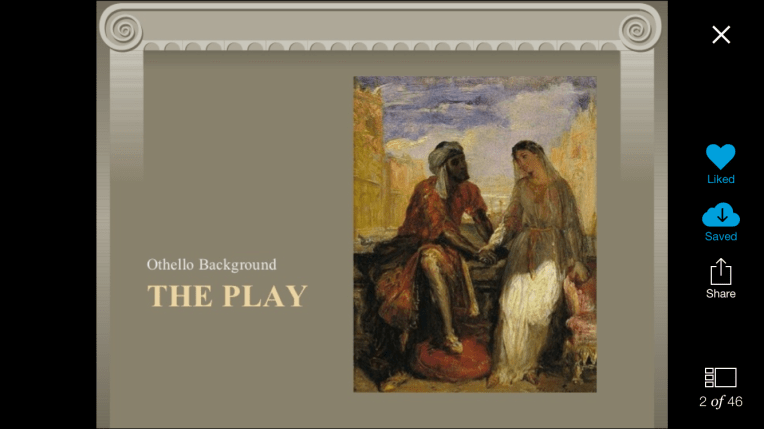
Background Presentation About Othello


In the spirit of black history month, enjoy this excellent documentary about Shakespeare’s only black hero: www.pbs.org/wnet/shakespeare-uncovered/uncategorized/othello-david-harewood-full-episode/
 Here’s a classroom guide that you can use with your students: Othello Classroom Guide

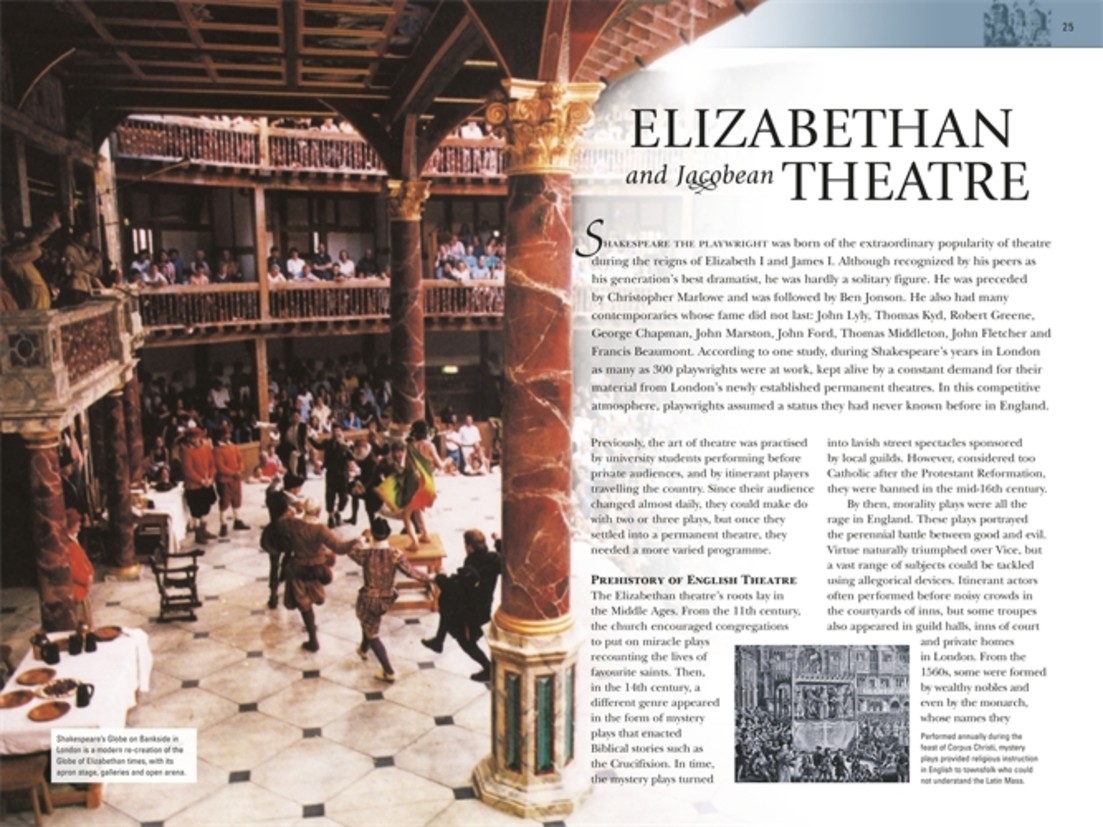
In doing my research for Twelfth Night, I came across a fantastic production from Shakespeare’s Globe in 2002. It used what is known as “original practices,” meaning that the actors tried to replicate everything we know about the way Shakespeare’s actors performed.

The play was performed in the great Globe Theater, which is itself a replica of Shakespeare’s original playhouse, which means that it was outdoors, using mostly natural lighting, and minimal sets. https://youtu.be/qtoUeVjP_rs
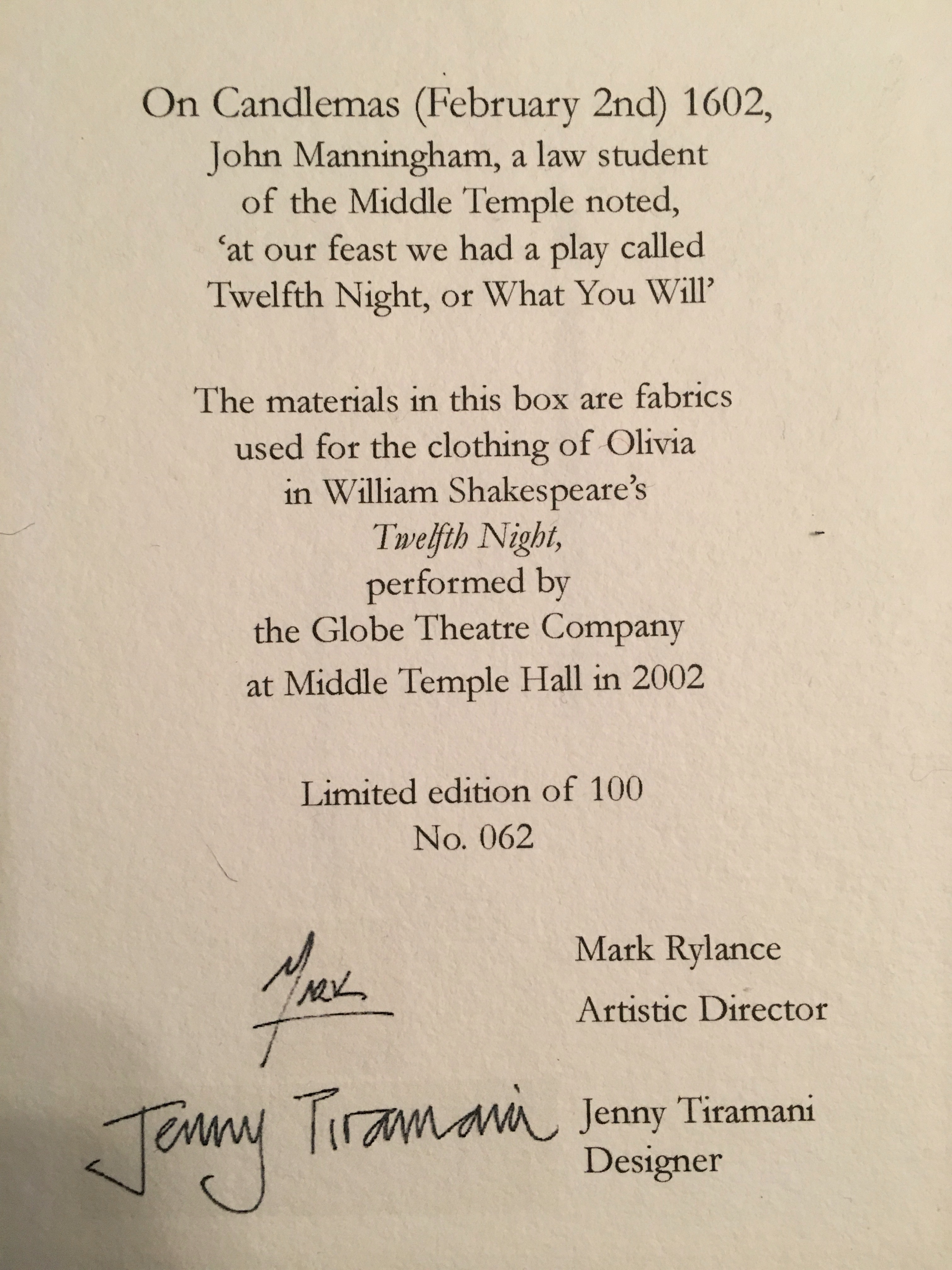
In addition, all the women’s roles were played by men, and the actors played multiple parts, which were all accurate stage practices from Shakespeare’s era. Most exciting of all, the actors all wore authentic 17th century costumes designed by veteran costume designer, Jenny Tiramani:
/https://prezi.com/m/zef_cpurcfsl/jenny-tiramani/
Few things determine how an actor moves or looks more than the clothes he or she wears, and watching these actors wear doublet and hose and real Jacobean dresses really fires up my imagine and makes me feel that I’ve truly been transported through time. The production is available on DVD, as well as several clips on YouTube, and I urge you to take a look at it. In the meantime, I’d like to comment a little on how the costumes from this production inform the audience about the characters that wear them.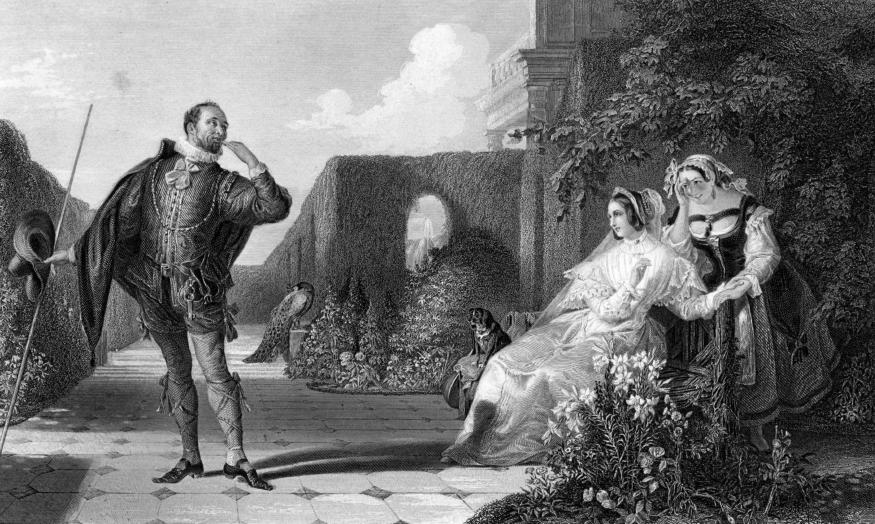
Some Info On 17th century fashion
* Men
* Women
Longer skirts, often embroidered with elaborate patterns
* Servants- Servants like Cesario (who is actually the Duke’s daughter Viola in disguise), would typically wear matching uniforms called liveries, a sign of who they worked for and their master’s trust in their abilities. People judged the aristocracy by how well they trained and controlled their servants, so wearing your master’s livery meant he trusted you to represent his house.
 In her first scene as Cesario, a servant named Curio remarks to her that Orsino has shown favor to “him” from the very beginning. This might explain the rich garments that Viola wears in this production, which resemble a noble gentleman more than a servant.
 A higher ranking servant like Malvolio would be able to wear a higher status garment, which is why you see Steven Fry as Malvolio dressed in a handsome doublet.
3. Character notes:
* What are they wearing?
* Why are they wearing it?
* How do the clothes inform the movement?
1. Viola (Eddie Redmane)  Viola, the star of the show, begins the show as the daughter of a duke, who has just been shipwrecked in a foreign country, so her clothes must look bedraggled and worn, yet appropriate to her status. As I said before though, for the majority of the play, Viola is disguised as the servant Cesario
2. Malvolio (Steven Fry)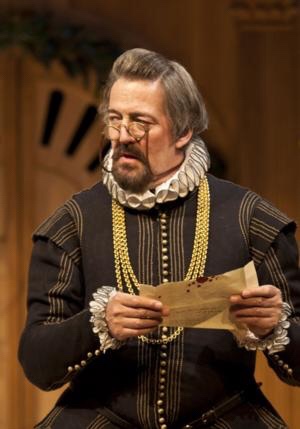
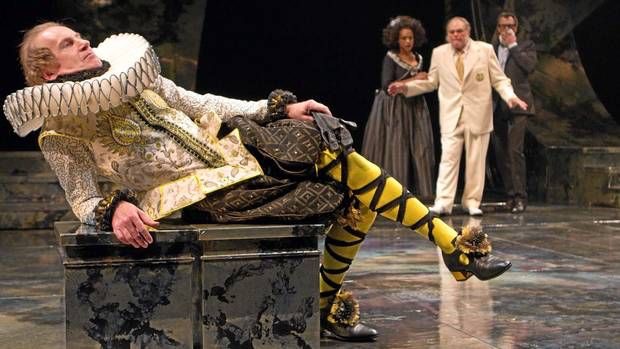
3. Maria the Countess Olivia’s maid, (who has an appetite for tricks and pranks), Maria’s job is to dress and help Olivia with her daily routine. This might include tying up her corset, putting on her makeup, and helping her with the elaborate gowns that nobles wore during this period. In the video below, you can watch a dresser help get an actress into an elaborate costume for another Globe theatre production. Just think of the amount of time and hard work it would take for a servant like Maria to dress Olivia every day!
In the play, Viola momentarily mistakes Maria for her mistress because she wears a veil. This also suggests that, rather than wearing a livery like Cesario, maybe Olivia let Maria wear some of her older clothes, which was a common practice for high level servants. A lot of the costumes Shakespeare’s company wore were probably hand me downs from their aristocratic patrons.
4. Olivia (Mark Rylance) 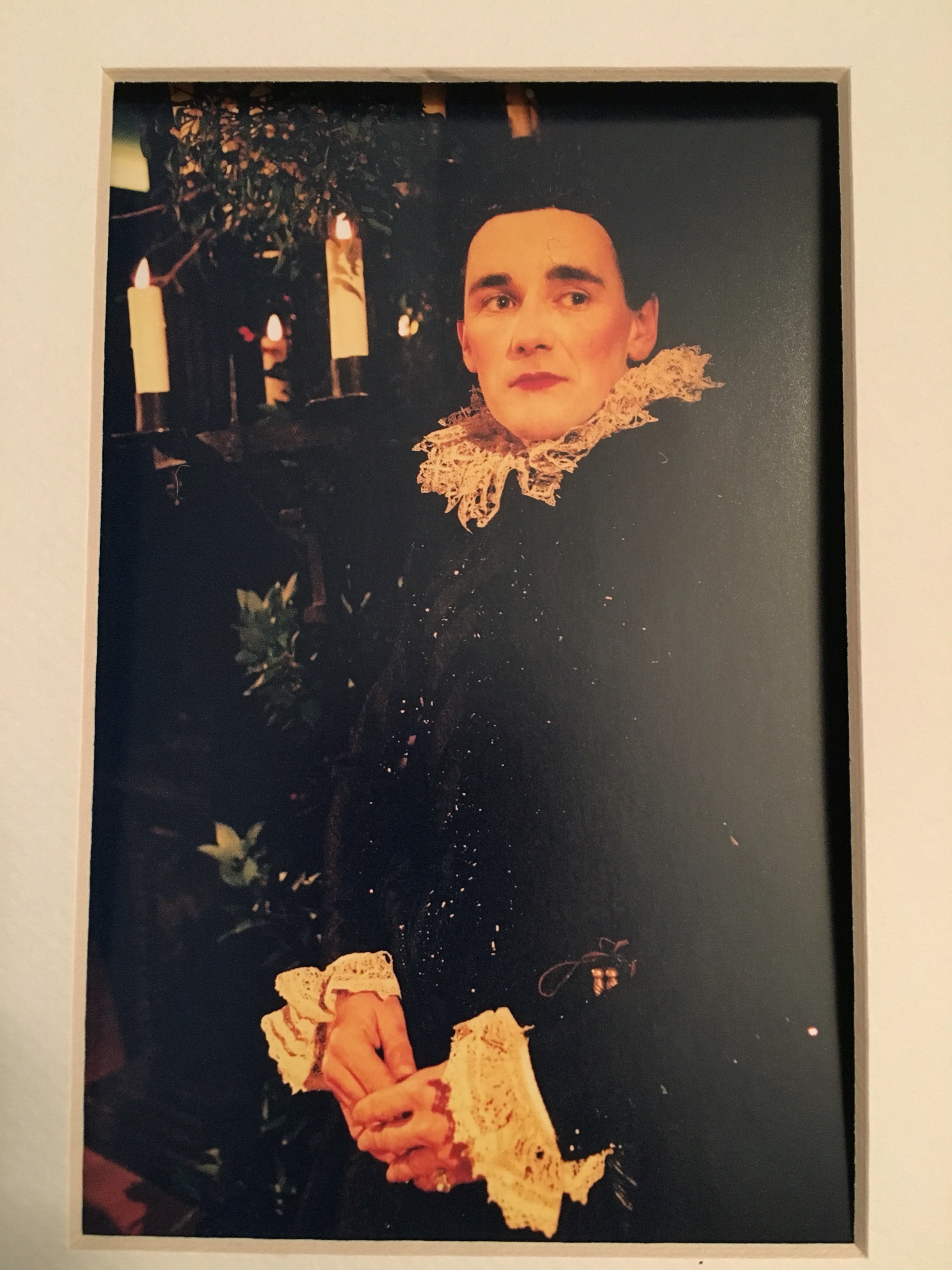
In this production, the countess and all the female roles were performed by men, just as they were in Shakespeare’s Day. Mark Rylance, who played Olivia, was also the Artistic Director of the Globe Theatre.


Costumes like these offer a tantalizing glimpse into history. Just as Shakespeare’s words help an actor bring to life the thoughts and feelings of his age, The type of clothes his company wore helps the actor embody the moiré’s and desires of Shakespeare’s society, whether a mournful countess, a dazzling gentleman, or a reserved Puritan.
References
Feldman, Adam
“Q&A: Mark Rylance on Shakespeare, Twelfth Night and Richard III” Time Out Magazine. Posted: Tuesday November 12 2013
Retrieved online from https://www.timeout.com/newyork/theater/q-a-mark-rylance-on-shakespeare-twelfth-night-and-richard-iii
Minton, Eric. Twelfth Night: What Achieved Greatness was Born Great.
Posted May 22, 2014 to http://shakespeareances.com/willpower/onscreen/12th_Night-Globe13.html.
If you liked this post, please consider signing up for my online course “Christmas For Shakespeare,” which will talk about the costumes, characters, and themes of Shakespeare’s play Twelfth Night, as well as Christmas traditions from Shakespeare’s day: https://outschool.com/classes/what-was-christmas-like-for-william-shakespeare-BwVLyBPp?sectionUid=75ee7895-c8ac-437c-9ef7-05cf8e3bf114&usid=MaRDyJ13&signup=true&utm_campaign=share_activity_link
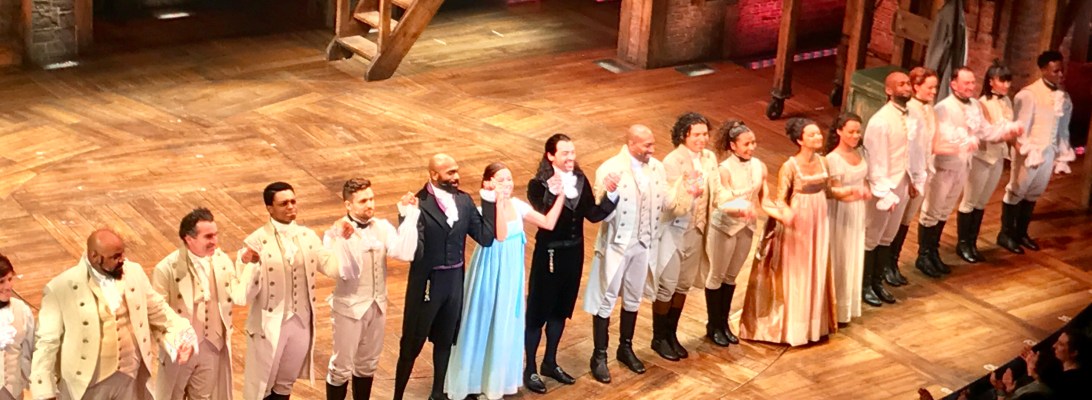

If you have two ears, you’re probably familiar with the Broadway Musical Hamilton. It swept the Tonys, has opened up touring productions across the country, and there’s already talk of a movie.
This historic American musical was the brainchild of writer Lin Manuel Miranda, who also originated the role of Alexander Hamilton.
The show is incredibly smart, creative, and delves into the seminal moments of American history.
What’s really exciting to me is that Hamilton also has a depth and complexity that mirrors some of Shakespeare’s greatest plays, specifically the history plays.
Between about 1590 and 1613, Shakespeare wrote 10 plays about the lives of English kings, from the vain Richard the Second to the heroic Henry the Fifth, to the diabolical Richard the Third. Here is a list of Shakespearean history plays, with links to online study guides, listed in chronological order by reign, not publication date.
Are these Shakespearean history plays historically accurate by our standards? No, not by a long shot, though Shakespeare is only partially to blame for that. While Lin Manuel-Miranda had Hamilton’s own essays, his letters from friends and loved ones, and of course, every American history book at his disposal, Shakespeare’s sources were few, and mostly propaganda. They were, (to paraphrase Napoleon and Benjamin Franklin), “A series of lies, composed by winners, to excuse their hanging of the losers.”
Shakespeare’s genius however, was to turn these two-dimensional propaganda stories into three dimensional characters with which we can all identify. Miranda did the same thing in reverse- distilling his wealth of historical information into a universal story of a man’s quest for the American Dream. Hamilton went from being an immigrant, to a soldier, to a pioneer in American law, government, and finance and the musical reflects his struggle to achieve his dreams through each stage of his life. It is also a love song from America to a man who dreamed of a future for America, one not dissimilar to the ode Shakespeare wrote to his “Star of England,” Henry the Fifth. The greatest compliment I can give Miranda is to say that he created an American musical, with the scale and breadth of Shakespeare.
Part I: War and Peace
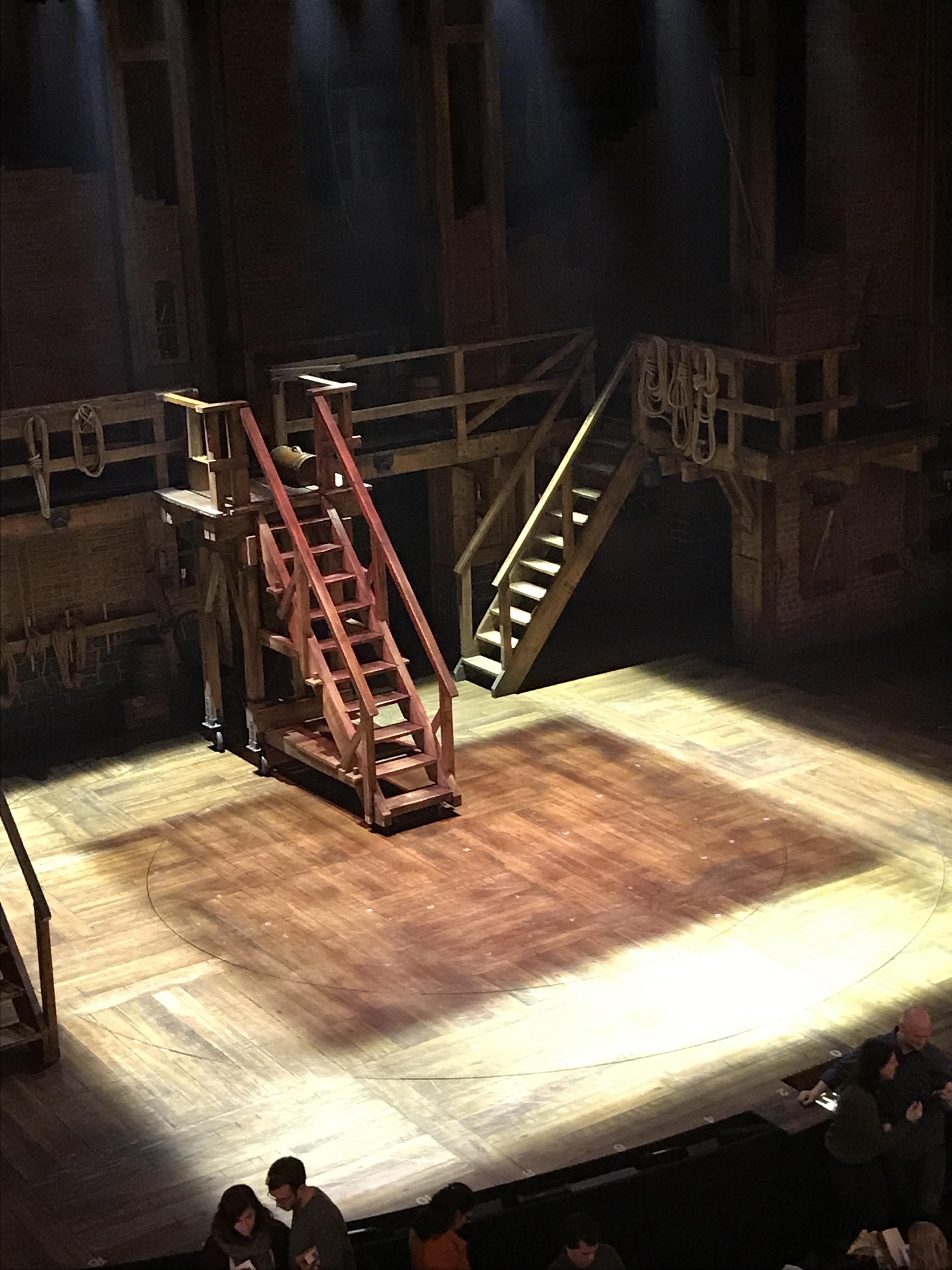
In Shakespeare’s histories, particularly the first tetracycle of plays that include Richard the Second, the three parts of Henry VI, and Richard, III, there is a constant shift between war and peace, as scholar Robert Hunter observes. These plays cover the 200 year period of Wars of the Roses, and the end of the Hundred Years War. In all of these plays there are some very violent and very opportunistic young men who see war as an opportunity to rise above their stations. In war, they win glory in death, honor, respect, and status in life. However, in peacetime, they have “no delight to pass away the time,” as Richard III observes, and they struggle to survive in the political landscape of peace.
Hamilton is a man of this same mold: When we first meet him, he is a poor immigrant from the West Indies with no title or money to improve his status. He spends the first third of the musical wishing he could become a commander in the Revolutionary War, especially in the song: “My Shot”
Hamilton in war bears similarities to Shakespearean characters like Hotspur, Richard Duke of York, and even Richard III; people who see war as a chance to either die in glory, or become honored, wealthy, and powerful.
Unfortunately for Hamilton, he fares less well once the war ends. Even though he becomes Washington’s first Secretary Of the Treasury, his success and closeness to now-President Washington makes him a walking target to his political adversaries. Even worse, his ambition and inability to compromise makes Hamilton equally vulnerable to people who see him as a loudmouth, an elitist, and a would-be demagogue who wants to control America’s finances and live like a king, similar to the way the British Prime Minister controls England’s finances.
The character Hamilton resembles most in peacetime is Cardinal Wolsey in Shakespeare’s Henry VIII.
I happen to know a lot about this character since I played him back in 2008. Wolsey controlled Henry VIII’s finances and was hated by most of Henry’s court because he was the son of a poor butcher in Essex, and became the king’s right-hand man. Throughout Shakespeare’s play, the lords of court are whispering about how Wolsey really controls the government; they even call him the ‘king cardinal’!
The real life Wolsey appears to have been hated just as much by Henry’s lords. Just look at the faces of the people of the court in this painting of the king and Wolsey by Laslett John Pott; the lords on the right are clearly jealous of Wolsey’s closeness to the king.
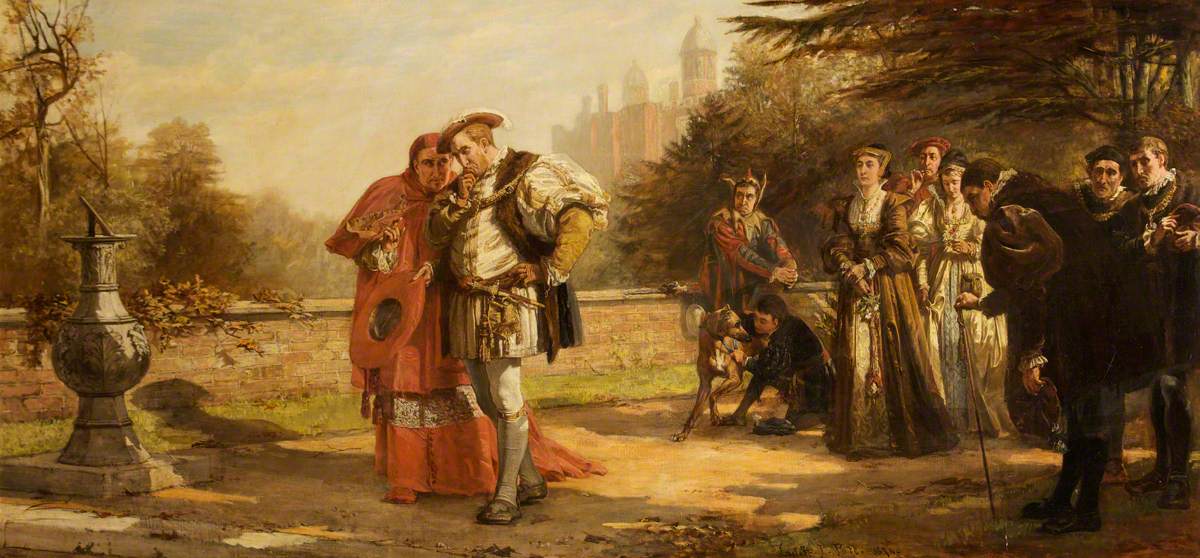
In both plays, Washington and King Henry are treated like gods- invulnerable, aloof, and completely above reproach.
Whenever anything bad happens in the play or musical, the legislature blames Wolsey and Hamilton, not the King or the President. Also, in both plays each one falls from grace and is destroyed by his enemies when the king and president no longer supports their right-hand-men.
Wolsey and Hamilton both fall because of their position as the financial advisor, which makes them a target to their enemies. Both are accused of using their country’s finances to enhance their personal wealth, which leads him to scandal and disgrace.
In Henry the Eighth , Wolsey is certainly guilty of conspiring to use his country’s wealth to line his own pockets- he pays the cardinals in Rome to influence their vote in the hopes that he will become the next Pope!

CARDINAL WOLSEY
What should this mean?
What sudden anger’s this? how have I reap’d it?
He parted frowning from me, as if ruin
Leap’d from his eyes: so looks the chafed lion
Upon the daring huntsman that has gall’d him
Then makes him nothing. I must read this paper;
I fear, the story of his anger. ‘Tis so;
This paper has undone me: ’tis the account
Of all that world of wealth I have drawn together
For mine own ends; indeed, to gain the popedom,
And fee my friends in Rome. O negligence!
Fit for a fool to fall by: what cross devil
Made me put this main secret in the packet
I sent the king? Is there no way to cure this?
No new device to beat this from his brains?
I know ’twill stir him strongly; yet I know
A way, if it take right, in spite of fortune
Will bring me off again. What’s this? ‘To the Pope!’
The letter, as I live, with all the business
I writ to’s holiness. Nay then, farewell!
I have touch’d the highest point of all my greatness;
And, from that full meridian of my glory,
I haste now to my setting: I shall fallLike a bright exhalation in the evening,
And no man see me more. Henry the Eighth Act III, Scene ii.
Again, though Wolsey is guilty, like Hamilton he also used his financial genius to bring England into a new age of prosperity after centuries of war. The Tudors were some of the richest and most powerful monarchs in British history, and Wolsey helped establish their dynasty, but thanks to his enemies, he is turned out of court in disgrace:
O Cromwell, Cromwell!
Had I but served my God with half the zeal
I served my king, he would not in mine age
Have left me naked to mine enemies. Henry VIII, Act III, Scene ii.
Hamilton is also accused of embezzling his wealth by his enemies, including James Madison, and Thomas Jefferson
In both plays, the moment where the main character begins to fall is dramatized in a stirring, metaphor-rich soliloquy. Wolsey compares himself to the Sun, who, once he reaches the zenith of the sky, has nowhere to go but down to the west, and set into night.

Hurricane From “Hamilton: An American Musical. Reposted from Deviant Art.com
Hamilton compares his situation to being in the eye of a hurricane, a particularly apt metaphor, since the real Alexander Hamilton’s house was destroyed by a hurricane in 1772. In addition, Lin Manuel Miranda‘s parents come from Puerto Rico an island that has, (and continues to be,) ravaged by hurricanes.
In the song, “Hurricane,” Hamilton remembers that when he lost everything as a boy in 1772, he beat the hurricane by writing a letter which was published in the newspaper, and inspired so much pity that the residents of the island raised enough money to send Alexander to America.
Part II- The Duel: Hamilton and Burr V Henry and Hotspur.
Aaron Burr and Hamilton keep meeting at important moments in the show, as if their fates are intertwined like gods in some kind of Greek tragedy.
Hamilton and Burr appear as polar opposites in the musical. Hamilton is fiery, opinionated, uncompromising, and highly principled. He ruffles feathers, but his supporters know where he stands. Burr is the opposite. He keeps his views to himself, and waits for the most opportune time to act on anything. Throughout the play, Hamilton and Burr hate and admire different things about each other. Hamilton admits that Burr’s cool practicality helps him to practice the law and succeed in politics, while Burr admires Hamilton’s energy and his ability to work and write as if his life depends on it, especially in the song “The Room Where It Happens.”
As this video from the Royal Shakespeare Company shows, these two combatants meet only once in the play, but they are constantly compared to each other by the other characters, who talk about them as if they were twins, (they even have the same first name)! Even the king remarks that his son could have been switched at birth with Hotspur.
Prince Henry (known as Hal in the play), is the heir to the throne. Like Burr in Hamilton, Hal is methodical, cool, keeps his feelings to himself, and is known by some as a Machiavellian politician. Hotspur, (or Henry Percy), is his opposite. Like Hamilton he is fiery, eloquent, and not afraid to die for his cause, which in Hotspur’s case is to supplant the royal family and correct what he believes is an unjust usurpation by Hal’s father, King Henry the Fourth.

In the scene below, the two men seem hungry to not only kill one another, but to win honor and fame as the man who killed the valiant Henry. Whether it’s Henry Percy, or Prince Henry who will die, is something they can only find out by dueling to the death.
HOTSPUR
If I mistake not, thou art Harry Monmouth.
PRINCE HENRY
Thou speak’st as if I would deny my name.
HOTSPUR
My name is Harry Percy.
PRINCE HENRY
Why, then I see
A very valiant rebel of the name.
I am the Prince of Wales; and think not, Percy,
To share with me in glory any more:
Two stars keep not their motion in one sphere;
Nor can one England brook a double reign,
Of Harry Percy and the Prince of Wales.HOTSPUR
Nor shall it, Harry; for the hour is come
To end the one of us; and would to God
Thy name in arms were now as great as mine!PRINCE HENRY
I’ll make it greater ere I part from thee;
And all the budding honours on thy crest
I’ll crop, to make a garland for my head.HOTSPUR
I can no longer brook thy vanities.
They fight, HOTSPUR is wounded, and falls
HOTSPUR
O, Harry, thou hast robb’d me of my youth!
I better brook the loss of brittle life
Than those proud titles thou hast won of me;
They wound my thoughts worse than sword my flesh:
But thought’s the slave of life, and life time’s fool;
And time, that takes survey of all the world,
Must have a stop. O, I could prophesy,
But that the earthy and cold hand of death
Lies on my tongue: no, Percy, thou art dust
And food for– Dies.
Hamilton’s duel is also a matter of honor; Alexander wants to defend his statements against Burr, while Burr wants to stop Hamilton from frustrating his political career. Here is how their duel plays out in the musical Hamilton:
PRINCE HENRY
For worms, brave Percy: fare thee well, great heart!
Ill-weaved ambition, how much art thou shrunk!
When that this body did contain a spirit,
A kingdom for it was too small a bound;
But now two paces of the vilest earth
Is room enough: this earth that bears thee dead
Bears not alive so stout a gentleman.
If thou wert sensible of courtesy,
I should not make so dear a show of zeal:
But let my favours hide thy mangled face;
And, even in thy behalf, I’ll thank myself
For doing these fair rites of tenderness.
Adieu, and take thy praise with thee to heaven!
Thy ignominy sleep with thee in the grave. Henry IV, Part I, Act V, Scene iv.
III. The Times

In both Hamilton and all of Shakespeare’s history plays, the characters know that they are living during important events and their actions will become part of the history of their country, and none more than Washington. In the song, “History has its eyes on you,” he warns Hamilton that, try as one might, a man’s history and destiny is to some extent, out of his control, which echoes one of King Henry the Fourth’s most bleak realizations:
Henry IV. O God! that one might read the book of fate,
And see the revolution of the times
And changes fill the cup of alteration
With divers liquors! O, if this were seen,
The happiest youth, viewing his progress through,
What perils past, what crosses to ensue,
Would shut the book and sit him down and die. Henry IV, Part II, Act III, Scene i.
Washington is keenly aware of his legacy and does his best to protect it. In Shakespeare’s Henry IV,the king also lies awake trying to figure out how to deal with the problems of his kingdom, which is why Shakespeare gives him the famous line “Uneasy lies the head that wears the crown.” Likewise, Richard II, makes a famous speech where he mentions how many kings have a gruesome legacy of dying violently:
As we see the whole story of Hamilton’s life, his fate changes constantly and his legacy shifts in every scene of the show: immigrant, war-hero, celebrated writer, Secretary of the Treasury, but then, once he published The Reynolds Pamphlet, Hamilton went from famous to infamous. After After Burr murdered him in the duel, Hamilton might have been utterly forgotten, in spite of all his great accomplishments. This is a key theme in all history and tragedies; the desire of every man to create a lasting legacy for himself, and thus transcend mortality.
The women who tell the story
When Hamilton commits adultery and writes the Reynolds pamphlet though, Eliza is so hurt and scandalized that she rescinds her requests. In the song “Burn,” she destroys her love letters from before the affair, and all correspondence she had with Alexander when he revealed it. Lin Manuel Miranda explained that he wrote the song this way because no records during this period survived, so he invents the notion of Eliza destroying them as a dramatic device, to heighten her estrangement from her husband. Though this is a contrivance, it does re-enforce how, when part of the story is lost, it twists and destroys part of our impression of a person. Shakespeare knew this too; Henry Tudor went to great lengths to destroy the legacy of his predecessor Richard the Third, and literally repainted him as a deformed tyrant. Shakespeare couldn’t escape the narrative of Richard as a monster when he wrote his history play and sadly helped to perpetuate it to this day.
Bravo.

Educational links related to Hamilton:
Books

Hamilton: The Revolution by Lin-Manuel Miranda, Jeremy McCarter. A complete libretto of the show, with notes on its creative conception. 

Alexander Hamilton by
TV:
“Hamilton’s America” PBS Program. Originally Aired 2016. Official Webpage: http://www.pbs.org/wnet/gperf/episodes/hamiltons-america/ You can watch the full documentary here: http://www.tpt.org/hamiltons-america/
Web:
Biography. Com- Alexander Hamilton:https://www.google.com/amp/s/www.biography.com/.amp/people/alexander-hamilton-9326481
Founders Online: The Papers of Alexander Hamilton: Columbia University, accessed 11/12/17 from https://founders.archives.gov/about/Hamilton
House Of Representatives Biography: Alexander Hamilton- IIhttp://history.house.gov/People/Listing/H/HAMILTON,-Alexander-(H000101)/
Resources on Shakespeare’s History Plays:
Books
Leslie Dunton-Downer and Alan Riding Published: 16 Jan 2013.

TV:Shakespeare Uncovered: Henry the Fourth. Originally Aired February 1, 2013. Available at http://www.pbs.org/wnet/shakespeare-uncovered/episodes/
Websites

Ghostly greetings everyone!
Since it’s the month of all things spooky, and we have a rare Friday the 13th today, I thought I would share some of Shakespeare’s scariest lines!
First, from the tragedy of Macbeth, the famous Dagger Speech:
Is this a dagger which I see before me,
The handle toward my hand? Come, let me clutch thee.
I have thee not, and yet I see thee still.
Art thou not, fatal vision, sensible
615
To feeling as to sight? or art thou but
A dagger of the mind, a false creation,
Proceeding from the heat-oppressed brain?
I see thee yet, in form as palpable
As this which now I draw.
620
Thou marshall’st me the way that I was going;
And such an instrument I was to use.
Mine eyes are made the fools o’ the other senses,
Or else worth all the rest; I see thee still,
And on thy blade and dudgeon gouts of blood,
625
Which was not so before. There’s no such thing:
It is the bloody business which informs
Thus to mine eyes. Now o’er the one halfworld
Nature seems dead, and wicked dreams abuse
The curtain’d sleep; witchcraft celebrates
630
Pale Hecate’s offerings, and wither’d murder,
Alarum’d by his sentinel, the wolf,
Whose howl’s his watch, thus with his stealthy pace.
With Tarquin’s ravishing strides, towards his design
Moves like a ghost. Thou sure and firm-set earth,
635
Hear not my steps, which way they walk, for fear
Thy very stones prate of my whereabout,
And take the present horror from the time,
Which now suits with it. Whiles I threat, he lives:
Words to the heat of deeds too cold breath gives.
640
[A bell rings]
I go, and it is done; the bell invites me.
Hear it not, Duncan; for it is a knell
That summons thee to heaven or to hell. Act II, Scene I.
Hamlet. Angels and ministers of grace defend us!
Be thou a spirit of health or goblin damn’d,
Bring with thee airs from heaven or blasts from hell,
What may this mean
680
That thou, dead corse, again in complete steel,
Revisits thus the glimpses of the moon,
Making night hideous, and we fools of nature
So horridly to shake our disposition
With thoughts beyond the reaches of our souls?
685
Say, why is this? wherefore? What should we do? Hamlet, Act I, Scene v.
Puck. Now the hungry lion roars, 2220
And the wolf behowls the moon;
Whilst the heavy ploughman snores,
All with weary task fordone.
Now the wasted brands do glow,
Whilst the screech-owl, screeching loud, 2225
Puts the wretch that lies in woe
In remembrance of a shroud.
Now it is the time of night
That the graves all gaping wide,
Every one lets forth his sprite, 2230
In the church-way paths to glide:
And we fairies, that do run
By the triple Hecate’s team,
From the presence of the sun,
Following darkness like a dream, 2235
A Midsummer Night’s Dream, Act V, Scene I.

Donald Trump Jr tweeted two questions after the Julius Caesar play protest I posted over the weekend:

“When does art become political speech, and does it change things?”
I would like to try to answer these questions and by doing so, see if I can explain this fascinating moment in Shakespearean performance history.
Though this production raised new questions about art, and has raised passion from many people, it is not as radical as the protesters might think. Here is a list of historical points of reference to show you the many similarities between this protest and others throughout the history of Shakespearean performance:
1. This is not the first time a Shakespeare play has been seen as a spur to violence: In February of 1601, The Earl of Essex commissioned Shakespeare’s company to perform a scene of the deposing and killing of King Richard the Second one day before he attempted to overthrow queen Elizabeth, and make himself head of the English government.

Shakespeare’s company was exonerated, but Essex himself was tried convicted, and executed for high treason.

Similarly, when John Wilkes Booth assassinated President Lincoln in 1865, he had previously performed in Julius Caesar, and reportedly complained, (while on the run from the law), that “I am being hunted for what Brutus did so freely”
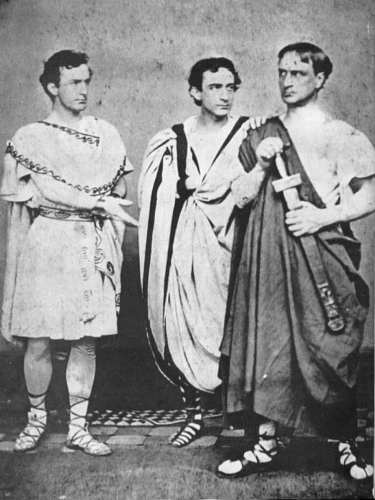
Source: New York Times Review. Now in both cases it is worth noting that Shakespeare’s play was not responsible for the death of a political figure, it was the people who interpreted his work that bear the responsibility themselves.
2. This play is also not the first time a director has portrayed Caesar as a contemporary president-


As many people have pointed out, in 2012 The Acting Company put on a production of Caesar with an Obama-esque version of the title character. No protests came from the left or right, though Caesar died in the exact same way- bloodily stabbed onstage. I would argue that these shows demonstrate that portraying Caesar as a contemporary figure does not itself incite violence. The audience knows that the figure of Caesar is simply meant as a link between Shakespeare and contemporary politics. This is how the director Oskar Eustis of the Shakespeare in the Park production defended himself against criticism of his staging: https://www.google.com/amp/s/mobile.nytimes.com/2017/06/13/theater/donald-trump-julius-caesar-oskar-eustis.amp.html
I frankly also find the disproportionate reaction to these two Caesars rather insulting. When Obama was in office, he got plenty of negative criticism that sometimes extended to threats of violence. If you click here you can see a threat by country music singer Ted Nugent who threatens to shoot the president with a machine gun. The double standard that threatening a president on the left has no consequences, but threatening a Republican president is worthy of scorn, derision, and its backers pulling their support, deeply hypocritical.
3. Thirdly, this is not the first time a Shakespeare play has depicted Trump negatively. If you look at the comments of my Trump villain post, a director mentioned his production of Henry the Sixth Part Two, in which an actor portrayed the character Jack Cade as Trump. Like Caesar, Cade also murdered in the course of the play. Clearly, portraying Donald Trump as a Shakespearean character is not what is unique here.
4. Though it is certainly true that the play depicts violence and the overthrow of a regime, it doesn’t endorse violence, and is not intended to glorify the murder of a president or even a demagogue like Caesar. As I will later discuss, this play can’t be an endorsement of violence, since everyone who commits violence is duly punished.
So why has this particular production, that uses a Caesar that resembles this president, gotten such a big reaction? Part of the issue admittedly is the timing. The protest specifically mentions the attempted murder of a GOP senator, which happened last week. It is only natural that, given this recent threat of violence, some would fear that this production might incite others to violence. Yet, as I said before, a thorough analysis of the play shows that it does not condone violence against a political leader.

Additionally, given today’s divisive political environment, it is understandable why an audience of right wing protesters might be concerned about this scene in which Caesar is murdered on stage. They may vey well think the play is wish fulfillment for those on the left, who might enjoy watching the bloody assassination of someone who is vey unpopular right now. However, let me emphatically point out that first of all, no one on the left has endorsed violence against Trump. If you look at the backlash to Kathy Griffin’s picture of herself holding a bloody makeshift Trump head, you can see that no one left or right has endorsed support for such a treasonous un-American act. Secondly, with regards to Caesar, the play’s message is actually nonviolent. When Brutus and Cassius kill Caesar, it starts a violent uprising that leads to anarchy, precisely the outcome the two Roman senators hoped to avoid. Seeing their designs fail would certainly discourage anyone attempting violence against a sitting authority figure.
Perhaps the best way I can prove this point is to remind everyone that Shakespeare himself lived in a monarchy. His theatre was strictly controlled by the government. If anyone in 1599 believed that Julius Caesar seemed to support the killing of queen Elizabeth, the play would have been burned and Shakespeare and his whole company would have been arrested and hanged.
Also, people have criticized the murder of Caesar as “too realistic,” again believing that the gore is intended to glorify violence. In reality the violence of the murder is intended to incite revulsion and disgust. Look at Mark Antony’s reaction when he shows Caesar’s body to the crowd. https://youtu.be/tRceRJAz6_Q
I frankly think that the main reason why this production is getting bad press is because it’s a portrayal of President Trump, not Obama, not the historical Caesar, not Hitler, not even Trump before he was president, but the current president, that a group of people elected, and who believe that he supports their values.
I believe that the main reason Trump’s supporters are angry at this production is they feel an attack on him is an attack on them. The president’s supporters have shown repeatedly that they are willing to overlook almost anything to show their support of him. I imagine that they have no desire to see him as an autocrat and dictator, let alone entertain the notion that he might ever be taken down by his opponents.
The irony is that the real Caesar was a man of the people who died because his opponents thought he was an autocrat. The real Caesar helped create the modern calendar, gave money to the entire city, and according to Marc Antony, “When the poor hath cried, Caesar hath wept.” Trump is the exact opposite; he is a self-centered con artist who pretends to be a man of the people. As I predicted, after his inauguration, he has vowed to cut taxes on businesses like his own, put his family in positions of power, used diplomatic meetings and press conferences to sell his products, and obstructed justice when his FBI director tried to investigate him. With this in mind, it seems bizarre to claim that this production is designed to ridicule the right, since Trump is neither Julius Caesar, nor is he an embodiment of the political right. He only stands for his own interests. Therefore an attack on Trump is not an attack on conservative values.
So to go back to the beginning point, “When does art become political speech?” I would argue art always becomes political when it comments about our world, and this quality of art is essential for our society to function. We need a healthy dose of satire and critical thinking, and art can provide it to us. However, there is a difference between disagreeing with a play and openly shunning it onstage.
To address Mr. Trump’s second question, art doesn’t change things, people change things, so we need to temper our reactions, especially to art pieces like Julius Caesar. Remember, Caesar only died because people said he wanted to be king. Cinna the poet died because the mob said he should. This play warns us all to be careful and remain critical thinkers, or mob rule will result.
References
What depicting Julius Caesar as Donald Trump really means – CBS News
https://www.google.com/amp/s/www.theatlantic.com/amp/article/530037/
https://apple.news/AW6FmlDY3TEe4C97AG7UI4Q
Ted Nugent once said Obama should ‘suck on my machine gun.’ Now he wants to tone down ‘hateful rhetoric.’ – The Washington Post
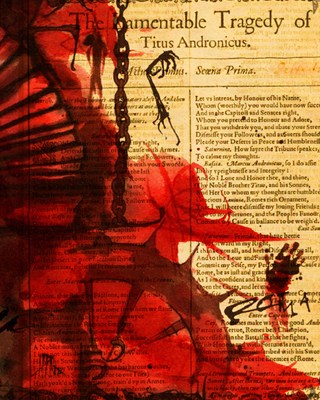
With just a few days left until Halloween, many of us will be anxious to put the candy bowl away, dim the lights, and watch a scary movie. I’d like to recommend my pic for the single best Shakespeare play for Halloween, and you might be surprised to learn which one it is:
It’s not Macbeth, despite its ghosts and witches, it’s not Hamlet, though it has a famous scene in a graveyard. In my opinion, the scariest, most horrific, most disturbing Shakespearean play is the ancient Roman revenge tragedy Titus Andronicus!
Titus Who?
Titus is the most violent, most outrageous play in the Shakespearean cannon and features murder, mutilation, cannibalism, (and even featured the first recorded trick or treating). It was also his first tragedy ever, written around 1590. Back in this period, Shakespeare’s theater was also the site of public executions and blood sports like Bear-baiting, so Shakespeare knew that gore sells. He also knew that people were reading the bloody tragedies of the Roman poet Seneca, so he created a play that out-does the Roman master of bloody violence!
So why have you not heard of it?
Scholars often compare the dark comedy of Titus to the films of Quentin Tarantino, who will murder his characters in grotesque, but funny ways. I won’t even give away the surprise ending where Titus and his daughter gets their revenge, but let’s just say that they would certainly agree with Tarantino that revenge is a dish, best served cold!
AARON
Look by and by to have thy sons with thee.
Aside Their heads, I mean.
O, how this villany
Doth fat me with the very thoughts of it!
Let fools do good, and fair men call for grace.
Aaron will have his soul black like his face (Titus, Act III, Scene 1).
Now the question to ask about Aaron and most of Shakespeare’s villains, is are they bad because they’re different (different race, differently abled, illegitimate birth), or did they become bad from people treating them badly?
Serious note– Even though productions often dramatize the violence and rape in Titus as over-the-top black comedy, this kind of rape and violence happens in real life, every day, particularly violence against women like Lavinia. One reason why this play is gaining popularity is sadly, that this kind of violence is more common in our current society with the shocking number of rapes committed in this country (1 in 5 women, according to the National Sexual Violence Resource Center), and the brutal murders in this play suggest many real-life atrocities such as Abu ghraib,
Plot summary and more at Schmoop.com
More at http://www.gradesaver.com/titus-andronicus/study-guide/summary
Review of Julie Taymor’s Titus
If you can’t get to the theater this Halloween and want to watch a production of Titus, you’re in luck: In 1999, Julie Taymor, famed director of the Broadway production of The Lion King, directed a film adaptation of Titus which I consider the single greatest Shakespearean film of all time. The movie captures the grotesque comedy of the play, while also visually showing the beauty of Shakespeare’s poetry. It also doesn’t get hung up on historical accuracy just because the play is set in Rome. Best of all, the cast in incredible: Anthony Hopkins, Jessica Langue, Alan Cumming, Harry Lennox and more. This cast knows how to do Shakespeare for the movies and their work shows in every scene. Interesting side note: Hopkins actually considered making this movie the last movie of his career, which explains his amazing glee and energy in the role of Titus. Below is a nice in-depth analysis of the film
Another good review comes from the French Shakespeare Society: https://shakespeare.revues.org/1558
And finally, a review from Roger Ebert: http://www.rogerebert.com/reviews/titus-2000
So that’s my two cents on Titus Andronicus. Happy Halloween everybody!

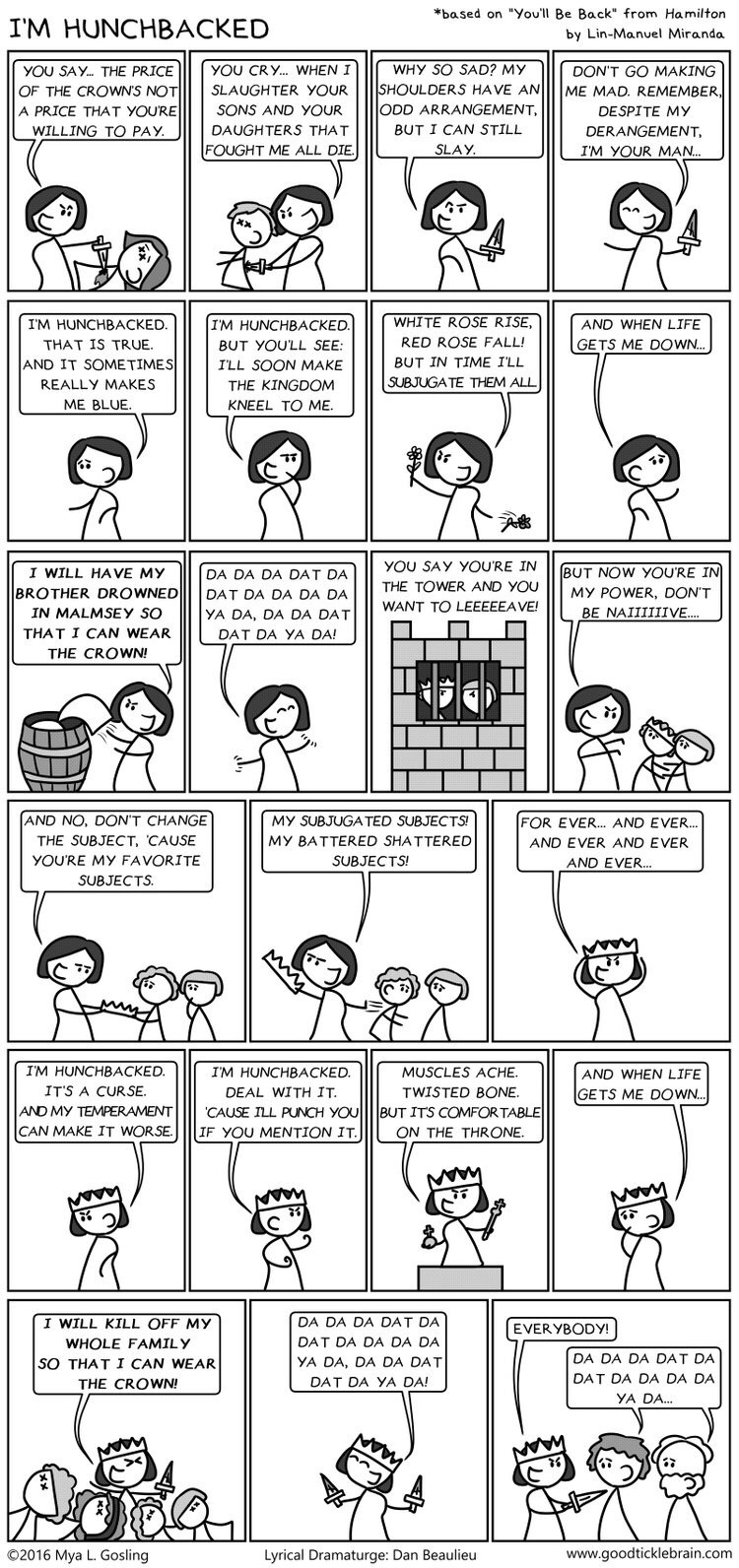
As you know, I’m a huge fan of Shakespeare and the Broadway musical “Hamilton,” so I was delighted when I saw this post on “Good Tickle Brain!”
Original Post Here: check them out for Shakespearean humor!
I was going to review this movie, but I’m quite impressed by Mr. Galgren of Channel Awesome’s take on it. I think this review is a great summary of how this movie cleverly adapts Shakespeare’s play in a 20th century context, and how incredible Sir Ian’s performance is! Enjoy the review, and see the movie if you get the chance!
 The Shakespearean Student