The Fashion Is the Fashion: Antony and Cleopatra

Part I: Famous Cleopatras

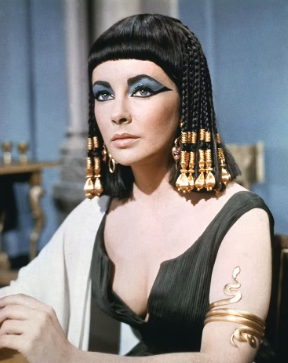
Elizabethan Taylor

Elizabeth Taylor in her iconic portrayal in the film “Caesar and Cleopatra”

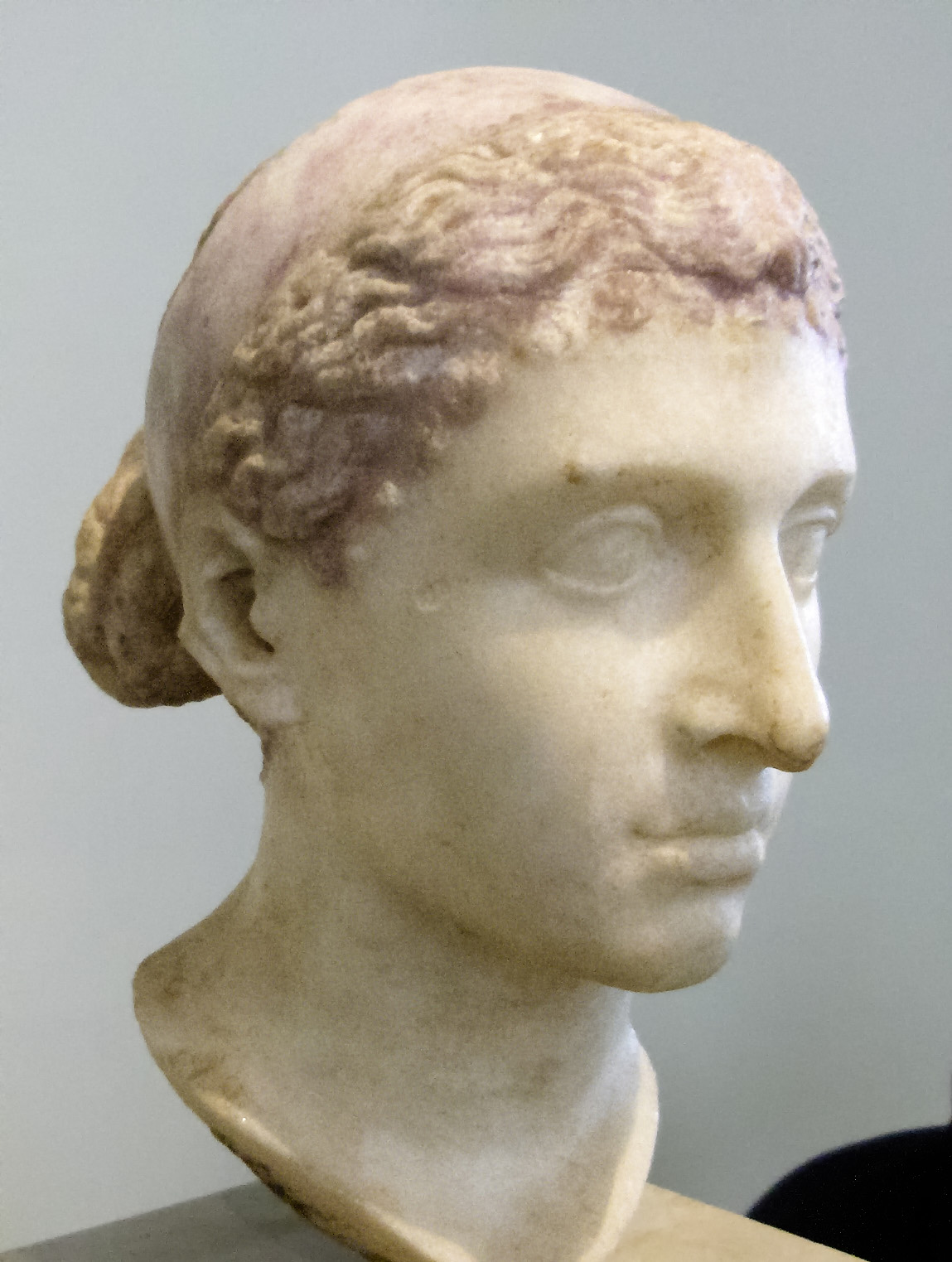
Part II: The Real Cleopatra

  1. Actually Greek, but assimilated into Egyptian Society
  2. Dressed as the Egyptian Goddess Isis (allegedly)
  3. Spoke egyptian
  4. Hosted elaborate parties where her dress conveyed the wealth of Egypt
  5. Beauty routine.

Part II DIY antony and Cleopatra

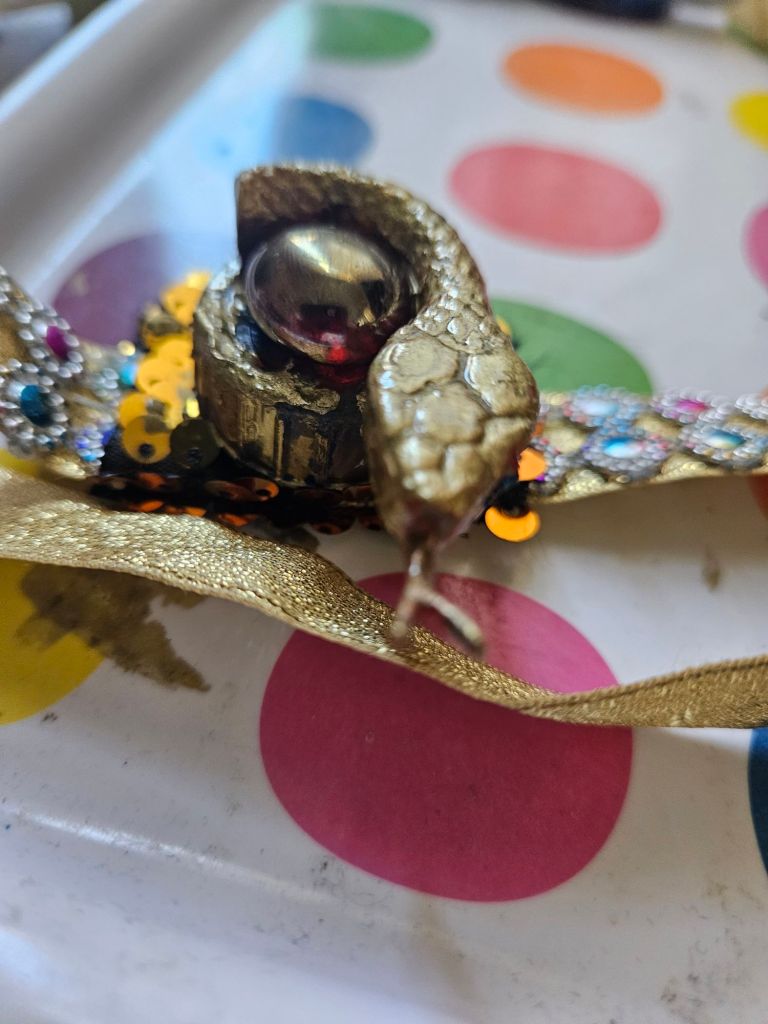
Roman Helmet/ Sword

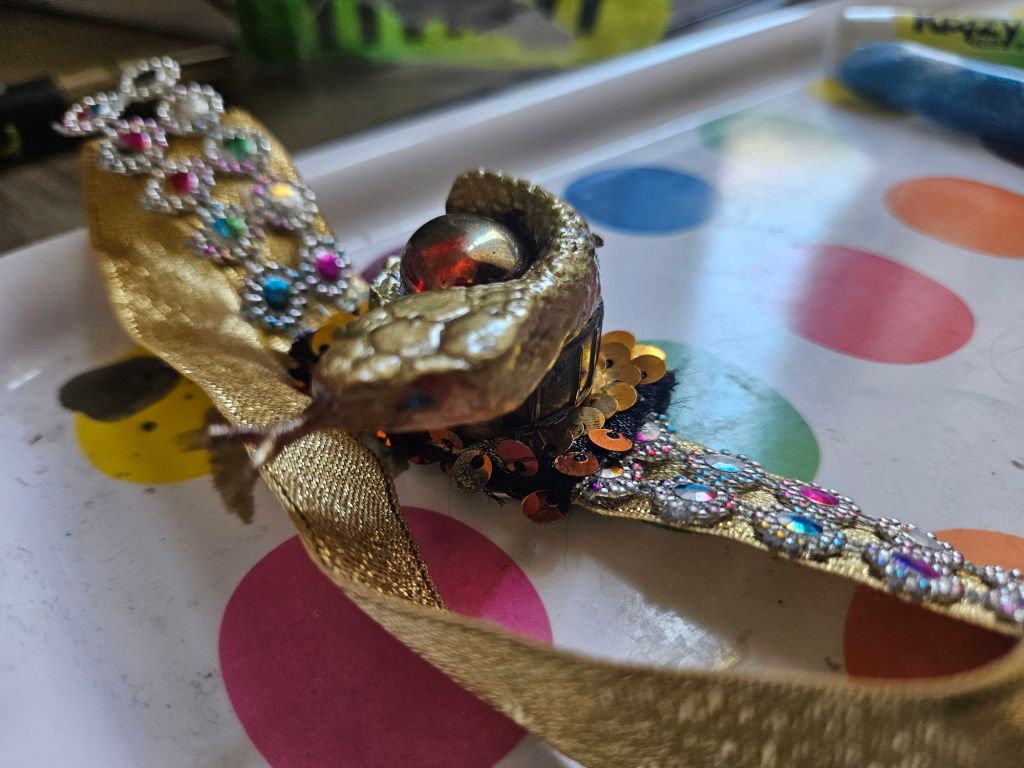
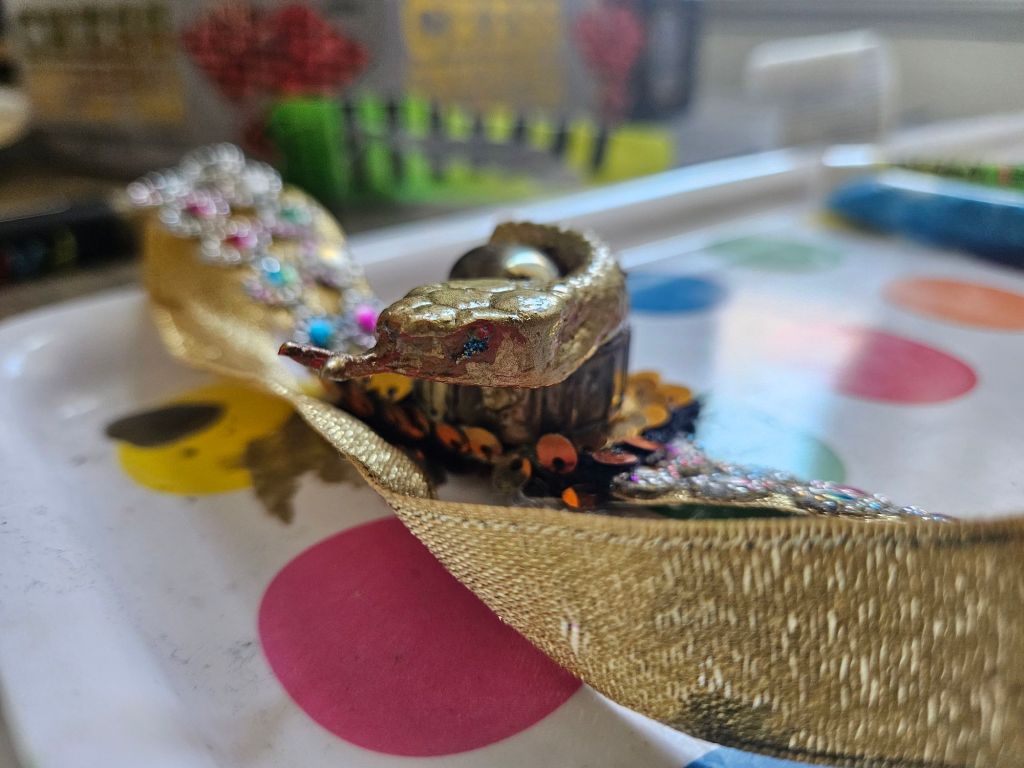
Jewelry

Dress

Crown

Hair

Makeup

Part III Staging antony and cleopatra

Egyptian Antony

Roman Anthony

Color blind casting

Works Cited:

https://theconversation.com/cleopatras-skin-colour-didnt-matter-in-ancient-egypt-her-strategic-role-in-world-history-did-205240

https://www.smithsonianmag.com/history/rehabilitating-cleopatra-70613486/

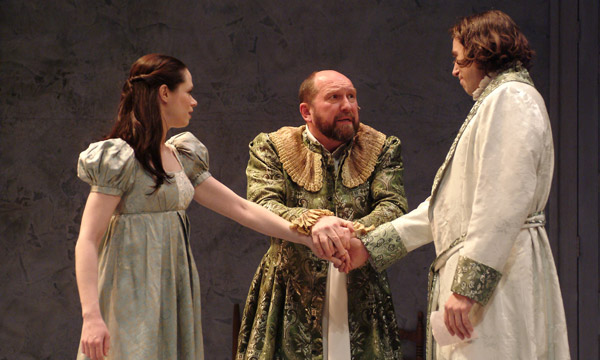
Shakespeare In the Park: Twelfth Night

I’m beyond excited that The Deleclrte Theater is continuing their tradition of producing high-quality, free Shakespeare in the Park, and then giving everyone the chance to see it via streaming over PBS.

This summer’s show is Twelfth Night, my favorite Shakespearean comedy, with an all-star cast

https://playbill.com/article/pbs-to-broadcast-twelfth-night-starring-peter-dinklage-lupita-nyongo-jesse-tyler-ferguson-sandra-oh

Photos

https://playbill.com/article/photos-see-lupita-nyongo-sandra-oh-peter-dinklage-more-in-rehearsal-for-twelfth-night

https://playbill.com/article/watch-lupita-nyongo-sandra-oh-peter-dinklage-more-in-the-rehearsal-room-for-twelfth-night

The cast

My predictions

I’m so excited to see Peter Dinklage as Malvolio, one of my favorite characters in Shakespeare, and one that I have played myself. I’m also very interested in Sandra Oh’s interpretation of Olivia. She has proven herself in both dramatic and comic roles, which works well for Olivia, a character who starts out in mourning and ends up madly in love.

The performance I am the most excited about, though, is Lupita N’ongo as Viola. I’ve said before that Viola is one of the greatest characters in all of Shakespeare, so I can’t wait to see her portrayed by Lupita N’ongo, an actress I greatly admire. I loved her performances in Avengers Endgame, Us, and my whole family adored her excellent voice work in The Wild Robot. She has simultaneously a childlike enthusiasm, and a calm and stoicism that I’m sure will translate excellently for Viola, who survives a shipwreck and losing her brother (she thinks) through courage and humor.

Hopefully, I can stream this program soon, and give you a full review. In the meantime, enjoy my past posts and videos about Twelfth Night

FMI

https://publictheater.org/productions/season/2425/fsitp/twelfth-night/

New Outschool Class: Shakespeare For Kids

I’m pleased to announce that I’ve created a fully online, interactive Shakespeare class for kids ages 6-11 to start them on a lifelong journey of Shakespeare! The course will include games, videos, webquest activities, and puppet shows!


Title: Shakespeare for Kids!

Purpose:

Video trailer

The goal of this class is to introduce Shakespeare to young children in a fun and interactive way. For example, each lesson starts with a fun and funny introduction to a Shakespearean topic by our friend Puppet Shakespeare. Each class will also feature interactive games and quizzes that break down the poetry, language, characters, and plots of Shakespeare to help kids lose their “Shakes-fear” and begin engaging with classic literature

Each class builds from learning about Shakespeare to learning about the language and poetry of his plays, to finally an in-depth analysis of one play: “A Midsummer Night’s Dream.” After watching videos, playing games, and filling out handouts about these topics, the student will go on a “webquest,” that is, a series of webpages that feature activities, outside websites, and a short- puppet show retelling of “Midsummer” for the student. The goal is that by the end of the course, the student will be able to understand the dialogue of the play, summarize the story, know the characters, and enjoy the poetry.


Format: Nearpod with video and web links.


Ages 6-10

Description:
2 week course, $10 per week.

Part I: Who Is Shakespeare?

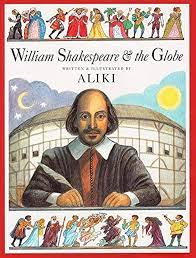
Learn about Shakespeare’s life and career with an interactive timeline, handouts, and an engaging puppet show! This section will include me reading from the excellent children’s book: William Shakespeare and the Globe by Aliki.

Part II: Words, Words, Words


WIlliam Shakespeare (Or Bill as I like to call him), wrote in a very special way. Back then playwrights were called poets, so not only did he have to make plays, he had to write them so they would sound like lines of poetry.


Part III: Shakespeak

Figure out how to translate all the “thees” and “thous” that make reading Shakespeare a challenge nowadays


Part IV The Play’s the Thing!

What kinds of plays did Shakespeare write? This handy lesson will teach you about the basic types of plays Shakespeare wrote, and give you a quick summary of each!


Part V: Disney vs. Shakespeare

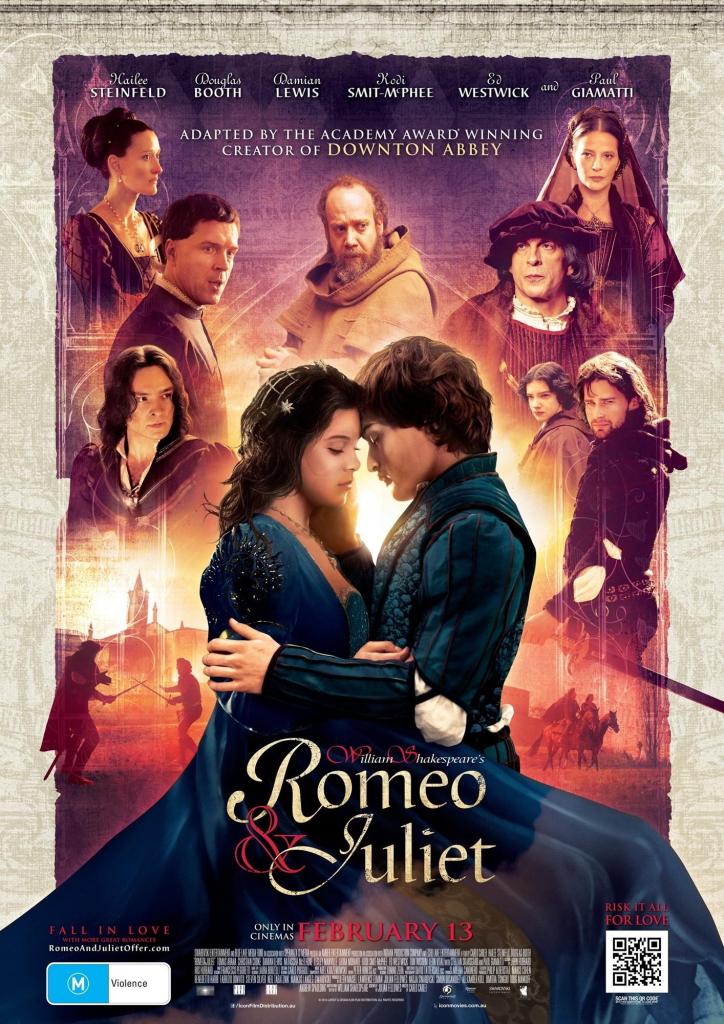
Poster for Disney’s Elemental, which bears many similarities to Shakespeare’s Romeo and Juliet
Continue reading

RIP James Earl Jones

Speak of me as I am, nothing extenuate- Othello

I’m sure I don’t need to tell you that one of the most iconic voices of our generation, James Earl Jones has passed away at the age of 93. I’m sure I also don’t need to mention his iconic film roles in such films as Field of Dreams, Coming To America, The LIon King, and of course, his (initially uncredited) role as the voice of Darth Vader in the Star Wars Trilogy. As I’ve written before, Jones had a powerful, authoritative voice that played kings, generals, knights, and even gods, which came directly from his training as a Shakespearean actor. So, instead of taking a look at his illustrious film career, I’d like to celebrate Jones’ contributions to Shakespeare, and how Shakespeare changed his life, and through him, changed mine.

Jones and Poetry

I don’t mind talking about my stuttering because it’s just another example of you finding yourself with a weak muscle and you exercise it, and sometimes that becomes your strong muscle,” Jones told KCRA in 1986. “I was mute from grade one through freshman year in high school — mute because I just gave up on talking.”

-James Earl Jones in a TODAY Show interview, 1986

James Earl Jones was born in 1931 in Arkabutla, Mississippi. Not only did he struggle with racial discrimination at home and in his career, he also dealt with a debilitating stutter which, as you can see in the quote above, left him all but mute for years of his life. It was one of his teachers who helped Jones find his voice by giving him poetry to read, inspiring him to become an actor. As a Shakespearean actor who also struggles with a stutter, reading this about Jones helped me become an actor as well.

The New York SHakespeare Festival

Your voice has the power to inspire, motivate, and change lives. Don’t be afraid to use it.

James Earl Jones

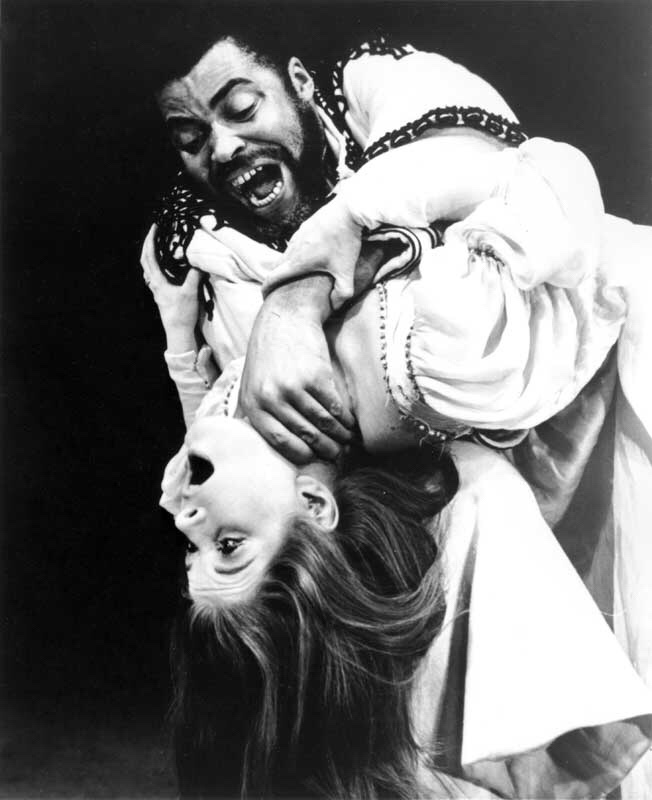
Before he became a star in the Hollywood firmament, Jones was a classically trained actor who starred in many contemporary and classic plays like The Iceman Cometh, The Great White Hope, and a title role in a drama about the great Shakespearean actor, Paul Robeson. In addition, Jones was a regular performer at the New York Shakespeare Festival, starring as King Claudius in Hamlet, Oedipus Rex, The Prince of Morocco in The Merchant of Venice, and like Paul Robeson, Jones was celebrated for his dignified and powerful portrayal of Othello.

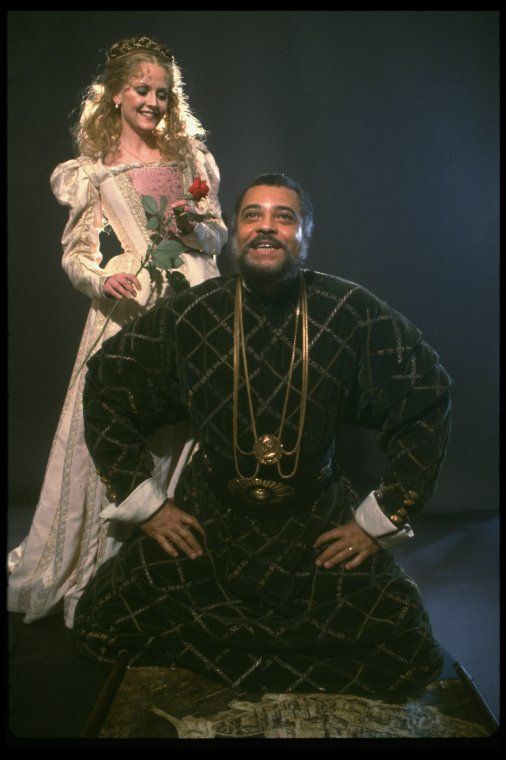
James Earl Jones as Othello and Cecilia Hart as Desdemona in a scene from the Broadway revival of the play “Othello.”
James Earl Jones as Othello and Christopher Plummer as Iago in a scene from the Broadway revival of the play “Othello” (New York 1982)

Mr. Jones commands a full, resonant voice and a supple body, and his jealous rages and frothing frenzy have not only size but also emotional credibility,” .”

The Times wrote in a review in 1964

From Shakespeare to Strangelove

James Earl Jones made the leap from stage and TV (he was one of the first celebrity guests on Sesame Street among others), after a surprising performance. In 1964, he was playing the relatively minor role of the Prince of Morocco in Merchant of Venice at the New York Shakespeare Festival, while George C. Scott played the more iconic role of Shylock. Surprisingly, Director Stanley Kubrick saw both of them and cast them both in Dr. Strangelove, Or: How I Learned to Stop Worrying And Love the Bomb, Jones’ first film role.

This goes to show that success is often not a straight line, that sometimes it’s the people you know and the reputation you garner that gives you success in your field.

Success should not be measured by material possessions, but by the contentment and fulfillment we find within ourselves.

James Earl Jones

My Favorite Performance of Jones

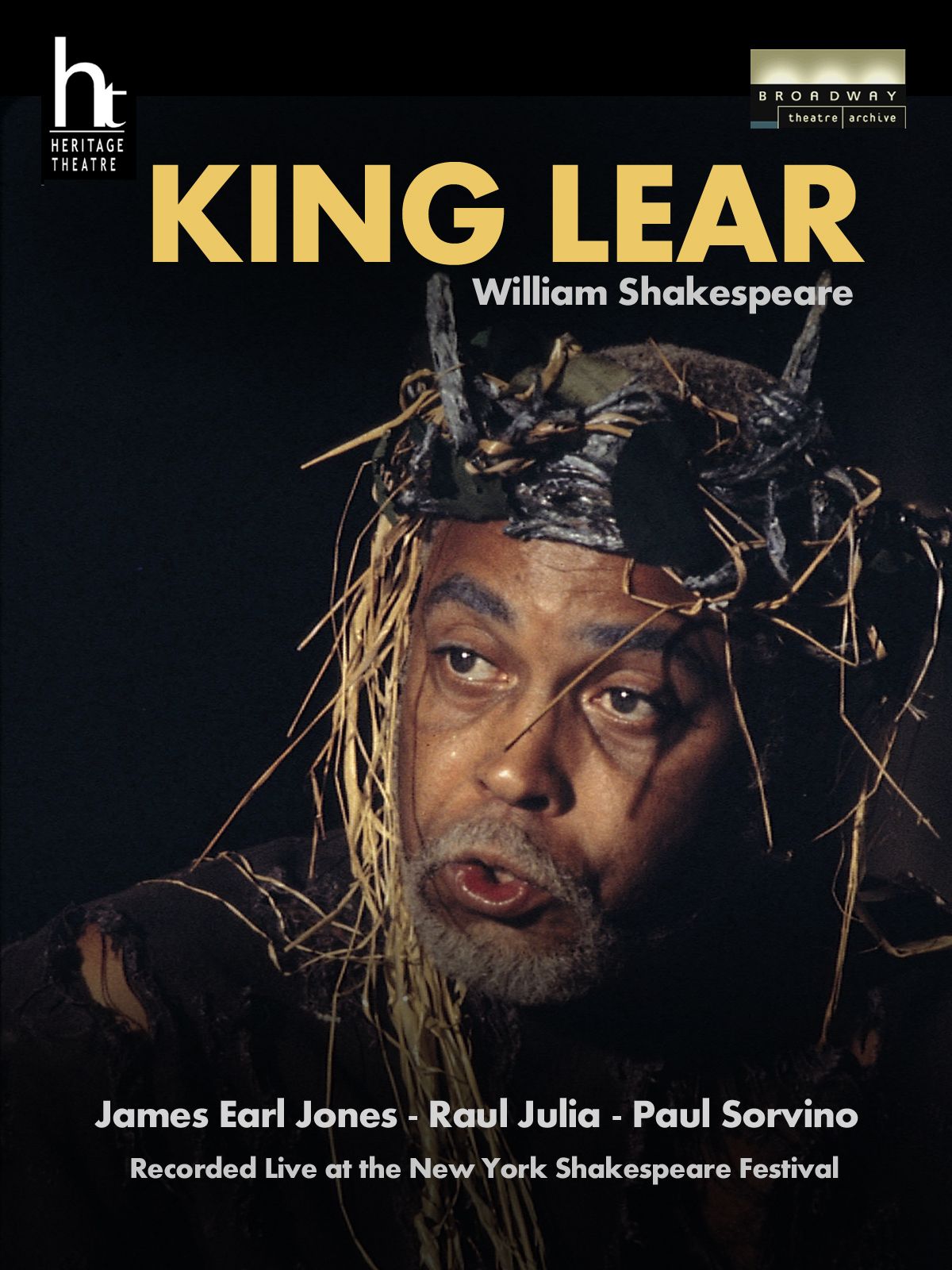
Though his film roles brought him international acclaim, James Earl Jones still performed onstage well into his 80s, including many more memorable performances at the New York Shakespeare Festival, including my favorite performance of all Jones’ stage roles- his role as King Lear. I’ve written before that Jones is still my favorite Lear- he plays the characters’ rage and commanding presence extremely well, but tempers it with the frailty and foolishness of age. You get the sense that this man was a force to be reckoned with, but is now unable to command himself, much less others. Jones’ interpretation apparently changed drastically in rehearsal, as he delved into Lear’s all-too-human flaws, playing him more like a king with dementia than like Mufasa.

Final thoughts

James Earl Jones would be the first to admit that Shakespeare and poetry changed his life. I would argue that the poetic qualities of his voice was what made him such a great actor. He could rumble and smash but also soothe and charm with a single sentence, and that is why I am glad that his voice is now preserved in the halls of Hollywood. Though he was a movie star, his voice was a Shakespearean through and through.

True strength is not in showing power over others, but in conquering your own fears and insecurities.

James Earl Jones

For More Information

https://news.northeastern.edu/2024/09/12/james-earl-jones-voice/

Review: Kenneth Branaugh’s As You Like It

The Concept

According to Branaugh, the idea behind the film was to emphasize beautiful things like tranquility and love, but preserve and heighten the danger of being hunted by a powerful warlord like the Duke

Interview with the director and cast at the Barbican

The Plot Of the Play

Historical Context

Branaugh set the film in 19th century Japan, at a time when English people came to Japan for the first time, and created small English communities in the country. I’ll discuss later that I have very conflicting feelings with this choice, but I will give Branaugh this- it does highlight the fish out of water journey that Rosalind and the other characters go through leaving their homes at court, and becoming enamored with a new country.

The Cast

The cast is full of veteran Shakespeareans and gifted Hollywood stars. Bryce Dallas Howard is charming as Rosalind, and has good chemistry with RSC actor David Oyelowo. I also enjoyed Brian Blessed’s dual role as Duke Senior and Duke Frederick. Kevin Klein is very sincere as Jaques but I wish he had a bit more fun with the over exaggerated melancholy that Jaques puts on. The overall effect of the performances is a sentimental, charming, beautiful, witty group of people who are having a fun time.

My Reaction

The cast is great, the cinematography is stunning, and the music is charming. Overall, Branaugh has done a great job of bringing the spirit of the play alive- that of a sweet, pastoral comedy about love, unrestrained by wealth or status. What I worry about though, is that Branaugh might inadvertently be celebrating colonialism. Yes, Japan is a beautiful country with a  highly sophisticated and rich culture, so it makes sense that English people would be drawn to it. That does not justify the cruel way the English and Americans colonized parts of Japan, made the people mine for gold, and forced them to trade with the west. I worry that, like The Mikado, Branaugh celebrates Japan in a way that makes it seem like westerners were justified in taking so much away from it. I wish the plot had more of a “look but don’t touch” attitude to Japanese culture.

I also question the decision to cast barely any Asian actors. Given the story Branaugh wants to tell, it makes sense to cast non-asian actors as Thr Duke, Rosalind, Celia, and even Orlando, since they are the ones who come to the forest from an English-style court. But the roles of Corin, Silvius, Audry, Phoebe, and even Old Adam are people who are supposed to be familiar with the country, meaning it would make perfect sense to cast Asian actors in these roles. Frankly, there are very few well known Asian actors in Hollywood and I would love to give some of them a chance to shine, especially since Shakespeare has long been a way for actors to show their skills.

In conclusion, I can see why people like this movie and I too enjoy it, despite its questionable subtext. I don’t want to take away anyone’s enjoyment of the film, just to remind people not to be too seduced by the historical practice of taking something “As You Like It”

If you like this analysis, you might be interested in signing up for my Outschool Course on Shakespeare’s Comedies. Link down below. Share this class with a friend and you will get $20 USD off!
You’ll also get $20 USD when you sign up with your link and take their first class!

https://outschool.com/classes/shakespeares-comic-plays-868BR5hg?sectionUid=420e2feb-050f-456b-8d06-6510f6b9ad2c&usid=MaRDyJ13&signup=true&utm_campaign=share_activity_link

A Midsummer Night’s Dream Graphic Novel

  1. Name: A Midsummer Night’s Dream by William Shakespeare. Adapted by Nel Yomtov (Adaptor), and Berenice Muniz (illustrator)
  2. Media: Graphic Novel compilation, with accompanying website https://www.mangashakespeare.com/titles/midsummer.html
  3. Ages: Pre Teen- teen. The story is highly condensed so older readers might want a more in-depth adaptation to understand the themes and ideas of the plot.
  4. Premise: This graphic novel is a good introduction to “A Midsummer Night’s Dream.” It tells the bare minimum of the story with very little dialogue and almost none of the original text. Most of the story is conveyed through the visual medium.

ABOUT THE ILLUSTRATORS (Reprinted from the graphic novel)

https://www.behance.net/berelince?locale=en_US
Berenice Muniz is a graphic designer and illustrator
from Monterrey, Mexico. In the past, she has done
work for publicity agencies, art exhibitions, and
she’s even created her own webcomic. These days,
Berenice is devoted to illustrating comics as part of
the CGraphikslava crew. In her spare time, “Bere”
loves to draw, read manga, watch animated movies,
play videogames, and kill zombies
Fares Maese is a graphic designer and illustrator. He
has worked as a colorist for Marvel Comics and as a
concept artist for the card and role-playing games
Pathfinder and Warhammer. Fares loves spending
time playing video games with his Graphikslava
comrades, and he’s an awesome drum player: https://faresmaese.artstation.com/

About the Retelling Author


The career path of Nel Yomtov has taken him from
the halls of Marvel Comics, as an editor, writer,
and colorist, to the world of toy development. He
then became editorial and art director at a children’s
nonfiction book publisher, and now Nel is a writer and
editor of books, websites, and comics for children. A
harmonica-honking blues enthusiast, Nel lives in
New York with his wife, Nancy. They have a son. Jess.

mY rEACTION

I read this version to my five year old son and he enjoyed the colors and characters, which is why I feel confident recommending this version to younger children. It won’t help you pass a test on Midsummer and you won’t get the whole story. But you might get a tantalizing glimpse of Shakespeare’s world of fairies, lovers, and funny fools and honestly, that’s fine with me. As I’ve stated before, parody and short pop-culture adaptations of Shakespeare are great ways to connect with young people, and I see this book as a tool to do just that.

tECHNICAL eXECUTION

Character Design. It’s interesting to see the difference in style between this version, and the Manga Shakespeare version I previously read. That one was very much inspired by the Shoujo manga style, which emphasizes drama and relationships. This version’s drawings are softer, more cartoonish, and the expressions are less stiff, (except for Oberon, who is drawn very austerely). I particularly like the design for Puck with his big mischievous eyes and squat, childlike shape. I would argue however that the lovers and Mechanicals aren’t distinct enough, which is a problem since they are the most important characters.

The Adaptation

Like I said, this is a bare minimum adaptation of the play. None of Shakespeare’s text is used and the lines and speeches are cut liberally. The entire book is only 77 pages which of course means, that there are a lot of cuts. There’s no mention of the Indian boy, Titania’s tiff with Oberon, Philostrate, the other fairies, and all the great speeches are cut. This version is focused entirely on the plot, and it cuts it quite efficiently. To demonstrate this, below on the left is a panel that shows how Lysander and Hermia express their frustration with not being allowed to marry. On the right is the original text of the scene.

Ay me! for aught that I could ever read,
Could ever hear by tale or history,
The course of true love never did run smooth;
But, either it was different in blood,
Lysander. Or else misgraffed in respect of years,
Lysander. Or else it stood upon the choice of friends,
Or, if there were a sympathy in choice,
War, death, or sickness did lay siege to it,
Making it momentany as a sound,
Swift as a shadow, short as any dream;
Brief as the lightning in the collied night,
That, in a spleen, unfolds both heaven and earth,
And ere a man hath power to say ‘Behold!’
The jaws of darkness do devour it up: So quick bright things come to confusion.

The Colors

The colors are very beautiful. Other manga stories have colorful title pages but no color in the panels. This comic is alive with color and the colors help tell the story. Athens represents the world of the daytime, so the colors are very warm and vibrant. In the nighttime, the colors are cool and the characters are drawn with very sharp lines to make sure they don’t fade into the background.

IN Conclusion

This version tells l the story quickly and entertainingly with a vibrant and colorful style that was lacking in the Manga version. Granted, the Manga Shakespeare did allow me to focus on the text more, but I think I actually prefer this version, simply because of its beautiful artwork. Check it out if you get a chance!.