If you’re reading this as I post it, there’s a Shakespearean nerd in your life and your wits are about to turn trying to find a gift. I’ve already written about printed editions of Shakespeare and educational apps, so you can consult those if that’s what you are looking for. Now I’m covering the kinds of stuff that die-hard Shakespeare fans will kill a king and marry with his brother for, basically nerdy swag that no Shakespearean fanatics should be without!
Slings and Arrows
For anyone: Immortal Longings.com- This company is very special to me. If you’ve seen any of my Play Of the Month posts, you’ve seen the gorgeous artwork for Shakespeare’s plays by the artist Elizabeth Schuch. Not only do I love her work, my wife and I put her prints on the decor for our wedding day, and wrapped some of my presents in wrapping paper with her designs on it. If you go to her website, she sells Shakespearean art printed on and inspired by Shakespeare’s plays on everything from tapestries to clothes to iPhone cases. I highly recommend checking her work out, and patronizing it as much as possible: https://society6.com/immortallongings/s?q=popular+framed-prints
I also want to give a shout-out to the website Good Tickle Brain, a weekly Shakespearean comic that satirizes the Bard’s work with love. I feel the best way to introduce anyone, young or old to Shakespeare is through a healthy dose of satire and parody. Mya Gosling loves Shakespeare and it comes through in her simple, funny retellings of his plays. If you go to their shop (spelled Shoppe to appeal to nerds like me), you can get some of her comic books, funny T-shirts, and a few educational posters for teachers too: https://goodticklebrain.com/shoppe/
Adults
The Bard game This is the Monopoly for Shakespeare Nerds- each player pretends to be a theater manager putting on plays in real locations where Shakespeare’s company toured during his lifetime. You make money by reciting speeches or improvising one in the Shakespearean style, or by answering Shakespearean trivia questions. A must-have for any Twelfth Night Party! Review of the game: https://boardgamegeek.com/boardgame/12372/shakespeare-bard-game https://boardgamegeek.com/boardgame/12372/shakespeare-bard-game
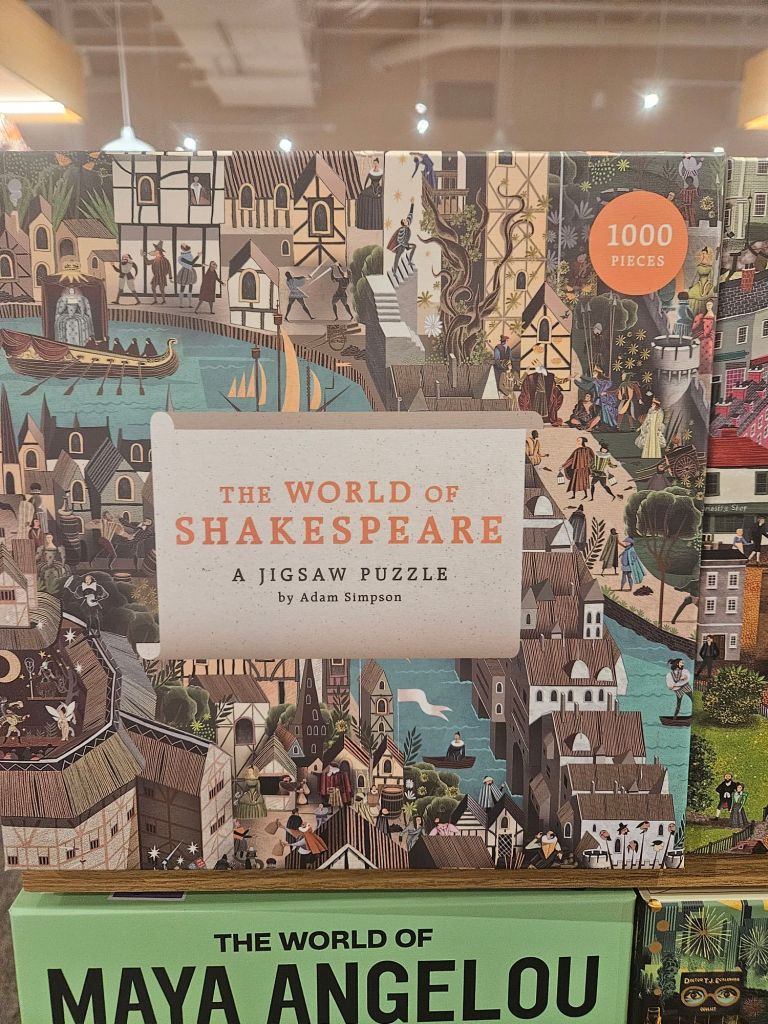
Puzzles- The world of Shakespeare or Build it yourself Globe Theater- I love the idea of learning about history by building it yourself.
Wine🍷 Though I was unable to find actual wine with Shakespeare’s name on it, practically every other part of the wine drinking experience has been branded with Shakespeare- wine bags, glasses, corks and bottle stoppers, and even whole bars! If you spend a few minutes looking online, you can find tons of Shakespearean wine merch. By the way, here’s a convenient list of quotes Shakespeare wrote about alcohol: http://www.shakespeare-online.com/faq/shakespearedrinking.html
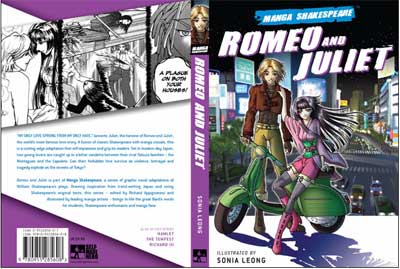
The title page of the clever comic book, “The Manga Shakespeare”
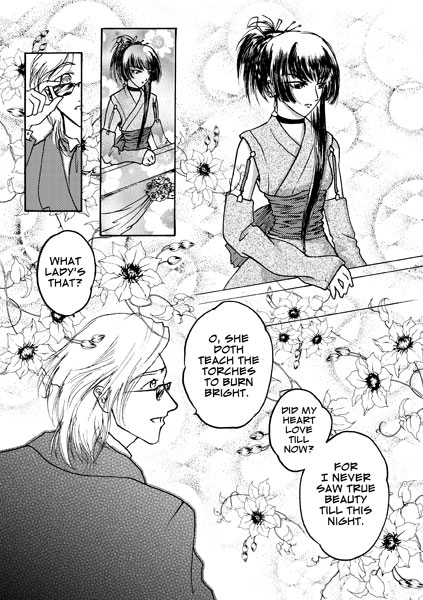
Shakespearean Comic Books. I’ve written reviews about some of these books and I’m very impressed by the artwork and the clever adaptations. Click here to read my review of the Romeo and Juliet Comic.
Kids
Pop-Up Shakespeare by the writers of the Reduced Shakespeare Company. I’m a huge fan of The Reduced Shakespeare Company and they have created an amazing new popup book for kids of the entire Shakespearean cannon!
Board books 📖 Yes, even toddlers can get into Shakespeare. I actually read this to my daughter a lot. It’s not the story of the play, but it does introduce some of the characters and famous lines which can help a child to become familiar with Shakespeare.
Let’s hit each other with Foam Swords (Game)- Most kids get into Shakespeare for the swordplay, and here’s a fun, safe way to do so.
So there are some gift ideas for the Shakespeare nerd in your life. Merry Christmas!
Here’s one more gift that you could give a Shakespeare nerd ages 13-18: A class from ME!
Go to my Outschool profile and Get $5 off the following classes:
With the holidays approaching, why not give your kids the gift of learning Shakespeare in a low-key, no-pressure scenario? I have classes on Shakespeare’s life, Romeo and Juliet, and my celebrated Stage Combat class! Sign up now for all the fun on Outschool.com!
Shakespeare and Star Wars
Class Description: Using self-paced online activities, your child(ren) will compare the plot and characters of Star Wars to Shakespeare’s plays. We will also discuss Shakespeare’s writing by looking at “William Shakespeare’s Star Wars” by Ian Doescher.
Romeo and Juliet Murder Mystery
Course Description: A flexible schedule class that teaches kids the plot and characters of “Romeo and Juliet,” in the context of a detective story where you solve the mystery of the young lovers’ deaths.
Course Descriptions
How to Write Like Shakespeare: Learn the basics of iambic pentameter, sonnet form, and Shakespeare’s dramatic structure, and practice writing Shakespearean speeches.
So, why Ghostbusters? Well, as William Shakespeare’s Star Wars has shown, it’s not only fun to adapt popular stories into Shakespearean parodies, it can also be educational. I knew I wanted to do a short play for my school’s fall festival, but I didn’t think to do “Ghostbusters” until I saw the final joke in the Simpson’s parody of Hamlet, where Homer says: “Son, [Hamlet] is not only a great play, but also became a great movie, called Ghostbusters!”
This joke got me thinking- Hamlet has a comic scene where the prince and his two friends are running around the stage away from a ghost, one that refuses to speak to them and then terrifies them. This reminds me of the moment where the ghost of the librarian shushes the heroes, and becomes a hideous creature:
The librarian in Ghostbusters is similar to the Ghost of Hamlet’s Father.
From this realization. I took it as a personal challenge to adapt Ghostbusters into a one-act stage play with as much Shakespearean dialogue as possible.
My Process
Re-writing the script of a movie into a Shakespeare text required me to overhaul the story of Ghostbusters, as well as retrofitting Shakespearean lines and speeches from Hamlet, Macbeth, Henry IV & Henry V. I knew I wanted to freely cut-and-paste from Shakespeare, as if he’d written the original Ghostbusters. The result is a sort of stitched together blanket of Shakespeare lines, lines adapted from Ghostbusters, and some lines I created myself.
The Outline
Like I said, I kept the story limited to how the four Ghostbusters learn that ghosts are real, become professional ghost catchers, and then receive a call from a damsel in distress (Ms. Dana Barrett), who allows them to become heroes by defeating the ghost that has possessed her. I also decided to use the commercial in the movie as a framing device:
In my version, the Ghostbusters start by doing a commercial that then becomes a flashback where the heroes recap everything that has happened to them over the past week. I then ended the play by joking referring to the play as “A very long commercial.”
Scenes I Included/ Scenes I Cut
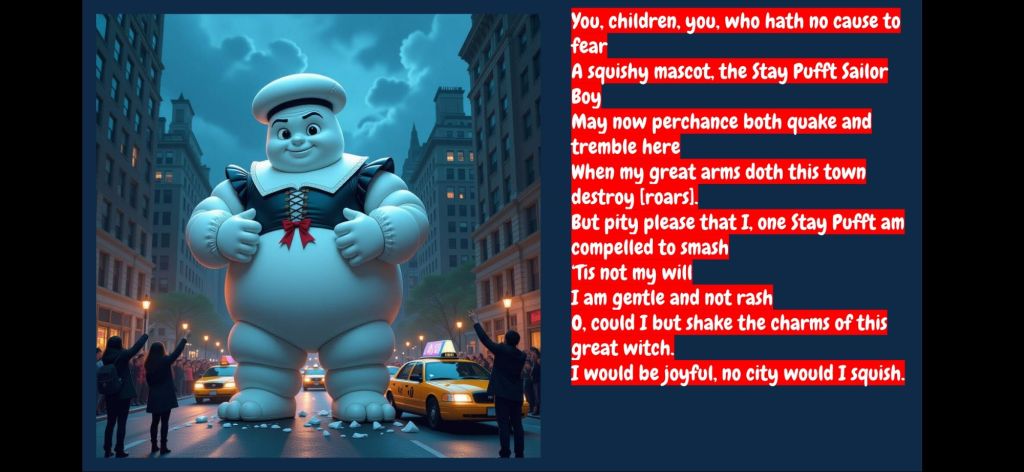
I only had 30 minutes allocated for my show, so I knew I’d have to pare down the story to its bare bones. This meant I had to eliminate a lot of subplots and characters and condense several scenes. As much as I love Walter Peck, Dean Jaeger, Louis Tully, Janine Melnitz, and the guy who gets electrocuted, they are not absolutely essential to the plot, so I cut them from my version. I also combined the characters of Dana and Gozer, eliminating the two terror dogs and limiting the antagonists to Gozer and the Stay Pufft Marshmallow Man. So I watched the film a few times, and created an outline of just 7 scenes.
Character Models
One thing I’ve said again and again is that Shakespeare’s characters are all based on archetypes that we see everywhere throughout literature, theater, and yes, movies. While I was watching Ghostbusters, I tried to find the Shakespearean archetypes that match the best with the characters in the movie:
Ray Stantz- Hamlet from Hamlet– Ray is a bookish man who is obsessed with death and with the occult, which makes him very much like the scholarly Prince Hamlet. He’s also a man on a mission to try and understand the supernatural and help keep it from destroying our world. Dr. Venkman describes him as “The heart of the Ghostbusters”, and that humorous heart gets him into trouble sometimes.
Egon Spangler- Horatio from Hamlet If Ray is the heart of the team, Egon is the brain. He is the no-nonsense scientist who provides the team with data and equipment to help them fight ghosts effectively, much like how Horatio reports to Hamlet that his father’s ghost has returned from the grave.
Dr. Venkman– Sir John Falstaff/ King Henry V
Dana Barret- Ophelia from Hamlet
Gozer– Hecate from Macbeth
The Stay Pufft Marshmallow Man- Snug the Joiner from A Midsummer Night’s Dream
Sneak Peak
Here’s one of the scenes I wrote, with the original scene for context
[The ghostbusters climb the stairway to the penthouse, where Gozer is sitting in a cloud. They have been going for a while and are clearly tired]. Venkman: Though I have not known fair Dana long, I know she must be a virtuous maid. Ascend this penthouse tower and let’s rescue she! Like to the Knights of ancient chivalry! Egon: These apparitions whizzing in the air Give so much light that I may read by them. [They reach the top and behold Gozer] Ray: I am resolved to speak to Gozer. This is the latest parle we will admit. Gozer: Art thou a god? Ray: Nay. Gozer: Then perish, half-man! Winston: Enough Ray of thy diplomacy! Speak, thou proton pack for me! [He fires, then the rest join in] Gozer disappears Venkman: The sky hath bubbles as the water hath, and she be one of them! Gozer [in Voice Over]: Sub creatures! Hark! Tis time! Pick the Destructor’s form Be it a Goblin damned or angel bright! Tornado or a earthy bright Or greatest Monkey with an appetite! Winson: Our thoughts contain the form that seals our doom? Then make them blank as a new-made room! [They all gesture to their heads as if pushing thoughts out] Gozer: Thy choice is made. Prepare to meet thy doom! Venkman: Nay! I chose nothing Winston: Nor I! Egon: Nor I [Pause] All: Ray? Ray: Twas not my fault! It popped into my mind Venkman: What? What hast popped in? Egon: LOOOK!!!
I’ve criticized Ms Swift in the past, offering praise for her work as a whole, but not when she tackled Romeo and Juliet in “Love Story.” So, when I heard she was making a new song specifically about Ophelia, the young ingenue role in Hamlet, I wasn’t sure what to think. I am pleased to report that Taylor Swift’s song has a masterful grasp of not only Shakespeare, but of many classic iconic ingenues (both real and fictional). And her album, Life of a Showgirl, has a salient point to make about relationships, love, and Ms Swift as a woman and artist.
And I of ladies, most deject and wretched, Have sucked the honey of his music vows. -Hamlet, Act III, Scene i.
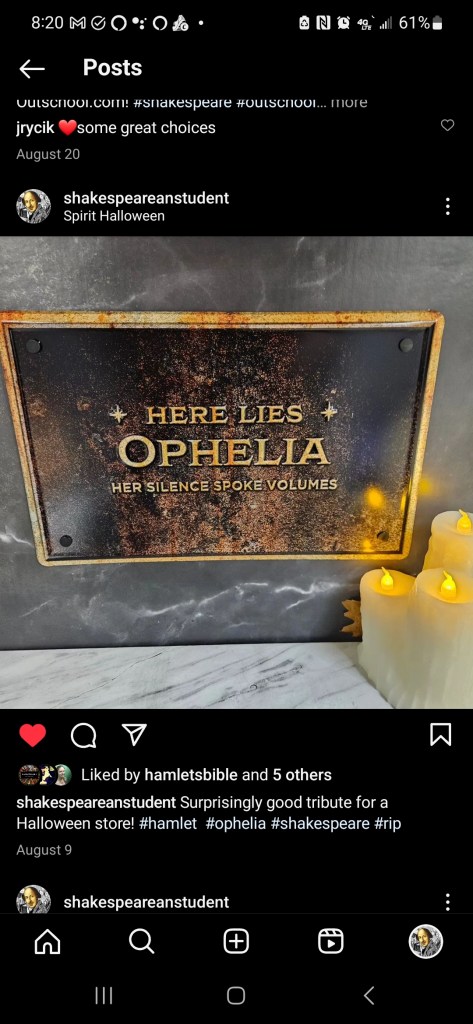
Put quite simply, the fate of Shakespeare’s Ophelia is, bad. In Hamlet, Ophelia is the prince’s girlfriend. Over the course of the play, her brother Laertes leaves her for France and Hamlet breaks up with her before accidentally killing her father, Polonius. Ophelia cannot take the strain of all this misery, and she loses her mind, unable to communicate except through flowers or little songs, as this clip from Slings and Arrows shows:
Geoffrey Tennent (Paul Gross) explains Ophelia’s torment to young actress Claire
Once Ophelia loses her mind, she dies by drowning. Hamlet’s mother, Queen Gertrude relates how she was picking flowers for garlands (flower crowns), and the branch she was holding broke. She was then weighed down by her gown and sank into the river:
Gertrude: There is a willow grows aslant a brook, That shows his hoar leaves in the glassy stream. There with fantastic garlands did she come Of crowflowers, nettles, daisies, and long purples, There on the pendant boughs her coronet weeds Clamb’ring to hang, an envious sliver broke, When down her weedy trophies and herself Fell in the weeping brook. Her clothes spread wide And, mermaid-like, awhile they bore her up; Which time she chanted snatches of old tunes, As one incapable of her own distress, Or like a creature native and indued Unto that element; but long it could not be Till that her garments, heavy with their drink, Pull’d the poor wretch from her melodious lay To muddy death.
Hamlet, Act IV, Scene vii.
It’s unclear whether Ophelia committed suicide, died by accident, or if Gertrude actually mercy killed her to end her suffering. In any case, Ophelia lost her family, her mind, and eventually, her life.
Ophelia’s Songs
Like Taylor Swift herself, Ophelia deals with her pain through songs and they range from upbeat and pretty, to deeply nihilistic:
And will he not come again? And will he not come again? No, no, he is dead; Go to thy deathbed; He never will come again. His beard was as white as snow, All flaxen was his poll. He is gone, he is gone, And we cast away moan. God ‘a’mercy on his soul! And of all Christian souls, I pray God. God b’ wi’ you. -Hamlet Act IV, Scene v.
It’s the actress’ ultimate test to determine what these songs mean, (“Though this be madness, yet there’s method in it)”. I’ve seen some Ophelias who seem vapid, and consumed by melancholy. Others are full of rage, particularly at Hamlet and Claudius, since they are responsible for her dire fate. As you probably know, if you read my review of Branaugh’s Hamlet, my favorite Ophelia is Kate Winslet, who manages to be all of these and more. Her songs tell the story of a woman who followed her heart, and ended up broken for it; a fate Taylor Swift knows all too well.
TS’ Literary Allusions
The eldest daughter of a nobleman Ophelia lived in fantasy But love was a cold bed full of scorpions The venom stole her sanity And if you’d never come for me I might’ve lingered in purgatory You wrap around me like a chain, a crown, a vine Pulling me into the fire All that time I sat alone in my tower You were just honing your powers Now I can see it all (see it all) Late one night You dug me out of my grave and Saved my heart from the fate of Ophelia
The central conceit of the song is how an unnamed person stopped the speaker from suffering the same fate as Ophelia. The song suggests that Ophelia’s first mistake was that she was too naive “living in a fantasy.” One thing Ophelia’s father and brother repeatedly impress on her is that she cannot be the wife of a prince like Hamlet, since (like so many Disney characters), she isn’t actually royal. There is a deep danger to this unequal power dynamic, which explains her image of a bed full of scorpions, (which by the way, could be cribbed from Macbeth’s line “O full of scorpions is my mind, dear wife”).
It’s particularly interesting that Swift uses allusions, not just to Ophelia, but to other characters as well: Her imagery of venom and purgatory suggests the Ghost of Hamlet’s father, who alludes to being stung by a serpent, and who might be trapped in purgatory. Like Ophelia, the ghost is languishing and suffering because of a man’s crime. I love how she intertwines the ghost and Ophelia with the metaphor of a chain, crown, and vine. While the ghost suffers due to his crown and his chains, one would wish someone would come up to Ophelia with a rope or vine, to save her from her drowning death.
The final image I’d like to discuss is the notion of being pulled out of a grave. Obviously, the Ghost comes out of his grave, but so does Ophelia! In Act V, Scene i, her brother Laertes jumps into his sister’s open grave and fights with Hamlet over her corpse!
Laertes. Lay her i’ th’ earth; And from her fair and unpolluted flesh May violets spring! I tell thee, churlish priest, A minist’ring angel shall my sister be When thou liest howling.
Gertrude. Sweets to the sweet! Farewell. [Scatters flowers.] I hop’d thou shouldst have been my Hamlet’s wife;3580 I thought thy bride-bed to have deck’d, sweet maid, And not have strew’d thy grave.
Laertes. O, treble woe Fall ten times treble on that cursed head Whose wicked deed thy most ingenious sense Depriv’d thee of! Hold off the earth awhile, Till I have caught her once more in mine arms. [Leaps in the grave.] Now pile your dust upon the quick and dead Till of this flat a mountain you have made T’ o’ertop old Pelion or the skyish head Of blue Olympus.
Hamlet. [comes forward] What is he whose grief Bears such an emphasis? whose phrase of sorrow Conjures the wand’ring stars, and makes them stand Like wonder-wounded hearers? This is I, Hamlet the Dane. [Leaps in after Laertes.]
Hamlet. Thou pray’st not well. I prithee take thy fingers from my throat; For, though I am not splenitive and rash, Yet have I in me something dangerous, Which let thy wisdom fear. Hold off thy hand!
The question is, who is this mystery figure who metaphorically pulled Taylor Swift from her grave? To answer that, we need to look at the music video itself.
Imagery In The Video
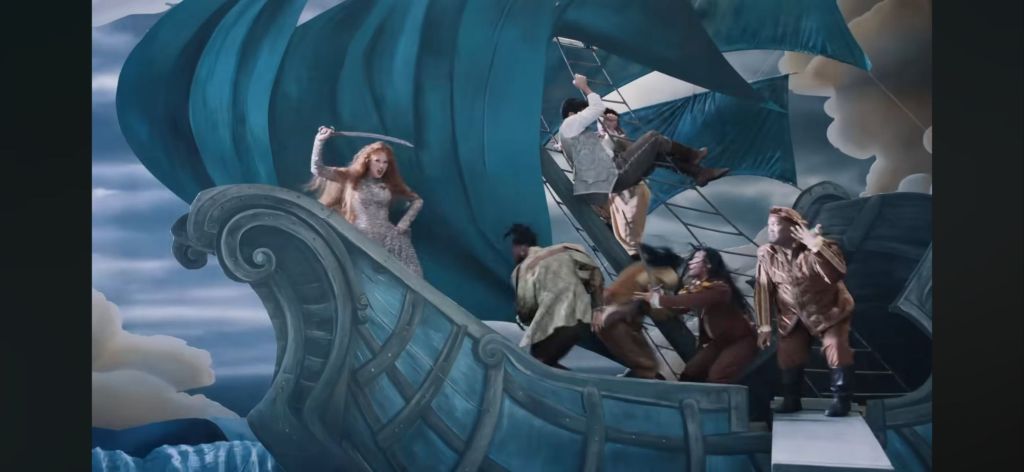
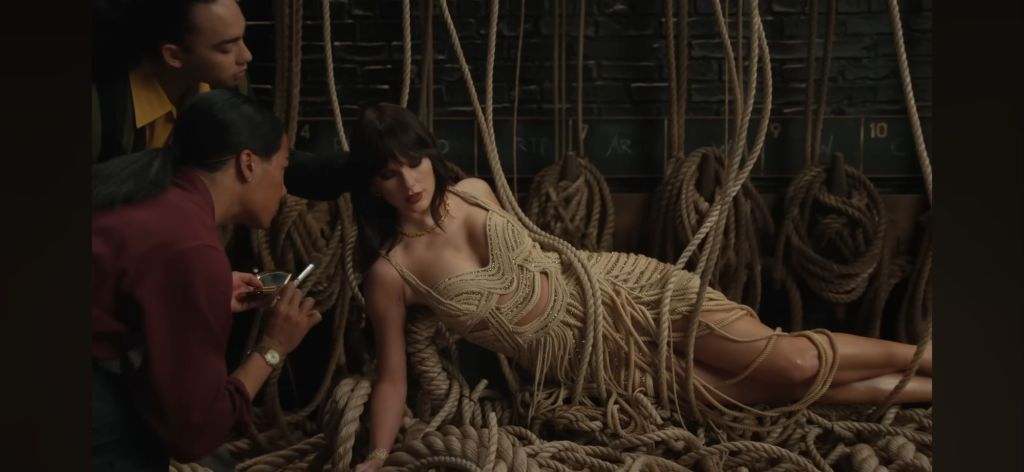
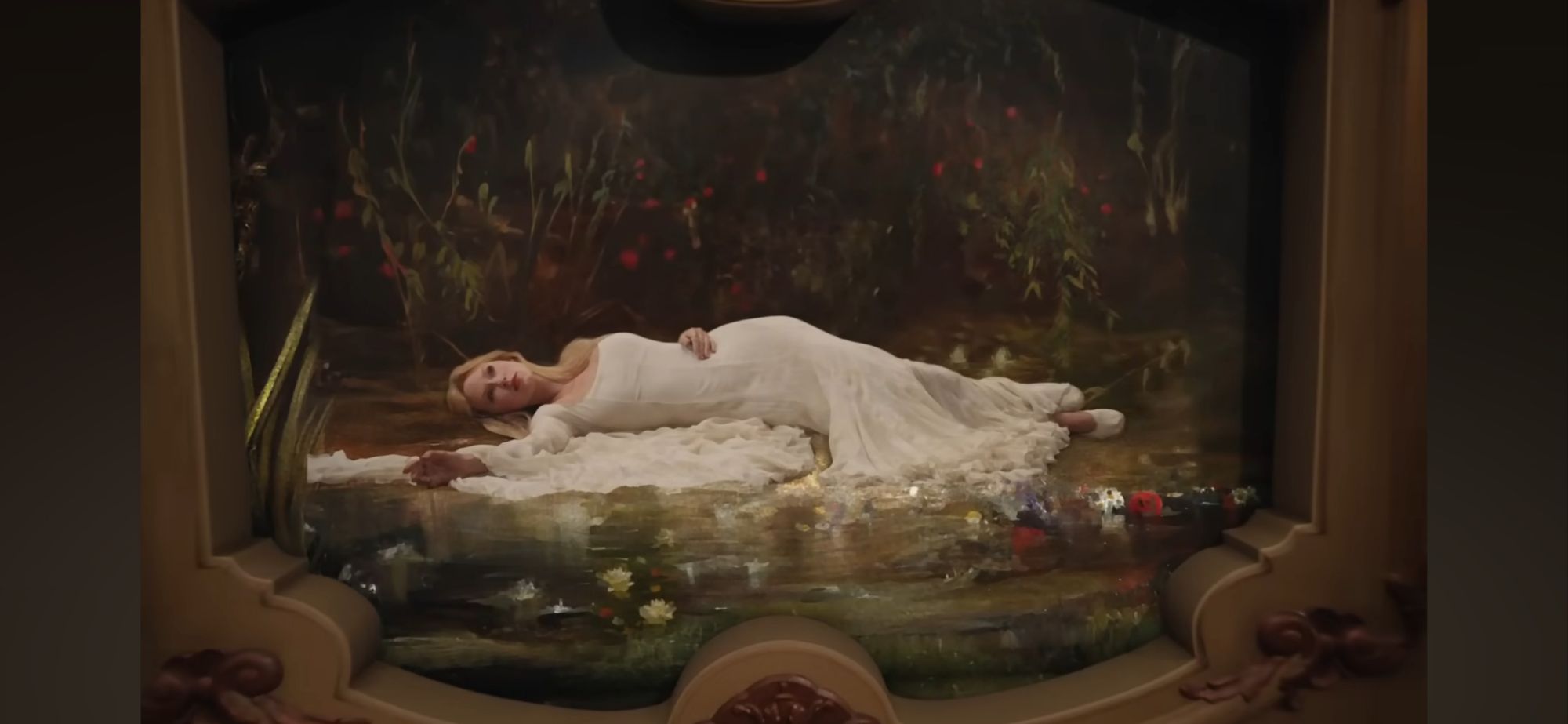
Taylor Swift poses as Ophelia in her 2025 music video Taylor stands her ground as a pirate/ siren in “The Fate of Ophelia”Taylor seems tied up backstage in The Fate Of OpheliaTaylor dons fiery red and seems happy to be a showgirl again
Taylor As Ophelia
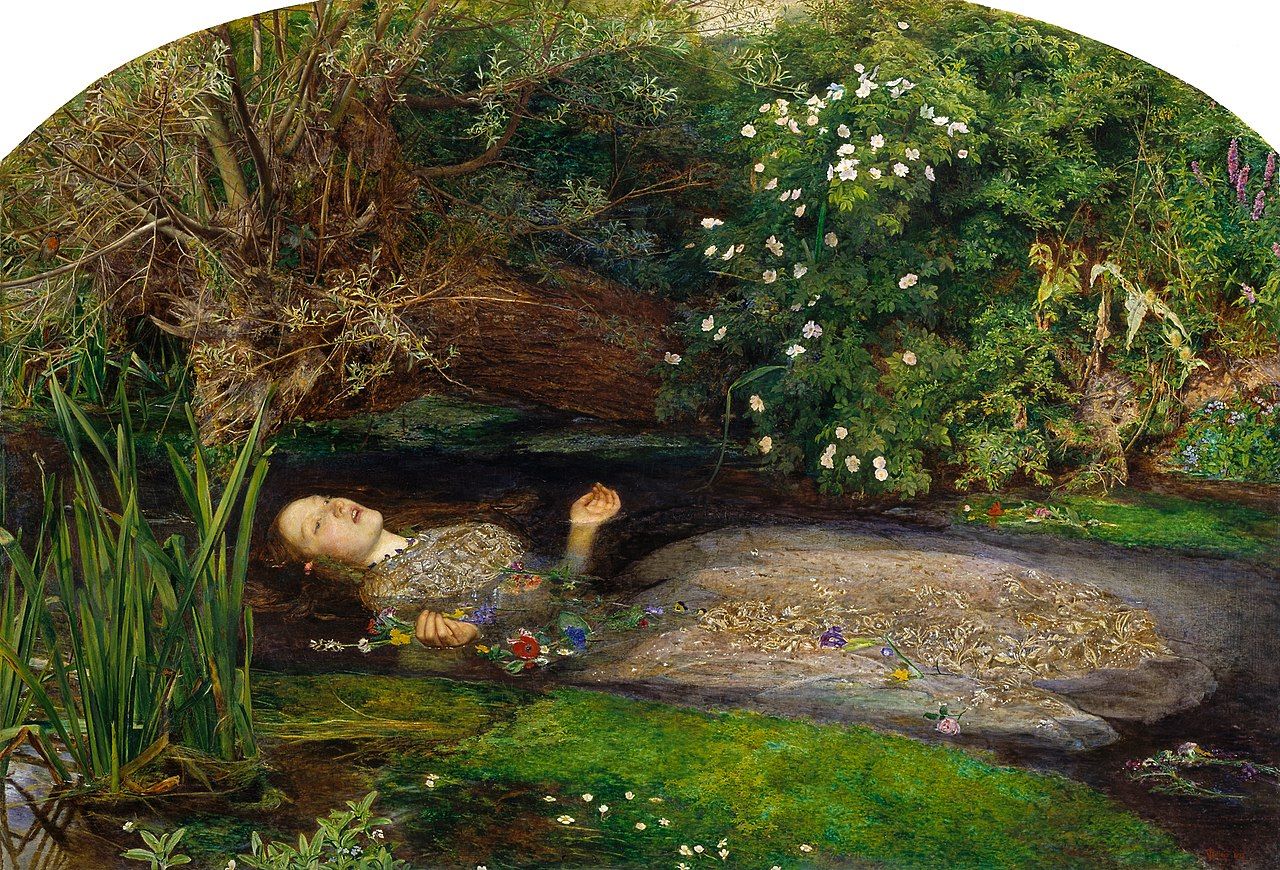
I certainly expected Taylor to appear in an Ophelia-like pose, and I suspected she’d base it on the famous 1851 painting Ophelia by John Everett Millais. For the record though, apparently the pose is based on a lesser-known painting by Friedrich Heyser from 1900 .
Ms Swift establishes who Ophelia is using a pose reminiscent of these late 19th and early 20th century paintings. They make Ophelia into a sort of fairy tale character. The lighting is bright and ethereal. The colors suggest a literal watercolor painting, which is important, given the motifs of water and fire in the song. Taylor seems placid, dreamy, and extremely passive.
Taylor as a mermaid/siren
Taylor as a Mermaid/ Siren
Taylor’s character keeps changing through the video- she goes from Ophelia “A creature incapable of her own distress,” into more active and more assertive characters. First, a mermaid. This isn’t so much of a departure from Shakespeare since, as you saw above, Gertrude compares her to a mermaid. Like Ophelia, mermaids are singers with strong connections to water, who sometimes give their lives for humans, (like in the iconic Hans Christian Anderson story The Little Mermaid).
Taylor stands her ground as a pirate/ siren in “The Fate of Ophelia”
However, in ancient Greek mythology, mermaids are known as sirens, and they can drive men mad with their songs. Taylor’s character has turned tables on Ophelia and is taking control of the men in her life in this image. She becomes a sort of siren/ pirate, using a sword to keep men at bay. This also echoes how, after being sent oversees, Hamlet himself boards a pirate ship and makes the pirates take him back to Denmark, so he can finally take revenge on Claudius. Of course, Taylor Swift wouldn’t settle for the supporting character of Ophelia, and has recast herself as the starring role.
Taylor seems tied up backstage in The Fate Of Ophelia
Waiting In the Wings
The title of Taylor’s album is The Life of a Showgirl, so the whole song is an homage to Taylor’s chameleon like persona, which evocatively, (and provocatively), come through in this shot. The strategic ropes and the bobbed haircut suggest a 1920s flapper, one of the most famous kinds of showgirls. In addition, Taylor is backstage in a dark theater, where ropes and pulleys are frequently used in stagecraft.
The shot and the album as a whole also explore the joys and sorrows of celebrity. Taylor is literally tied to the stage. Perhaps she sees herself as part of the scenery, not a real person. One might even recall how Prospero, one of Shakespeare’s self-insert characters, recalls how ephemeral the illusion of theater and film can be:
Our revels now are ended. These our actors, As I foretold you, were all spirits and1880 Are melted into air, into thin air: And, like the baseless fabric of this vision, The cloud-capp’d towers, the gorgeous palaces, The solemn temples, the great globe itself, Ye all which it inherit, shall dissolve1885 And, like this insubstantial pageant faded, Leave not a rack behind.
I interpret this image as Taylor enjoying the glamor and creativity of the limelight, but also feeling lonely and not totally fulfilling. A showgirl is still not totally alive, without an audience.
Taylor dons fiery red and seems happy to be a showgirl again
The Fire
At the climax of the song, Taylor’s persona becomes a dynamic showgirl in fiery red and orange; the complete opposite of the quiet and passive Ophelia. The song itself makes a reference to being pulled from the water into the fire- from cold, lonely death, to dazzling life. She seems to be happy to be a star and, for the first time, she is sharing the stage. Clearly, finding support and backup (pun intended), is what saves her from the fate of Ophelia. The question remains though, who saved her?
Ophelia In Art
Video from the Tate Modern art gallery about “Ophelia” by John Everett Millais
Ope not thy lips thou foolish one Nor turn to me thy face The blasts of heaven shall strike thee down ere I will give thee grace” –Elizabeth Siddall
Even famous paintings about Ophelia have a tragic story- I mentioned the famous John Millais painting, in which the model for Ophelia was a poet named Elizabeth Siddall. As you can see in the video above, Siddell modeled for Millais in a bathtub for hours in increasingly cold water, leaving her pale and her lips blue. Swift also alludes to Siddall in the shots where she herself is in a bathtub. Here yet again, we have a woman whose every action is dictated by a man, one who cares little for her physical and mental health.
Mystery Solved?
So, who is the mystery man who saved Taylor from the fate of Ophelia? Well, even though the song need not be autobiographical, since the song’s release coincides with her recent engagement, it’s easy to read the song as an ode to Taylor’s fiance, Travis Kelce.
My Take
I know I have been critical of TSs’ interpretation of Shakespeare in the past, but I think she nailed it this time. Her song, and album is a joyous celebration of a healthy relationship, one devoid of jealousy or control. Taylor is celebrating that she can truly be herself around Travis, and that means both her public persona as a superstar, and her private persona that is known only to Travis and herself. Ophelia represents the person Taylor feels pressured to be- a face frozen in time and cold water. Taylor wants a more active persona, and her fiance gives her the courage to do so!
Dream Album-
Now that Ms Swift has tackled both Romeo and Juliet, and Hamlet, I would adore it if she wrote songs for more iconic Shakespearean characters:
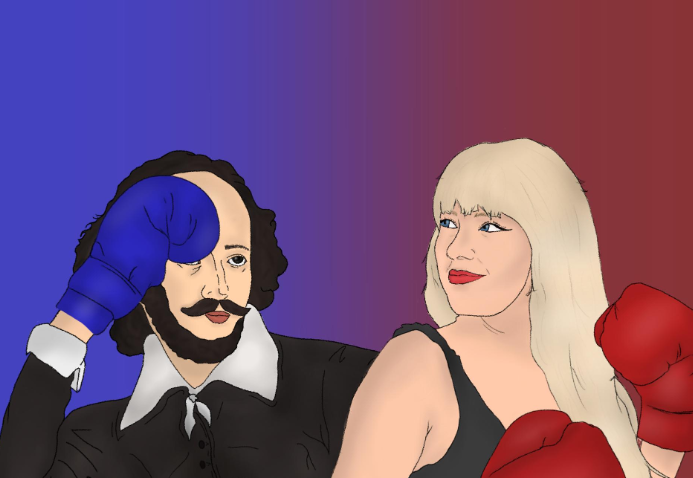
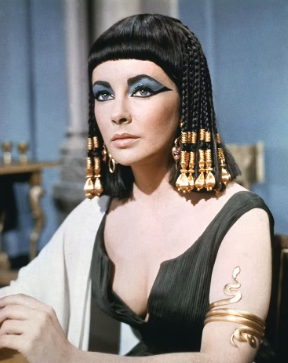
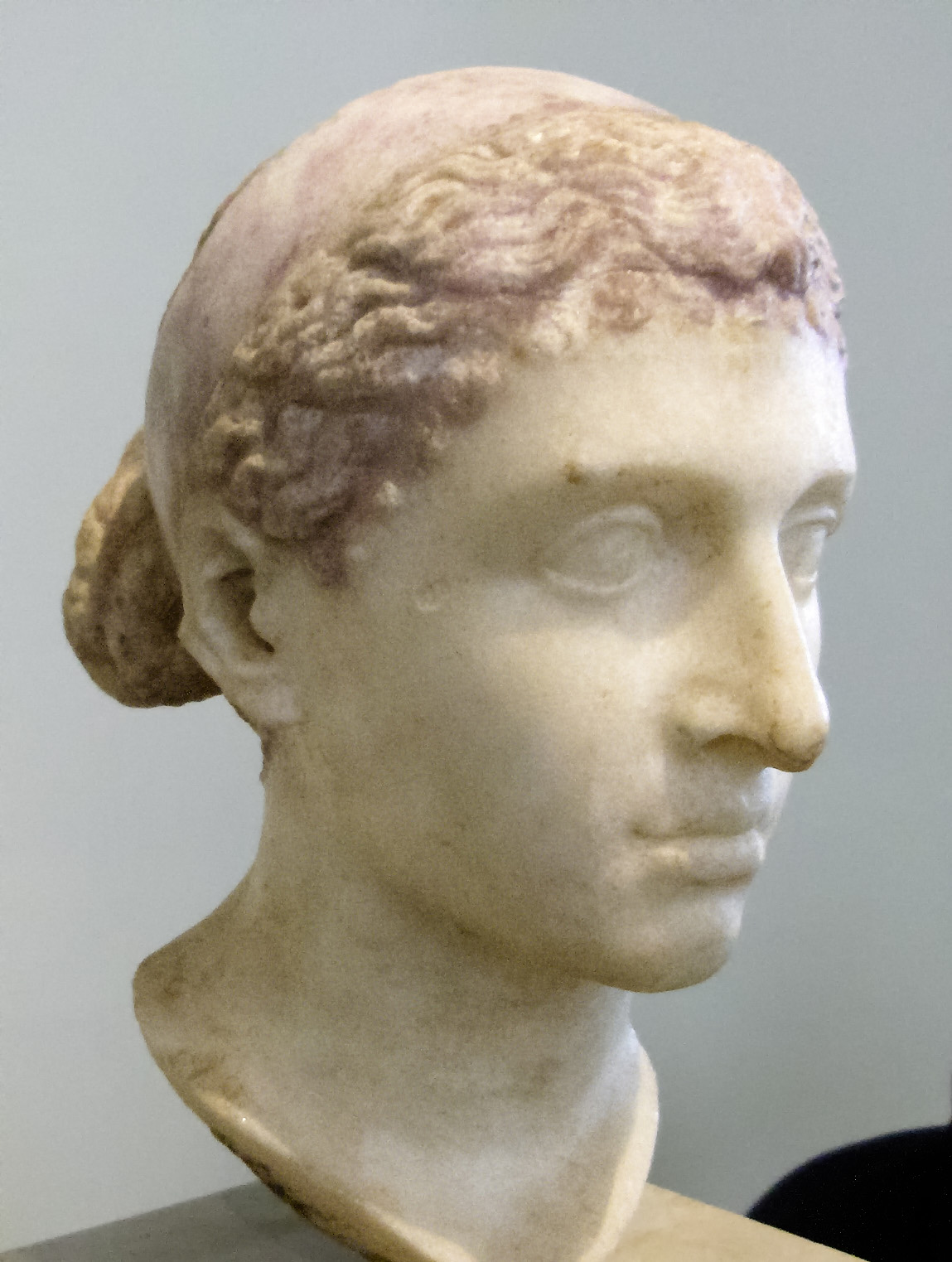
Antony and Cleopatra- who better to write about the original power couple than Tay Tay!
Twelfth Night- Both Viola and Taylor know what being a tomboy feels like
Lady Anne from Richard III Let’s be honest, Taylor is known for her celebrity feuds, and who had more beef than the Yorkists and the Lancastrians?
Do you agree with my analysis? If you were TS, what Shakespeare plays would you write about? Let me know in the comments!
Lots of teachers play this game and there are many Youtube videos of people playing it. Occassionally, even Shakespearean actors have played it:
There are also online quiz forms available on Quizlet and Gimkit. You can also show your students this video below:
Richard III and Henry Tudor- Bad Blood
Macbeth- Look What You Made Me Do
King Lear- Anti-hero
Lady Macbeth- No Body No Crime
Julius Caesar- My Tears Ricochet
Richard II- Castles Crumbling
Antony and Cleopatra- Style
Mercutio from “Romeo and Juliet”- 22 and “Shake it Off”
Goneril from “King Lear”- Blank Space
Do you agree with my list?
Teachers are increasingly seeing the value in analyzing Taylor Swift with their students to teach them about literature. What a gift Ms Swift has given us with this song!
I’m beyond excited that The Deleclrte Theater is continuing their tradition of producing high-quality, free Shakespeare in the Park, and then giving everyone the chance to see it via streaming over PBS.
This summer’s show is Twelfth Night, my favorite Shakespearean comedy, with an all-star cast
I’m so excited to see Peter Dinklage as Malvolio, one of my favorite characters in Shakespeare, and one that I have played myself. I’m also very interested in Sandra Oh’s interpretation of Olivia. She has proven herself in both dramatic and comic roles, which works well for Olivia, a character who starts out in mourning and ends up madly in love.
The performance I am the most excited about, though, is Lupita N’ongo as Viola. I’ve said before that Viola is one of the greatest characters in all of Shakespeare, so I can’t wait to see her portrayed by Lupita N’ongo, an actress I greatly admire. I loved her performances in Avengers Endgame, Us, and my whole family adored her excellent voice work in The Wild Robot. She has simultaneously a childlike enthusiasm, and a calm and stoicism that I’m sure will translate excellently for Viola, who survives a shipwreck and losing her brother (she thinks) through courage and humor.
Hopefully, I can stream this program soon, and give you a full review. In the meantime, enjoy my past posts and videos about Twelfth Night
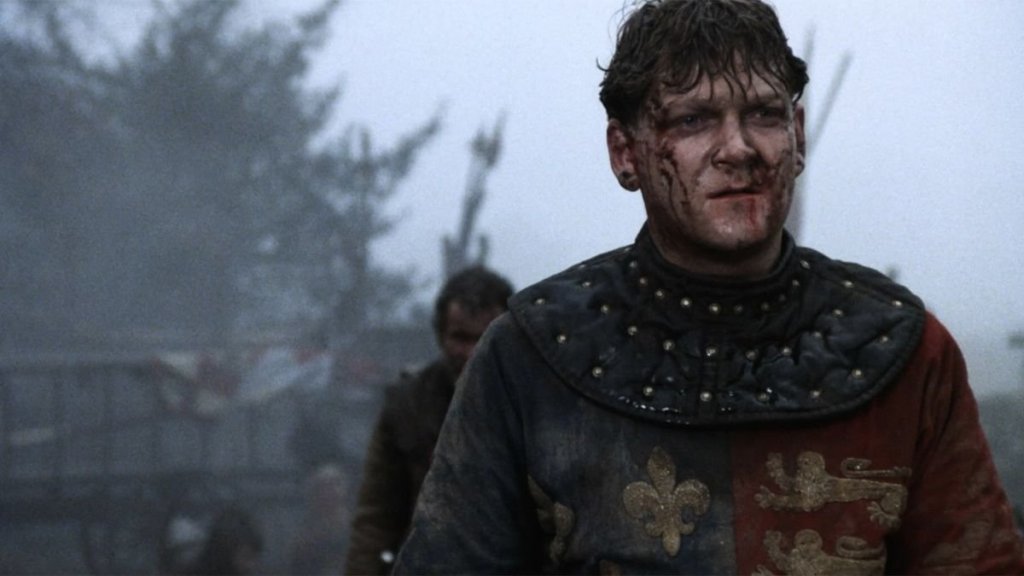
Kenneth Branaugh as Henry V Laurence Oliver as Henry V
The Characters
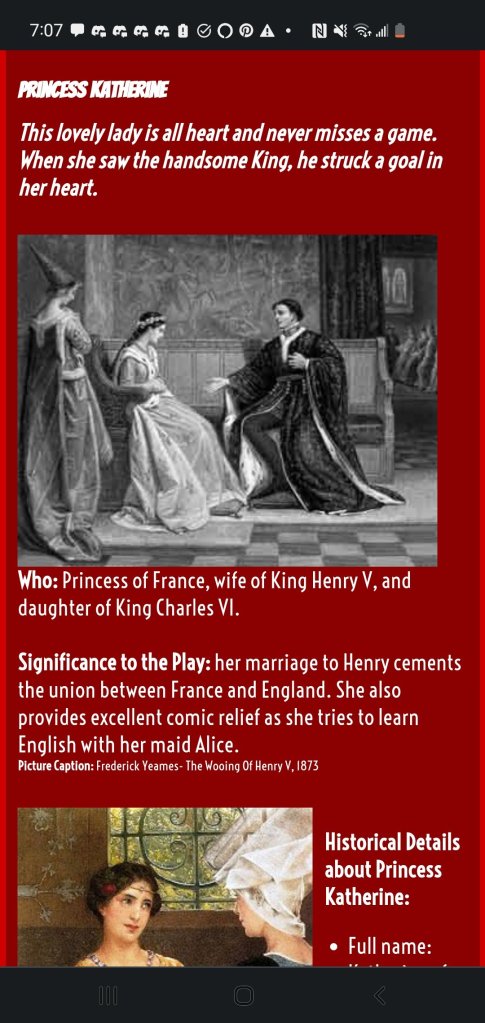
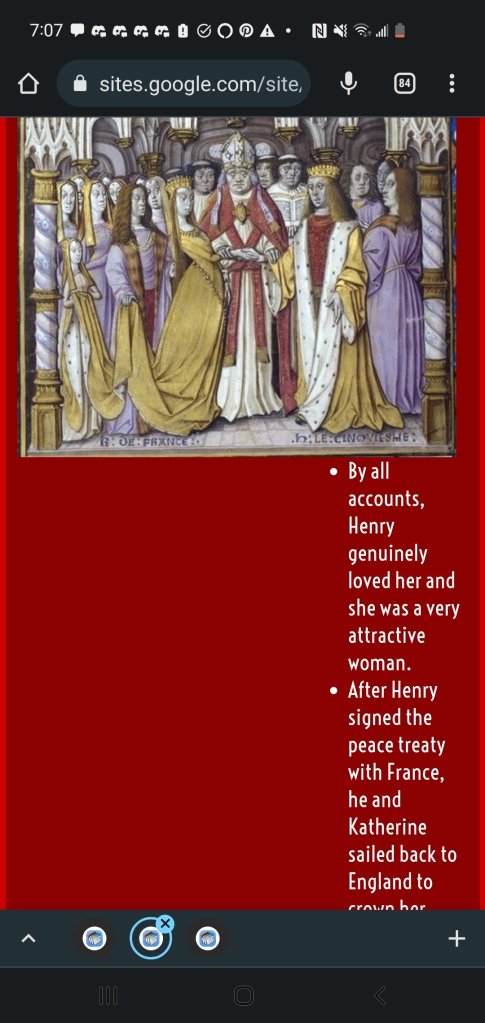
Katharine of Valois
King Henry V
King Henry has just won a decisive victory at the Battle of Agincourt. He is now claiming the crown of France, and Katherine’s hand in marriage. Though he’s proven himself an able soldier and a wise king, he repeatedly stumbles when trying to win Katherine’s heart.
The Text:
Henry V: Fair Katharine, and most fair, Will you agree to teach a soldier terms Such as will enter at a lady’s ear And plead his love-suit to her gentle heart?
Katharine: Your majesty shall mock at me; I cannot speak your England.
Henry V: O fair Katharine, if you will love me soundly with your French heart, I will be glad to hear you confess it brokenly with your English tongue. Do you like me, Kate?
Katharine: Pardonnez-moi, I cannot tell vat is ‘like me.’
Henry V: An angel is like you, Kate, and you are like an angel.
Katharine: O bon Dieu! les langues des hommes sont pleines de tromperies.
Henry V: What say you, fair one? that the tongues of men are full of deceits?
Katherine: Oui, dat de tongues of de mans is be full of deceits:
Henry V: Kate, my wooing is fit for thy understanding: I am glad thou canst speak no better English; for, if thou couldst, thou wouldst find me such a plain king that thou wouldst think I had sold my farm to buy my crown. I know no ways to mince it in love, but directly to say ‘I love you:’ I have no strength in measure, yet a reasonable measure in strength. If I could win a lady at leap-frog, or by vaulting into my saddle with my armour on my back, I should quickly leap into a wife. I speak to thee plain soldier: If thou canst love me for this, take me: take me; and take me, take a soldier; take a soldier, take a king. And what sayest thou then to my love? speak, my fair, and fairly, I pray thee.
Katharine: Is it possible dat I sould love de enemy of France?
Henry V: No; it is not possible you should love the enemy of France, Kate: but, in loving me, you should love the friend of France; for I love France so well that I will not part with a village of it; I will have it all mine: and, Kate, when France is mine and I am yours, then yours is France and you are mine.
Katharine: I cannot tell vat is dat.
Henry V: No, Kate? I will tell thee in French; Je quand sur le possession de France, et quand vous avez le possession de moi,—let me see, what then? Saint Denis be my speed!—donc votre est France et vous etes mienne. It is as easy for me, Kate, to conquer the kingdom as to speak so much more French: I shall never move thee in French, unless it be to laugh at me!
Katharine: Sauf votre honneur, le Francois que vous parlez, il est meilleur que l’Anglois lequel je parle.
Henry V: No, faith, is’t not, Kate: But, Kate, dost thou understand thus much English: canst thou love me?
Katharine: I cannot tell.
Henry V: How answer you, la plus belle Katharine du monde, mon tres cher et devin deesse?
Katharine: Your majestee ave fausse French enough to deceive de most sage demoiselle dat is en France.
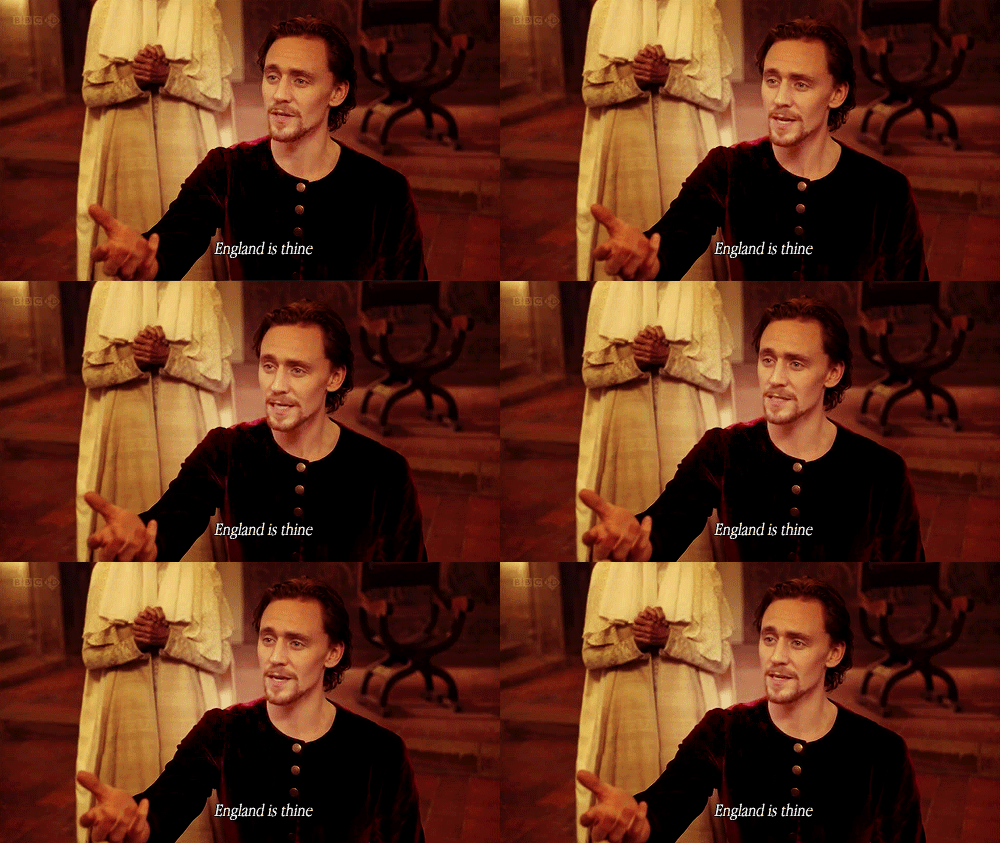
Henry V: Now, fie upon my false French! By mine honour, in true English, I love thee, Kate: by which honour I dare not swear thou lovest me; yet my blood begins to flatter me that thou dost, Put off your maiden blushes; avouch the thoughts of your heart with the looks of an empress; take me by the hand, and say ‘Harry of England I am thine:’ I will tell thee ‘England is thine, Ireland is thine, France is thine, and Harry Plantagenet is thine;’ Come, your answer in broken music; for thy voice is music and thy English broken; therefore, queen of all, Katharine, break thy mind to me in broken English; wilt thou have me?
Katharine: Dat is as it sall please de roi mon pere.
Henry V: Nay, it will please him well, Kate it shall please him, Kate.
Katharine: Den it sall also content me.
Henry V: Upon that I kiss your hand, and I call you my queen. [she shakes her head ‘no’ and kisses him on the lips] You have witchcraft in your lips, Kate: there is more eloquence in a sugar touch of them than in the tongues of the French council; Here comes your father.
Context
The initial awkwardness between Henry and Katherine is what makes the scene endearing; the notion that to Henry, conquering France is easier than wooing Kate. He’s repeatedly at a loss for words, and refuses to flatter or flirt with Katherine. He either is incapable of wooing in “festival terms,” or he wants Katherine to love him for who he is.
For Katherine’s part, at first, she seems indifferent to Henry, if not outright resistant to his love suit. As she says, “Is it possible that I should love the enemy of France?” Henry’s awkward wooing is not the only barrier to Katherine’s heart – he also killed hundreds of her countrymen and aims to take her father’s crown. It’s entirely possible that Katherine sees Henry as her enemy. The biggest question is- does she actually fall in love with him? Henry is charming, so it’s not impossible that Katherine’s feelings are genuine. It’s also possible that Katherine is actually interested in becoming queen to keep her father’s lands and titles in the family through marriage.
Interpretations
Questions To Ask:
Is Henry really being awkward, or is this a front?
Does Henry love Kate, or is he being political?
Is Kate in love with him? If so, when and why does she fall for him?
If Kate never falls for Henry, why does she agree to marry him?





















 The Shakespearean Student