
Hamlet in THree panels:

What If Hamlet Wasn’t so Wishy-Washy:
https://goodticklebrain.com/shakespearean-what-ifs-hamlet
The Hamlet Death Clock:
https://goodticklebrain.com/home/2015/7/29/the-hamlet-death-clock

Stick figure Iconography: Hamlet


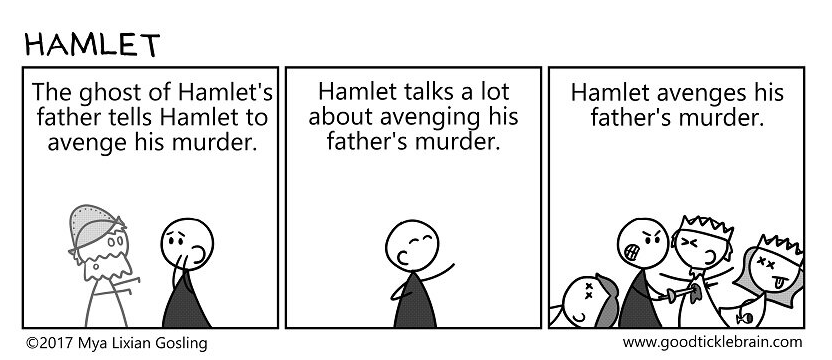
https://goodticklebrain.com/shakespearean-what-ifs-hamlet
https://goodticklebrain.com/home/2015/7/29/the-hamlet-death-clock

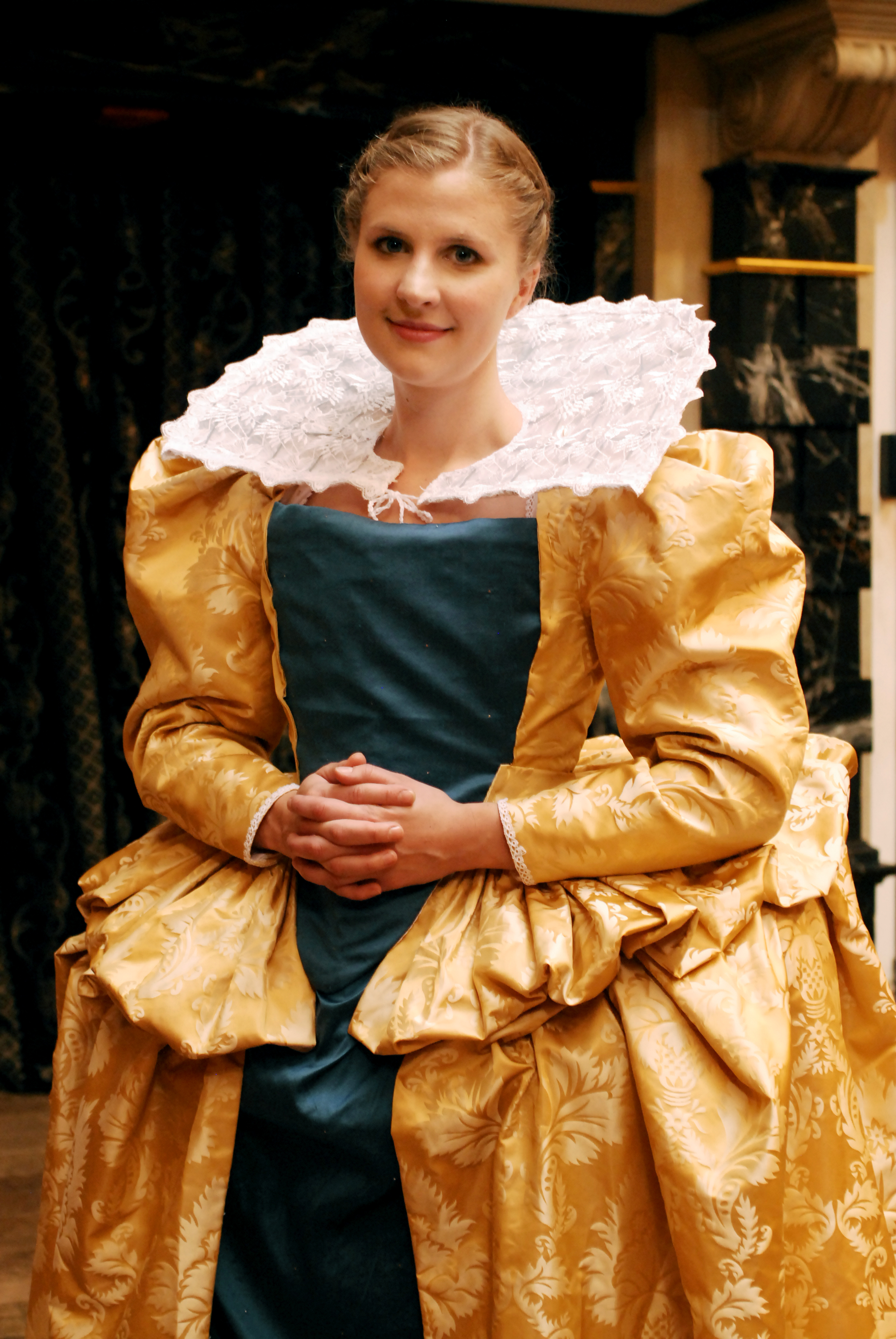
Hamlet is a play that features a powerful noble family engaging in political and millitary intrigue. in Elizabethan England, clothes were of vital importance to denote a person’s status and wealth. The costumes also informed the movements and posture of the people that wore them.
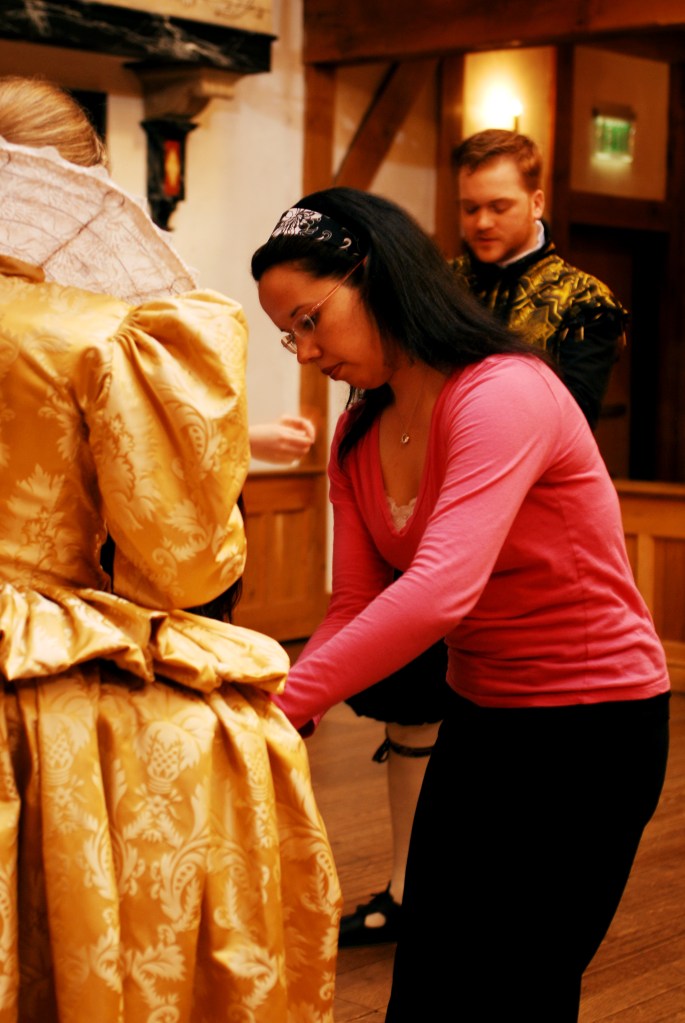
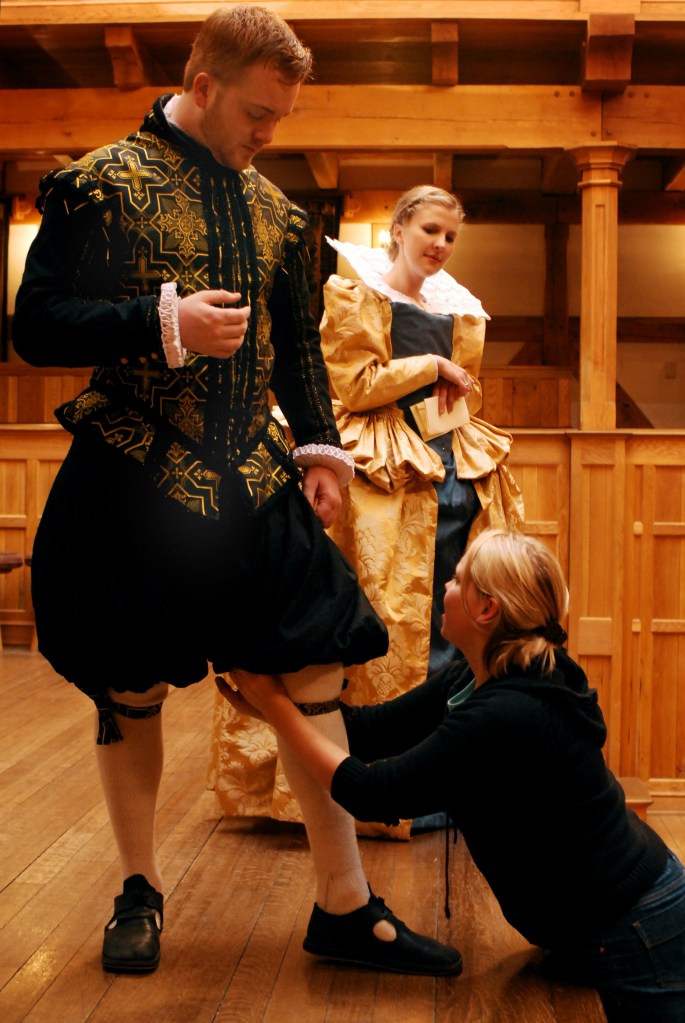
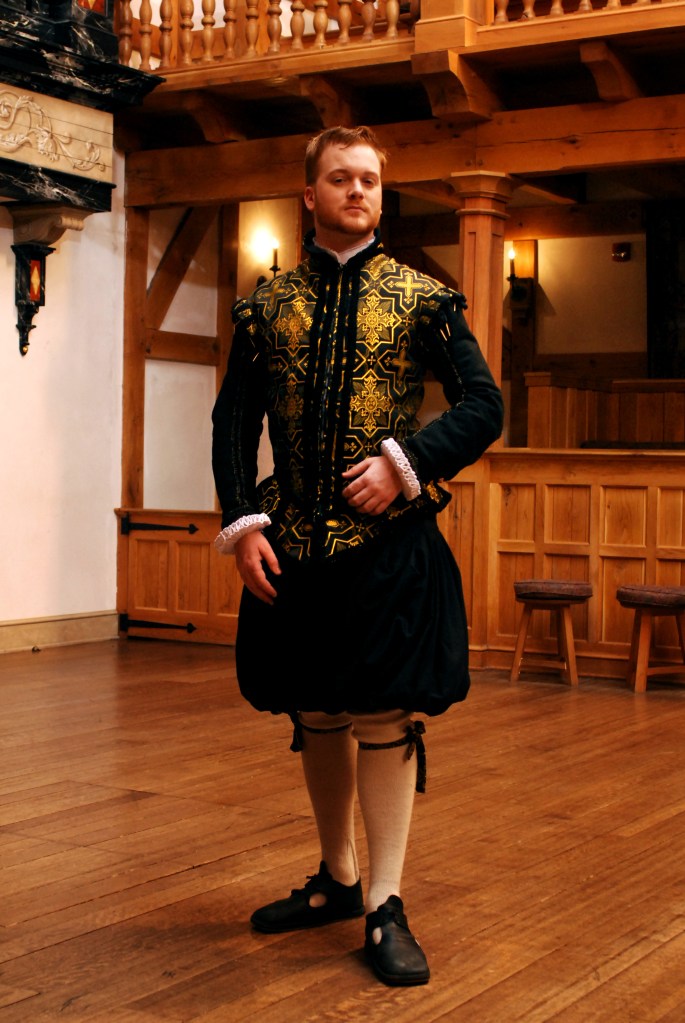
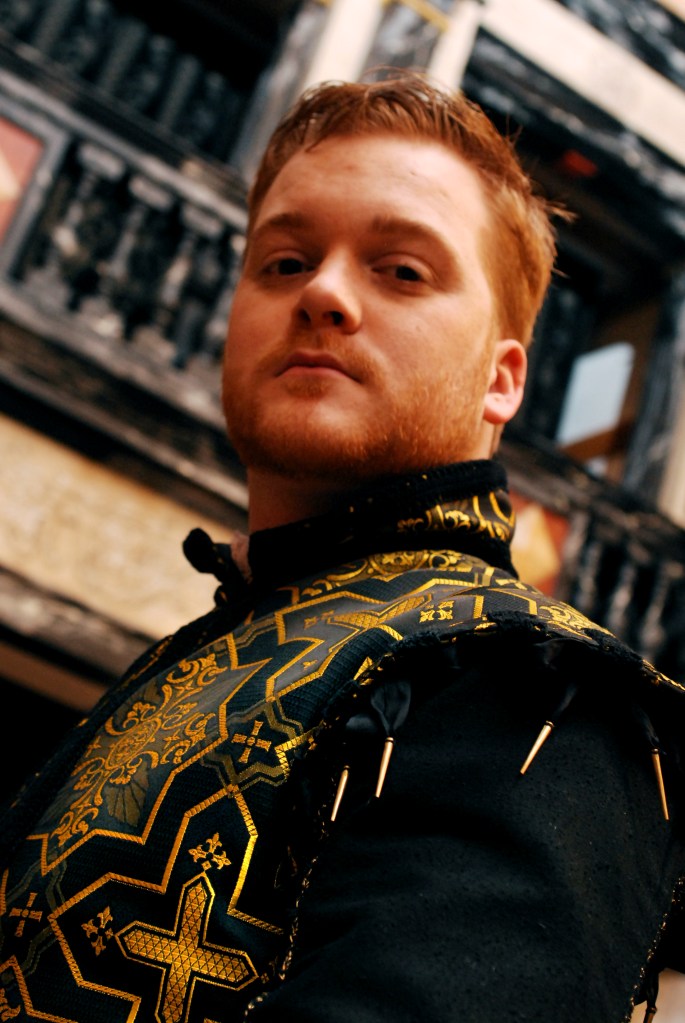
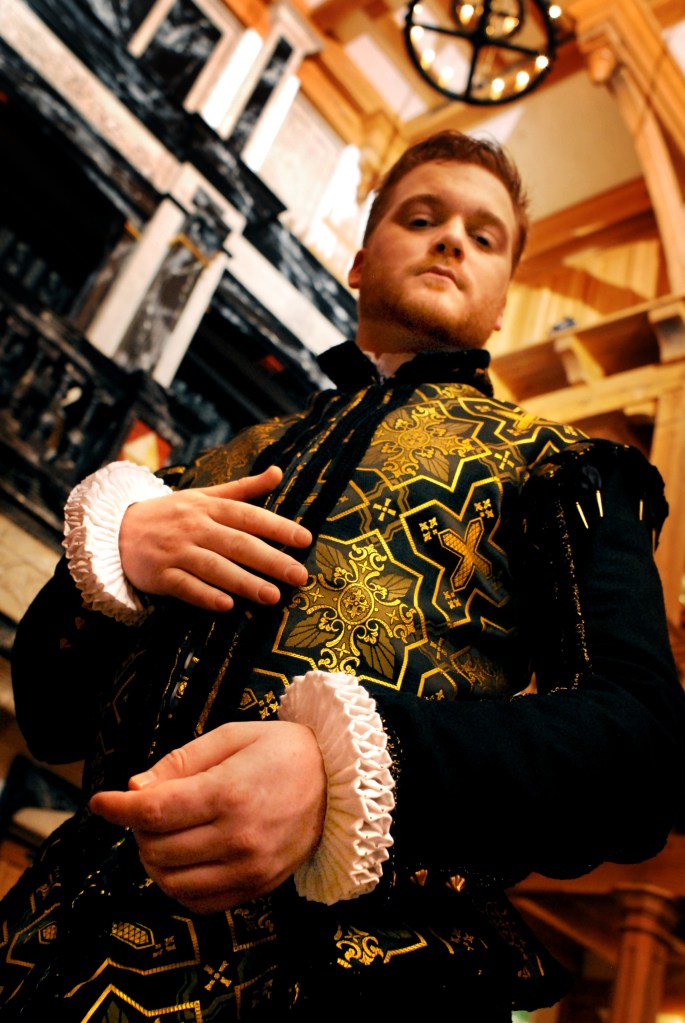
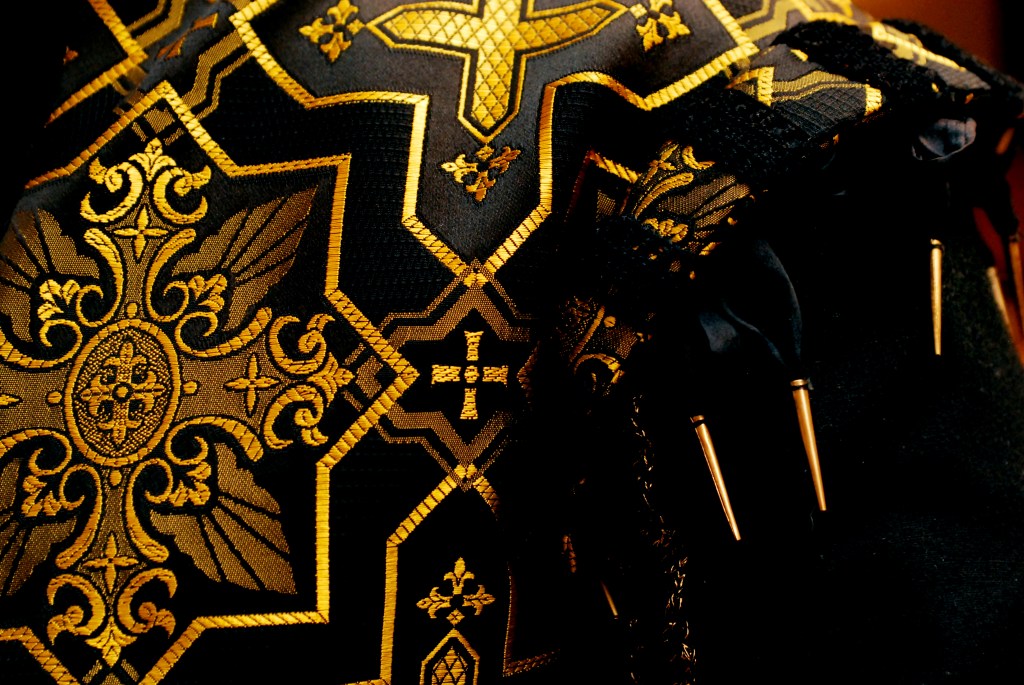
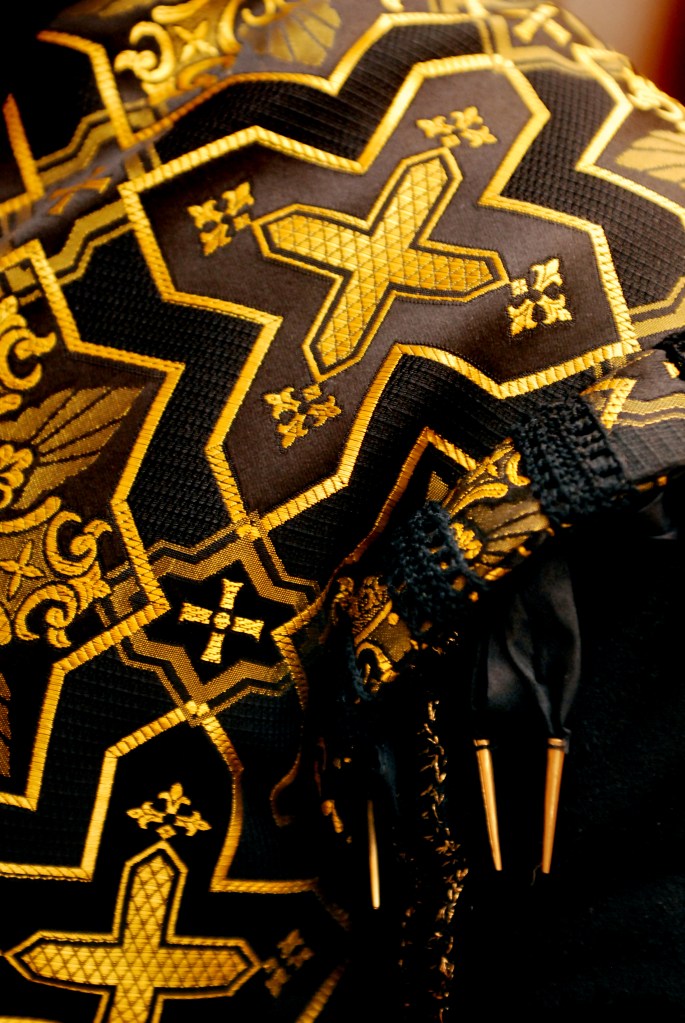
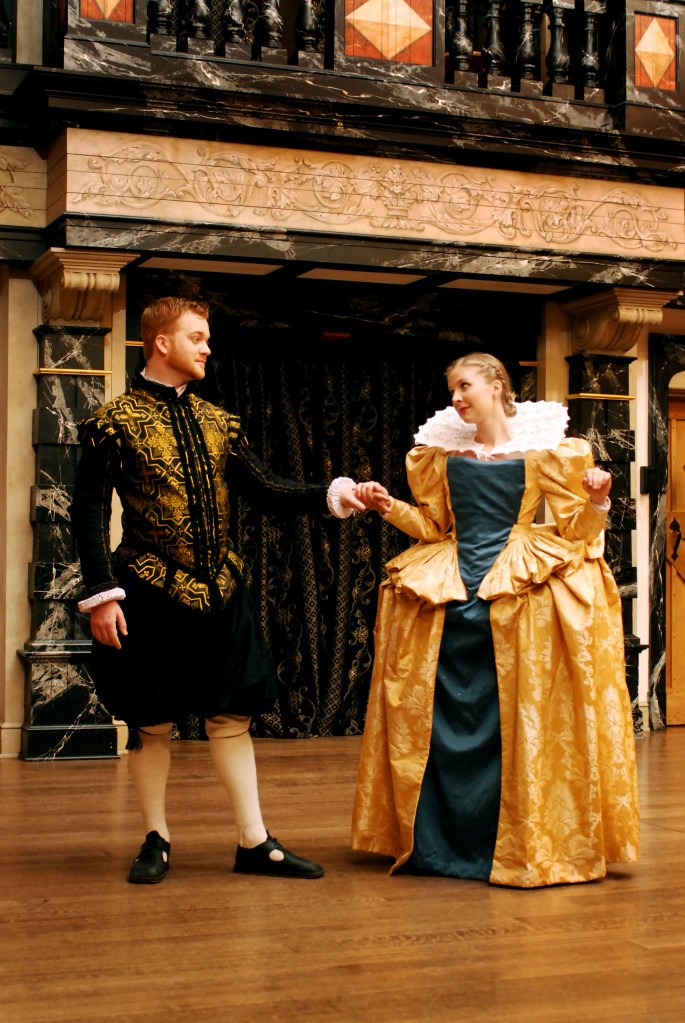
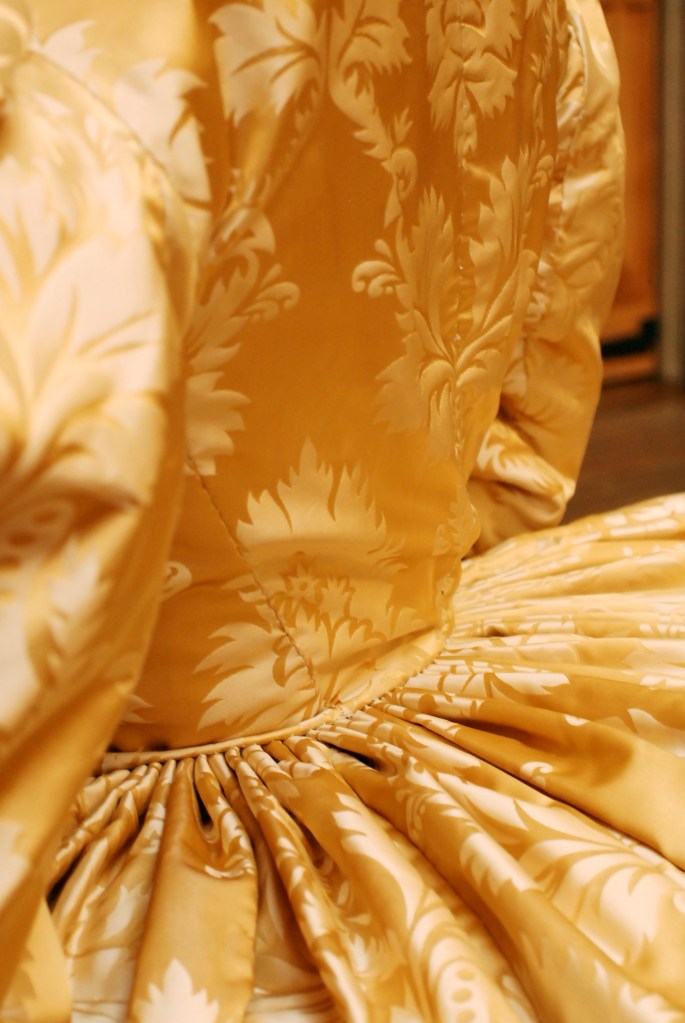
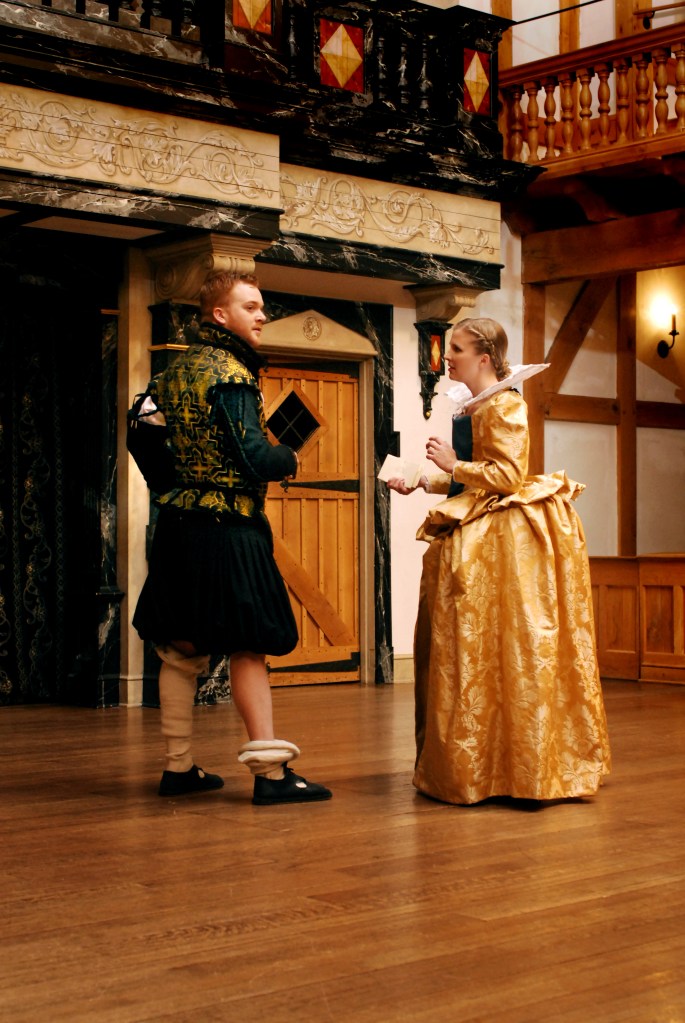
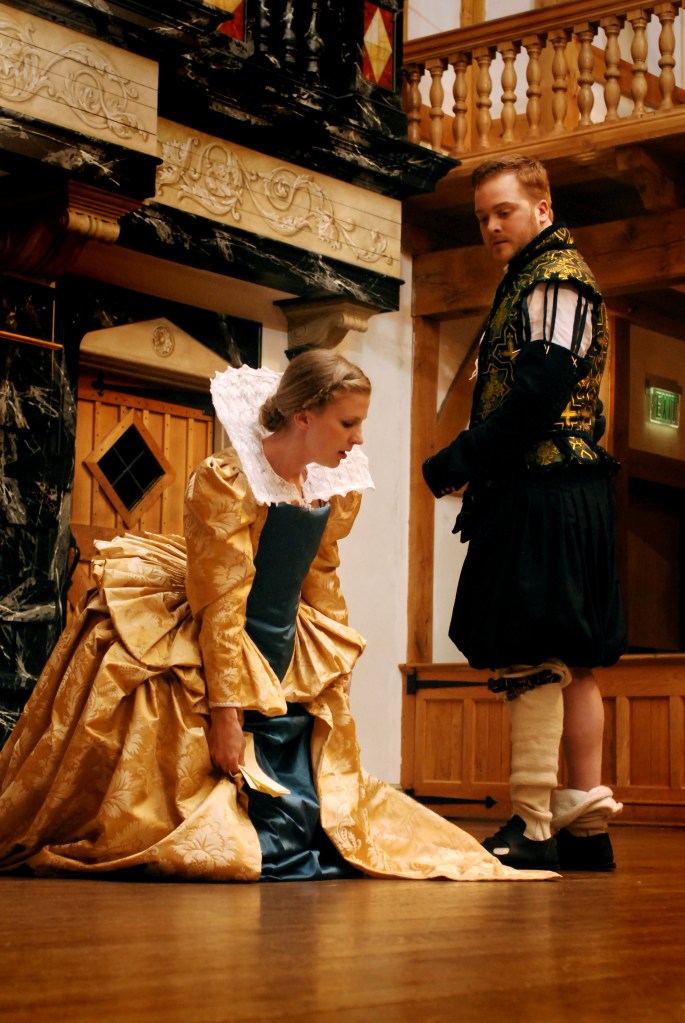
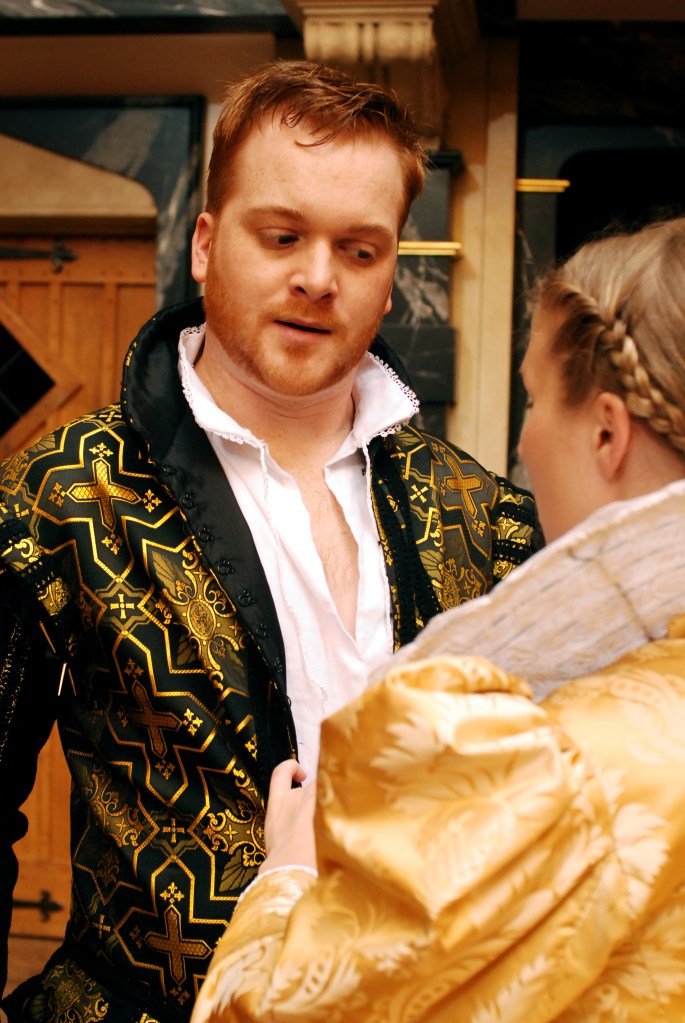
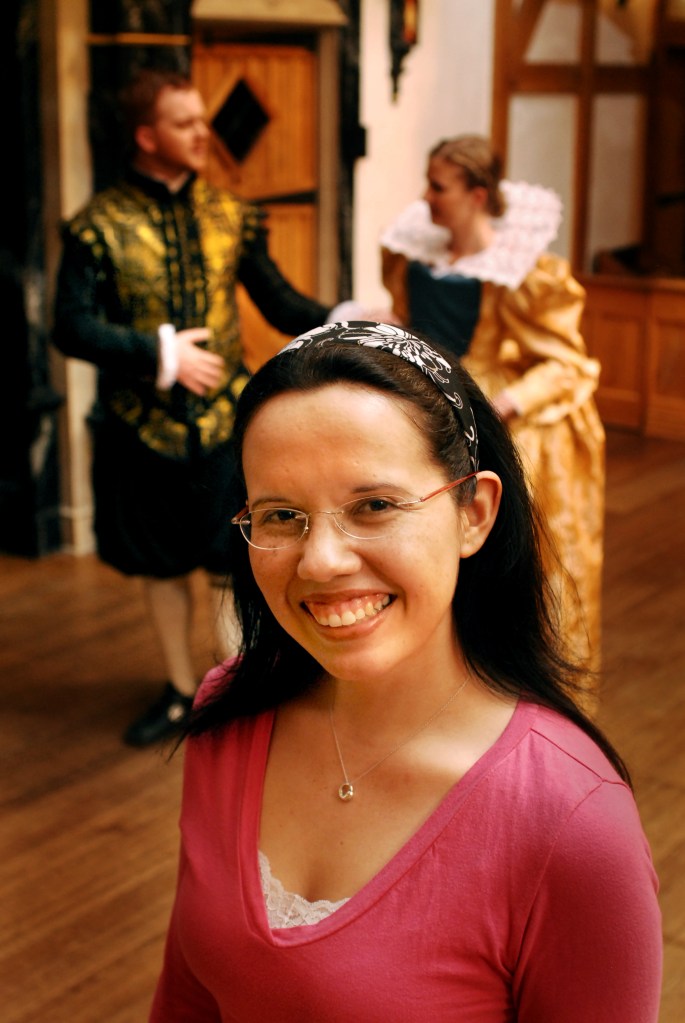
For this installment of this series on Elizabethan costumes, I am deeply privileged that in 2009, I filmed an MFA presentation by my friend and colleague Anna Gonzales. For her presentation at the Blackfriars Theater in Staunton VA, she created two authentic Elizabethan costumes from scratch, which took 900 hours!
In order to make these costumes as accurate as possible, Anna painstakingly researched Elizabethan fashions including period portraits, surviving records, and books of patterns that tailors later published in the mid-1600s. Sadly, no Elizabethan garments survive intact and no patterns. Elizabethan tailors probably felt no need to record their clothing patterns since almost everything they did was custom-made.
She then gave these costumes to two actors, Jeremiah and Dawn, and had them rehearse a short scene from Hamlet. As the video below shows, these costumes dramatically change not only how the actors look, but how they are able to move, which in turn, gives vital information as to how Elizabethan actors were able to perform onstage.
‘Tis not alone my inky cloak, good mother,280
Hamlet, Act I, Scene ii.
Nor customary suits of solemn black,
Together with all forms, moods, shapes of grief
‘That can denote me truly. “
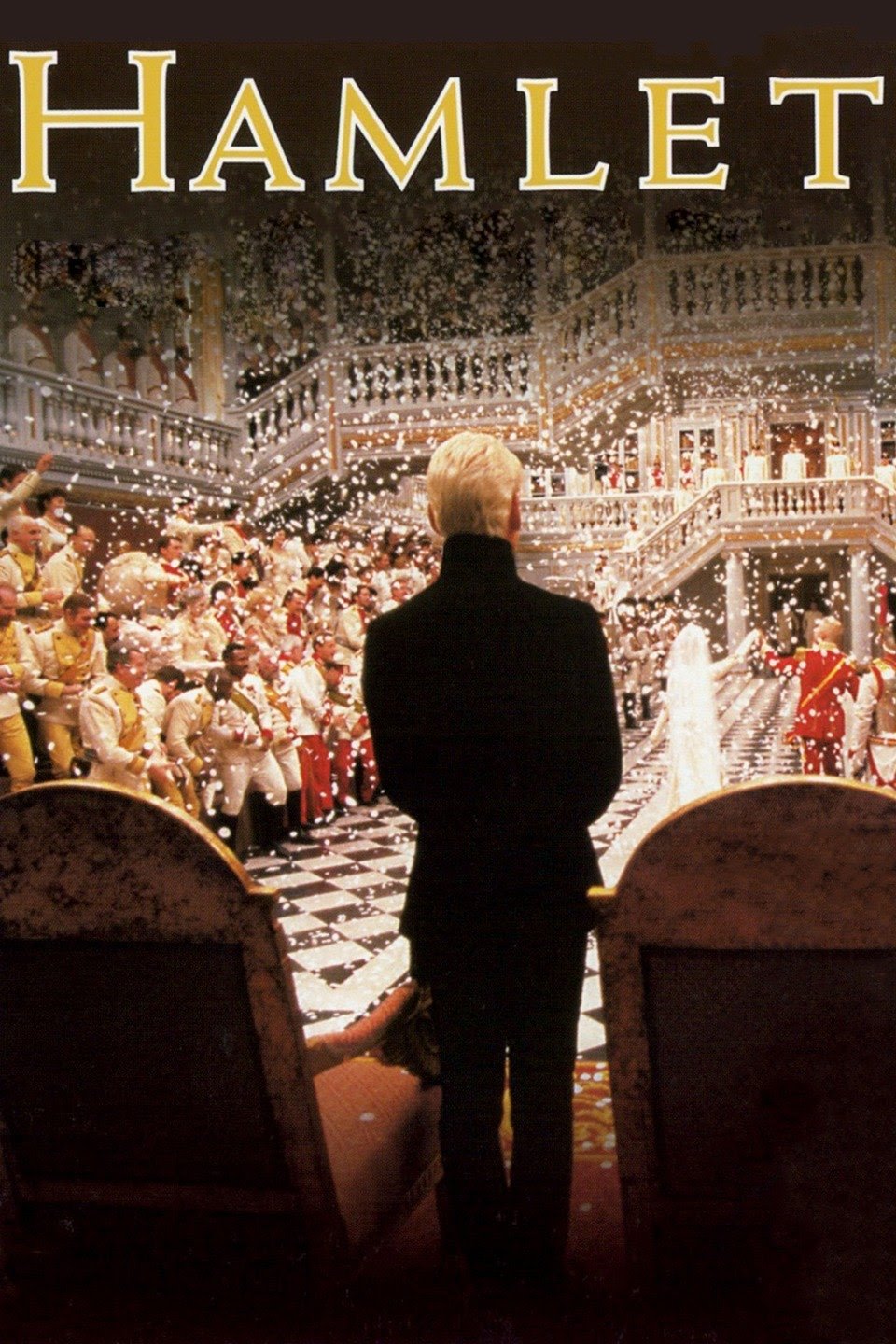
Out of all of Shakespeare’s characters, Hamlet is the only one who is explicitly stated as wearing black. As Anna says in the thesis presentation, black was a very expensive color to make, so only a prince like Hamlet could afford a black cloak. In addition, his black clothing reflects that he is in mourning for his father. Given that Shakespeare’s company were middle-class artisans, it’s entirely possible that they only owned one black garment and made sure Hamlet was the one who wore it. Therefore, he may very well have been the only character who wears mourning clothes in Act I, Scene ii, thus making an uncomfortable divide between himself, and the court.
Polonius Costly thy habit as thy purse can buy,
Act I, Scene iii.
But not express’d in fancy; rich, not gaudy;
For the apparel oft proclaims the man,
And they in France of the best rank and station
Are most select and generous, chief in that



Act II, Scene i
Ophelia. My lord, as I was sewing in my closet,
Lord Hamlet, with his doublet all unbrac’d
No hat upon his head, his stockings foul’d,
Ungart’red, and down-gyved to his ankle;
Pale as his shirt, his knees knocking each other,
And with a look so piteous in purport
As if he had been loosed out of hell
To speak of horrors- he comes before me.
Anna Gonzalez
“Early modern dressing was a social event,” that is, well to do men and women couldnt get dressed without the help of dressers, drapers milliners, haberdashers, and tailors.”

The play opens with two soldiers strolling the battlement; then a ghost dressed in complete armor appears. Once Hamlet and all the other main characters die, the play ends with Fortinbras staging a violent coup. Therefore the soldiers’ costumes are very important for creating a mood.
In the 1590s, gunpowder made full plate armor unnecessary. Usually, soldiers only wore a padded coat, a helmet, and a breastplate. Higher ranking nobles who likely never saw combat would wear a gorget, a small armor collar to protect the chest. This video about the wars between early English settlers in America and Native Americans shows nicely the armor and weapons used by the English of this period (strong language ahead):


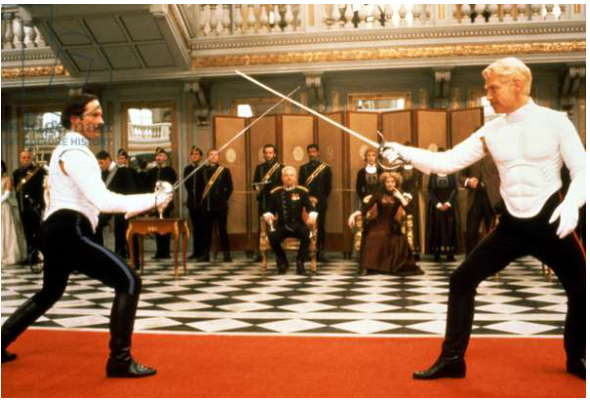
Most productions like Olivier’s and Branaughs have Hamlet and Laertes in outfits approximating modern fencing outfits, but in 1600, when the play was written, the attire of fencers was less sophisticated. According to Malcolm Fare, early fencers mainly wore padded doublets and sometimes cloaks; outfits similar to what they would normally wear.
https://www.leonpaul.com/blog/the-development-of-fencing-kit/




I’m delighted to share with you my recommendations for the best Hamlets committed to film! I was pretty strict with my criteria which left a few Hamlets out, so if I missed yours, let me know in the comments.
In order to make this list:
By the way, if you’re a teacher, I’ll be sure to mention which productions work for classes, and which, for whatever reason, do not. I also can recommend Common Sense Media to give you a good idea what age group this film works best for:
So, without any further adieu (get it?):
I would love to do a full review of this movie. When it works, it is actually a thoughtful deconstruction of the action movie genre, and as this clip shows, the movie concedes that Hamlet was actually the first great action hero. Schwarzenegger is really funny as an action movie parody of “Hamlet,” and everything he does is pretty cathartic for bored school boys who have to read the play in class. Plus, as a funny easter egg, the teacher in the scene who is showing Olivier’s Hamlet on the screen is played by Joan Plowright, who played Gertrude IN THAT FILM, and was married to Olivier in real life!
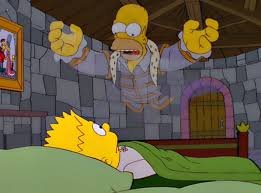
It’s absolutely astonishing how many Shakespeare easter eggs are in this little episode! How they make fun of medieval history, (the Danes were in fact Vikings in the early middle ages), Elizabethan theater, (when Bart does a soliloquy and is surprised that Claudius can hear him), and the way they compress Shakespeare’s longest play into a five minute episode is masterful satire.
In addition, the cast is perfectly chosen among the Simpsons’ core cast. Long-time viewers know that Moe has wanted to sleep with Homer’s wife for years, so making him Claudius is a brilliant choice. Plus, Dan Castellaneta steals the show with his over-the-top performance as the ghost, which actually reminds me of a 1589 review of Hamlet by Thomas Lodge:
“[He] walks for the most part in black under cover of gravity, and looks as pale as the vizard [mask] of the ghost who cried so miserably at the Theatre like an oyster-wife, Hamlet, revenge!”
THOMAS NASHE, “PREFACE” TO ROBERT GREENE, MENAPHON, (1589)
In any case, this clip is a great way to introduce anyone to Hamlet and I highly recommend it.
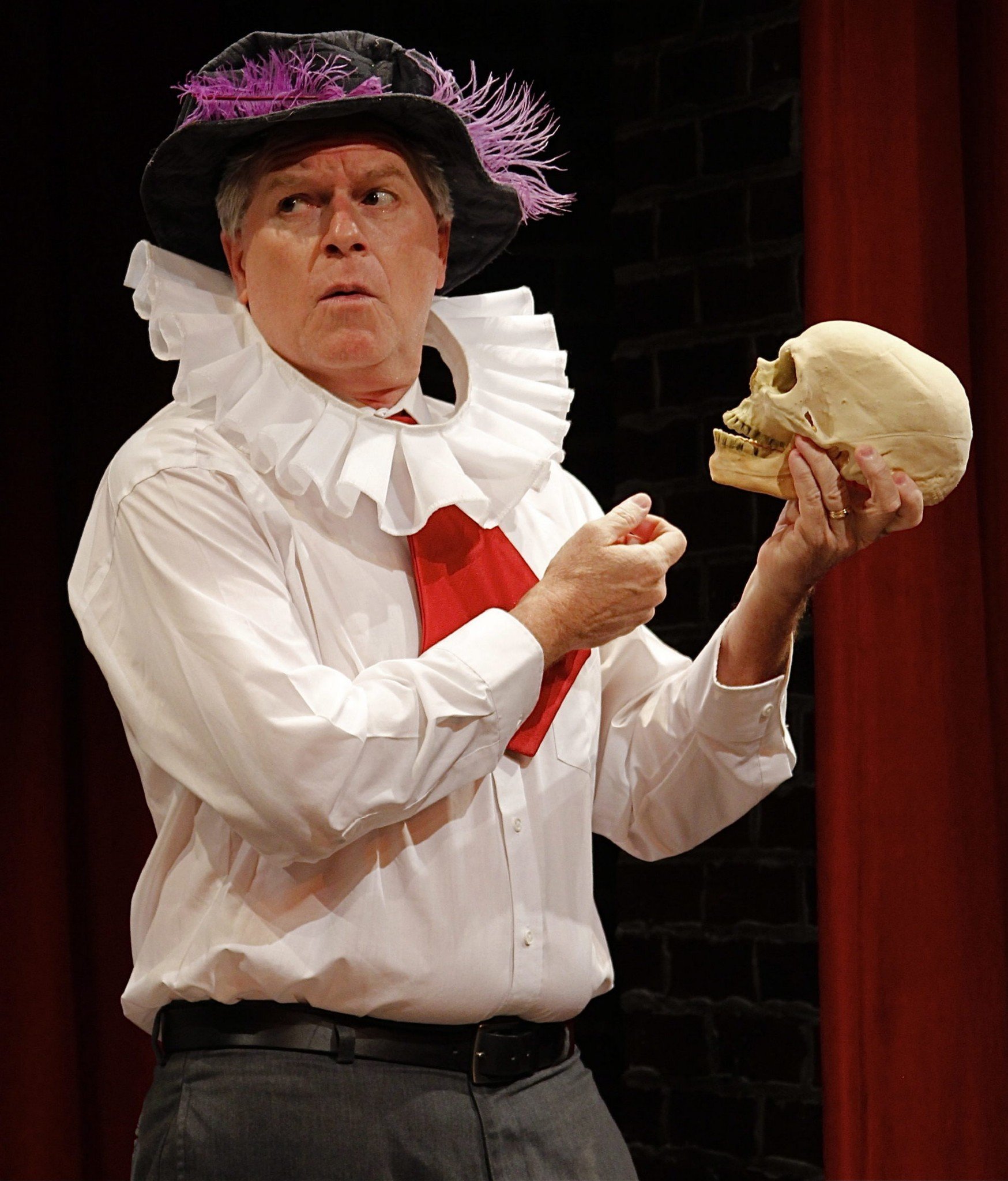
This show is very special to me- in around 1997 my parents went to England and brought home a copy of The Complete Works of Shakespeare (Abridged). I’d only read “Romeo and Juliet” previously and through this show, I gained an appreciation for all of Shakespeare’s plays. Seeing the plays through parody made them seem less lofty and stuffy, and made me want to see and read the original works. This is especially true for “Hamlet,” which occupies the second half of the show, where Hamlet is portrayed by Austin Tichenor.
Tichenor wins my award for “Hammiest Hamlet,” which is just delightful to watch. He clearly takes the part WAAAY too seriously, as evidenced by how emphatically he demands solemn silence from the audience while he attempts to do “To Be Or Not To Be.” Tichenor also serves as the pedantic straight man who tries to keep the show moving and academic, while mediating between his bickering co-stars Adam and Reed. This wonderful Three-stooges dynamic makes every minute of the show fun and frenetic. However, the cast makes it very clear that they are making fun of Shakespeare with love; they never mock the play, they inform as well as entertain, and occasionally they even move the audience as Adam does at the end. In short, this show helped me form my approach to Shakespeare, and it’s largely through Tichenor that I read Hamlet at all, so he’s to blame for this website.
With the advent of TV and film making theater seem obsolete, directors knew they had to do something drastic in order to get people to come to the playhouses. Enter John Gielgud, one of the greatest Hamlets of the early 20th century, who directed Richard Burton in a highly-acclaimed production with minimum sets and with actors wearing rehearsal clothes. The idea was to let Shakespeare’s words and the actors’ performances be the focus, and save spectacle for film and TV. This approach has been adopted by many theater companies since, including a few I’ve been a pat of.
Burton has a lot of energy and manic physicality in his portrayal and it makes his Hamlet engaging to watch. Plus Gielgud himself as the ghost is almost operatic to hear. I highly recommend any theater fan to watch it, though it might not translate in a classroom much.
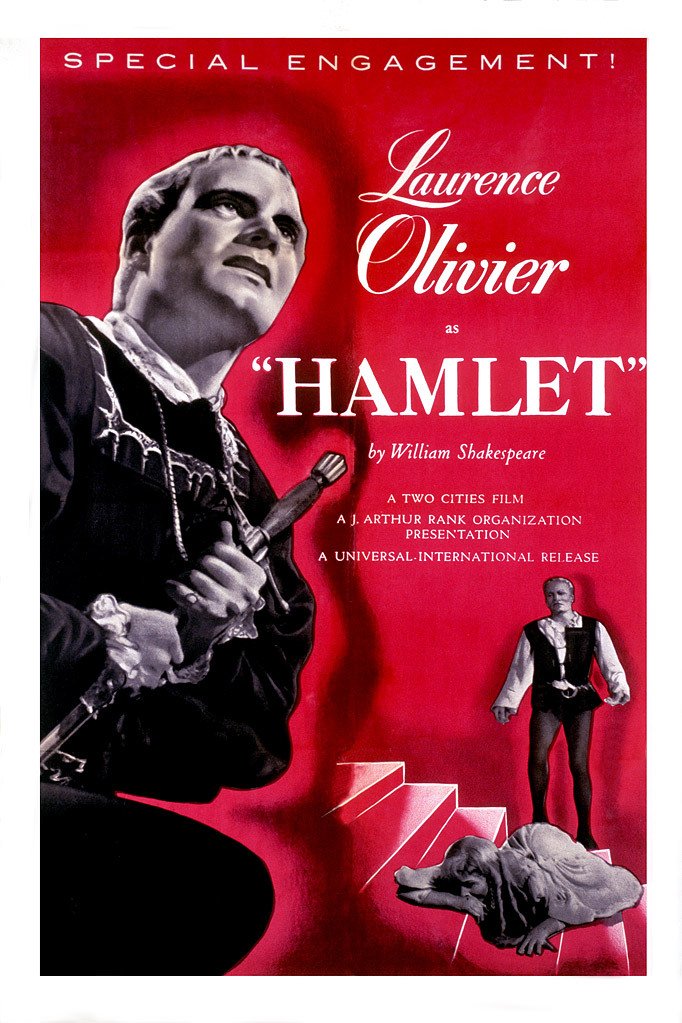
I have my issues with Olivier as an actor and apparently I’m not alone:
I find Olivier’s acting over-the-top, lacking in emotion and subtlety, and I think his directing is generally self-centered. He rarely deigns to give close-ups to anyone but himself and a lot of the scenes he directs are filmed like stage plays. That said, Olivier’s Hamlet is really good. SIr Laurence talked to Ernest Jones about the theory that Hamlet might have had an Oedipus Complex and created a unique and well-thought-out interpretation for his Hamlet. First off, casting his real-life wife Joan Plowright as Gertrude, fills the Closet scene with uncomfortable tension. He also did a great job making the ghost seem as imposing and accusatory as possible, as well as making Claudius as disgusting as possible.
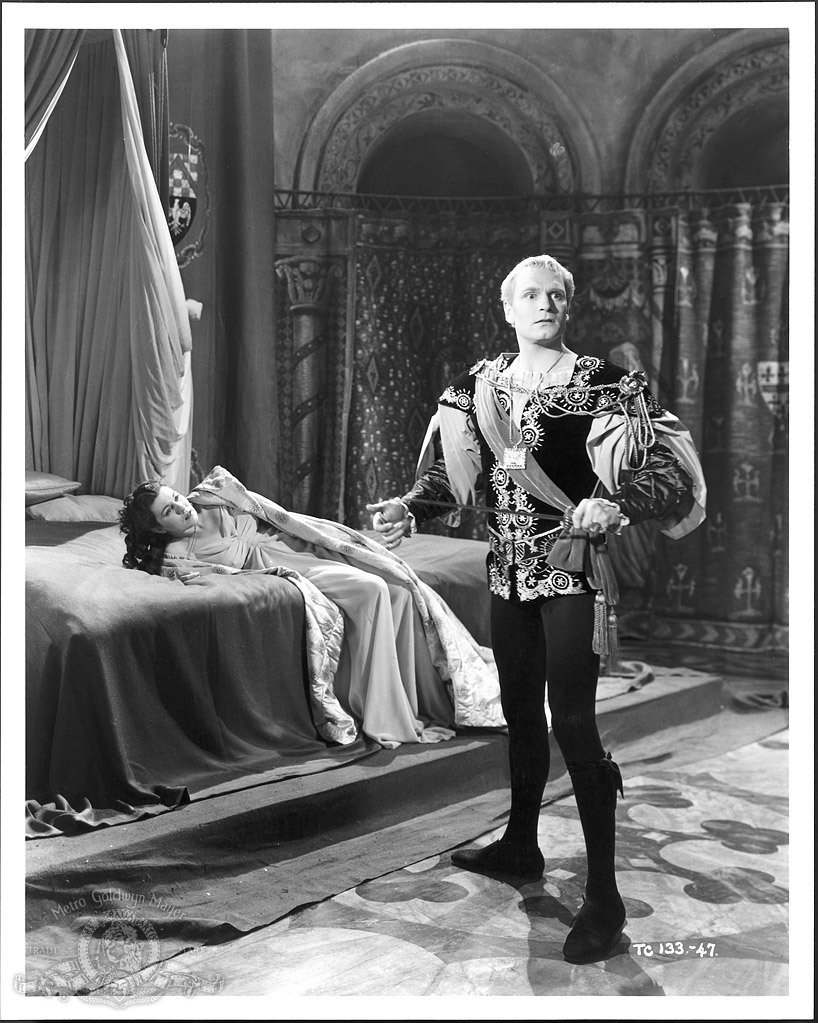
You get the idea that this film is how Hamlet sees the world with its dark and shadowy towers, representing Hamlet’s melancholic mind, his imprisoned spirit, and his dark desires. Also as many people have pointed out, Gertrude’s bed chamber looks like a female organ, making the Oedipus theory even more explicit.
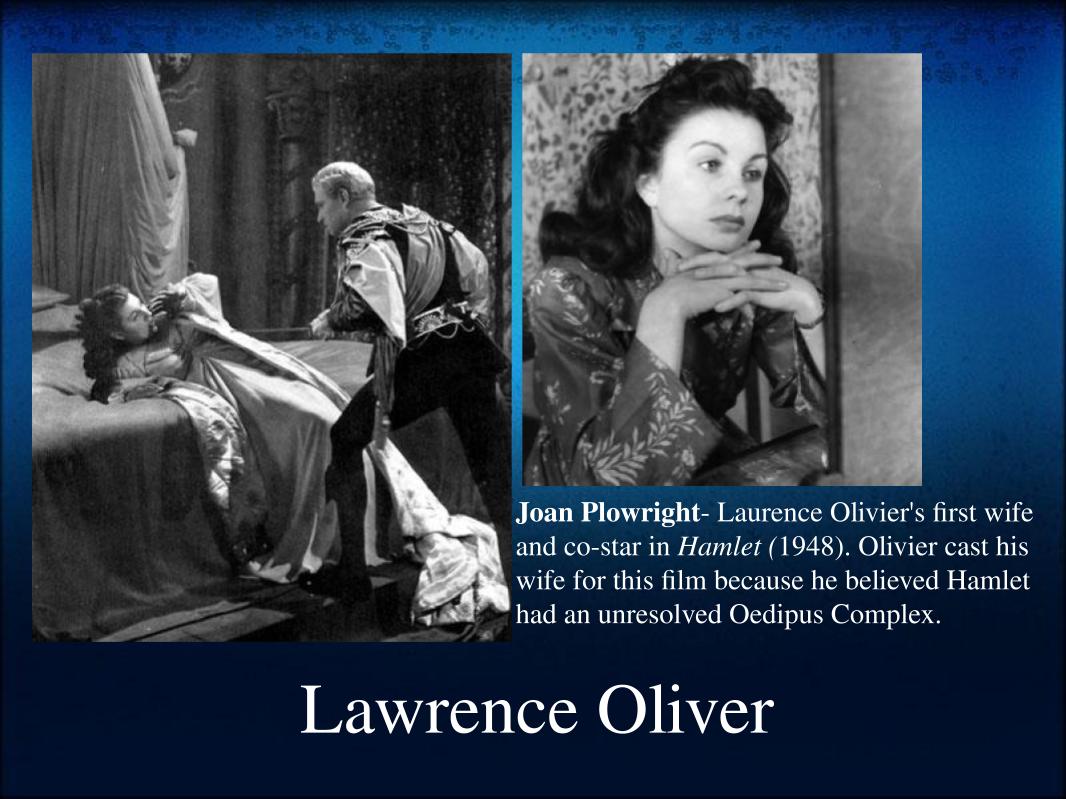
Even I have to admit that Olivier nailed the “To Be Or Not To Be,” Speech. He squirms at his own Oedipal fantasies, and contemplates jumping off the battlements in a captivating and subtle way. The performance and cinematography is iconic, and it makes me grudgingly admit Olivier, for all his faults, is still one of the best Hamlets of all time.
I would recommend this film to every Shakespeare film fan and any hardcore Shakespeare scholars. I would caution against showing the whole thing in a class however, since it’s black and white, and again, I find Oliver’s delivery very old-fashioned.
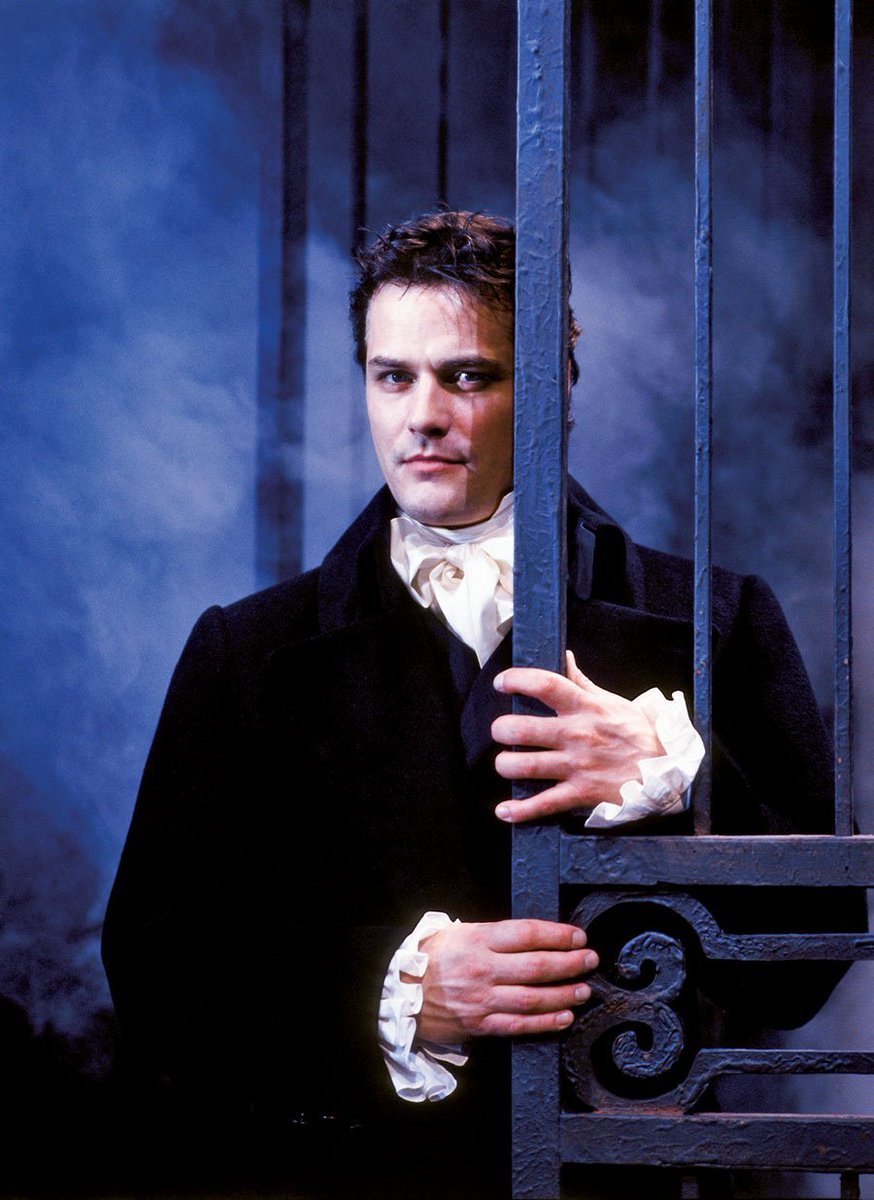
Thus far, I’ve mainly reviewed British and American Hamlets. Paul Gross is one of Canada’s most celebrated actors who gained fame as one of the best Hamlets at Toronto’s Stratford Festival. Unlike most Hamlets who go for the humanistic prince version of Hamlet, Gross plays him with sort of an animal intensity, like a wounded bear who will growl at you if you get in his way.
I have to admit I broke my own rule with this one- I haven’t really seen Gross’ portrayal, but I believe I saw it well-represented in his role as Geoffery Tennent, the Shakespearean Actor-turned madman-turned director in the Canadian TV show “Slings and Arrows.” This amazing dark comedy portrays the ins and outs of a Shakespeare Company from the normal problems of mounting a play to backstage drama, even the funding and marketing gets focus! Basically, the show is The Office for Shakespeare nerds, except for one ghostly cast member (no spoilers).
I couldn’t make up my mind between these two Hamlets, so I’m listing them together (guess that makes me Hamlet too). One is one of the most accomplished Shakespearean actor in recent memory, an RSC alumn, and a Hollywood star to boot, Benedick Cumberbatch.
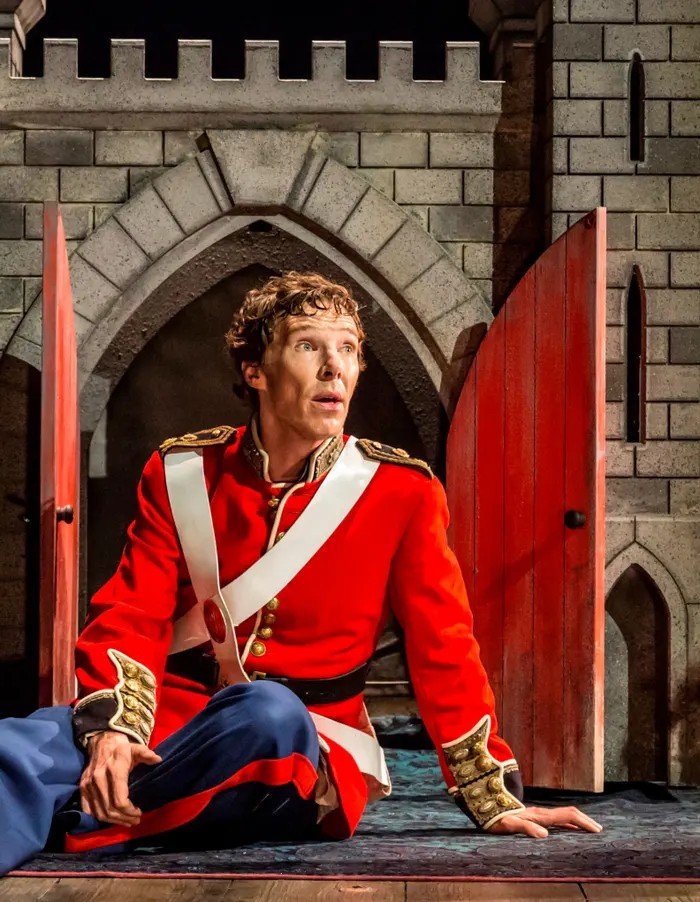

Both these actors have similar strengths- they’re both tall and imposing with aquiline features. They are also highly physical performers. I talked in my lecture on Richard III about how Harrell performed the role of Gloucester with his legs tied together and a bowling ball strapped to his hand. Appearance-wise- Harrell and Cumberbatch are so similar, that it’s actually a joke at the ASC that they must be long-lost twins.
That said, when it comes to their approach to Hamlet, these two actors couldn’t be more different. Cumberbatch focused on Hamlet’s emotional turmoil- he was tortured and angry, full of youthful angst and volatility. This particular production is sort of an anachronistic mash-up of modern and period, which gives it a sort of dream-like quality that I really enjoy. Like Richard Burton, the director knows how to stage a play differently from a movie or TV show, which is especially important with this actor, since we can see him on all those platforms.
Nor should they have. Full of scenic spectacle and conceptual tweaks and quirks, this “Hamlet” is never boring. It is also never emotionally moving — except on those occasions when Mr. Cumberbatch’s Hamlet is alone with his thoughts, trying to make sense of a loud, importunate world that demands so much of him.
By Ben Brantley
New York Times, Aug. 25, 2015
John Harrell on the other hand is a more mature and subtle Hamlet, more interested in saving his hide than contemplating his navel. This Hamlet masks pain with humor and sardonic wit and it translates to all his relationships with the King, Queen, and courtiers.
Rather than a sour, dour, morose, obtuse, naval-gazing Hamlet, this prince was cunning, cynical, devious, sarcastic, and very much enjoying his feigned madness, his chess game with the king, and his fencing bout with Laertes.
Eric Minton
https://www.shakespeareances.com/willpower/onstage/Hamlet-11-ASC11.html
OK, I have to admit that I didn’t see this whole production either, but it’s so cool and the acting is so good I wish I had! Papaa Essiedu is an electrifying blend of wit, sadness, manic excitement, and rage. His fresh take on a role that can be rather dour is why even the little I’ve seen of his performance makes it one of my favorites!


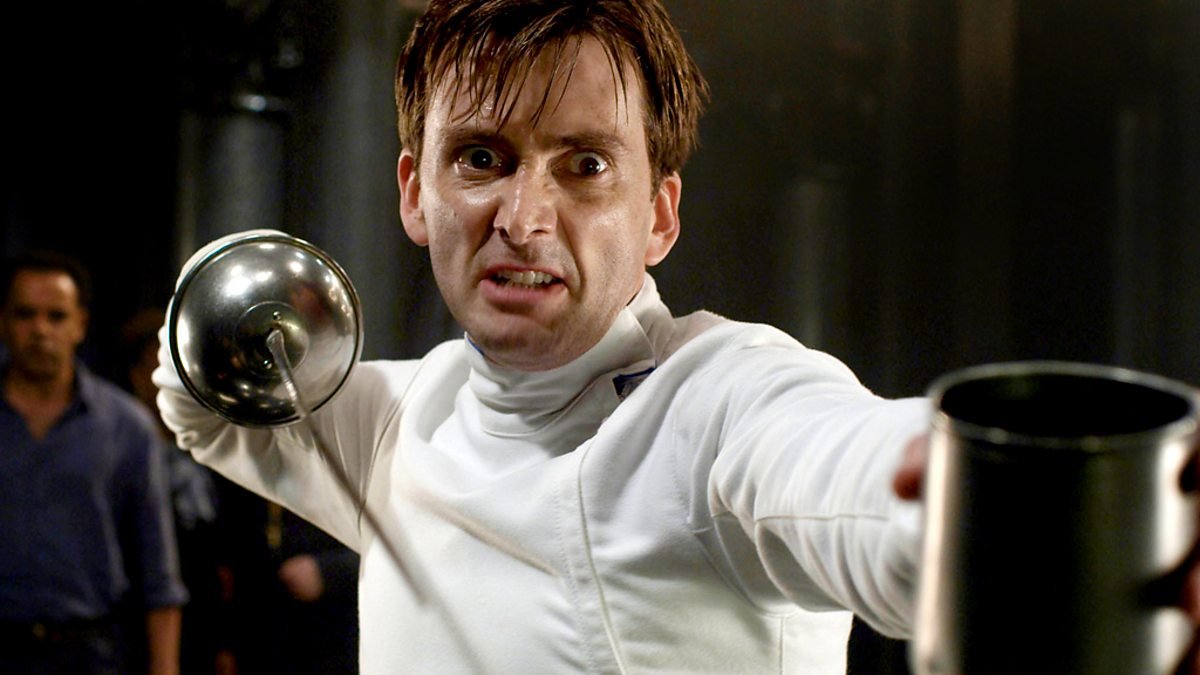
Tennet does an incredible job of encapsulating Hamlet’s quick wit, giddy excitement, frailty, fury, and frustration, especially with himself. I love the fact that he does “To Be Or Not To Be” in a superhero T-Shirt. In a way, this Hamlet is constantly wishing he was more of the action-movie type that Schwartzenegger parodies at the top of this list. Like Harrell, Tennent’s Hamlet masks his pain with humor, but you can see him struggle with it and try to pull himself out of despair. All these Hamlets find a way to nail at least one aspect of the character, but Tennet in his short 3 hours on the stage, manages to highlight all of them.
I recommend this version for any viewer in any classroom. It’s beautifully shot, extremely well acted, fast-paced, funny, and exciting. I cannot recommend it highly enough.


I haven’t seen any of these Hamlets and have been unable to locate any clips, but I have the deepest respect for all of these actors, so I thought I’d highlight them here.
I’d also like to give special mention to Michelle Terry. Gender-blind productions of Shakespeare get a lot of flack that is undeserved, and there’s nothing wrong with a female Hamlet. To quote Geoffrey Tennet in Slings and Arrows: “Shakespeare didn’t care about anachronism, and neither should we.”
I didn’t include Ms. Terry in this list, simply because I wasn’t able to get to the Globe, and I wanted to focus on productions that people can watch for free. If you wish, you can watch her 2018 performance on the Globe Theater’s steaming website:
https://player.shakespearesglobe.com/productions/hamlet-2018/


You probably saw this coming. I’ve made it clear in other posts that I absolutely love Branaugh’s Hamlet, after all his film was one of the first Shakespeare movies I ever saw and the first one I really enjoyed. I discuss in detail why I love this movie the best in my review of the film, but to summarize, I think the direction is incredible, the music is excellent, the cast is nearly perfect, and Branaugh himself puts a huge amount of love, craft, skill, experience, and maybe a little madness into his portrayal of the character. I know Branaugh isn’t everyone’s cup of tea; other Hamlets on this list might be more enjoyable, fun, or subtle, for you. But for me, Branaugh’s will always be my favorite.
I’m helping to coach an actor who’s doing Hamlet’s first soliloquy in Act I, “O that this too, too, solid flesh.”
Hamlet. O that this too too solid flesh would melt,
Thaw, and resolve itself into a dew!
Or that the Everlasting had not fix'd
His canon 'gainst self-slaughter! O God! God!
How weary, stale, flat, and unprofitable
Seem to me all the uses of this world!
Fie on't! ah, fie! 'Tis an unweeded garden
That grows to seed; things rank and gross in nature
Possess it merely. That it should come to this!
But two months dead! Nay, not so much, not two.
So excellent a king, that was to this
Hyperion to a satyr; so loving to my mother
That he might not beteem the winds of heaven
Visit her face too roughly. Heaven and earth!
Must I remember? Why, she would hang on him
As if increase of appetite had grown
By what it fed on; and yet, within a month-
Let me not think on't! Frailty, thy name is woman!
A little month, or ere those shoes were old
With which she followed my poor father's body
Like Niobe, all tears- why she, even she
(O God! a beast that wants discourse of reason
Would have mourn'd longer) married with my uncle;
My father's brother, but no more like my father
Than I to Hercules. Within a month,
Ere yet the salt of most unrighteous tears
Had left the flushing in her galled eyes,
She married. O, most wicked speed, to post
With such dexterity to incestuous sheets!
It is not, nor it cannot come to good.
But break my heart, for I must hold my tongue!
Hamlet, Act I, Scene ii, lines 332-363.
This is the first time Hamlet really speaks. He’s extremely tight-lipped to Claudius and his mother, and for good reason: he just witnessed his father die under mysterious circumstances, his mother remarried, his school year canceled, and himself proclaimed heir to the throne. All of this happened within a month! It’s very hard to process this kind of massive shift in your life, so Hamlet waits until he is alone.
The speech is full of distrust for his uncle, contempt for his mother, and deep starry-eyed mourning for his father. Hamlet compares his father to Hyperion, the Greek Titan who ruled the Sun- a being who inspired awe and terror. He then contrasts that with Claudius whom he compares to a satyr- an old, half-goat man who is horny in more ways than one. Hamlet clearly doesn’t like or trust his uncle and is disgusted by the notion that he is now Hamlet’s stepfather.
How does Hamlet feel about himself? Well, the text is somewhat ambiguous. The soliloquy’s first line might be saying that Hamlet wants to melt away into air, but it could just as easily apply to the Ghost (who is still on Hamlet’s mind), Claudius (who he hates), or Gertrude (whom he’s disgusted at because she’s sleeping with his uncle). We don’t have a clear picture yet how Hamlet feels about himself in this moment, but we do know that his world is shattered and is no longer as happy as it once was:
How weary, stale, flat, and unprofitable seem to me all the uses of this world.
Act I, Scene ii, Line 336.
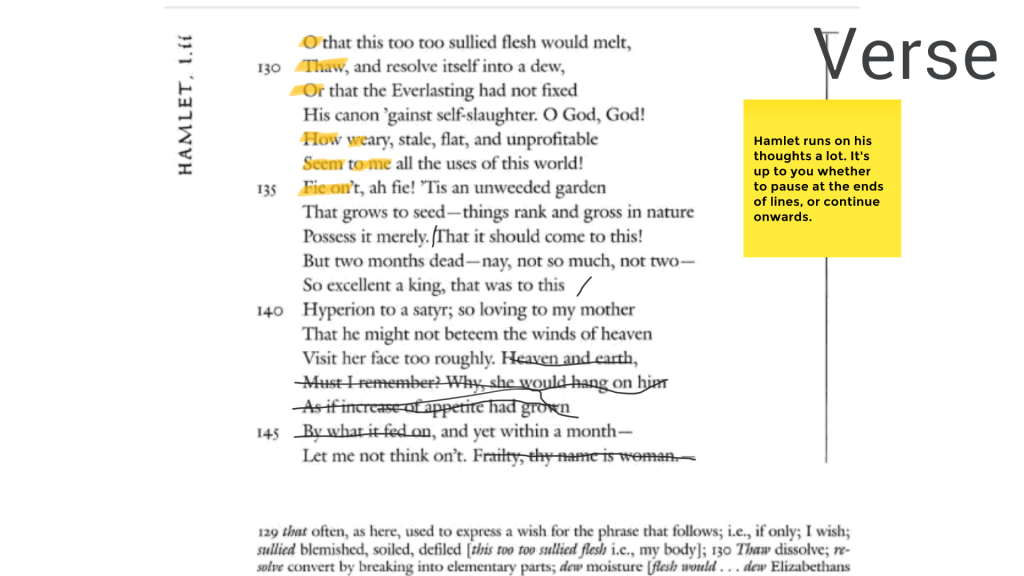
As I often say, verse is the heartbeat of a character, and as Hamlet says, his own heart is broken so his verse is very irregular. Ideas spill over into multiple lines instead of tight, 10-syllable lines. In the excellent book, “Speak the Speech”, Rhona Silverbush and Sami Plotkin comb the speech for clues in the verse that suggest Hamlet’s fragile emotional state:
The piece is riddled with starts and stops mid line, sentence fragments, and [self] interruptions, which underscore Hamlet’s extreme agitation.
Excerpt from “Speak the Speech” by By Rhona Silverbush, Sami Plotkin · 2002
In the picture below, you can see how Hamlet often inverts his lines from Iambic to Trochaic (emphasis on the odd beats, rather than the even beats):

It’s up to the actor to decide which emotions Hamlet is showing and how this effects his breath, voice, and physicality, but the structure of the verse, the punctuation, and the flow of the thoughts gives him or her clues to play with, as you can see in this video with RSC actor Pappa Essiedu:

Hamlet is a play that is all about the ambiguities that plague us as we go through life and its title character is constantly second-guessing, third-guessing, and fourth-guessing himself. In this speech, there are questions that the actor must decide for him/herself, because Hamlet and Shakespeare leave them open:

https://myshakespeare.com/hamlet/act-1-scene-2
If you liked this analysis, you might want to sign up for my acting class or acting course on Outschool.com, link below:


Www.outschool.comhttp://www.outschool.com

Educators love to compare Shakespeare to classic Disney, myself included. After all, both Shakespeare and Walt Disney were popular entertainers who adapted classic stories into new forms for larger audiences.
You can make a pretty strong case that Hamlet is “The Lion King” from these narrative similarities:
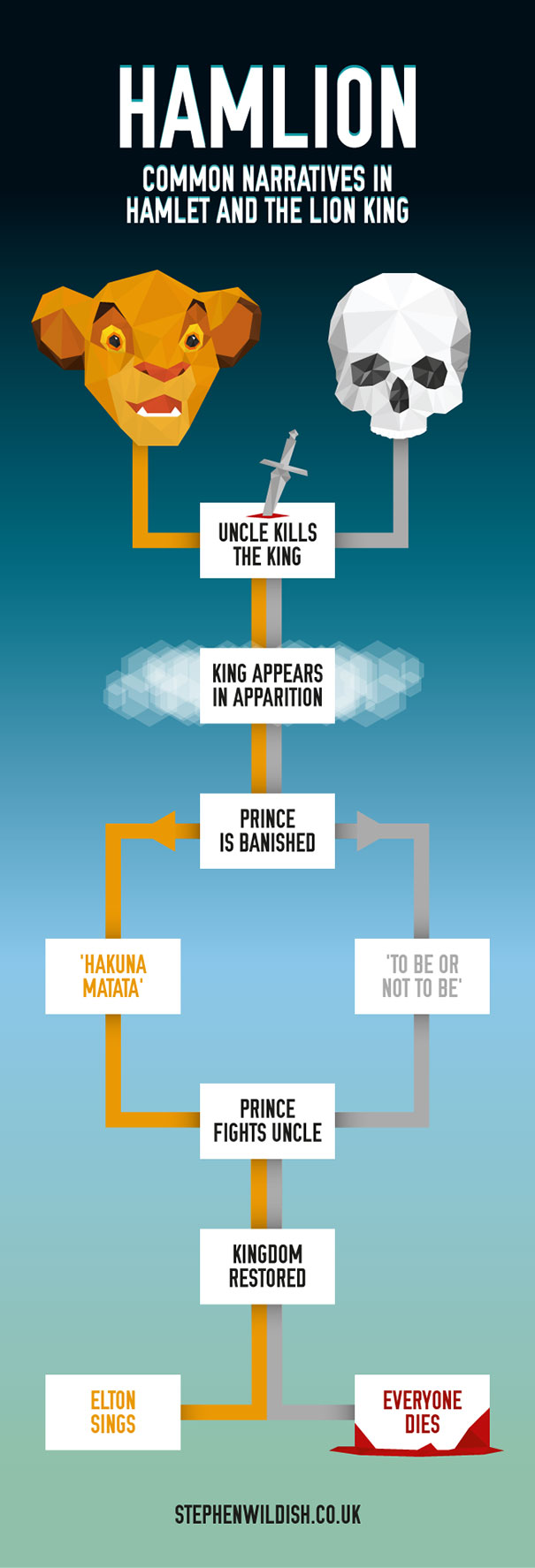
It’s also true that, when the story artists at Disney decided to make the villain Mufasa’s brother, they noted the parallels to Shakespeare as the film was being written:
https://collider.com/the-lion-king-hamlet-connection-explained/
Then again, there are some critics who say the play more closely resembles other Shakespeare plays.
And the legal argument that Shakespeare’s descendants could make for plagiarism are pretty weak:
So, let me know in the comments whether you agree Hamlet is Lion King or another play:
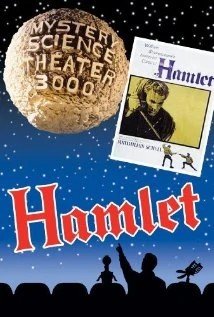
Mystery Science Theater 3000 has been on the air for over 20 years. The show originally aired in 1988 on KTMA TV in Eden Prairie MN. Since then it’s spawned over 13 seasons, (still going strong on Netflix), a huge cult following, and countless parodies in many versions of pop culture.The premise is that three guys watch bad movies and make sarcastic comments about the acting, sets, costumes, etc. The show thrives on meta-commentary, obscure references, and satirizing anything and anyone.
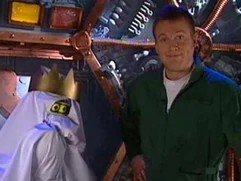

Kevin Murphy, one of the show’s creators actually had reservations of even doing the episode, as he is a big Shakespeare fan. This makes sense as I would argue that the very premise of the show lies in Shakespeare, and in particular, Hamlet. As I said in the last paragraph, the show thrives on reference humor, meta-commentary, and satire, and one person who loves that kind of humor is in fact, Shakespeare’s own drama critic- Hamlet, Prince of Denmark.
In Act III, Scene ii of Hamlet, there is a play within a play, where Hamlet sits back and makes sarcastic comments about how bad the production is:
Enter Prologue.
Hamlet, Act III, Scene ii
Hamlet. We shall know by this fellow. The players cannot keep counsel;
they’ll tell all.
Ophelia. Will he tell us what this show meant?2035
Hamlet. Ay, or any show that you’ll show him. Be not you asham’d to
show, he’ll not shame to tell you what it means.
Ophelia. You are naught, you are naught! I’ll mark the play.
Pro. For us, and for our tragedy,
Here stooping to your clemency,
We beg your hearing patiently. [Exit.]
Hamlet. Is this a prologue, or the posy of a ring?
Ophelia. ‘Tis brief, my lord.
Hamlet. As woman’s love.
If Hamlet had two robot companions, he’d essentially be doing an episode of the show!
Begin Murderer! Pox! Leave thy damnable faces and begin!
Hamlet, Act III, Scene ii.
So it’s an interesting kind of irony that after 13 years, MST3K finally got around to review the very source of their humor. Not only is Hamlet highly meta and satirical, Many educators, myself included, say that teaching Shakespeare with a healthy dose of irreverence is a good way to draw in new students and get them interested in the play:
Mystery Science Theater 3000’s “Hamlet ” episode reveals a common reaction to Hamlet that often goes unspoken by high school and college students too afraid to sound anti-intellectual. Despite this irreverent tone, however, this unique appropriation of Shakespeare adds to our understanding of a play that today very few read and even fewer see performed. As an author who reveled in making serious, yet sometimes playful, fun at human weakness, I think this respectful irreverence would have delighted the Bard were able to see it.
Dan Mills. “Mystery Science Theater 3000, Shakespeare, and Postmodern Canonization,” Interdisciplinary Literary Studies, 17.2 (2015): 206-227.
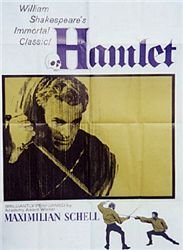
This episode is somewhat controversial among the MST3K fandom. While almost everyone agrees it was a good idea for Mike and the bots to do Shakespeare, many fans question the choice to do this Shakespeare. The 1961 film was produced for German TV, and starred Maximillian Schell, (who would later win an Oscar for his performance in “Judgement at Nuremberg).”
First of all, the film is very slow and badly paced with no distinctive production choices. The sets and costumes are generic, (except for the Liberace-looking ghost), and the cinematography is competent but dull. Finally it’s Hamlet; the play that even Mike Nelson called “The greatest work of fiction ever written.” Even with the dreary set, the bad dubbing, and nonexistent pacing, it’s still a good story with magnificent dialogue, and the cast is still pretty good. Perhaps the ultimate backhanded compliment Mike Nelson and company could have handled is that even the worst production of Hamlet is very difficult to riff. Still, when the jokes land, they hit extremely well. Here are some of my favorites:
C’mon, man. We’ve seen like eight ghosts, none of ’em have been even close to my dad.
MIKE NELSONRap artist, The Notorious K.I.N.G.”
Hamlet: To die: to sleep.
Crow: Yeah, that’s what we’re doing right now, Bub.Mike: So I’m a chicken for not stabbing myself—that’s all you needed to say!Hamlet: TO BE OR NOT TO BE…. and lose the name of action.
[Having stabbed an intruder behind Gertrude’s tapestry, Hamlet discovers it is not the King, but Polonius.]
Hamlet: Thou wretched, rash, intruding fool!
Crow [as Polonius]: Oh, right, it’s my fault you killed me.
On the one hand, it’s great to watch the MST3K guys look at a piece of classic theater, especially since the show owes a lot to Shakespeare. That said, they never acknowledge this, not even during the play within a play scene. In addition, the critics are right that the film is so dreary it’s hard to make fun of. I would love to see how the bots and Mike riff on Branaugh or Gibson! Finally, maybe part of the problem was that Hamlet has already been riffed and mocked before. As the clip above from The Reduced Shakespeare Company shows, gently ribbing on the plot and characters of Hamlet has been done before. Once something becomes famous as the best or the worst, it becomes a target for mockery. I was hoping that my favorite riffers would have more fun riffing on the play that helped create their art form. That said, this show is a classic comedy series, and this episode always makes me smile.


























 The Shakespearean Student