
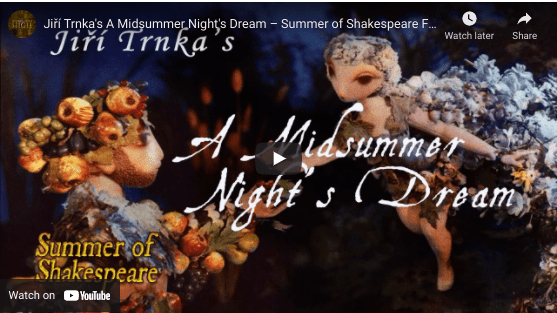
Watch Jiří Trnka’s A Midsummer Night’s Dream – Summer of Shakespeare Fan Pick #5



In this section, I review a Shakespeare book, movie, or TV show that I feel has some kind of value, either as an interpretation of Shakespeare, or a means to learn more about the man and his writing.
My reaction:
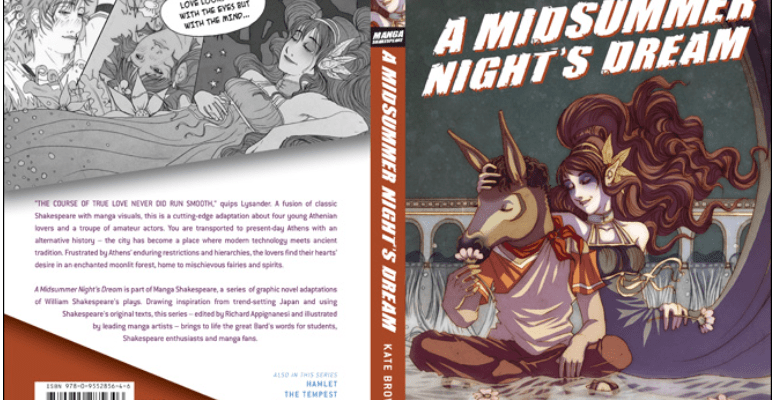
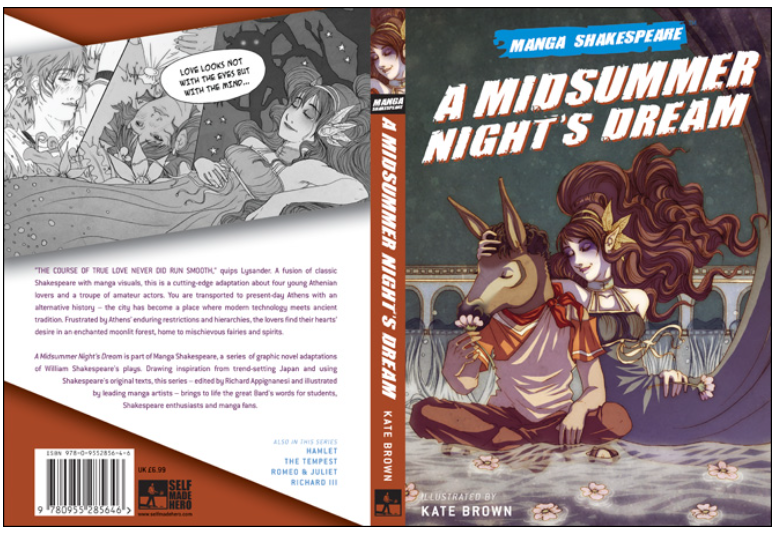
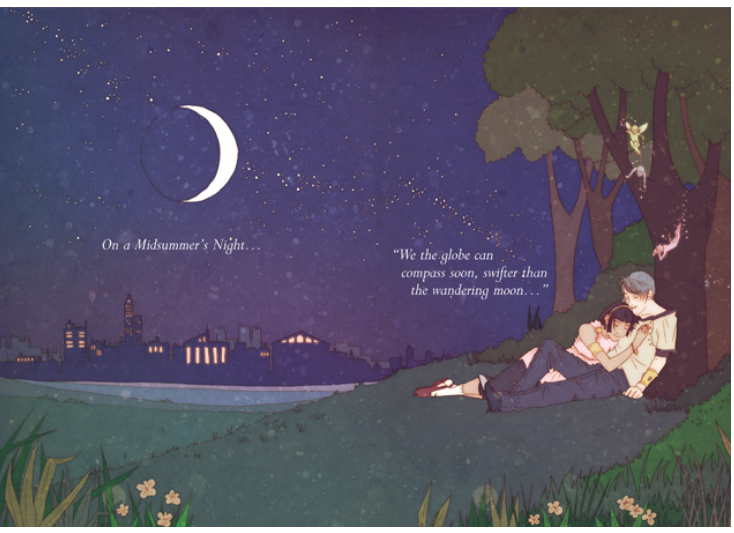
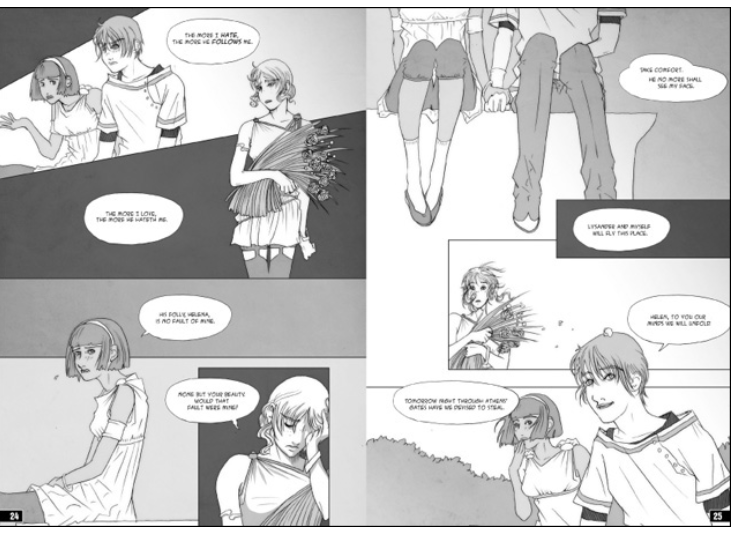
This series is very creative and in general, has a distinct and exciting style that works well for Shakespeare, though I would argue that “Midsummer” is one of the weaker ones in the series. The character designs are somewhat generic, and although the emotions are clearly conveyed, I feel that the style doesn’t clearly show who these people are or the different environments in the play- Athens, the Woods, and the Court.
Basic Details:
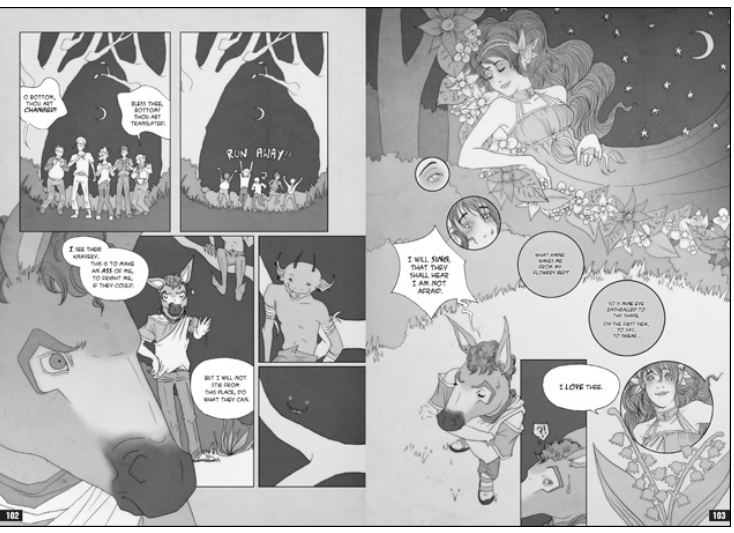
Sometimes the over-the top nature of manga drawings works well with this play. When Helena is mooning over Demetrius, we can see highlights in her eyes that work very well within the big-eyed, expressive style of Manga. By contrast, some other characters like Oberon are drawn very sharply, making him appear stern and even grim.
Another thing the style of pictures does is to literally illustrate the poetic passages of the For example, when Titania delivers her “These are the forgeries of jealousy,” speech, the images of the text compliment her concerns that the king and queen of the fairies are effecting the natural world.
Critique
I enjoy how well the characters convey emotions in this version because they help convey the meaning of the text. However, I think this visual style is too austere and sharp for such a vibrant, silly, colorful play. I wish the style of Manga didn’t dictate that most of the pages are black and white, because some color in the fairy scenes would add some much-needed magic.
Recommendation: This book is a good resource for classrooms exploring the text of “A Midsummer Night’s Dream,” but honestly I wouldn’t read it for pleasure.

Grade: 2 1/2 Shakespeare globes.
Happy Pride Month everyone! This month I’m going to concentrate on “A Midsummer Night’s Dream,” more info on Shakespeare’s comedies, and a few little nerdy analyses, but first I wanted to extend a friendly hand to members of the LGBTQ+ community, whom arguably Shakespeare has celebrated in some of his writing, especially in Midsummer and the other comedies.
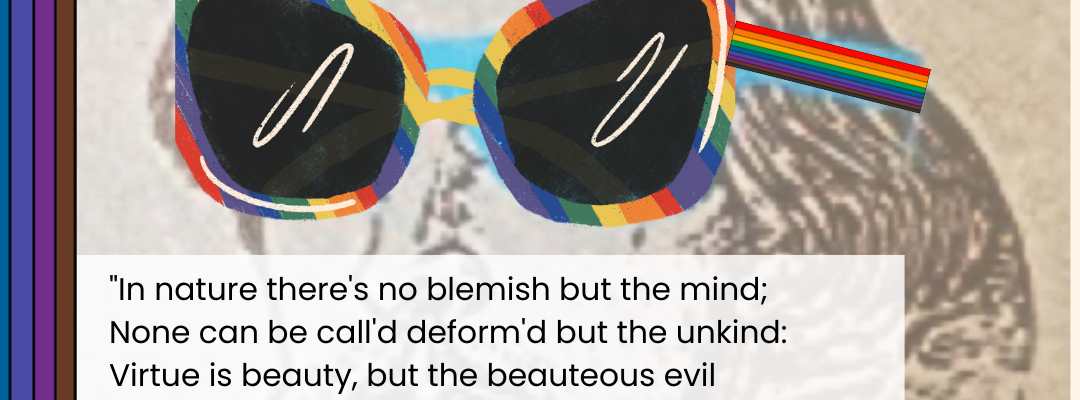
The quote on the featured photo comes from “Twelfth Night.” The character Antonio repeatedly mentions how much he loves Sebastian (Viola’s twin brother). He shows a great amount of courage and devotion. Sadly, Sebastian doesn’t reciprocate his feelings, but he is grateful to Antonio, and tries to help him when he gets in trouble.
If you’re interested in queer readings and queer coding in Shakespeare, enjoy this video analysis from Kyle Kalgren and Rantasmo- a scholar who delves into queer representation in popular media:
Let me know if you’d like me to cover more of this topic. I admittedly, haven’t read many Queer Theory papers on Shakespeare, but it’s a fascinating and wide-ranging topic. It also helps develop the case that, as Rantasmo puts it: “If we truly believe (and I do) that Shakespeare is a universal writer, then his plays should be able to speak to all races, cultures, and all forms of love.”
Happy Pride Month!
 The Shakespearean Student