
8 lessons from ‘King Lear’ as we head back to work or nights out after COVID-19


“There is a tendency for us to view Shakespeare as this unquestionable monolithic genius. But there is also in us all that iconoclast that wants to tear him off his pillar or plinth.”
–Dr. Katrina Marchant

There are few things that will drive a Shaespeaeran scholar more skull-shatteringly livid than when someone asks them if Shakespeare wrote the plays attributed to him. There are dozens of YouTube rants, bile-dripping academic papers, tinfoil-hat Tweets, and of course, centuries of anti-academic book bashing and counter-bashing research on the subject. So I won’t try to settle this debate, but I think the debate itself is worth looking at.

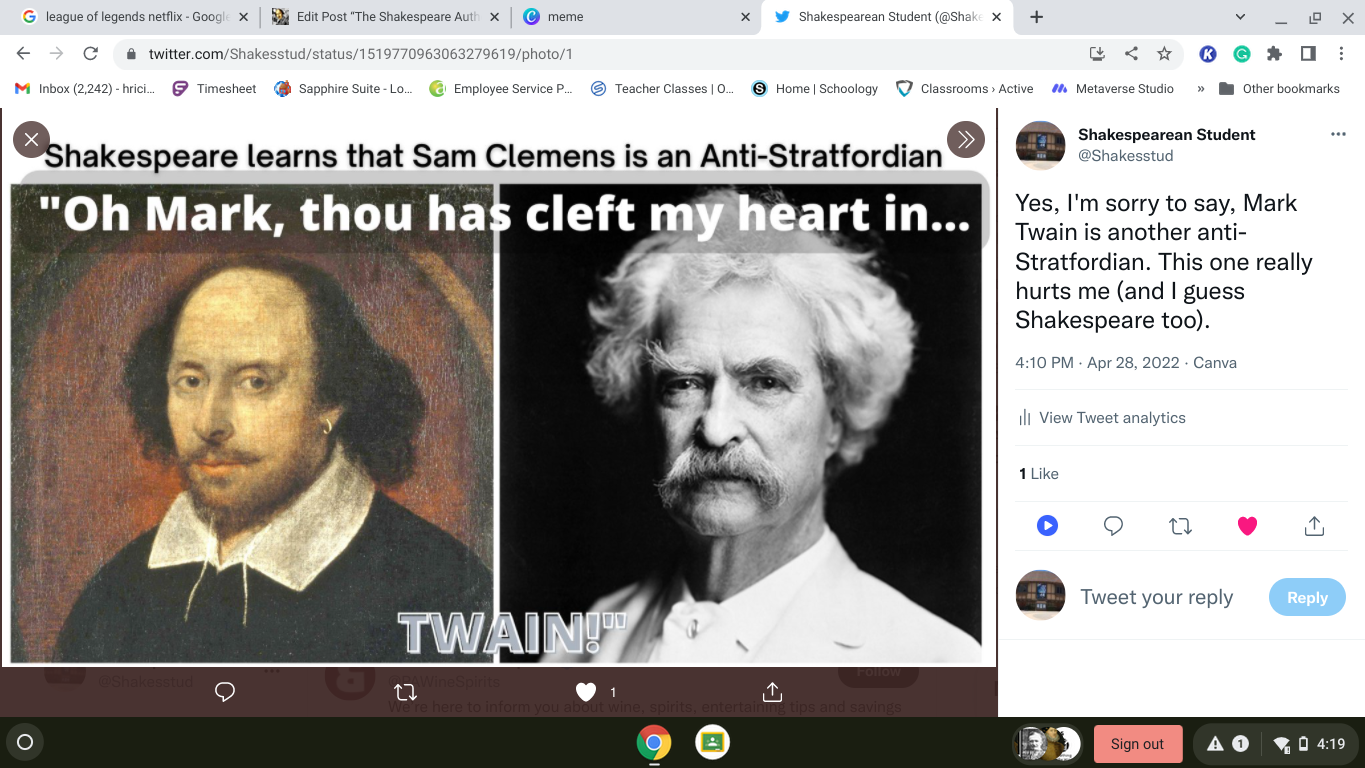

The authorship controversy is essentially a conspiracy theory- Was some unknown writer sending scripts to Shakespeare’s company and using the actor from Stratford as a patsy, or a pen name? Is there a massive cover-up to disguise the author of the most celebrated works in the English language? If so, why? How? and what else are they hiding?

Now if there’s one thing I’ve learned over the past four years is that it’s extremely rare to change anyone’s mind about any kind of conspiracy theory, and there are hundreds! Ancient Aliens, Bill Gates, Covid vaccine microchips, Elvis isn’t dead, The Illuminati, Kennedy Assassination, Pizzagate, Q-Anon, Trump’s Russia connections, the list goes on. Several recent studies show that the majority of Americans have heard at least one conspiracy theory, and many of us believe these theories to varying degrees. Sadly, the internet, which was designed to share information, is extremely good at sending misinformation as well.
So as an en educator and a father, I want to focus on the Shakespeare conspiracy not just because it gets my dander up, but also because, compared to these other theories, it is actually one of the least harmful. Conspiracies like the Plandemic hoax are extremely dangerous because they dissuade people from getting a life-saving treatment, and allow this pandemic to continue. By contrast, ultimately it doesn’t really matter who wrote Shakespeare’s plays, so I think this kind of exercise is useful for educators to challenge students to think critically about this low-stakes theory, and then applying the same skill to others to become better-informed thinkers.
First, let’s summarize the most compelling points of the theory that Shakespeare didn’t write his plays. This is a video by director Roland Emmerich, which he made to help promote his film “Anonymous.” Emmerich dramatizes the controversy by portraying the Earl of Oxford writing the plays of Shakespeare anonymously, and sending them to Shakespeare’s company, giving the man from Stratford credit for writing them.
There’s an old saying in science that “Extraordinary claims require extraordinary proof,” and, aside from the fact that the Earl of Oxford wrote poems, there is no evidence that Oxford ever even spoke to Shakespeare’s company. In fact, almost none of this video is supported by any historical evidence. Now it would be a lot of work to refute each argument of this video point by point right? And surely I have better things to do than do a point-by-point refutation, but…
– Shakespeare did leave evidence of his handwriting, just not evidence of his dramatic writing. The fact that his correspondence didn’t survive doesn’t mean there wasn’t any. The kind of cheap parchment that writers of the period used dissolved very easily, especially when they used ink with high iron content. The examples we have of Shakespeare’s writing are mainly legal records and books that were designed to last. In short, there’s no conspiracy to hide Shakespeare’s manuscripts, they simply didn’t survive.
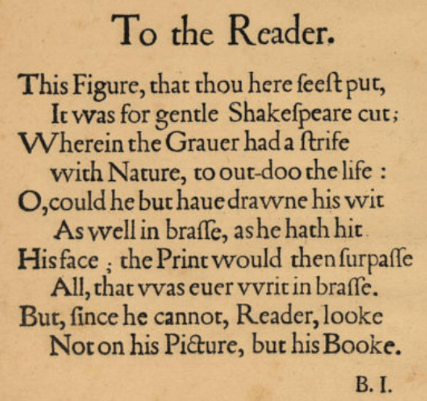
– We don’t know for sure that his parents were illiterate, or that his daughters were. That is based on an urban legend, not actual proof. Also, plays were not written to be read, that’s why TV viewers are viewers and the grounding are called an audience.
A. Shakespeare wrote about aristocratic people because they were paying his rent. His company was literally named “The Lord Chamberlain’s Men.” One reason why Shakespeare was more successful than Ben Johnson was that he was deferential and obsequious to the English aristocracy; he had to sing their praises to stay in business.
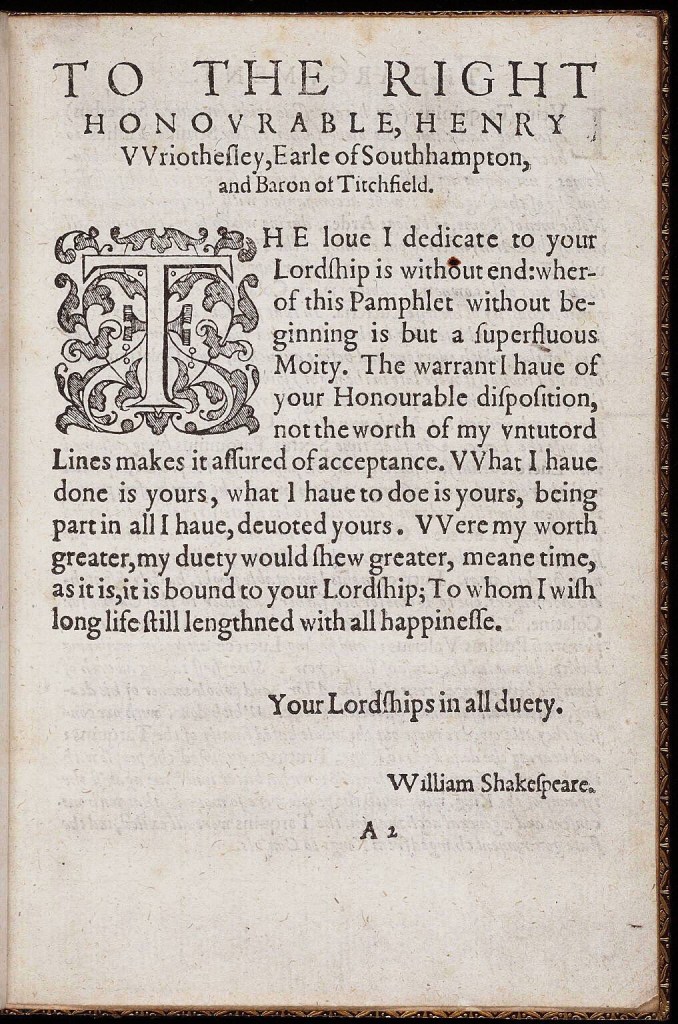
B. Every character that Emmerich mentions is not an aristocrat- Bottom is a lower-class weaver, Mistress Overdon is an inn-keeper. The only aristocrats Shakespeare ever insults are Polonius (who isn’t real), and Sir John Oldcastle in the early draft of King Henry IV, which he immediately changed to Sir John Falstaff once Oldcastle’s family members complained about it to Shakespeare’s company. Emmerich is flat-out lying when he says Shakespeare mocks the English upper class like an equal.
C. There’s a very simple explanation of how Shakespeare was able to write about the manners and lives of the English aristocratic class: he didn’t. All of Shakespeare’s comedies (except for Merry Wives which has the aforementioned Falstaff as a character), and tragedies take place in other countries like Italy, France, Sicily, or Greece. His History plays are set in England, but they dramatize events that happened 100-200 years before Shakespeare was born, meaning that he didn’t need to know too much about contemporary court politics. Furthermore, the majority of the plots he used were recycled from history books, poems, and prose romances.
It’s useful to think of Shakespeare not as a novelist like Dickens or Tolstoy and more like a TV or film screenwriter like George Lucas or Aaron Sorkin. He didn’t write based on real-life experiences or conjure new ideas out of thin air. He was a popular dramatist who adapted existing works of literature to be dramatized onstage. This is why I created my YouTube comedy series “If Shakespeare worked for Disney.” Emmerich, like many Anti-Stratfordians, is assuming that Shakespeare couldn’t have written plays about the nobility without being one himself, but that’s not what Elizabethan dramatists did- they adapted pre-existing work to fit on the public stage, which means anyone with a good education and knowledge of the theater could have written them, regardless of his or her upbringing.

If you are wondering how I could possibly know Shakespeare’s writing process,, the answer is simple: All of Shakespeare’s sources have survived, which means that I can prove that his plays are adaptations. This is a common problem with most conspiracy theories- they never take the straightforward way to explain something. Instead, they take a theory and twist facts to suit that theory. In this case, they twisted the facts about the Earl of Oxford’s life to make him look like Hamlet and based on that, they made him look like the true author of Shakespeare.
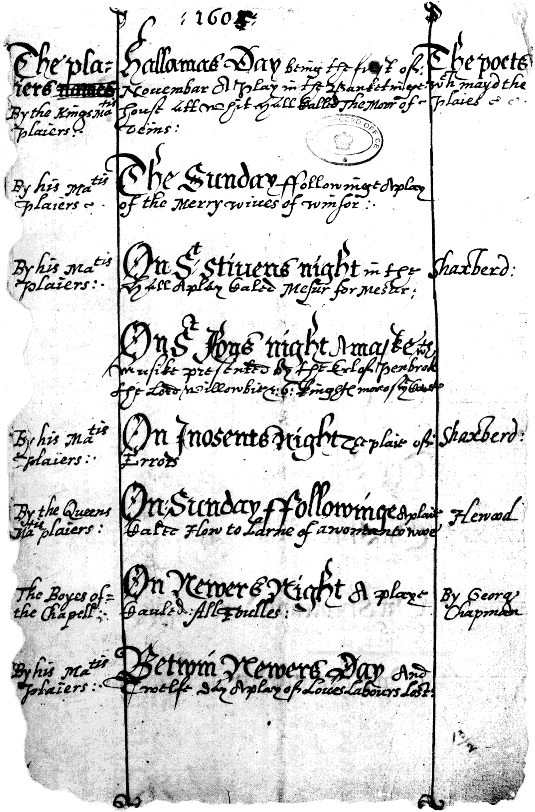
D. Honestly the handwriting is the weakest point- yes Shakespeare spelled his name differently in documents but this was before standard English spelling. The first English dictionary was at least 100 years after Shakespeare’s death. This point is clearly designed to discredit Shakespeare and make him seem uneducated. But again, this point is irrelevant when you consider that Shakespeare wrote for theater, where standard spelling is completely unnecessary.
By the way, Ben Johnson spelled his name differently in his manuscripts.
When I was in high school, taking my first class on Shakespeare, I watched this documentary which almost convinced me that Oxford was the true author of Shakespeare. The researcher they interviewed seemed so passionate and I wanted to believe what he said was true. But that was before I started reading about Shakespeare’s life for myself, and looked at the evidence myself.
https://allianceforscience.cornell.edu/conspiracy-theory-handbook/

If you look at many different conspiracy theories, they often exist in a form outside of normal reality, to the point where the believers have no interest in any kind of contrary evidence, logic, or any person who even questions it. Essentially the conspiracy becomes their identity, and they will virulently defend this conspiracy from anyone and anything that opposes it. Below is an explanation of the basic parts of a Conspiracy theory, with some points on how they all apply to the Shakespeare Authorship Controversy
Believers in conspiracies are motivated by feelings, not facts, and they don’t care how inconsistent those theories are. For example, the same people who believe Joe Biden lost the presidential election, also believe that the president (Joe Biden) is also being played by an actor. This might explain why many people believe that people like Christopher Marlowe wrote the works of Shakespeare, despite the fact that he died 9 years before Shakespeare started writing.
Again, since the believer is motivated by feelings, they are naturally suspicious of any contrary evidence and just assume anyone who contradicts them is in on the conspiracy. This is called self-sealing the conspiracy.
One question that inevitably comes up with the Shakespeare Authorship debate is: “Who cares?” Usually, this means “Does it really matter who wrote the plays?” However, I want to use this question in this context: “Why go through the trouble to conceal who wrote these plays?” As I mentioned earlier, though Shakespeare is very famous and culturally important now, he certainly wasn’t back in his lifetime. Playwriting was not a venerated profession, and socioeconomically, Shakespeare was little better than a tailor. Why would it be worth it to conceal who wrote a few, fairly popular plays in 1616?
It would take an enormous amount of effort to conceal who wrote these plays for 400 years- you’d have to pay off publishers, fake court records (like the one I showed you above), keep an entire court quiet, and make sure nobody ever wrote down the truth for 400 years. Why would it be worth it? This kind of logic is why the Moon Landing and the Flat Earth conspiracies don’t hold up to rational thought- there’s simply no reason to go through the effort of concealing the alleged truth. The truth itself is just easier to defend.
As the name implies, Anti-Stratfordians don’t so much believe in Bacon, Pembroke, Oxford, etc, so much as they actively choose not to believe in William Shakespeare of Stratford. This means they will use every bit of their energy trying to prove that theory, and won’t stop until they find something, no matter how nonsensical, to prove their Shakespeare is the real Shakespeare.
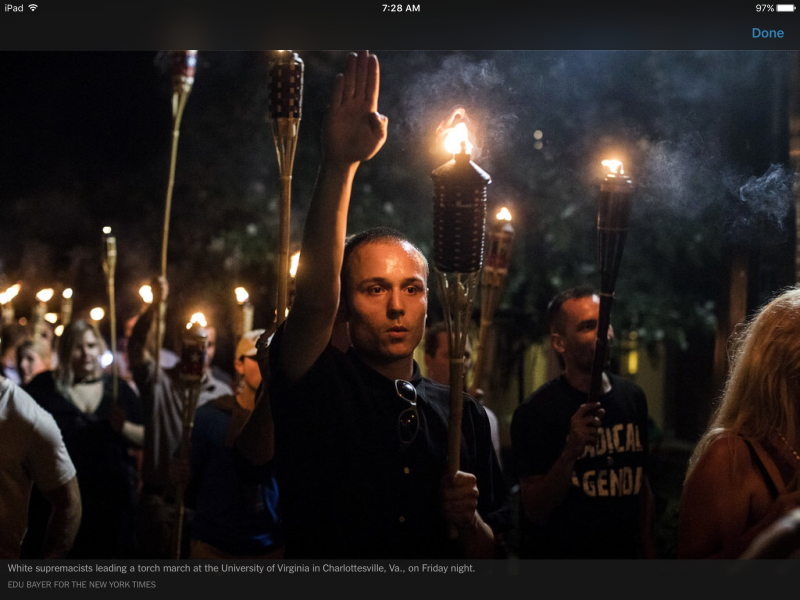
Let me be blunt- a conspiracy is very simmilar to a delusion, and any attempt to shatter that delusion is a form of persecution for the conspiracist. The most infamous example of how conspiracy theorists can feel persecuted and empowered at the same time is the way it permeated Nazi Germany and neo-Nazi units. Hitler came to power by spreading the theory that the Jews were secretly controlling the world and Germany was persecuted, while at the same time, Germany was destined to control the world in the eyes of the Nazis. I mention this not because I think Anti-Stratfordians are Nazis (how could I watch I Claudius otherwise?), but that conspiracy theories are potentially very dangerous because they foster a self-serving victim mentality where people are constantly looking for someone to blame for their problems and they will sometimes become violent against anyone who challenges them.
One of the most important concepts in law is the notion that someone is ixznnocent until proven guilty. Along those lines, the prima facie, the accepted truth is accepted as truth, until new evidence contradicts it. If you look at the Supreme Court mock trial for the Authorship question back in 1987, that was the conclusion they came to in the end. Though little historical evidence for Shakespeare has survived, there is NO PHYSICAL evidence that contradicts it, so in the interest of prima facie evidence, they ruled for Shakespeare.
Now real conspiracy believers never believe in the merits of contrary evidence. They will just assume it is manufactured or faulty; part of the attempts of those nefarious truth concealers to pull the wool over their eyes.
I’ve seen many people claim that the evidence for conspiracies is not found in documents or in scientific explanation, it’s in some kind of code or cipher or series of clues that only the believers understand. As you’ll see below, some of the most famous Anti-Stratfordians claimed to find hidden codes and ciphers in Shakespeare’s plays that prove that he was concealing his true identity. They will also cite coincidental details like the fact that the crest of Edward DeVere was an eagle shaking a spear, and claim this proves his identity as the true author of the plays. When you see a theory like like this, remember, correlation is not causation. Just because a few bad things happened when a few people said “Macbeth,” does not mean Macbeth is cursed. Some things actually are coincidences and not everything has a dramatic or sinister cause. This brings me to my next point:

Let’s do a little thought experiment: Let’s imagine that you were Miguel from Disney’s Coco, and you discovered that your hero Ernesto Dela Cruz murdered your grandfather Hector, but (unlike in the movie), he actually DID write the songs he said he did. How would you feel about Hector? Would you hope and pray that Ernesto lied and your virtuous grandfather was the real author? Might you even concoct a conspiracy theory to rewrite Ernesto’s history and get Hector celebrated as the real author of “Remember Me?”
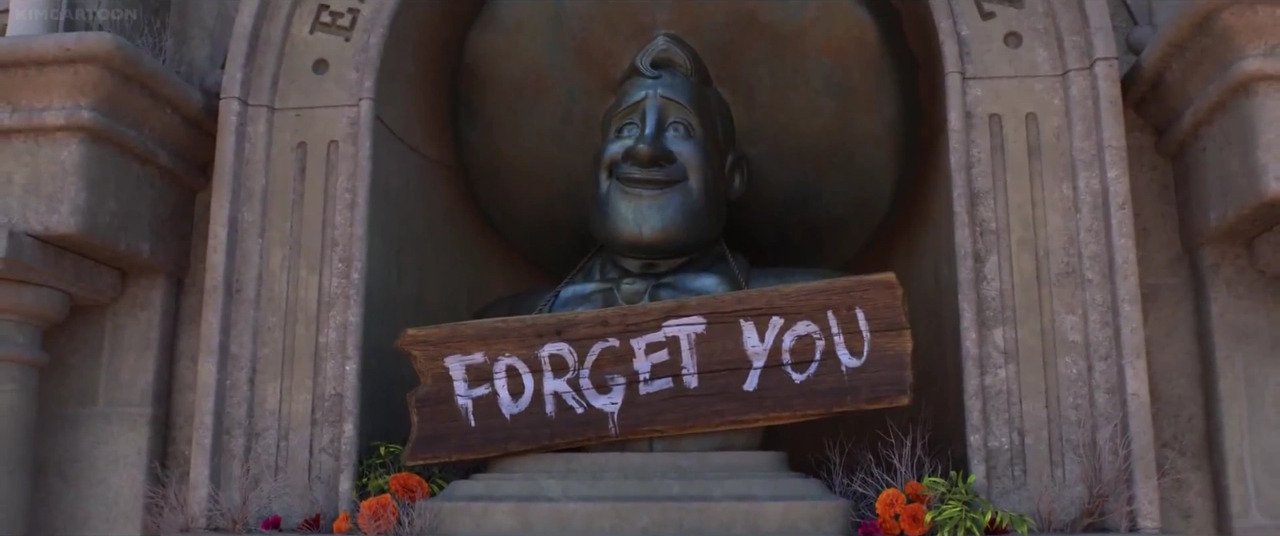
I’m not suggesting that Shakespeare is guilty of murder, or any other crime (apart from usury, hoarding grain, and a few minor tax violations). What I’m trying to do is to draw parallels between two men who are icons that are beloved by their hometowns, who created work that resonates with a lot of people.

We all have a tendency to take people we admire and put them on pedestals, (like the quote at the beginning mentions), and many people try to identify with their heroes. This is really easy with Shakespeare because most of the personal details of his life have vanished, so we can imbue him with our own sensibilities. Case in point- when Mya Angelou read Shakespeare’s sonnets as a little girl, she initially thought that he was a black girl. Likewise, Eugene O’Neill and other Irish and Irish American writers have thought he might be been Irish.
Some of the most outrageous anti-Stratfordians clearly have an axe to grind because they have a family connection (real or imagined) to the man they believe to be Shakespeare. In the 19th century, Delia Bacon wanted to prove that the real author of Shakespeare’s plays was the 17th-century poet, philosopher, and essayist, SIR FRANCIS BACON. Ms. Bacon hated Shakespeare because she thought he was an illiterate sheep-poaching commoner. She, therefore, used her theory to hoist Shakespeare off his literary pedestal, and therefore elevate herself because she believed she was descended from Sir Francis (though in reality, she wasn’t).
Rather than using any kind of historical evidence to prove her theory, Ms. Bacon claimed there was an elaborate code hidden in the iambic pentameter. Subsequent literary pseudo-scholars have attempted to hack the code and prove that they can prove that Sir Francis was the real author of the plays. In the late 1800s, American politician and author Ignatius Donnelly appropriated Ms. Bacon’s theory and claimed he had found the code, which rested on the pagination of the First Folio.
Donnelly had a knack for spreading conspiracy theories; as the title page of his book shows, he also authored a book where he claimed he correctly identified the location of the lost city of Atlantis. He also hated Shakespeare because Donnelly believed he was nothing more than a businessman, exploiting the talent of others, so like Bacon, he cooked up these ‘facts’ to suit his theory in order to take Shakespeare down.
Like many conspiracy theories, Anti-Stratfordians don’t have any factual basis for the ideas they hold, they are responding to an emotional need or desire. Donnelly and Bacon wanted fame, recognition, and revenge against a man they hated. J. Thomas Looney, who proposed that the Earl of Oxford wrote Shakespeare, wanted a ‘fairy prince’ that is, a semi-mythical Bard who would lead England into a golden age. All these people were dissatisfied with the man from Stratford, so they created a Shakespeare of their own, and tried to justify his existence.

To briefly sum up why the Bacon/ Donnelly theory is false, it hinges on the page numbers of the Folio, but Shakespeare didn’t print the first Folio. If you look at the title page, it was assembled by two actors from Shakespeare’s company- Henry Condell and John Hemmings, and it was printed by Isaac Jaggard, the same man who printed Shakespeare’s Sonnets in 1609. Writers had no say in how their work was printed and in fact Jaggard actually printed the sonnets without Shakespeare’s permission! The notion that Jaggard had any interest in properly printing a secret code in the pages of his posthumous book seems to me, incredibly unlikely at best.
I’ve adapted a lesson plan about conspiracy theories to include a discussion of the Shakespeare authorship question. I’ll also include a worksheet that you can use in your classroom to distribute among your students if you choose to use it as well. I think it’s a good way to foster critical thinking, scientific reasoning, and historical curiosity, and if it prevents more people from joining Q-Anon, so much the better!
This lesson plan makes use of the Conspiracy Theory Handbook, and it has great, easy to read activities about how to spot a conspiracy theory, how to talk to a conspiracy theorist, and how to avoid being taken in by a conspiracy.
https://www.c-span.org/video/?618-1/shakespeare-author-pseudonym#
If you’re like me, you are probably saddened by the loss of the great American actor, Sidney Poitier. He was part of the original cast of the great American play A Raisin In the Sun, and earned countless accolades for his roles on stage and screen like In the Heat Of the Night, Porgey and Bess, Guess Who’s Coming To Dinner? and The Greatest Story Ever Told.
In this interview, Poitier’s friend Denzel Washington talks about how Poitier was a beacon, not just for black actors but a gold standard for all actors.
Washington also discusses his role in the film Macbeth, in which he plays the title role. As I mentioned in my Much Ado About Nothing review, Denzel is a consummate performer of Shakespeare and I for one can’t wait to see him as Macbeth. This is nor just because he was an absolute joy in Much Ado, but because Denzel is famous for playing characters that start out as good men become violent and evil in films like Training Day, American Gangster, and Flight. I have high hopes that Denzel’s Macbeth will rank among his greatest performances.
Macbeth is now playing at selected theaters and streaming online on Apple+. I plan to see it and hope that you will too.




From now to January 13th, I’m offering a $5 discount for any class that is $10 or more! You can take my Shakespeare classes for as little as $4! Go to my Outschool.com class and enter the coupon code: HTHESNIF6B5 at checkout!
https://outschool.com/teachers/c9bc565b-71e9-44c9-894a-921c472f4a37#usMaRDyJ13
If you’re new to Outschool, use the referral code below when you sign up. You’ll automatically get $20 USD off as a thank you to use on future classes! My referral code is: MaRDyJ13
Hope to see you on my Outschool page!

I’ve been working on a remote learning class for Outschool.com where I take some of the audition advice I wrote in Creating A Character: Macbeth, and some of the other acting posts I’ve published over the years. This will be a weekly virtual acting course for kids ages 13-18, starting September 12th at 10AM EST.
This class will outline the tools and techniques of Shakespearean acting such as projection, articulation, and imagination. Each We’ll also go over Shakespeare’s own advice on acting in his play “Hamlet: Prince of Denmark.” The course will culminate with the students choosing their own Shakespearean monologues and scenes, which they can use going forward in auditions, school plays, and classes.
The best thing about the course is that each week builds on the previous week’s experience, but you don’t need to go to all of them. I’ll be flexible and work with the student’s schedule so everyone gets as much out of the class as possible.
If you’re interested in signing up, go to Outschool.com. If you have any questions, email me by clicking here:
Hope to see you online soon!

I’m working this summer with the good people at Outschool, an online learning platform for kids ages 3-18. I’m designing a series of Shakespeare classes that you can sign up for. We’ll be doing acting exercises, reading Shakespeare’s text, and making Shakespeare props Cost is $3 per child.


The course is ala carte, that is, you can sign up for as many courses as you like. Each course builds on the last one, but you don’t have to have taken the previous ones to enjoy any one particular course Let me know in the comments which class(es) you are interested in, and/or what suggestions you might have. I can’t wait to hear what you think about these summer Shakespeare courses, and I hope to see you online soon!
1. Introduction to Shakespeare- (enrollment here: https://outschool.com/classes/introduction-to-shakespeare-or-how-i-learned-to-love-the-bard-UoHH5fes?sectionUid=973060db-f857-461a-a23a-f1476203a544&showDetails=true) We’ll talk about why Shakespeare is so famous and learn about his life and career. Then we’ll do some fun quizzes that you can earn prizes based on how well you pay attention!
2. How to write ✍ like Shakespeare (Enrollment here: https://outschool.com/classes/how-to-write-like-shakespeare-0HuPq1Cg?sectionUid=4243af25-ba41-4724-82a2-61bd7c7d862e&showDetails=true) – Have you ever wanted to woo your sweetheart or write the next bestselling play? Well, this course will cover the secrets of Shakespeare’s writing. We’ll cover how to write romantic poems, the structure of Shakespeare’s plays, and you’ll get to write your own Shakespearean speeches!
3. Intro to Shakespearean acting Practical tips and tricks for your next Shakespeare audition.
4. Shakespeare’s villains We’ll look at the darkest and creepiest Shakespearean characters and see why they still fascinate us today!
5. The Violent Rhetoric Of Shakespeare’s Julius Caesar (Registration Here: https://outschool.com/classes/the-violent-rhetoric-of-julius-caesar-fkMLbAtA?sectionUid=1f9220cd-8c28-438d-9799-8479494353a4&showDetails=true#usMaRDyJ13) In this one-time course, students will analyze the rhetoric and persuasive power in two speeches from Shakespeare’s “Julius Caesar”
6. Intro to Romeo and Juliet – Get a leg up on your next English class with this fun, frenetic look through the characters, themes, and story of Shakespeare’s most popular, and most-taught play.
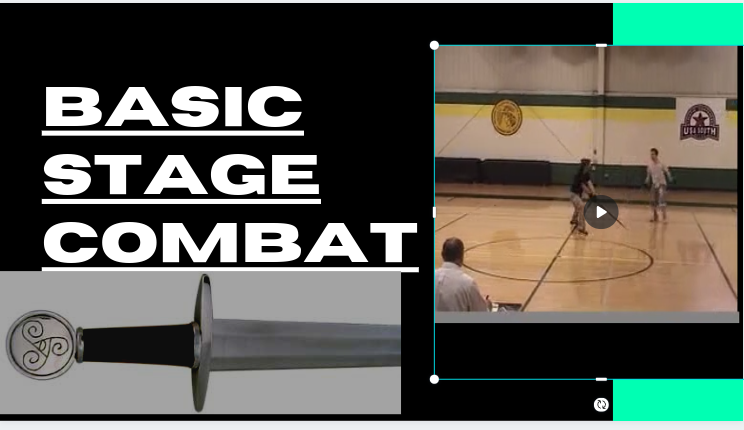
7. Basics Of Stage Combat (Registration here: https://outschool.com/classes/1120ada2-047d-4b0f-84f6-5eb4b0f7dc66/schedule#usMaRDyJ13– I’ll teach the kids about Elizabethan street fighting, and the basics of stage combat.
8. The Balcony Scene of Romeo and Juliet– It’s been called the greatest love scene of all time, but why? I’ll explain the imagery, the poetic language, and give you a chance to make your own love poetry!
9. Insults and Shakespeare You’ll craft your own Shakespeare insults and engage in a (respectful), beat down with your classmates! Along the way, we’ll talk about how insults escalate to violence in Shakespeare’s Romeo and Juliet.
10. The Iconic imagery of Romeo and Juliet We’ll look at some beautiful paintings, songs, and other works of art that build on Shakespeare’s poetic imagery.
11. Romeo and Juliet and pedagogy Shakespeare is uniquely challenging to get kids to engage with. I’ll give you some of my resources, games, and activities to help you delve into the play in your next class.
If you like these courses, let me know by leaving a comment below. If you’re interested in signing up, visit my teacher profile page: https://outschool.com/teachers/The-Shakespearean-Student. New classes will be added every week, and I’ll work around your schedule when planning the dates and times. Hopefully this will be a great chance for me to share my expertise with a young group of future Shakespearean students!


I played this character back in 2010 as a college production and not to brag, but I want award both for my performance and also my role as dramaturg for that particular production, so I did a lot of research in into the character and I tried to bring my own spin on the part. So unlike my other Crafting a Character posts, I am going approach explaining the character as a series of questions instead of talking about it https://youtu.be/-ocOfP16tdw
Who Is Friar Lawrence?

A friar is a monk who belongs to a local monestary. Francis belongs to the Franciscan orders created by Saint Francis of Assisi. It was known for its naturalist philosophy, and St Francis himself is often depicted in paintings as being friends with birds and rabbits and things like that. He was also a strict vegetarian and believed the spirit of God is in all creatures.
Francis’ work was a reaction to the other orders of Catholic monks who, the Franciscans believed, had gotten corrupt and lustful. So the Franciscans in reaction to that corruption, tried to embrace poverty, plain living, and duty to the poor.

The Franciscans were also famous for not wearing shoes; Shakespeare calls one of them “[our] barefoot brother.” Again, the Franciscans value humility before God, and because of that, they shaved off part of their heads, (known as a tonsure hairstyle); it was way of stating that they were not concerned with their appearance, (so yes, it’s supposed to look stupid).
Why does Romeo hang around him? Friar Lawrence is supposed to be Romeo’s tutor, but really he is in the play because Shakespeare needed a convenient way to get Romeo married to Juliet without his parents finding out. He is also a neutral party who can be sympathetic to both Romeo and Juliet, without being tangled in the politics of the Capulet/ Montegue fued.

Friar Lawrence also acts as a character foil to Romeo. While Romeo is rash, passionate, and impulsive, Friar Lawrence is calm, slow, and contemplative, (appropriate qualities for a monk). During my production of Romeo and Juliet, the director beautifully explained their relationship by having Romeo trip and fall when he is excited about his impending marriage. I as Friar Laurence turned around and said calmly: “Wisely and slow, they stumble that run fast.”

My Interpretation Shakespeare makes references again and again to the character being old, yet the director and I made a conscious choice not to portray him as such. I portrayed him as just a few years older than Romeo, who is supposed to be a teenager. I played him as sort of about 25-26, the same age that I was when I played the part.

We did this because even though Friar Laurence acts as the voice of age and experience, he also seems very naive. He seriously believes that he can singlehandedly stop the feud between the Montegues and Capulets with one marriage. he never consults anybody else, and he leaves Friar John in charge of sending the all important letter to Romeo that Juliet is not dead, and never checks up with him on that.
Rather than being an old priest who is aged and experienced, I portrayed him as a young idealistic priest who doesn’t know better. In some ways, his love of God has blinded him as much as Romeo’s love for Juliet. The Friar thinks that being a peacemaker is something that God wants him to do. He thinks that bringing together souls is part of his heavenly mandate and he doesn’t think about the practical consequences of his religious fervour.
What is his role in the play?
Friar Laurence engineers the plots to get Romeo married to Juliet and hopefully settle the feud. When we first meet him, Romeo convinces Friar Lawrence to perform a secret wedding between Romeo and Juliet (Act II, Scene iii).

In Act II, Scene vi, Friar Lawrence secretly marries Romeo and Juliet, but first warns them to “Love moderately,” because he believes that an over abundance of passion can have disastrous consequences. He even compares Romeo and Juliet’s love to gunpowder.
In Act IV, Friar Lawrence has two scenes where he stops Romeo and then Juliet from killing themselves. First he stops Romeo, filled, with grief and remorse after murdering Tybalt, and being banished.


In Act IV, Scene iii, Friar Lawrence concocts his plan to give Juliet a secret potion with which to fake her death. Juliet demands that he find a way to prevent her marriage to Paris or she will kill herself.


Is Friar Lawrence To Blame For Romeo and Juliet’s Death?
A lot of scholars, teachers, and classrooms have pondered this question. In addition, even the Supreme Court of the United States put Friar Lawrence on trial in 2016 as part of a mock trial sponsored by the Shakespeare Theater in Washington DC. https://www.c-span.org/video/?419930-1/federal-judges-discuss-romeo-juliet
I am actually working on my own mock trial activity which I will share by the end of this month, but for right now I will summarize the major arguments:
The Defendant (Friar Lawrence) tried repeatedly to prevent Juliet and Romeo from committing suicide. In Act III, when Romeo tries to stab himself, Friar Lawrence stops him and convinces him to go to Mantua:
Romeo. O, tell me, friar, tell me,
In what vile part of this anatomy1985
Doth my name lodge? tell me, that I may sack
The hateful mansion.
[Drawing his sword]

Friar Laurence. Hold thy desperate hand:
Art thou a man? thy form cries out thou art:1990
Thy tears are womanish; thy wild acts denote
The unreasonable fury of a beast:
Thou hast amazed me: by my holy order,1995
I thought thy disposition better temper'd.
Hast thou slain Tybalt? wilt thou slay thyself?
And stay thy lady too that lives in thee,
By doing damned hate upon thyself?
Likewise in Act IV, Friar Lawrence stops Juliet from killing herself and gives her the vial of sleeping potion.

Throughout the play, Friar Lawrence attempted to keep Romeo and Juliet alive and together, but was thwarted by what could legally be interpreted as and ‘Act of God’:


What the prosecutor might say-
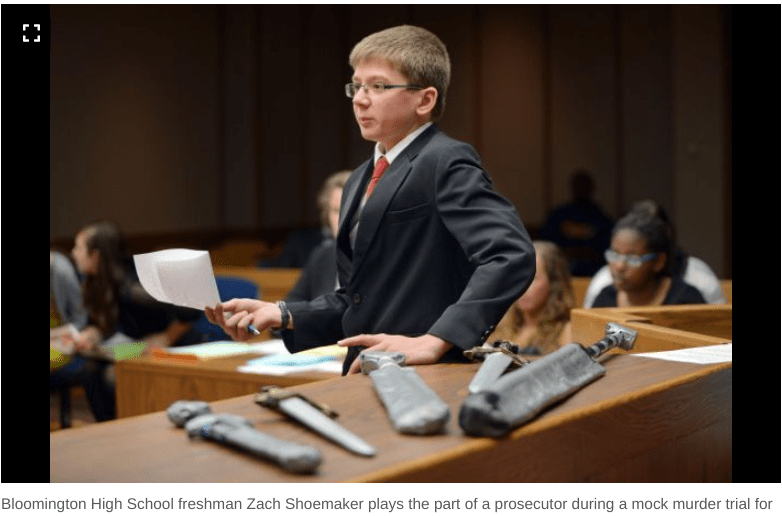
Friar Lawrence performed a marriage illegally, without consulting the parents of two minors. He also harbored a fugitive (Romeo), right after he was found guilty of murder. Finally, he tried to deceive Juliet’s parents by giving her a dangerous drug. On paper, though Friar Lawrence was certainly acting out of compassion for Romeo and Juliet, his actions were highly suspicious and could be considered criminal.
An English class can learn a lot putting Friar Lawrence on trial for his role in Romeo and Juliet’s deaths, as long as they are responsible in the way they portray teenage suicide.
Who Originally Played Friar Laurence?
I don’t have any substantial evidence to prove this but I do of have a theory: some of Shakespeare’s parts require a great amount of stage business; singing, dancing, swordfighting, improvising that kind of thing. Hamlet for example has to sing, dance, sword fight, and remember copious amounts of speeches and dialogue. Will Kempe had to dance and dance and sing. Robert Armin had to improvise and dance with the audience.
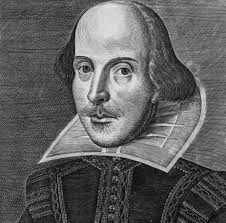
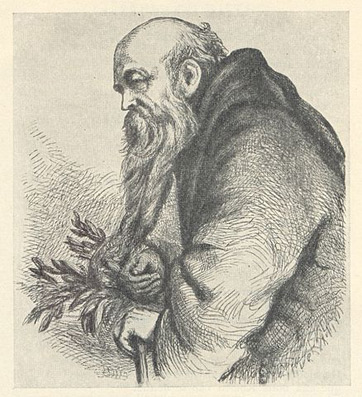
My theory is Shakespeare didn’t have time to learn extravagant stage business, since he was also writing the plays and helping with the company’s business dealings. With this in mind, he probably gave himself the parts that had long speeches. That’s why I think that Shakespeare himself might have played friar Laurence.
Plus Shakespeare had an edge playing the role over other actors. Since friars are supposed to shave their heads, and since we know that Shakespeare had thinning hair, he could have easily played the part himself.
So those of you who get cast as Friar Laurence and wish that you were cast is somebody young like Romeo or Tybalt, at least your consolation prize is that you might be playing the part that Shakespeare himself once played.
I hope you found this insightful and maybe helpful if you find yourself cast in Romeo and Juliet. I’ll be sure to post about the Friar Lawrence mock trial I’m currently working on. At the very least, I hope this information helps you see Friar Lawrence as more than an old guy who hangs around teenagers.
https://youtu.be/AMLRwqPm_gk snl
Thanks to WordPress’ new interface, it’s easier for me to read what other bloggers have to say about the topics I write about. One trend I’ve noticed is the question that’s been boiling underneath the surface of a lot of people in our culture: “Should Shakespeare be ‘cancelled’?” It’s an interesting question and definitely merits discussion.
It is also a question that has some basis reality: Shakespeare was taken off the list of required reading of of schools in New Zealand. In 2007, The American Council Of Trustees and Allumni published a report called “The Vanishing Shakespeare,” about the number of colleges who no longer require English majors to take Shakespeare courses. If you read my post on Romeo and Juliet, you will recall that one of the main reasons why we have Shakespeare as a requirement in American high schools is that he is required reading in many colleges. So this could be part of a trend that extends to primary as well as secondary schools as well.
Many academics, (myself included), are wondering about Shakespeare’s status in education, and whether or not he will continue to be a staple of all English language curricula. So what I want to do with this essay is to ask the question, “Should Shakespeare be cancelled,” as well as”Should he not be cancelled? and “What even is cancelling and how does apply to somebody who is already long long dead now?”
First off, cards on the table: I am a white man, (with a beard), who has been studying Shakespeare for 20 years. I have a very clear bias; I would never advocate for Shakespeare being taken out of any schools. That said, I see merits to parts of the argument, and I do not believe that these teachers who are reexamining Shakespeare’s place in education are inherently wrong. Nor do I believe if that there is no merit to changing the way educators teach Shakespeare in our schools, (more on that later). My point is to write a thoughtful reflection about the nature of Shakespeare as a writer, his status within our culture, his status within the educational establishment, and how changing that is not necessarily a bad thing.
When I read the article “Why I am rethinking Teaching Shakespeare In My English Classroom,” by teacher Christina Torres, I noticed a lot of her arguments centered around diversity quotas and simply not having the class time to devote to Shakespeare. This is entirely understandable. Shakespeare has been dead for 400 years, which means language has changed a lot since his heyday.
Shakespeare poses several unique challenges in education. He wrote in an obscure form of poetry that is no longer fashionable. You have to read footnotes. Although 95% of the words he used are still used today, they are used in a very unique syntax. Furthermore, I come to teaching Shakespeare from the perspective of somebody who studied theater, acting, Elizabethan history, and everything that that is required to teach Shakespeare, but many teachers do not. My point is I can understand why a teacher feels that he or she does not have the time, energy, or the learning required to give Shakespeare the space that he so clearly demands.
The question of Shakespeare’s status in our classrooms also raises subtle questions about diversity. Many curricula these days emphasize diverse writers and try to highlight the cultural contributions of women, people of color, and LGBTQ people, and as far as we know, Shakespeare fit into none of these groups.
This educational initiative is a part of the anti racist initiative and I as an educator I am fully on board with this. I love to be in a classroom where Gabriel Garcia Marquez, Lorraine Hansberry, Mary Shelley, and Truman Capote share the same shelf is William Shakespeare, but ever since the 18th century Shakespeare and cultural nationalism have been inexorably linked.
Almost since the beginning of Shakespearean scholarship, American and British critics have sought to venerate Shakespeare as the peak of British culture, and thus the peak of human culture as well. It’s not a coincidence that we celebrate National Poetry Month the same month as Shakespeare’s birth and death. Also, even though we don’t know for sure when Shakespeare was born, we celebrate it on April 23rd, St. George’s Day, thus forever linking England’s greatest poet, with its patron saint. George Bernard Shaw, (an Irishman), coined the term ‘bardolotry,’ to describe the treatment of Shakespeare by the English as if he were a god and the evidence is quite damning:
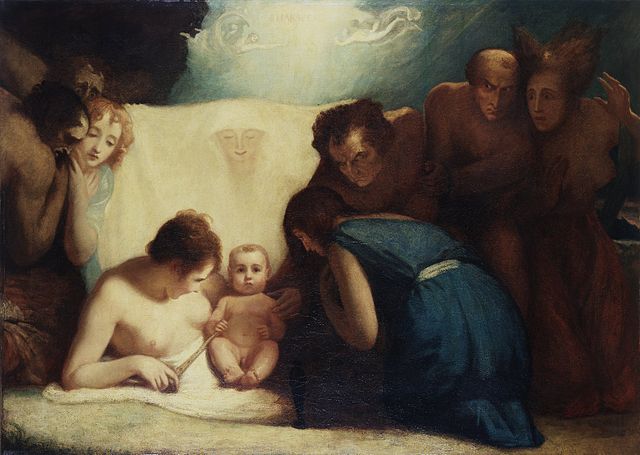
Just look at this painting where Shakespeare is portrayed as in the same pose and with the same reverence as the baby Jesus. This reverence carried over to poetry, music, festivals, and of course, to the classroom. As I wrote in My Romeo and Juliet post, since the beginning of American public education, Shakespeare was an indispensable fixture in American schools, and thus, prompting American writers like Mark Twain to grumpily refer to Shakespeare and other classics as “Something everyone wants to have read, but nobody wants to read.”
Countless textbooks refer to Shakespeare as the greatest writer in the English language, and possibly the greatest writer ever. Ralph Waldo Emerson once preached that Shakespeare was: “Inconceivably wise.” The god-like aura around Shakespeare has made him nearly impervious to criticism and English speakers on both sides of the Atlantic have claimed Shakespeare as their gospel. Being an English speaker means having the God-Shakespeare on your side, and if you have God on your side historically speaking, you can justify anything.

The British were keen to elevate Shakespeare to this godlike status partially because it showed that their culture was superior to others. Let’s not forget that Shakespeare’s last play The Tempest is about a man with book learning who goes off and colonizes an island whose inhabitants seem savage and uneducated. If our goal as educators with adding anti racist education is to show that all voices are valid, to highlight the contributions of every ethnic group, and to refute the notion that white culture is in any way superior to any other, then to a certain degree, we must knock Shakespeare off his literary pedestal.

We also should not a take a blind eye to the anti-POC and mysoginist language in some of Shakespeare’s plays. For instance one line I deeply despise in Romeo and Juliet is the line where Romeo refers to Juliet by saying she “Hangs upon the cheek of night like a rich jewel in Ethiop’s ear” (A black woman wearing an earring).

This statement contrast beauty, specifically the beauty of white skin, with the “ugliness” of a black woman’s ear. Shakespeare uses this metaphor several times in several plays, establishing white as beauty and black as the aberration.
I bring this up not to say that Shakespeare should be cancelled and hated because of this racially insensitive language, because he’s not the only one who does it. All you have to do is Google “Who’s the fairest one of all?” to realize that for centuries, fair skin, beautiful skin, and white skin meant the same thing. As Dr. Grady says in the video above, having an honest discussion of Shakespeare’s language and his culture’s attitude towards race is an opportunity to teach critical race theory in the classroom, and to teach students to recognize and deplore dehumanizing language, which though poetic to white Elizabethans, is hurtful and dehumanizing to people of color. In short, banning or condemning Shakespeare is counter productive, but examining his language, culture, and politics with a critical eye is a very useful and important exercise.
Part 2 why Shakespeare doesn’t deserve to be cancelled
I’ve established that Shakespeare has connections with some very dark moments in a European history and he should not be celebrated merely because of he was white or because he was British. I believe that Shakespeare’s contributions to the English language as well as drama and the arts still makes him worthy of study by students. As this video from the New York Times shows, students need at least a basic understanding of Shakespeare to understand western culture:
I believe that, as long as we educators don’t indulge our bardolotrous tendancies, and keep Shakespeare in the context of the period in which he lived, we can still teach him in a way that will benefit our students.
One small way to put Shakespeare in context is very simple: STOP USING THE TERM “RENAISSANCE.” Most scholars now refer to Shakespeare’s time period as the Early Modern Period, not The Renaissance, which was an honorific term that people used during Shakespeare’s time period. The term RENAISSANCE, meaning the rebirth of classical learning and by extention the rebirth of sophisticated European culture, can give the impression that it was only a period of study and artistic achievement, leaving out colonization and racial and political tension. I find Early Modern Period a very useful descriptor because like it or not, Shakespeare’s culture influenced ours, therefore an understanding of him is very much understanding of where we came from. Learning from Shakespeare is like learning from history- we cannot shy away from the mistakes of the past, nor should we flat out reject its benefits.
it should be noted that a lot of the good scholarship in the last to the last 50 or 60 years has been tasked with putting Shakespeare back into his historical context and trying to reclaim his staus as a man of his time. Dr. Stephen Greenblatt of Harvard University helped coin the term ‘new historicism’ which emphasizes learning about the culture of a writer’s time period. To New Historicists (such as myself), Shakespeare is no longer considered a great man of history, but a man shaped by the culture of his time, which is to say a man who had good parts and bad parts much like history itself. This is the approach that I think should be taught in American schools highlighting how Elizabethan culture shaped Shakespeare, and how he shaped our culture in turn.
Comparing Shakespeare to history, especially American history, is very useful in American schools. Like the founding fathers Shakespeare reached towards an ideal. He wrote plays about ideal kingship, even though kingship is a cruel and autocratic system of government. He wrote romances about young lovers who follow the wonderful idea of love at first sight, even though in reality that concept is somewhat rare, and very often fraught with peril. And like Shakespeare, people often ignore the flaws and human failings of the founding fathers too. Look at this mural painting of The Apotheosis of Washington, which still looks down on mortals from the US capital building in Washington DC.
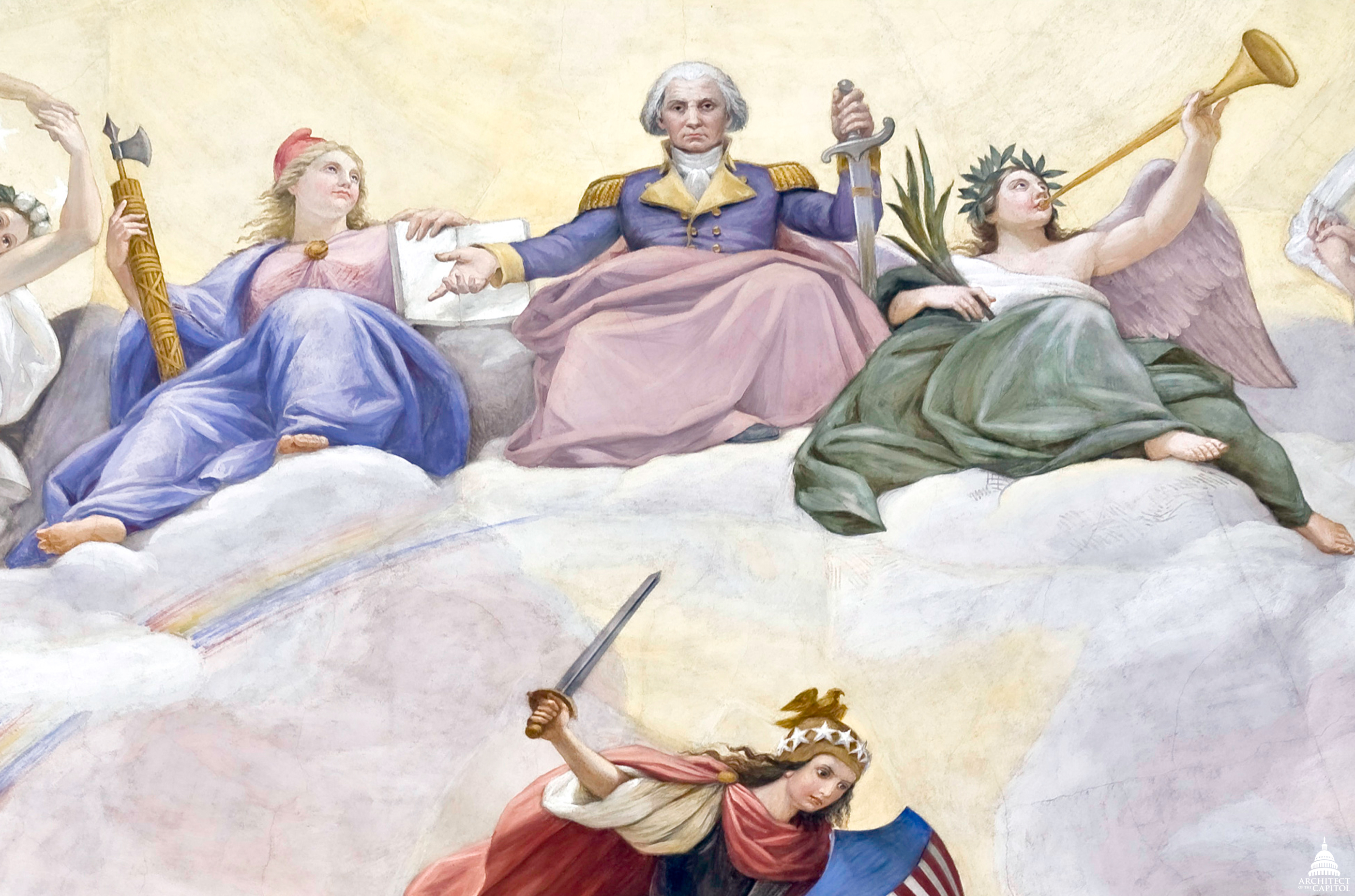
Much like the founding fathers’ document that declares that all men are created equal, we can appreciate Shakespeare’s plays but also be aware of their flaws. Both documents were written by a flawed human being with a very narrow understanding of the wider culture and world in which he lived, but one who did his best to try and write works that would benefit all of mankind. As educators we can teach students to be inspired by this work, and seek to have a greater understanding of “The Great Globe Itself,” with the benefit of hindsight, so they may become enlightened citizens of the world, true Renaissance Men, Women, themselves.
So if I truly believe, (and I do), that Shakespeare is still relevant and has something to say to people regardless of their culture or cultural and racial backgrounds regardless of what time period they were born in and regardless of gender, how then can we teach him in classrooms in responsible and nuanced way?
What to do?
[ ]Give a cultural context to the play you study. A culture that is the direct ancestor of our own, but one that was frought with Colonialism, Casual racism, (especially in language), Sexism, Patriarchy, and Homosexual oppression. Not to toot my own horn, but this is what I tried to do with my Romeo and Juliet Website: https://sites.google.com/d/1iLSGjbllxU-ZwyrUya_xHtjojSCg9pd6/p/12GhgKdJr63wmTcm6TTvkZ-ROmUnALKQi/edit
-Give students the chance to rewrite or reword the more problematic elements, such as Romeo’s creepy stalking of Juliet,
-Highlight Shakespeare calling attention to patriarchial issues: Capulet in Act III, v, Friar Lawrence comparing love to gunpowder. Juliet raging against arranged marriage, etc.


To sum up- cancelling Shakespeare doesn’t mean vilifying him. It means re-examining his role in our culture, and teaching students to appreciate the benefits, and try to correct the damages that his culture has brought to our own. We can’t change the past, but we can learn from it. As for Shakespeare himself, no amount of legitimate criticism will keep people like me from enjoying his plays. If anything, I appreciate even more the breadth and depth of his writing the more I learn about the culture in which he lived. I like to think that, if Shakespeare knew people would be talking about him in school, he’d echo the way Othello said he wanted to be remembered, to “Speak of me as I am, Nothing extenuate.” And that we heed the words of Ben Johnson in the dedication to the First Folio, when we think of treating Shakespeare as an icon.

Shakespeare’s darkest comedy takes on religion, sexual coercion, and the nature of justice.
— Read on www.slate.com/articles/podcasts/lend_me_your_ears/2018/08/lend_me_your_ears_podcast_episode_4_shakespeare_s_measure_for_measure.html
 The Shakespearean Student