Great classes are available December 1st.

Scehdule

Class Descriptions:

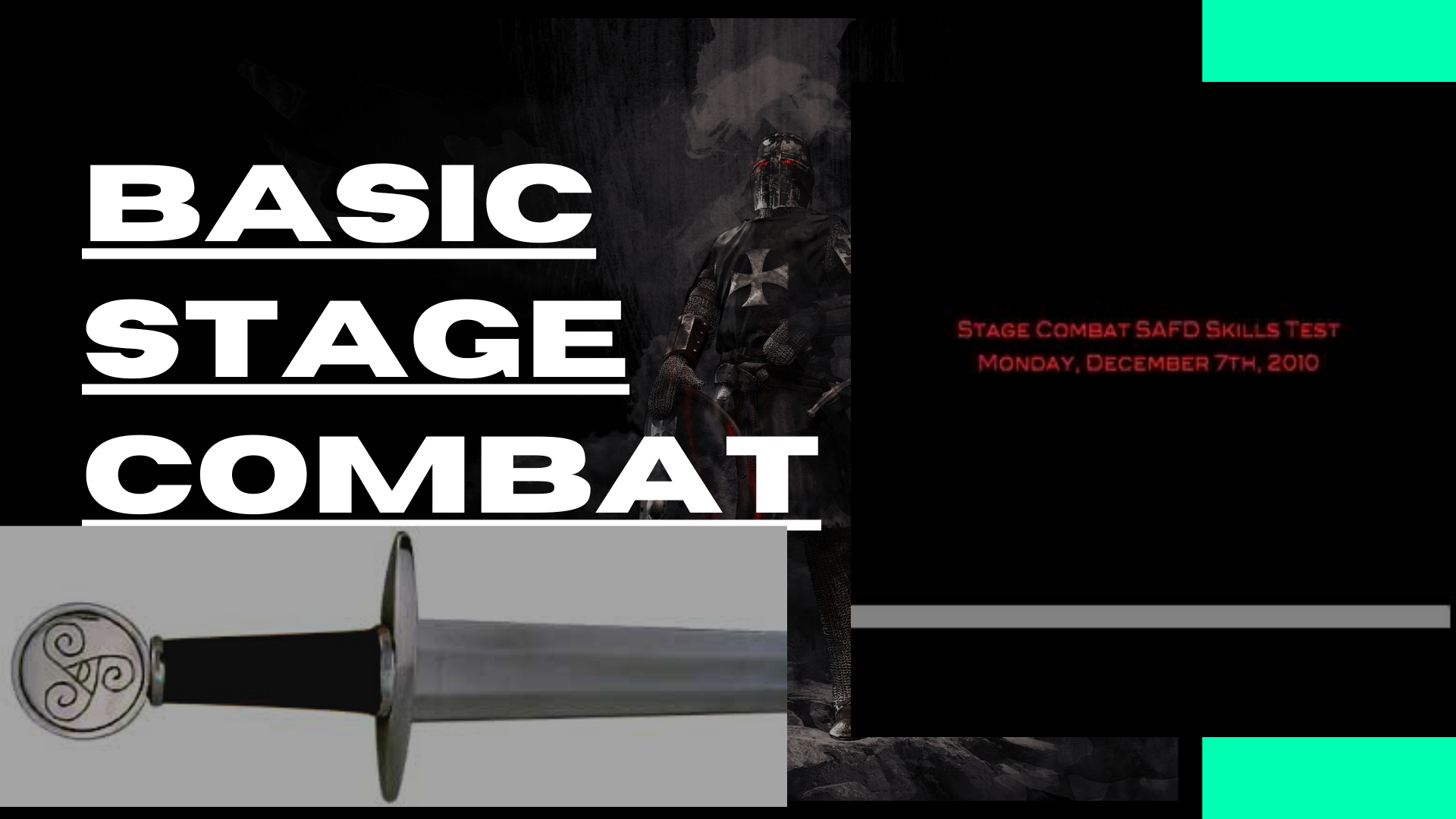
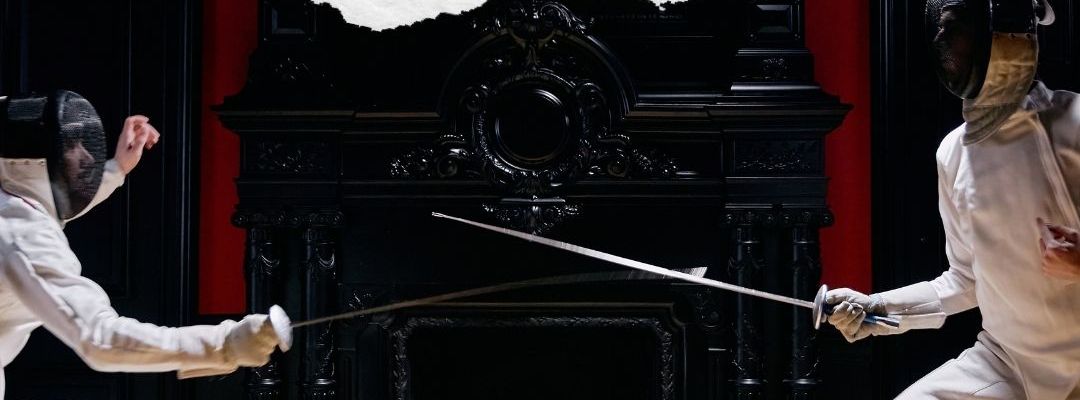
Basics Of Stage Combat:  Students will learn the basics of safely enacting a fight onstage, in preparation for a Shakespeare play. We will also learn about the history of sword fighting in the military and the duel.

Trailer for Basics of Stage Combat.

My daughter really enjoyed taking this class. She was actually able to use her sabre and try out her routine on her father. Paul is quite knowledgeable about Shakespeare and made the class really fun by teaching a fight scene from Romeo and Juliet. It is amazing watching her practice with Paul over Zoom. I hope Paul will have. more combat classes, it is a different way to learn Shakespeare.

IB, Parent

An Interactive Guide To Shakespeare’s London (New Class)
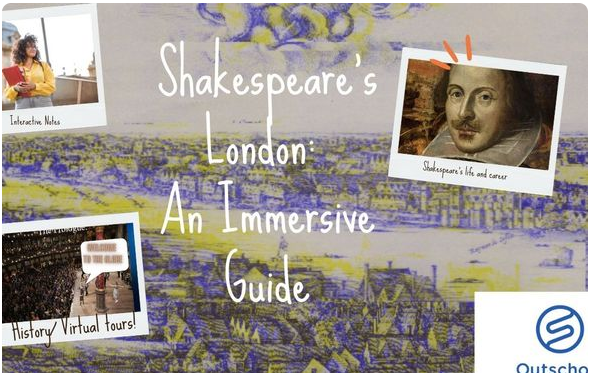
A virtual tour of Shakespeare’s London will get kids to interact with the culture of Elizabethan England.

Class Experience

To teach kids about the Elizabethan era and the background of Romeo and Juliet, The Instructor will interact with the class (via pre-recorded videos), pretending to be Shakespeare. The class, pretending to be actors in Romeo and Juliet, will get a virtual tour of The Globe Theater, Hampton Court Palace, and a virtual visit to an Elizabethan doctor's office. This activity is an immersive way for them to learn about the period, how it relates to the world of the play, and how Shakespeare changed theater.

The class will take the form of a guided WebQuest activity.  First, the students will get a worksheet that has a series of fill-in-the-blanks about Elizabethan society (below). The students will fill out this worksheet based on a Nearpod and in conjunction with a website I’ve made, https://sites.google.com/nebobcats.org/visit-to-elizabethan-london/home?authuser=0 
Both the Nearpod and each webpage will have a virtual tour, a video, and text explaining some aspects of Elizabethan life. Before they go to each location, I will give a short introduction via prerecorded video:

Wizard Science

In this one-hour course, your child will discover the enchanting world of science through a series of magical experiments. Learn about such topics as Astronomy, Static Electricity, chemistry, and optical illusions.

What was Christmas like For Shakespeare?

In this one-hour course, students will learn and play games that will explore the history behind Christmas traditions. We will also discuss the themes, characters, and famous quotes from Shakespeare’s play “Twelfth Night.”

Special Discount for My online “Macbeth” course

Since “Macbeth” is my Play of the Month, I’m offering a discount for my online class on the play. You can get $5 off my class “Macbeth: An Immersive Learning Experience” with coupon code HTHES6G3YH5 until Nov 4, 2022. Get started at https://outschool.com/classes/macbeth-an-immersive-learning-experience-xGKHeHgH and enter the coupon code at checkout.

To learn more about the class, watch the trailer above, and read my description of the escape room:

Summer Shakespeare courses!

Trailer for my summer Shakespeare Courses!

I’m beyond excited that I am able to offer three multiple week courses through Outschool for kids aged 6-12. If you scan the QR code below, you can see class descriptions and individual trailers. You can also check out the “My classes,” Page on this blog. I hope you and your family will join me this summer!

Shakespeare Week Is Coming at Outschool.com

Outschool.com will be honoring the contributions of Shakespeare during the very first Shakespeare Week on March 21-27th.

I’m honored to take part in this celebration, and I’m offering several aclasses which relate to Shakespeare in an engaging way. Here’s the schedule below:

If you want to sign up for one of my classes, please visit my Outschool page:

https://outschool.com/teachers/The-Shakespearean-Student

https://outschool.com/teachers/The-Shakespearean-Student

Hope to see you during Shakespeare Week!

Watch “New Outschool Course: Shakespearean Stage Combat” on YouTube

Class Experience

This 7 part class is geared towards students who have taken my class or some other combat class in the past. We will go in-depth into how to train for, rehearse, and perform a fight from a Shakespeare play. We'll cover fight safety, footwork, proper cuing, and selling the fight. I will also contextualize the fights in "Romeo and Juliet," (the play with more fights than any other in Shakespeare), to explain how the Elizabethans felt about violence, and what this play says about violence in our own time. 

The class will mostly be up-on- your feet demonstrations with me in front of the camera and the students mirroring my movements, but there will also be handouts, websites, and video presentations to help supplement what I say.

Class Structure:
Week of March 5th: Background on swords/ sword crafts
-We will learn about the history of swords from ancient military weapons, to the instrument of private dueling. We’ll also cover the culture of duelling that permeated 17th century Europe, as well as the text of Shakespeare’s Romeo and Juliet. The class will conclude with me instructing the kids how to make a practice sword themselves!

Week of March 12: Proper Footwork/ Stances For Sword Combat-
We’ll cover proper stance and en guard positions
We’ll practice advances and retreats
We’ll show you how to do a lunge and the footwork involved.
We’ll incorporate advances and retreats with simple high-low parries and cuts.

Week of March 19th : Cuts, Swipes, and Thrusts
You’ll learn the lines of attack and defense
You’ll learn the proper way to hold a blade and deliver realistic-looking cuts.
Learn how to thrust (online and offline)

Week of March 26th: Parries and other defensive moves
We’ll cover the 6 basic parries to stop an attacker’s blade.
We’ll also cover ducking, avoidances, and

Week April 2nd: Fight Rehearsal 1
We’ll assign roles for the fight between Mercutio, Tybalt and Romeo in Act III I of "Romeo and Juliet." The students will then get a fight
script, and you can practice the fight at ½ speed. We will also explain the concept of Cue-Reaction-Action: A basic stage combat principle/process used to achieve a safe and dramatically effective sequence of events.
We will discuss the importance of eye contact and cuing to ensure that the combatants know what to expect at all times.

Week of April 9th: Fight practice 2
- We'll go through a warm-up fight drill
- We'll rehearse the fight at 3/4 speed to make sure you understand all the moves.
- We'll Incorporate acting into the fight- selling pain, anger, and fear. Use distance to show character relationships.

Week of April 16th: Final Fight performance
- We'll go through a warm-up fight drill again
- We'll rehearse the fight at 3/4 speed again to make sure you understand all the moves.
-We’ll pretend we’re doing this fight for an audience at ¾ speed. If need be, I’ll play one of the aggressors and you can do the fight pretending I’m in the room with you.
At the end of class, I’ll show you a similar fight from my production of Romeo and Juliet and we’ll discuss the differences between our fight and the one I showed the students. Finally, we will discuss the way Shakespeare portrays violence in the play and its relevance in our world.

Click here to register for this course:

https://outschool.com/classes/shakespearean-stage-combat-TyjzafsK?usid=MaRDyJ13&signup=true&utm_campaign=share_activity_link

Get $10 off my class "Shakespearean Stage Combat" with coupon code HTHES13UPF10 until Apr 24, 2022. Get started at https://outschool.com/classes/shakespearean-stage-combat-TyjzafsK and enter the coupon code at checkout.

New OUtschool Class: Love Poetry, Shakespeare Style

Your child will learn how to write poetry like Shakespeare himself, through a mix of presentations, a printable guideline, and some fun quizzes to test your knowledge of Shakespeare’s sonnets! Designed for ages 13-18.

Class Description:

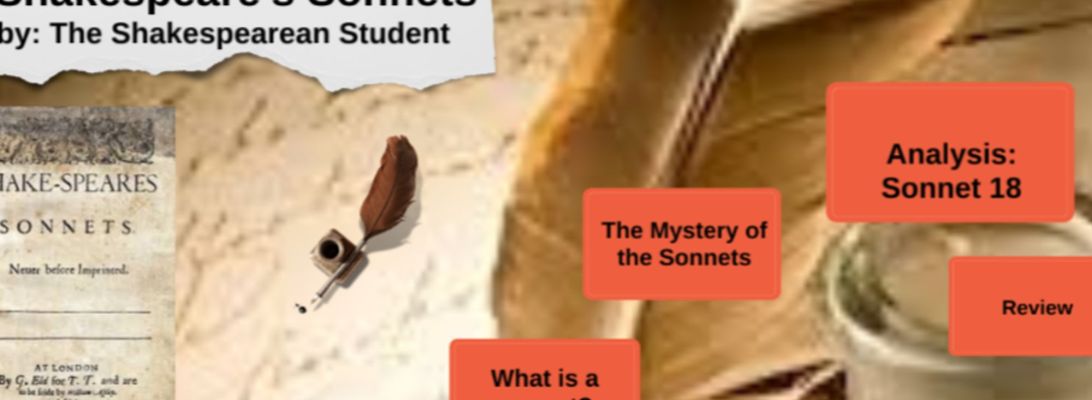
We will cover what a sonnet is, namely a type of poetry Shakespeare wrote in iambic pentameter with a particular rhyme scheme. Using a combination of Prezi video presentation and Google Slides, I will go in-depth to explain how he organized his poetic ideas into a very compact form. 
Using primarily Google slides, we will then analyze Shakespeare's sonnets for their themes, literary devices, and the way he uses the poetry to enhance and heighten emotion and ideas. I will focus mainly on Sonnet 18, "Shall I compare thee to a summer's day?" I will cover Shakespeare's use of such literary devices as:
- Metaphor
- Simile
- Personification
- Rhetorical Question
- Irony
- Paranomasia
Analyzing this sonnet will allow the class to grasp the basics of how a sonnet is constructed, and begin to prepare to write their own. While the presentation is in play, students will be given an access code to an optional Nearpod presentation, that will allow them to construct an iambic pentameter line, quiz themselves on the vocabulary I cover, and provide visual aides to better understand Shakespeare's sonnets.

In the next part of the course, We will engage in a group brainstorming session. I will provide the students with potential topics (assuming they don't have one of their own), and then we will construct a short story using madlibs around that topic that will later be condensed into a sonnet. I will demonstrate to the students how to use imagery and poetic language to enhance the ideas and feelings in the poem. After this, I will use the nearpod and Google slide presentations to guide the students how to tell their own story using such devices as metaphor, personification, allusion, and sensory details. They can jot their ideas down on the provided handout to help organize their thoughts. In addition, the optional handout will have useful brainstorming activities such as a web link to websites like Rhymezone.com, (which helps poets find rhymes to words), and imagery boards that will allow the students to think of sensory details to include in the sonnet . The class will draw attention to the handout activities, and pause briefly to allow the students to do them.


In the last part of the class, I will give the students step-by-step instructions on how to transform their brainstorming ideas into a sonnet. I will begin by showing them how to construct an iambic pentameter line. I will engage the students by clapping out the beats for this line and allow them time to do the same, so they may internalize the rhythm. This will be accomplished via a Google Slides screen.
The final page of the handout has a page to write a draft of their final sonnet, with the line numbers conveniently provided. I will go over every section of the worksheet so the students know how to utilize it effectively.

After all this practice and training, the students will be able to create a basic 14 line sonnet which will give them practice not only writing poetry but also using and recognizing literary devices. It is my hope that this course will not only help the student(s) gain an appreciation for Shakespeare's poetry but also develop their own ability to speak and write eloquently and persuasively.