Every holiday season, my school likes to decorate the classroom doors in a festive way. I wanted to celebrate my Shakespeare Club and also teach the club members about Shakespearean fashion, Shakespearean characters, and maybe a little bit about engineering too. I’m very proud of the results, and I wanted to share this idea with you to maybe inspire you next holiday season!
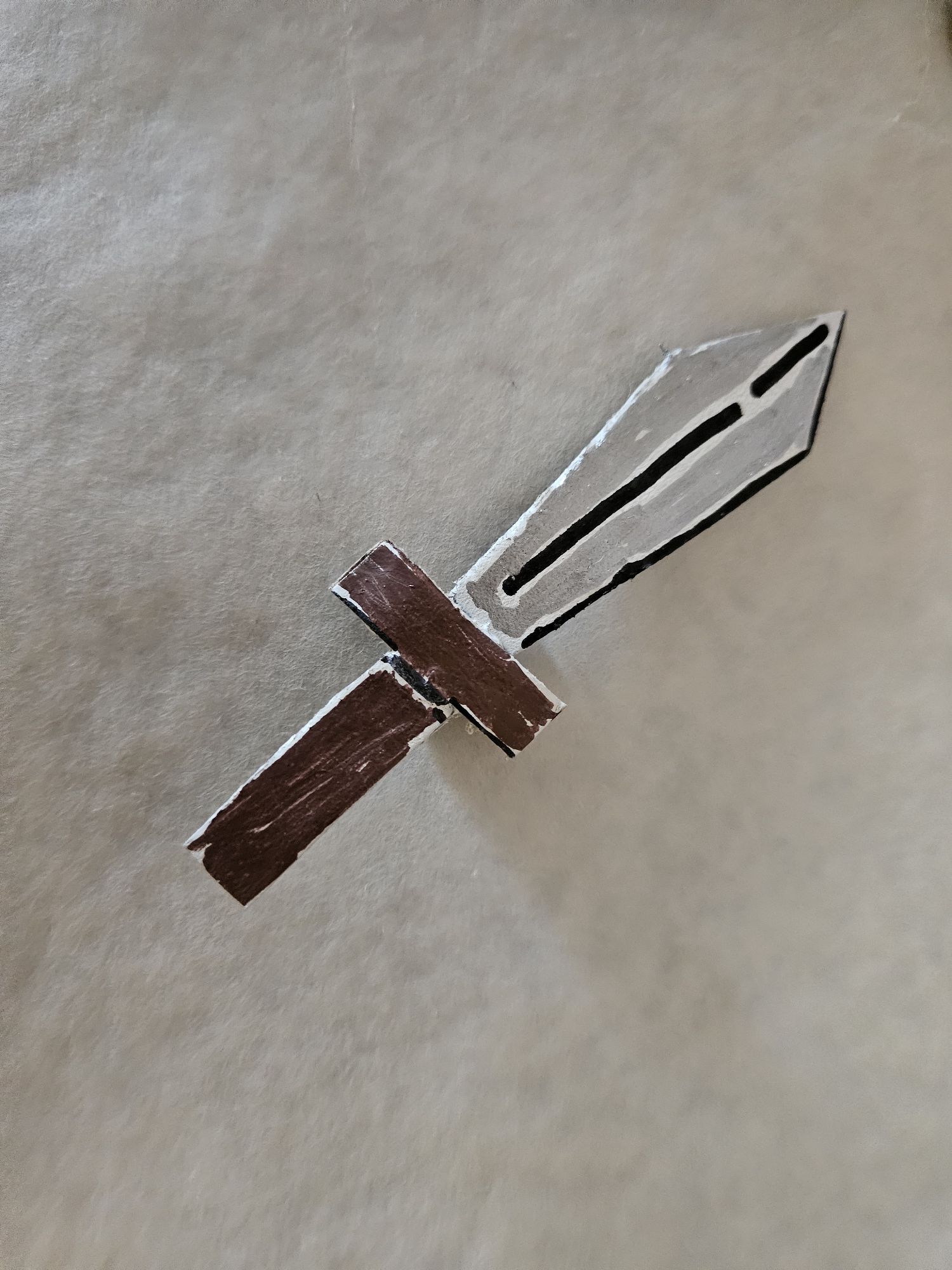
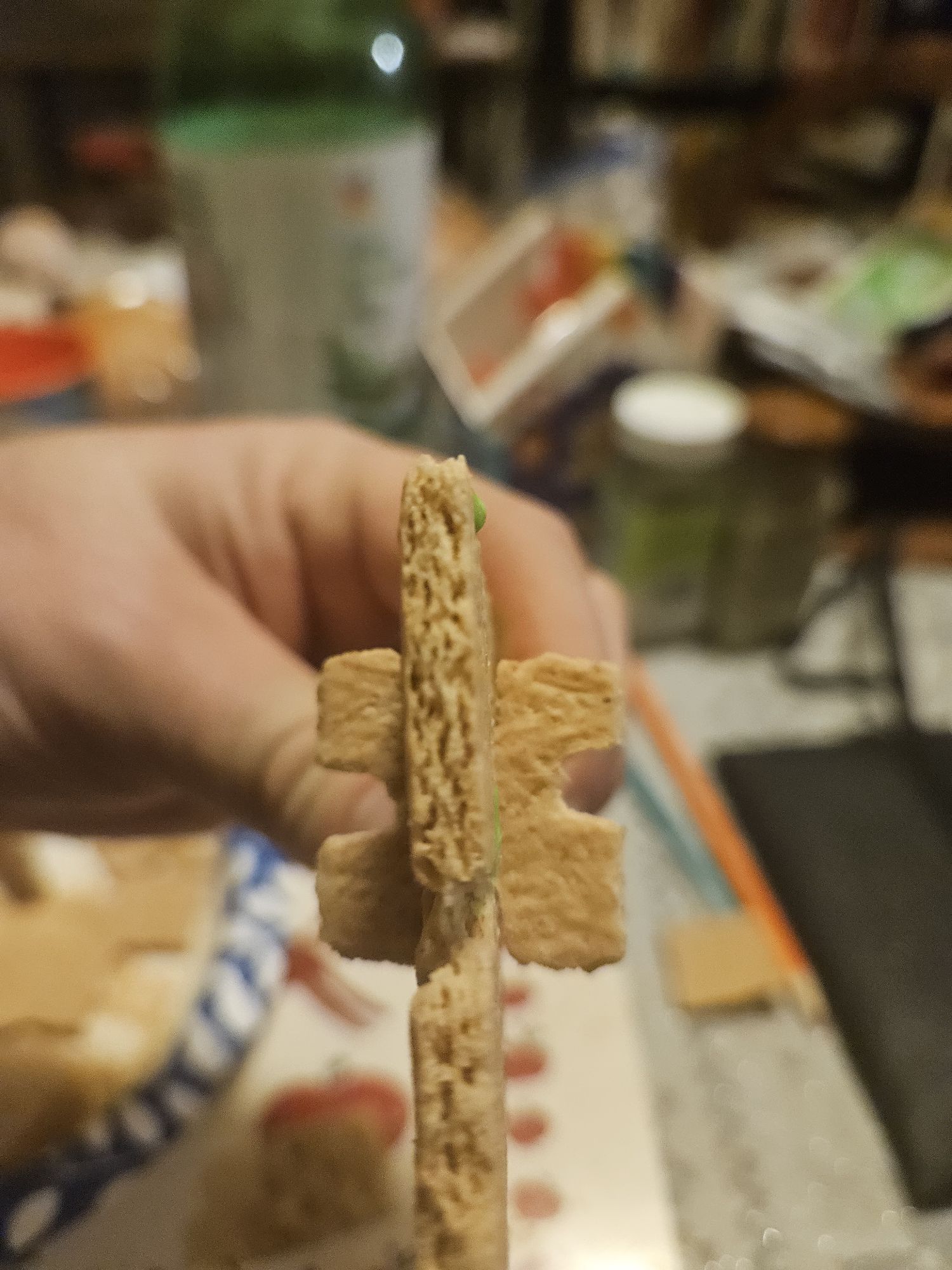
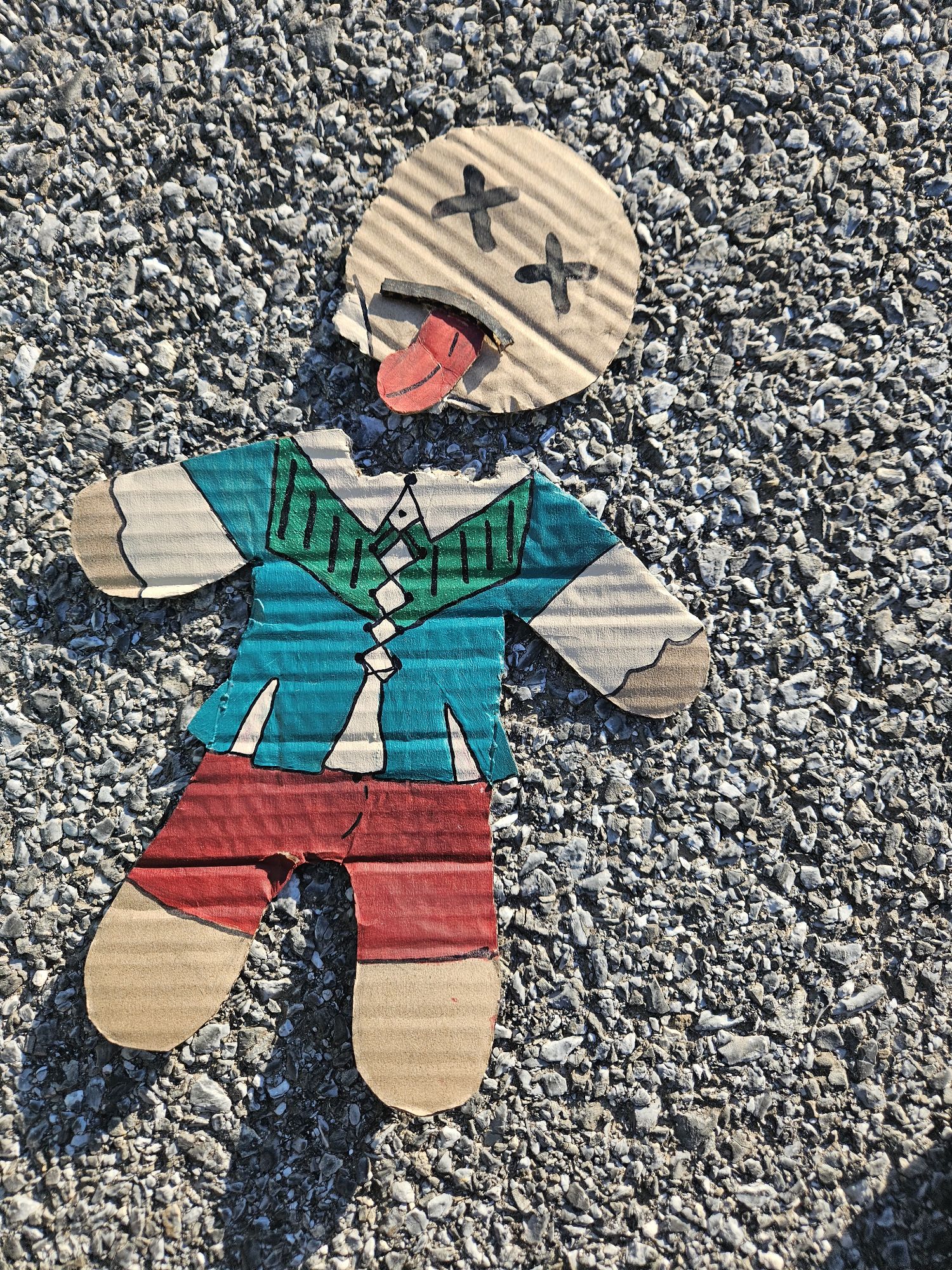
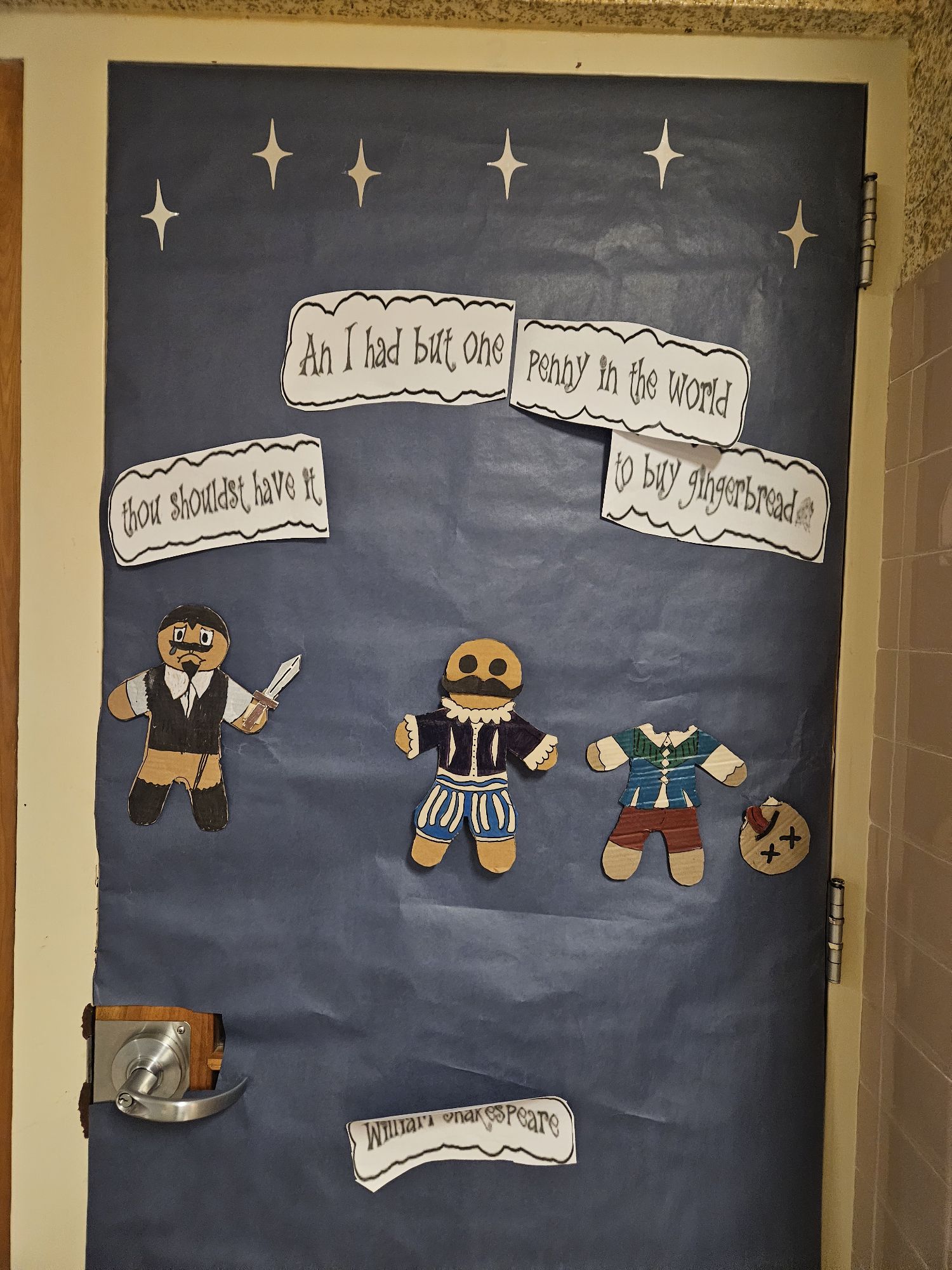
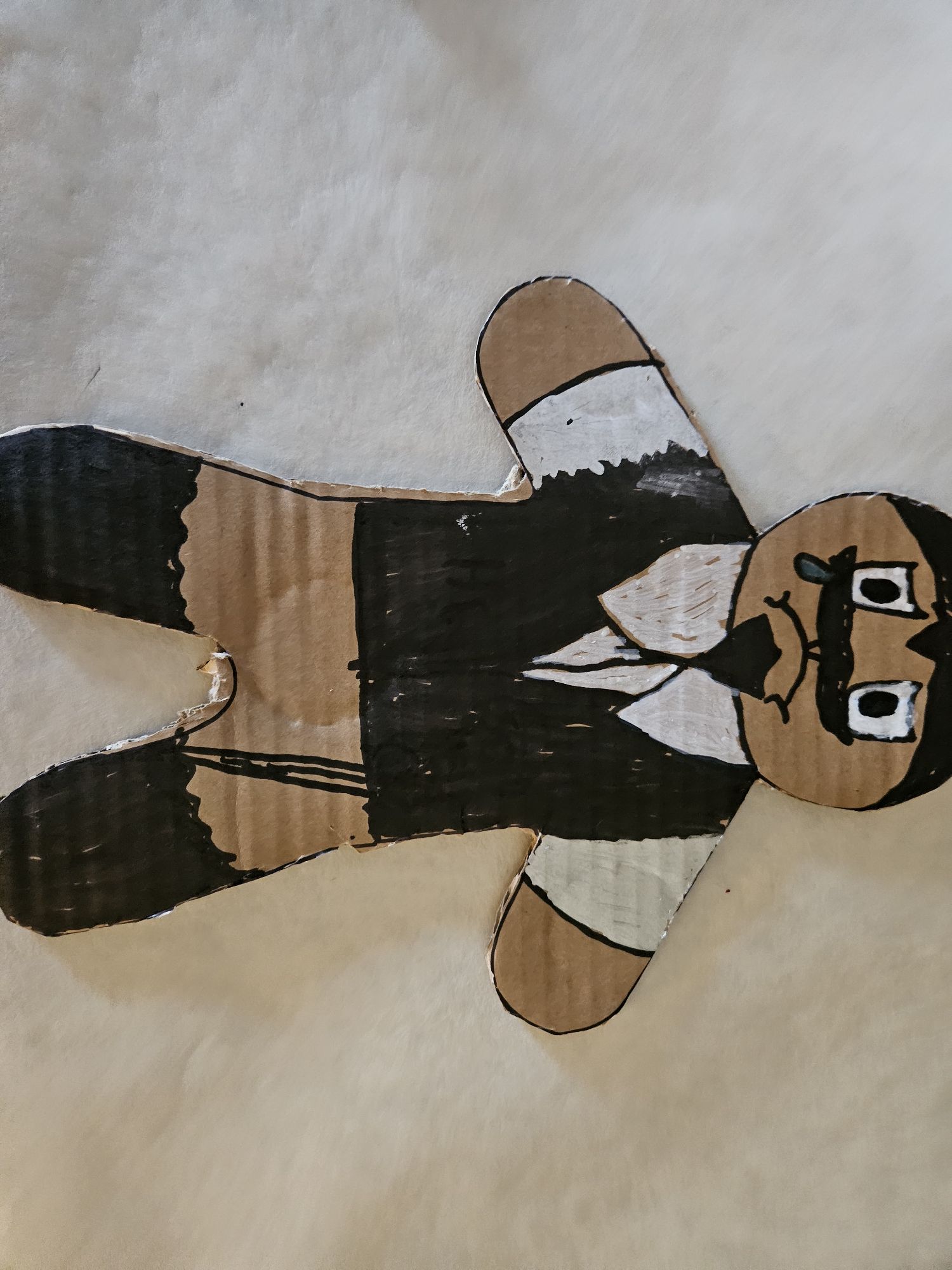
Gingerbread Hamlet Close up of Hamlet’s sword Gingerbread Shakespeare Off with his head!Gallery of my Gingerbread Madness
The Concept
Hath I but one penny in the world, thou should’st have it to buy gingerbread. – Love’s Labors Lost
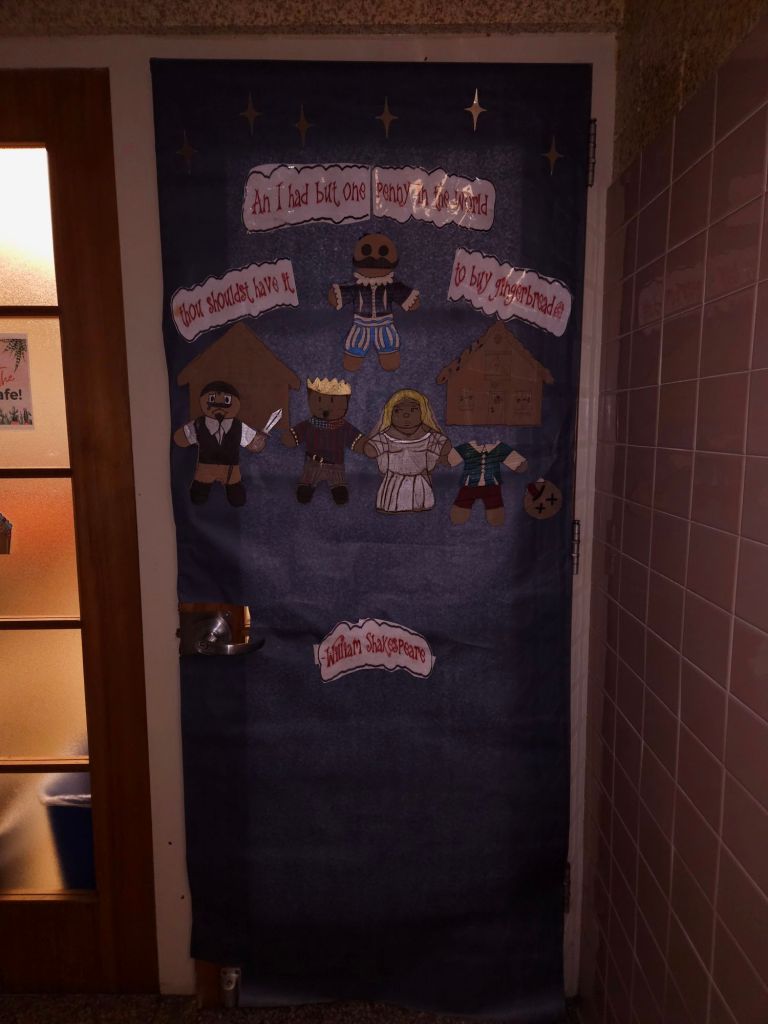
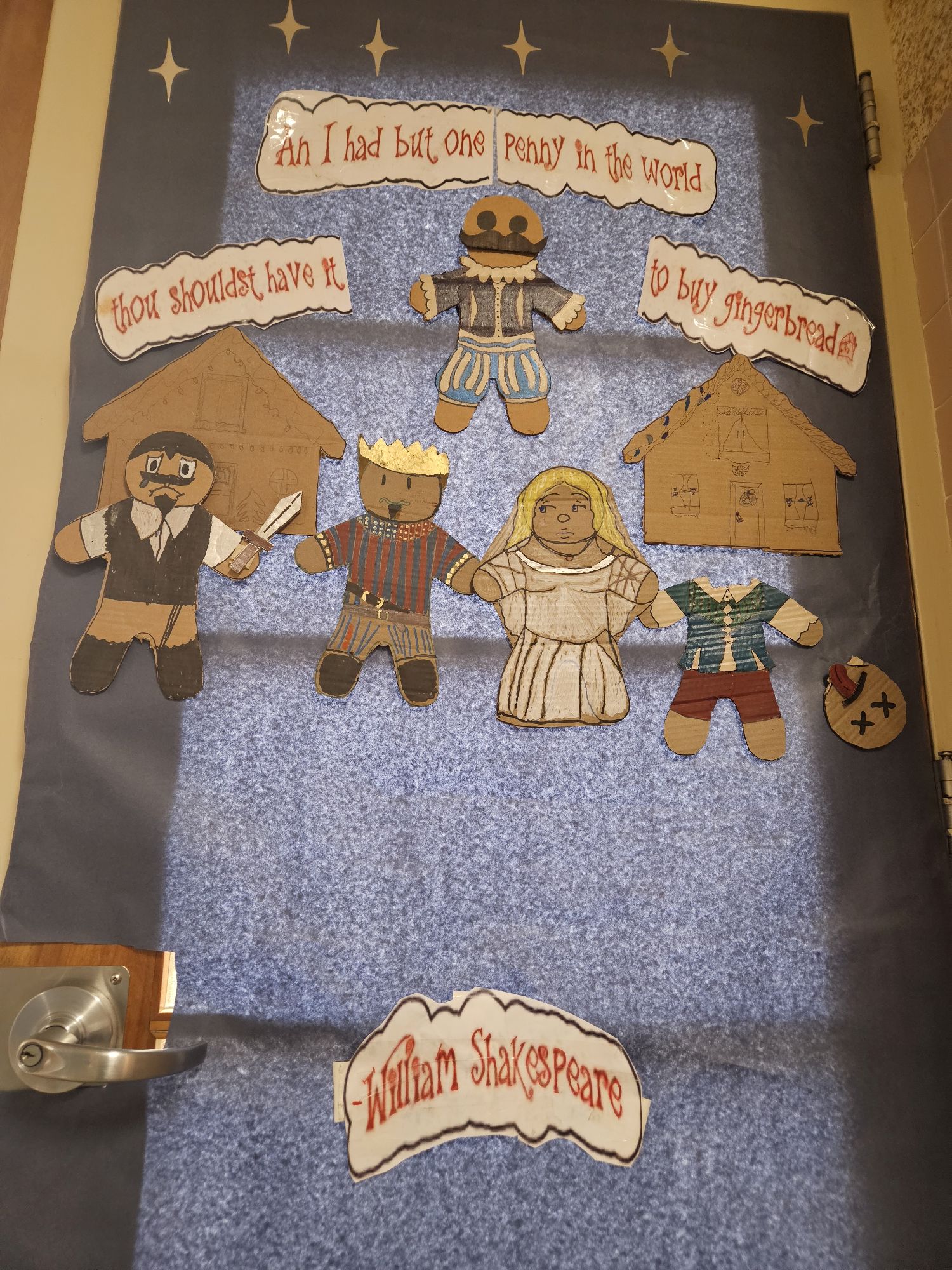
Since the theme had to be holiday-related, I looked at the above quote and decided to make Shakespearean gingerbread men! I knew I wanted to make the kids design a bunch of gingerbread men that would look like Shakespearean characters. While we were at it, I wanted gingerbread houses and maybe even a 3D element to go along with it. I knew it wouldn’t be easy, but I also knew my group was up to the task!
The plan
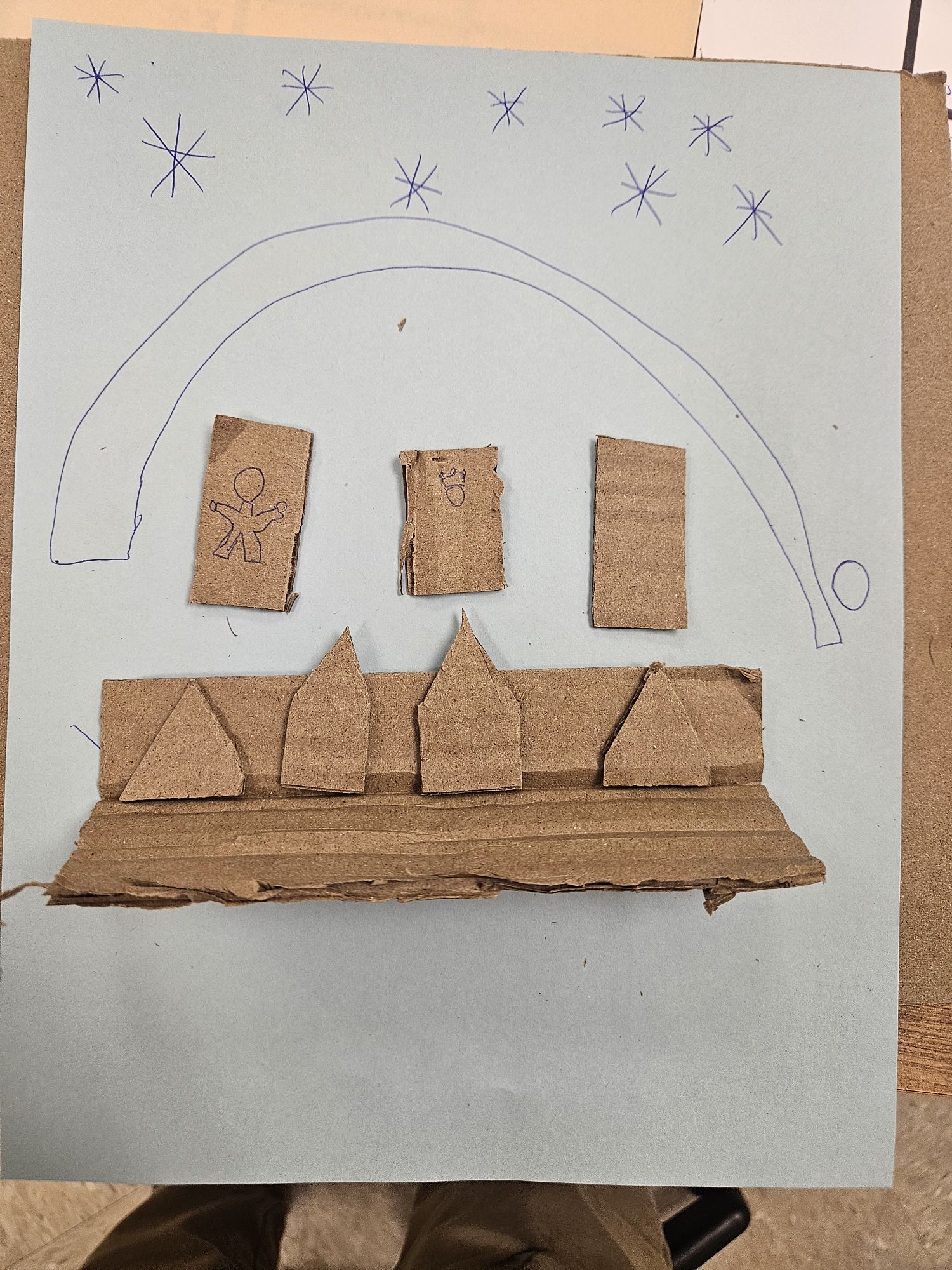
My concept drawing of how the door should look
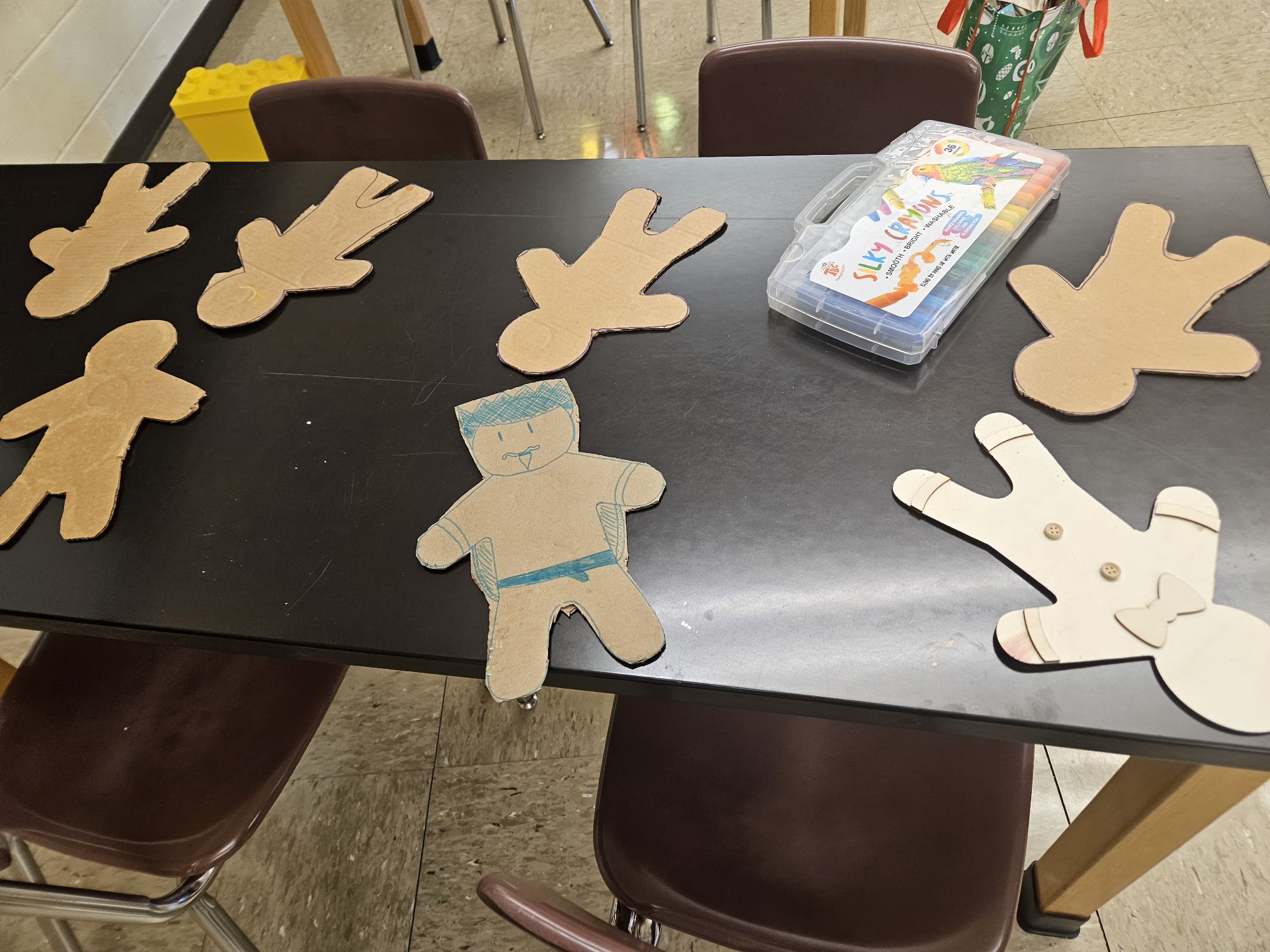
I knew I couldn’t use real gingerbread, so I chose the next best thing- cardboard! I made a cardboard plan of the door to show to my group. I then found a wooden gingerbread man at the local dollar store and used that as a template for the cardboard characters. Finally, I explained the concept to the group, and divided my group up into teams- one group would draw and color the gingerbread houses, one group would color the gingerbread men based on pictures of Shakespearean characters:
Gingerbread HamletGingerbread Henry V Gingerbread Juliet
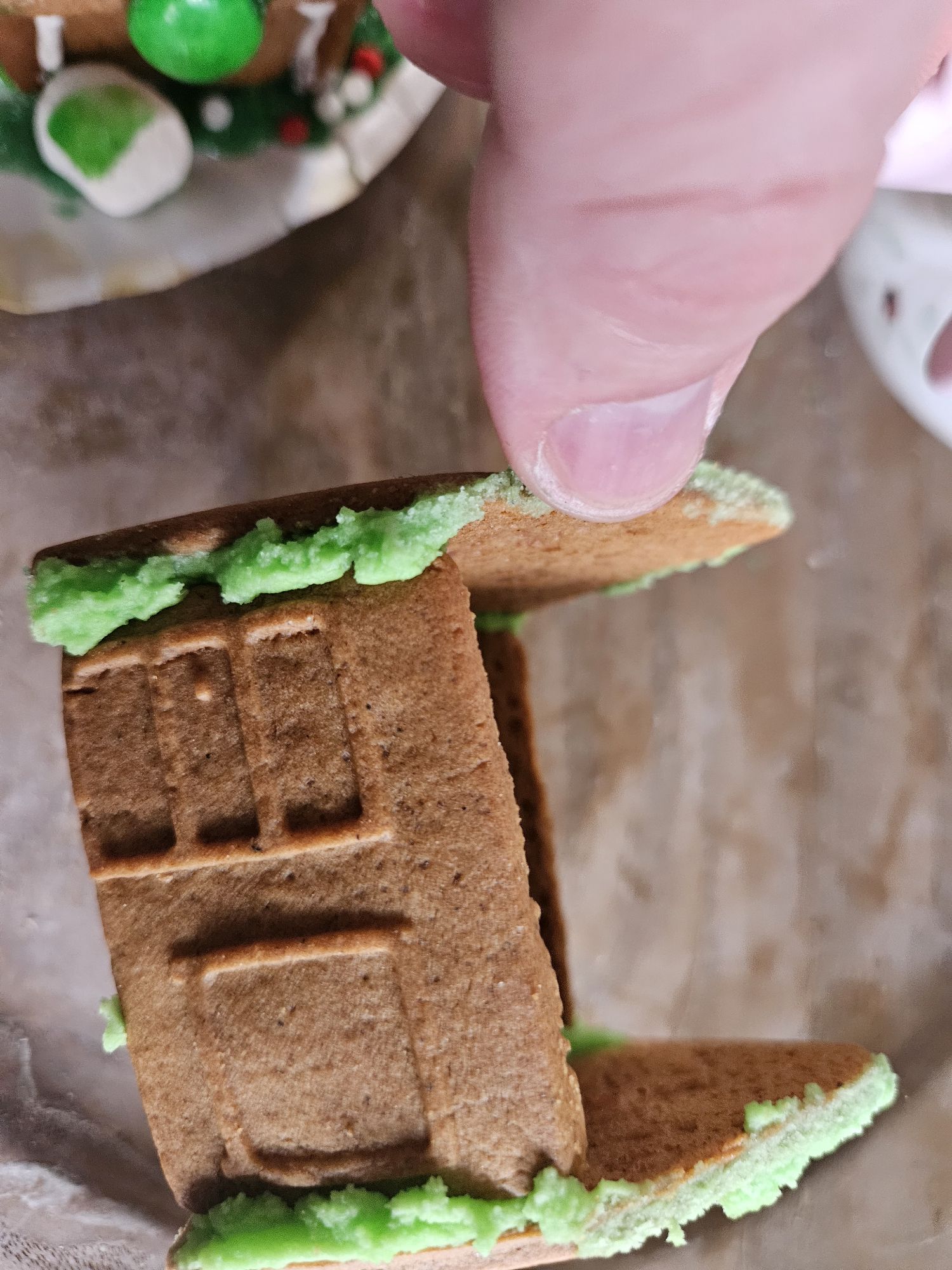
My final group created a 3D gingerbread house with a light in it to make the gingerbread village come to life. They even put my little puppet Shakespeare pal in there (I guess it’s his winter home).
With the new season just released on Netflix, I’m sure a lot of us literary nerds will rejoice and be happy to have an excuse to play dress up, eat some scrumptious food, and converse on the sweet little confection that is Bridgerton. What follows is by no means a comprehensive list of ideas, I just wanted to share some of my research that went into my own party in the hopes that it gives you ideas. Please feel free to respond to this post by commenting or by hitting me up on Twitter at @Shakestud and share your own Bridgerton Party Pics!
“I seek you out at every social assembly because I know you will lift my spirits and make me see the world in ways I could not have imagined.”
Colin Bridgerton.
I need to give a special thank you to my wife in this post. She’s the one who introduced me to Bridgerton, did a lot of research into Regency etiquette and dining, and bought all the ingredients for the party. More than that, she is an extremely talented writer and educator who inspires me in ways even Penelope Featherington couldn’t enumerate. Watching Bridgerton has become a kind of nightly tradition for us and I am very grateful
Background: Bridgerton and the Gorgeous Georgian Era
Bridgerton is a period comedy on Netflix based on the popular novel series. It is set in an idealized version of the late 18th and early 19th century; a time when England was wealthy, cosmopolitan, and when one’s social standing was everything. The shows writers pay homage to great literary figures like Jane Austin, George Brimsley Sheridan’s The School For Scandal, Shakespeare (of course), and real-life scandal writers of the time; rags like Town and Country, The Spectator, and Courtesans.
My Personal Opinion on the SHow
Some people have criticized the show for not being historically accurate. Others claim that the show’s plots and characters are highly derivative from other comedies like Gossip Girl and others. I would argue that THAT’S THE POINT. Bridgerton is not trying to do anything original- it is nostalgia bait for literature nerds like me who know that shows like Gossip Girl are ripped off from classical sources. What Bridgerton does, is take these classic tropes, put them back into the period where they became popular, and then update the setting to make it more accessible to a modern audience. Much like the party ideas I’ll give you later, this show is like a sweet confection- comforting, unassuming, with an air of nostalgia and romance like a cup of tea and a crumpet.
The show focuses on the hopes, dreams, and above all, loves of the Bridgeton family; a noble family in Georgian England. Viola, the matriarch of the house, seeks to find love matches for all her children and to avoid scandalous gossip. She does so through her own intelligence and through the help of her network of female friends, all while avoiding the watchful eye of Queen Charlotte (the powerful wife of King George III), and the mysterious scandal monger Lady Whistledown
Like its dazzling costumes, the show is very much fluff and feathers. Bridgerton’s use of color blind casting is extremely refreshing to me and it signals loudly and clearly that Bridgerton doesn’t want to be painstakingly historically accurate. This is an candy-coated and show that concocts an idealized version of Georgian society- one where painful racial problems are thrown out, there are few economic or political problems to sour one’s pallate, but everybody is rich and pretty and looking to fall in love with a wealthy eligible young man or lady. So, with a concept this delicious, I knew I had to throw a party based on it!
Part One: The Invitations
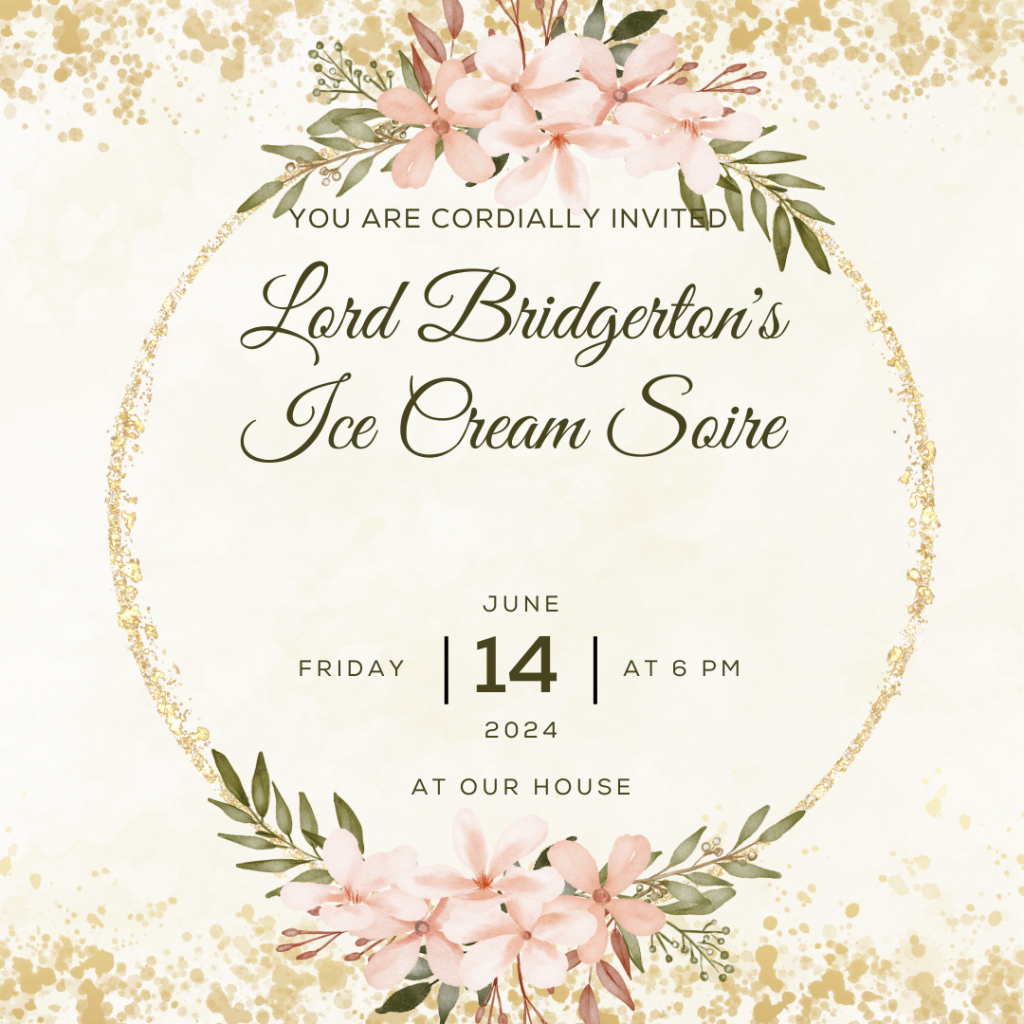
There’s a ton of fancy invitations templates online. Below is an invitation I created for free with an app called Canva and a parchment background picture I found online.
You probably also know that I am a huge fan of the website Immortal Longings because of their excellent Shakespearean art and they sell cards too. You can buy the cards or download the pictures on their website.
Shakespearean Greeting Cards from Immortal Longings.com
Part Two: Decorations
The Georgian Era was firmly in the Baroque era- a time known for opulence, excess, and as many frills as possible. Deck your home with as much gold, crystal lace as possible! Use electric candles liberally. Also, use curtains and fancy throw pillows to fancy up your dining room! Here are some more ideas from Chateau Challain:
Part Three: The Feast
As you can see, since the Georgian era was known as a time of wealth and excess, you could very easily break your wallet or your back trying to replicate an authentic Georgian dinner party, (especially if you lack an entire household staff to bring it to life). What we tried to do was distill some of my favorite foods from the Georgian era down and come up with an easy plan so that a plebian cooking-impaired soul like myself could make them at a reasonable price. I did not want my wife to have to cook for this, though she did wind up trying out a very interesting Georgian recipe:
Salmagundi
Thought I honestly doubt that the upper crust Bridgertons would ever eat this, it is an authentic Georgian recipe and it was common among middle class people, American Revolutionary War soldiers, and even pirates! It’s a savory salad that uses eggs, pickles, mixed greens and anchovies. The name is French for “hodge-podge” and it honestly can be swapped out with any number of ingredients. Here’s a recipe that’s pretty close to what my wife used:
Just like decor, a party or ball amongst the nobility was a sign of wealth and status. If you wanted to impress foreign dignitaries or net a wealthy spouse, you had to show off the wealth and sophistication of your household. We served duck as the main dish since it’s the sort of game the Bridgertons would have on their land. My wife and I also served a meat pie as an homage to the one Daphne eats excitedly in Season 1. Meat pies were very popular in the British isles due to the lack of refrigeration in the Georgian era. For our party, my wife bought the Steak and Stout pie from Trader Joes, which I realize not everyone likes, but it does have a good hearty feel to it. Accompanying the pie, we served cheese, grapes, and some good red wine!
Dessert
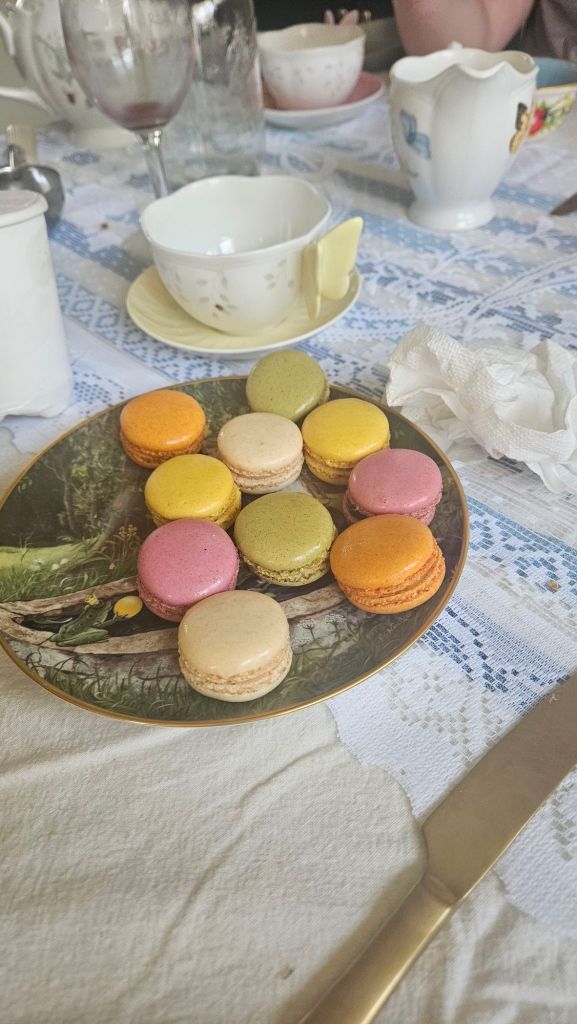
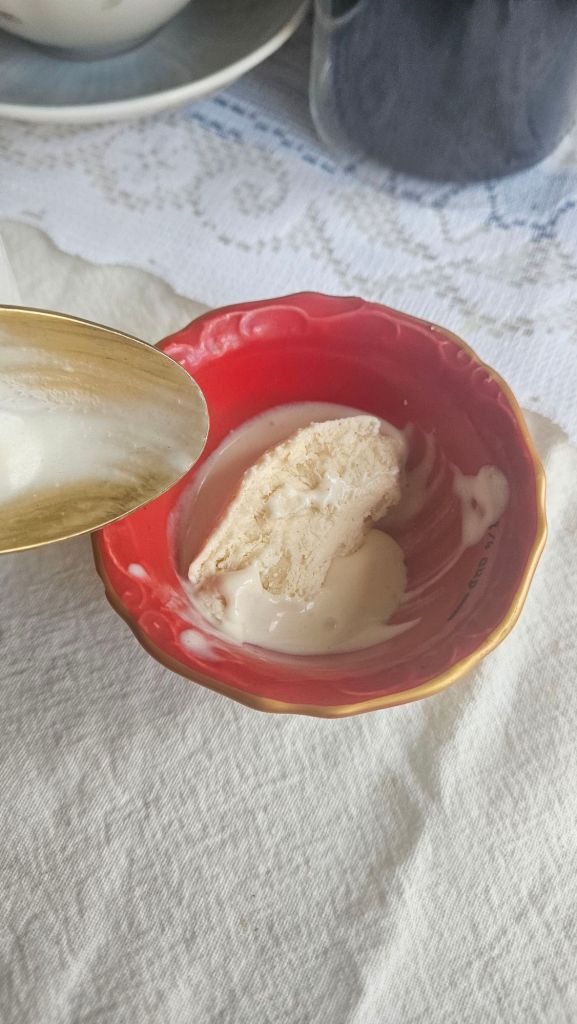
High tea is a real ritual in England to this day, and if you don’t have a lot of time or money on your hand it can be a bit daunting. Again, we relied on Trader Joes to help fill in the gaps of my cooking skills (since again, I wanted my wife to enjoy the party, not cook). I leaned heavily on ice cream, macarons, and of course, tea since they are all foods featured on the show. In fact, there’s a whole scene at the house where the family fight over the last chocolate macaron.
In case you don’t know, macarons are delicious French sandwich cookies made by sifting dry ingredients, combining them with egg whites, piping them onto a baking sheet, and baking them into light, flaky little half circles. From there you can add any kind of filling you like. Now, these cookies are notoriously temperamental, so I just bought some, but for the brave souls with a little more time on their hands, here’s a recipe from NYT:
Other Dessert ideas: You could incorporate scones petit fours, or jam/ cucumber sandwiches. I find a dessert tower is really nice for this kind of “take what you like” dessert atmosphere. Also, don’t forget the ice cream!
Tea-
I’m sure I don’t need to tell you that tea has great cultural significance to the British and I labored over what kind of tea to serve during the party. I personally love Indian Chai and that would be appropriate since it’s mentioned in Season 2. I also enjoy Earl Grey (though that one might be too bitter for most people). However, I decided on Harney and Sons Paris Tea, which is my wife’s favorite, and in my humble opinion, is one of the best teas readily available. It’s a black tea that has been withered, rolled, and baked to make it more flavorful and aromatic, though easy to mass produce. I LOVE THIS TEA. Here’s a link if you want to learn more:
Now, I should mention that there is a lot of officially branded Bridgerton tea, coffee, and tea snacks (of course), but this post isn’t an ad. If you’re interested in the branded stuff, here’s a few links below:
Bridgerton is famous for featuring classical music covers of pop songs, which I really enjoy- it is a nice way of retelling the story of the characters by connecting them with something contemporary. Most of these covers were done by a group called the Vitamin String Quartet and there are playlists on Youtube, Spotify, and others.
During the Regency, music by Mozart and Hayden were all the rage, so if you want to intercut the covers with real classical music from the time period, you can also use them. I would recommend using waltzes or minuets if you want to get people on the dance floor:
Again, for people on a budget, you might want to forgo full Georgian outfits, but this was a time of ball gowns and elaborate wigs for ladies, and men with waistcoats, knickerbockers, and breeches. For more information on the period, here’s a link to Fashion History Timeline:
And to conclude, I want to dedicate this post to my wife who introduced me to the wonderful, sweet, and heartfelt world of Bridgerton. I hope this post helps you bring a fun, fancy-but laid back evening into your home. I hope also that it helps you become closer to and appreciate your loved ones, just as I wish to keep enjoying the show with my wonderful wife.
Since it’s Women’s History Month, and we just had the Ides of March last week, I thought it might be a good idea to analyze some of Shakespeare’s female characters in his Roman plays. I’ve talked a lot about the men in Julius Caesar, Titus, Andronicus, and Coriolanus, but haven’t examined the female characters much, so that’s what I’m going do discuss today.
Examining these characters is important because many are based on real Roman women, and Shakespeare’s sources reveal what Roman culture thought about women’s roles. This is particularly relevant to those of you reading this in the west because Roman culture influenced the Elizabethans and they set the foundation for our culture today. Feminist criticism has been much maligned, (and I’m certainly not an expert on feminism), but I do know this: it exists to question the values and conventions of our culture, so we can identify what works and what needs to change to build a more egalitarian society.
When it comes to Shakespeare female characters in general, he challenges the status quo, but also reinforces it: There’s always a character who challenges traditional gender roles like Katherine and Beatrice, but, (with the exception of Twelfth Night), for every one of these there’s also a Bianca or a Hero; characters who embody traditional famine roles and virtues of chastity, meekness, and yes, marriage and childbirth.
Nowhere is this more apparent than in Shakespeare’s Roman plays where there are always two female characters and they usually embody opposite views of women’s roles and a woman’s duty to her country and the men in their lives
1. Tamara from Titus Andronicus
Titus was Shakespeare’s first tragedy and his first Roman play. As we shall see, as Shakespeare went through his career we see a more nuanced view of women’s roles and a greater appreciation for women who disdain or challenge patriarchal society. The characters Lavinia and Tamara are perfect examples and counterexamples respectively of traditional feminine roles.
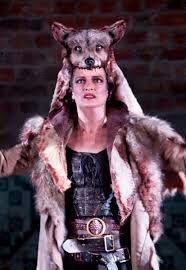
When we first meet her, Tamara is the queen of the Goths- an enemy tribe that Rome has just conquered. Everything about Tamara from her foreign upbringing, to her personality, is a counter-example of what Romans prize in women. She is portrayed as savage and bloodthirsty, motivated by revenge against Titus, (who in the first scene of the play, kills her eldest son. Tamara responds by masterminding the murder of all of Titus’ children. She is also sexually liberated and uses her sexuality to further her revenge. Tamara seduces the Emperor to get him on her side, and gets the Emperor to condemn Titus’ sons to death. Her adultery with Aaron is another way she uses her sexuality to get revenge; she brings ruin the monarchy by cuckolding the Emperor. Thus Tamara’s sexuality and bold personality is framed in the play as an existential threat to Rome itself.
Tamara’s chief and only virtue is her love for her children, as you can plainly see in this scene from the play. Her love for her son Alarbus is why she begs Titus for his life, and afterwards, when he sacrifices Alarbus, Tamara’s love for her son turns into deadly hate to Titus. It is her motherly devotion that makes Tamara simultaneously human, and inhuman. As the play progresses however, Tamara is referred to in increasingly inhuman and savage terms. She dresses up as the goddess Revenge to torment Titus, and after she dies, Lucius, the new Emperor (and Titus’ only surviving son), calls her a “ravenous tiger,” and calls for her body to be thrown to beasts, since “Her life was beast-like.” Tamara is unquestionably the villain- a femme-fatale and a threat to all the Roman characters, but especially Titus’ daughter Lavinia.
2. Lavinia from Titus Andronicus
For the entire play, Lavinia embodies traditional Roman female virtues, in that she is defined by the men in her life, and her chastity. The Romans actually invented the term castitas to refer to the female virtues of modesty and chastity, that is, only having sex with the man you are married to. Lavinia fits this mold perfectly. She’s a devoted daughter, wife, and sister. When we first meet her, she is a model of duty- greeting her father and asking for his blessing when he returns to Rome, and shedding tears for her brothers that were slain in the war:
In the cruelest and most barbaric scene in all of Shakespeare, Lavinia is raped by Tamara’s sons. Then, to keep her from identifying her attackers, they cut out her tongue and cut off her hands. The mutilation is grotesque, but for Titus, the Romans, and for the Elizabethans Shakespeare was writing for, the cruelest loss for Lavinia was the loss of her chastity. Now that she isn’t a virgin, Lavinia is marked with the opposite of chastity, incestum, or infamy. Even though the rape was not her fault, Lavinia is marked with shame. The Romans took unchastity extremely seriously; they used to punish it by throwing the adulteress to her death off the Tarpeian Rock. As you can see in this video, when a woman who was supposed to live chaste is even suspected of adultery, her very life is now in jeopardy:
When she loses her virginity, Lavinia becomes a silent creature of sadness. She is no longer a person, but a motivation for Titus’ revenge. Even if she hadn’t lost her tongue, she would still have little agency in the plot. This is why Titus kills her; to remove her incestum, and end her suffering. Lavinia embodies the the cruel truth that women had to face in ancient Rome- once they lose their virginity, they are already dead in the eyes of most of Roman society.
Lavinia’s death scene from Titus, 1999, directed by Julie Taymor.
3. Portia (Julius Caesar) If Shakespeare only wrote these two female characters, you might rightly assume that he was a vile sexist, who defines a women’s usefulness simply by her chastity or lack thereof, and who thinks the proper function of a woman is to be quiet, demure, chaste, and obedient. Thankfully Shakespeare created Portia in Julius Caesar, and she defies many of the stereotypes associated with women in Ancient Rome.
Portia marks a turning point in Shakespeare’s Roman female characters as we we go from more ‘traditional’ female characters, to ones who exemplify masculine virtues. Instead of women being subordinates to men’s affairs and keeping out of religion, politics, and the affairs of Roman society, Portia is a character who demands respect, and to share her husband’s dangers. Some ancient sources suggested possibly Portia might have been the one who inspired Brutus to kill Caesar, (more on that later), but in any case Portia is not a character who is subordinate to men, but who demands to be treated as a Roman citizen.
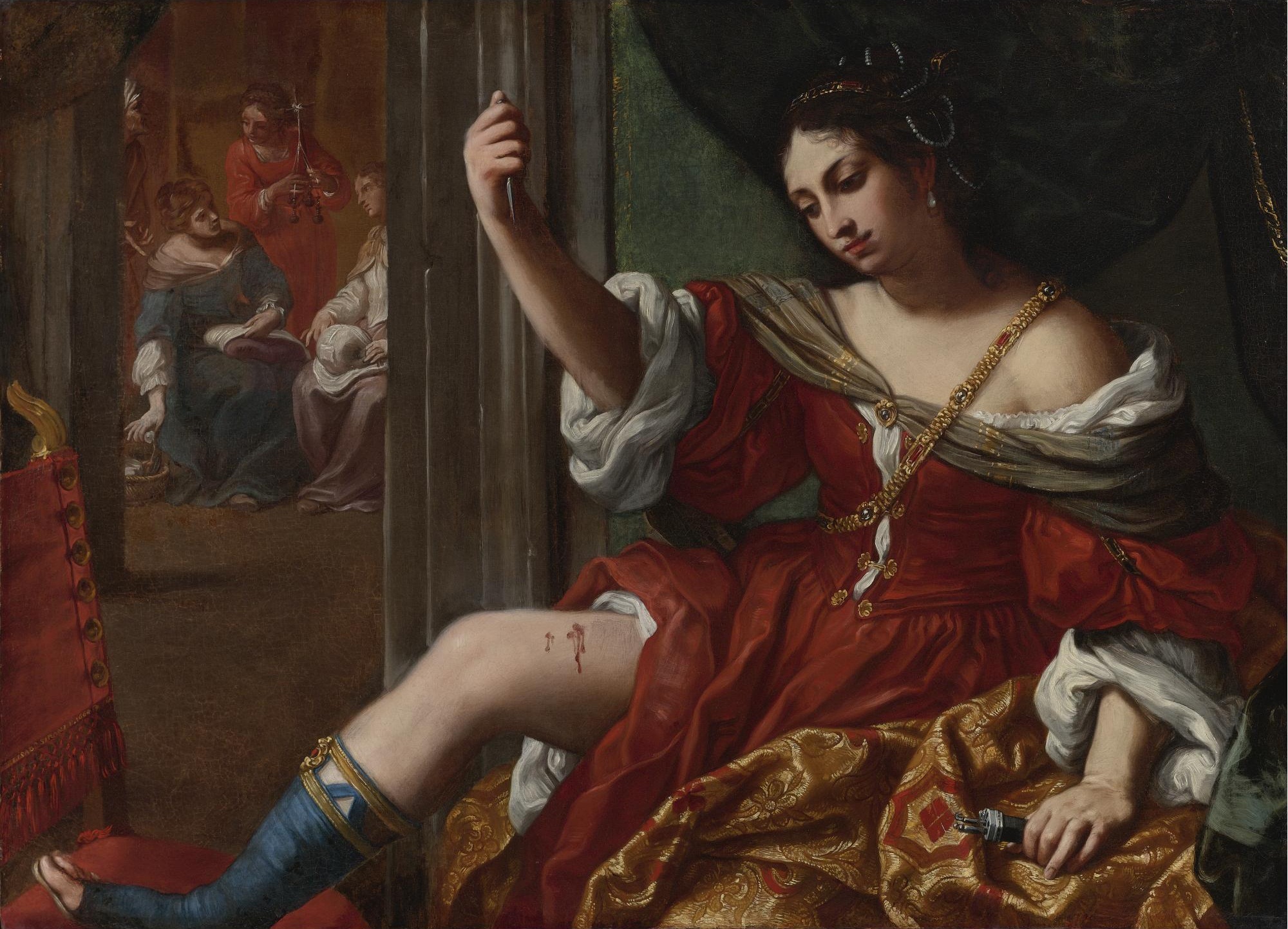
In one of the strangest passages of the play, Portia reveals that she has willingly injured herself by stabbing herself in the thigh. She does this as a way of establishing her tolerance for pain and her desire to be taken seriously by her husband:
Brutus. You are my true and honourable wife,
As dear to me as are the ruddy drops
That visit my sad heart
Portia. If this were true, then should I know this secret.
I grant I am a woman; but withal920
A woman that Lord Brutus took to wife:
I grant I am a woman; but withal
A woman well-reputed, Cato's daughter.
Think you I am no stronger than my sex,
Being so father'd and so husbanded?925
Tell me your counsels, I will not disclose 'em:
I have made strong proof of my constancy,
Giving myself a voluntary wound
Here, in the thigh: can I bear that with patience.
And not my husband's secrets?930
Brutus. O ye gods,
Render me worthy of this noble wife!
Romans have always had a connection with blood. Blood is a connection to duty; we owe our lives and our blood to Rome; the Gladiator whose blood honours the dead, the sacrifice of the enemy soldiers in Titus Andronicus, and the blood of the Roman soldier shed in service of the country. Rome is almost a culture that is built on blood. Portia in this gesture makes it clear that she is willing to shed blood just as much as her husband, who of course, will shed blood, (just not his own). In a way, Portia’s wound makes her more heroic than Brutus, because she is willing to suffer for the good of Rome, while Brutus kills for the good of Rome.
Shakespeare’s Roman characters, (male and female), extol the questionable virtue of the noble death. Historically when a Roman conspiracy failed, the conspirators had a choice; they could be paraded back to Rome humiliated and disgraced, or they could kill themselves and show defiance in the face of their conquerors. In some cases suicide was actually encouraged by the conquerors, as it meant that the threat was neutralized. In response, the conquerors would go easy on the wife and children.
Portia kills herself after Brutus is on the run. There could be two equally important reasons why she does this. First, she might be attempting to gain favor with the triumvirate by killing herself, (since she is complicit in the assassination), in the hopes that Anthony and a and Octavian will take pity on a Brutus’ children. It’s also possible that Portia kills herself because with the tide of battle turning, she might be next. Portia might be showing the same sort of resolve their husband later shows when he commits suicide to appease Caesar’s ghost and to defy his enemies the honor of capturing him.
Since Portia has a lot of her husband’s same virtues, the inevitable question I come to is to wonder what if; what if Shakespeare’s Brutus had a listened to Portia more,what might he have done?
The Lictors Bring to Brutus the Bodies of His Sons, Jacques Louis David, 1789.
This painting by Jacques Louis David depicts Brutus’ ancestor Junius Brutus. We see that he is utterly removed and stoic him in the face of death. He has ordered the execution of his own sons for trying to bring back the monarchy. In the background, Brutus’s wife and daughters are mourning the death of their son and brothers. Men like Brutus, with their Republican ideals, take little stock in the consequence of their actions.
One can only wonder if Brutus had had confided in Portia, would she have condemned his actions, or could she have led him to a more constructive path, that might have a prevented Brutus’ death, and maybe even stopped the coming days of the Empire?
Valumnia (Coriolanus) In Shakespeare’s later Roman tragedyCoriolanus, we again see a young, chaste woman and an older mother figure, but unlike in Titus, the older Volumnia is much more heroic than the young maid Virgilia. Both show loyalty to Rome and devotion to Coriolanus, but Volumnia is not only a hero, she is in many ways a complete inversion of the Roman mother trope.
Volumnia is fanatically devoted to Rome and its army and like her son. She finds war more beautiful than symbols of peace, especially those associated with motherhood. In Act I, Scene iii, she says that the breasts of the Trojan Queen Hecuba were not as lovely as her son’s forehead when it spit blood in battle. She is an inversion of the traditional motherly character; because of her devotion to Rome and her son, she is more outspoken than other women and not afraid to talk back to anyone who questions Rome. In a way she is more of Coriolanus’ general or his father than a traditional mother. Her love of Rome is inextricably tied to her love of her son. She raises her son to be a warrior for the Senate and the people of Rome, exhorting him to either return in glory, or die. Observe this passage where she tells Coriolanus’ wife that she was never proudest than when she sent her son off to war:
Volumnia: I pray you, daughter, sing; or express yourself in a
more comfortable sort: if my son were my husband, I
should freelier rejoice in that absence wherein he
won honour than in the embracements of his bed where
he would show most love. When yet he was but
tender-bodied and the only son of my womb, when
youth with comeliness plucked all gaze his way, when
for a day of kings' entreaties a mother should not
sell him an hour from her beholding, I, considering
how honour would become such a person. that it was
no better than picture-like to hang by the wall, if
renown made it not stir, was pleased to let him seek
danger where he was like to find fame. To a cruel
war I sent him; from whence he returned, his brows
bound with oak. I tell thee, daughter, I sprang not
more in joy at first hearing he was a man-child
than now in first seeing he had proved himself a
man.
Although Virgilia fits the bill of the modest, chaste, and loyal Roman housewife, Volumnia is framed as much more heroic. She even uses her mighty stoicism to save Rome! After Coriolanus rebels against Rome and joins the Volscis, Volumnia gets him to agree to make peace with Rome. She does this by kneeling before her own son; humiliating herself for the good of Rome. This act of self-humiliation changes Coriolanus’ mind. Observe how shocked Coriolanus (Ralph Fiennes) is when his mother (Vanessa Redgrave) kneels in this scene from the movie Coriolanus (directed by Ralph Fiennes in 2011).
4. Julia (Antony and Cleopatra) and with Cleopatra
With these final two examples, I’ve chosen two character who, (at face value), resemble Lavinia and Tamara. One is a dutiful, chaste Roman wife, related by blood to the Imperial family. Octavia was beloved throughout Rome for her chastity and kindness, and the citizens were outraged when her husband Marc Antony, abandoned her for Cleopatra, who was seen by many as a murderous, barbarous, lustful and an evil sorceress. However, Shakespeare paints a much more complex picture of Cleopatra, and though Octavia retains her chastity and is praised for her virtue, Cleopatra is unquestionably the star of the show, and ultimately commands more respect, awe, and even sympathy from the audience.
In Shakespeare’s play (and in real life), Cleopatra used her beauty as a propaganda tool. As I mentioned the Game of Thrones post, she deified herself in order to be taken seriously. In the 1st century AD, the system was very much rigged against female authority and so women had to resort to terrible measures in order to secure power for themselves.
If you look at the play again especially near the end, Cleopatra doesn’t come across as a femme fatale, she comes across as a woman who is trying to keep her Kingdom and her son Cesarian safe, and she will do anything to protect him. As the name suggests, Cesarean was Cleopatra’s love child of Julius Caesar, so the entire Roman world wanted him dead, because he was a threat to Octavian’s claim to the throne. To keep her son safe, Cleopatra seduces Marc Antony, hoping a powerful Roman alliance will keep her crown safe, and her son alive. Sadly for her, Octavian would stop at nothing to bring down all threats to his power, including Cesarian and Marc Antony. Arguably, the only reason he married Marc Antony to Octavia in the first place, was that he knew if Antony committed adultery, it would give Octavian the perfect excuse to raise an army and destroy Antony. Cleopatra got caught up in the political machinations of the most powerful and cunning man in the ancient world, and held him off as best she could.
Cleopatra struggles through the whole play to keep Antony, her people, and the situation in Rome under control. Antony never respects her as a queen and treats her like a jealous boyfriend, which is why they frequently get into fights.
However, after Antony’s suicide, the audience sees that Cleopatra also genuinely loved him back, and weeps for him as a wife, not an ally. Yet, quickly she regains her royal composure once Octavian threatens to take her back to Rome in chains. She decides to simultaneously deny Octavian the satisfaction, protect her son, and join her husband in the afterlife with her regal suicide:
Cleopatra: Give me my robe, put on my crown; I have
Immortal longings in me: now no more
The juice of Egypt's grape shall moist this lip:
Yare, yare, good Iras; quick. Methinks I hear
Antony call; I see him rouse himself
To praise my noble act; I hear him mock
The luck of Caesar, which the gods give men
To excuse their after wrath: husband, I come:
Now to that name my courage prove my title!
I am fire and air; my other elements
I give to baser life. So; have you done?
Come then, and take the last warmth of my lips.
Farewell, kind Charmian; Iras, long farewell.
[Kisses them. IRAS falls and dies]
Have I the aspic in my lips? Dost fall?
If thou and nature can so gently part,
The stroke of death is as a lover's pinch,
Which hurts, and is desired. Dost thou lie still?
If thus thou vanishest, thou tell'st the world
It is not worth leave-taking.
In conclusion, Shakespeare couldn’t go too far against the grain with challenging traditional patriarchal views of women, but in his Roman plays, we see characters who are simultaneously mothers and murderers, chaste and intelligent, citizens and devoted wives. I’m not trying to say that Shakespeare invented feminism, but I do believe his characters remind us that it is folly to try to box either gender into such stale old Roman categories as masculine or feminine. Perhaps we should all aspire to be like Cleopatra, whose infinite variety allowed her to succeed in a man’s world, while still being a wife, a mother, a lover, and a queen.
Happy Midsummer everyone! Wednesday June 24rth is the Midsummer festival, which means as you go to sleep that night, I wish you all Midsummer Night Dreams! Before that though, I welcome you to party like it’s the court of King Oberon, and here are some ideas:
Background: What Are Fairies?
The story of Fairies has many authors that come from multiple folkloric traditions. The Greeks had nymphs, the Romans had cupid, and the English and Germans had…
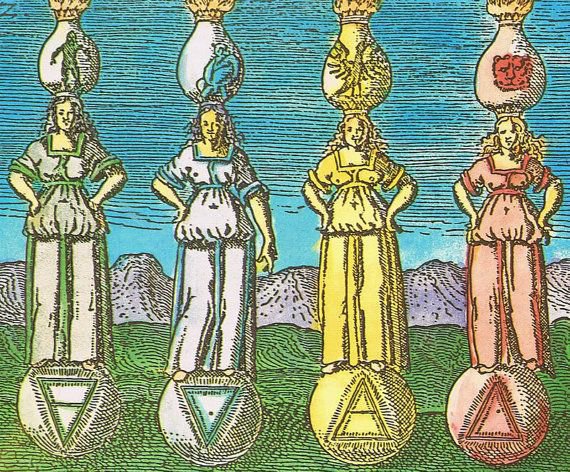
1. According to Paracelsus, fairies are elemental spirits that help control the Earth’s four elements: Silfs (air), gnomes (Earth), Salamanders (fire), and Undines (water). 2. In some versions, they are household creatures that interact with humans 3. Some cultures call them demoted Angels, not good enough for Heaven, but not bad enough for Hell.
So you can see there are lots of traditions that contribute to our modern concept of the fairy, and plenty of ideas to adapt into your party!
Part One: The Invitation:
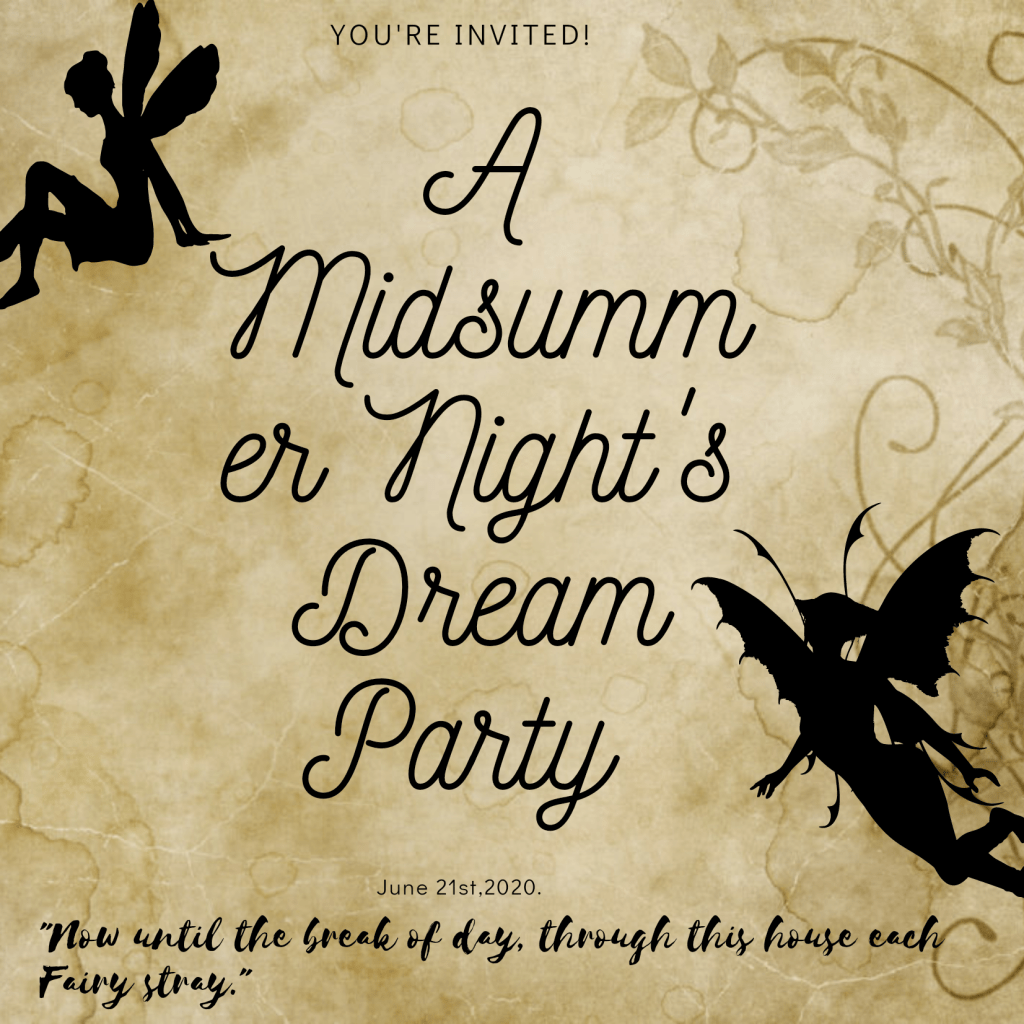
There’s a ton of free fairy clip art and fairy designs online. Below is an invitation I created for free with an app called Canva and a parchment background picture I found online.
1. Pixie invitations 2. Immortal Longings
Second card design I created on Canva.
You probably also know that I am a huge fan of the website Immortal Longings because of their excellent Shakespearean art and they sell cards too. You can buy the cards or download the pictures on their website.
Shakespearean Greeting Cards from Immortal Longings.com
Part Two: Decorations Fairy
Fairy Dens Right now the Royal Shakespeare Company is making DIY Fairy decorations including a Fairy Den that you can share with your family and friends:
What is a Fairy Den? Fairies in folklore are closely tied to the Ancient Celts and Druids, who believed that Fairies live in hollow places underground. A fairy den is a homemade den that imitates the ancient fairy hollows.
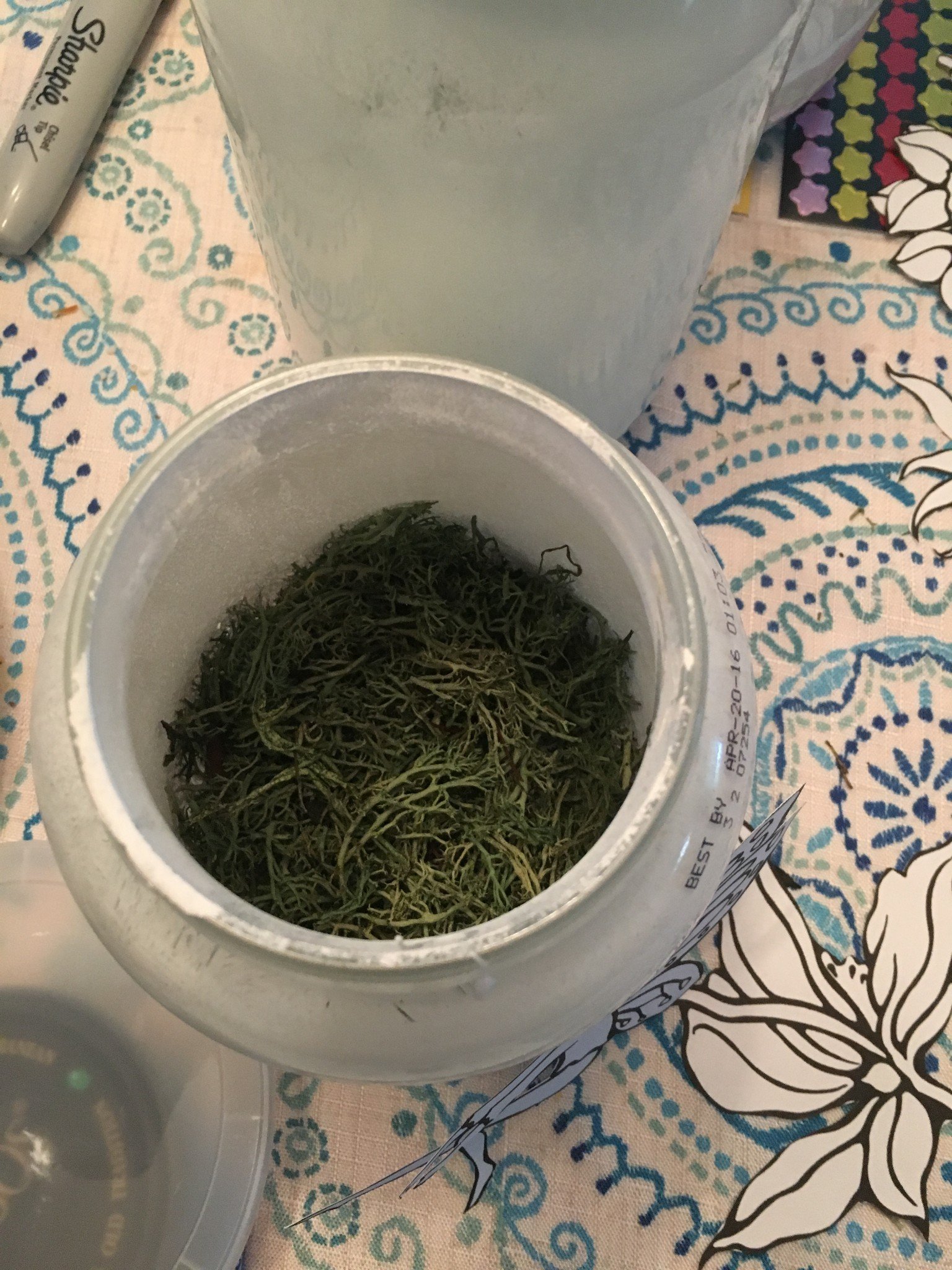
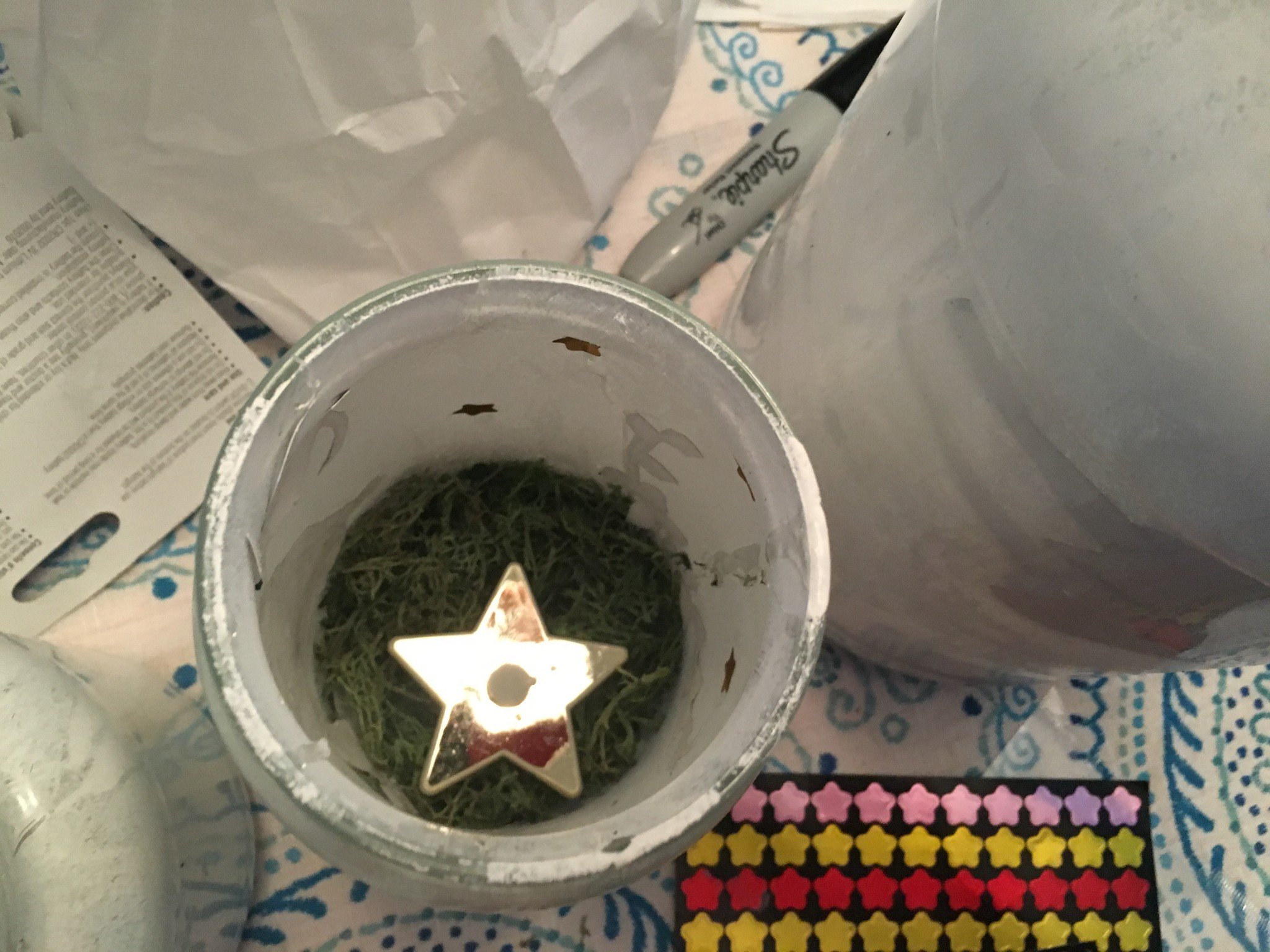
In addition to fairy dens, there are tons of fairy lights, fairy coloring books, and other fairy crafts you can find. Here is a fairy lantern my wife made using pickle jars!
First paint the jars with white paint and cut out paper fairies to paste around the inside of the jar (we used tackey glue). You can also stick star stickers on the inside of the jars.For added realism, you can glue fake moss to the bottom of the jar. We got this from our local dollar store.Put a small battery powered LED light inside.Turn on the LED lights and take the lanterns somewhere dark.Detail of the fairy lights.
Part Three: The Feast
Since the Fairies in Midsummer are woodland spirits, almost any forest or camping themed recipes can be adapted. Here are some ideas that my wife and I made for our own fairy themed party.
2. Love potion: Similar to follow the leader or musical chairs. A group of people lie down and pretend to sleep. Then someone plays Puck by putting a real or pretend flower in one of the player’s hands. The Puck then yells “Awake,” and sets a timer or plays some music. The object of the game is for everyone to chase after the flower and get it before time runs out.
Costumes:
Make some printable donkey masks for Bottom, flower crowns for the fairies, and don’t forget your wings!
In honor of Roman Week, and in light of the recent passing of Monty Python’s Terry Jones, please watch this excellent documentary about the day to day life of Ancient Rome:


































 The Shakespearean Student