

If you enjoyed this video, please consider signing up for my online class, “Basics Of Stage Combat,” on Outschool.com: https://outschool.com/classes/basics-of-stage-combat-pUrfWBtA?usid=MaRDyJ13&signup=true&utm_campaign=share_activity_link
broadway
New Acting Course for Young Actors Starting September 12th, 2021.

I’ve been working on a remote learning class for Outschool.com where I take some of the audition advice I wrote in Creating A Character: Macbeth, and some of the other acting posts I’ve published over the years. This will be a weekly virtual acting course for kids ages 13-18, starting September 12th at 10AM EST.
This class will outline the tools and techniques of Shakespearean acting such as projection, articulation, and imagination. Each We’ll also go over Shakespeare’s own advice on acting in his play “Hamlet: Prince of Denmark.” The course will culminate with the students choosing their own Shakespearean monologues and scenes, which they can use going forward in auditions, school plays, and classes.
The best thing about the course is that each week builds on the previous week’s experience, but you don’t need to go to all of them. I’ll be flexible and work with the student’s schedule so everyone gets as much out of the class as possible.
If you’re interested in signing up, go to Outschool.com. If you have any questions, email me by clicking here:
Hope to see you online soon!
Watch Shakespeare Uncovered: Othello

In the spirit of black history month, enjoy this excellent documentary about Shakespeare’s only black hero: www.pbs.org/wnet/shakespeare-uncovered/uncategorized/othello-david-harewood-full-episode/
 Here’s a classroom guide that you can use with your students: Othello Classroom Guide
How “Hamilton” is like a Shakespearean History Play
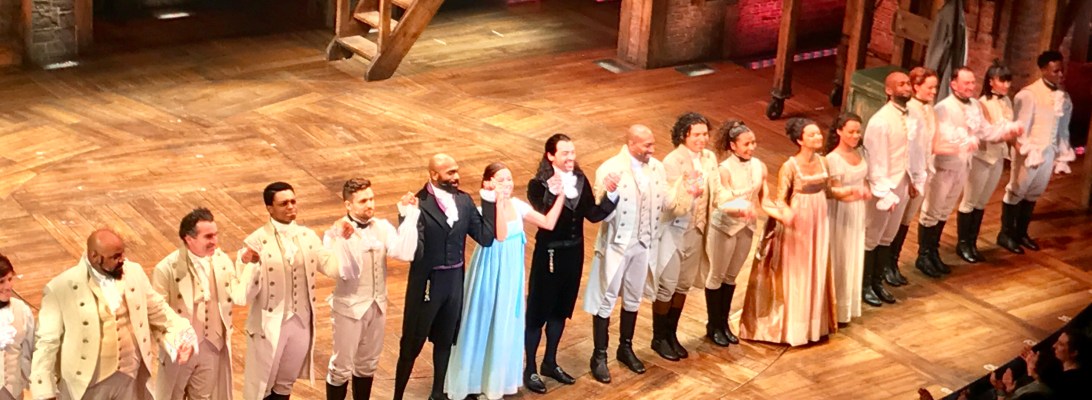

If you have two ears, you’re probably familiar with the Broadway Musical Hamilton. It swept the Tonys, has opened up touring productions across the country, and there’s already talk of a movie.
This historic American musical was the brainchild of writer Lin Manuel Miranda, who also originated the role of Alexander Hamilton.
The show is incredibly smart, creative, and delves into the seminal moments of American history.
What’s really exciting to me is that Hamilton also has a depth and complexity that mirrors some of Shakespeare’s greatest plays, specifically the history plays.
Between about 1590 and 1613, Shakespeare wrote 10 plays about the lives of English kings, from the vain Richard the Second to the heroic Henry the Fifth, to the diabolical Richard the Third. Here is a list of Shakespearean history plays, with links to online study guides, listed in chronological order by reign, not publication date.
- King John
- Richard the Second
- Henry the Fourth, Part I
- Henry the Fourth, Part II
- Henry the Fifth
- Henry the Sixth , Part I
- Henry the Sixth , Part II
- Henry the Sixth , Part III
- Richard the Third
- Henry the Eighth
Are these Shakespearean history plays historically accurate by our standards? No, not by a long shot, though Shakespeare is only partially to blame for that. While Lin Manuel-Miranda had Hamilton’s own essays, his letters from friends and loved ones, and of course, every American history book at his disposal, Shakespeare’s sources were few, and mostly propaganda. They were, (to paraphrase Napoleon and Benjamin Franklin), “A series of lies, composed by winners, to excuse their hanging of the losers.”
Shakespeare’s genius however, was to turn these two-dimensional propaganda stories into three dimensional characters with which we can all identify. Miranda did the same thing in reverse- distilling his wealth of historical information into a universal story of a man’s quest for the American Dream. Hamilton went from being an immigrant, to a soldier, to a pioneer in American law, government, and finance and the musical reflects his struggle to achieve his dreams through each stage of his life. It is also a love song from America to a man who dreamed of a future for America, one not dissimilar to the ode Shakespeare wrote to his “Star of England,” Henry the Fifth. The greatest compliment I can give Miranda is to say that he created an American musical, with the scale and breadth of Shakespeare.
Part I: War and Peace
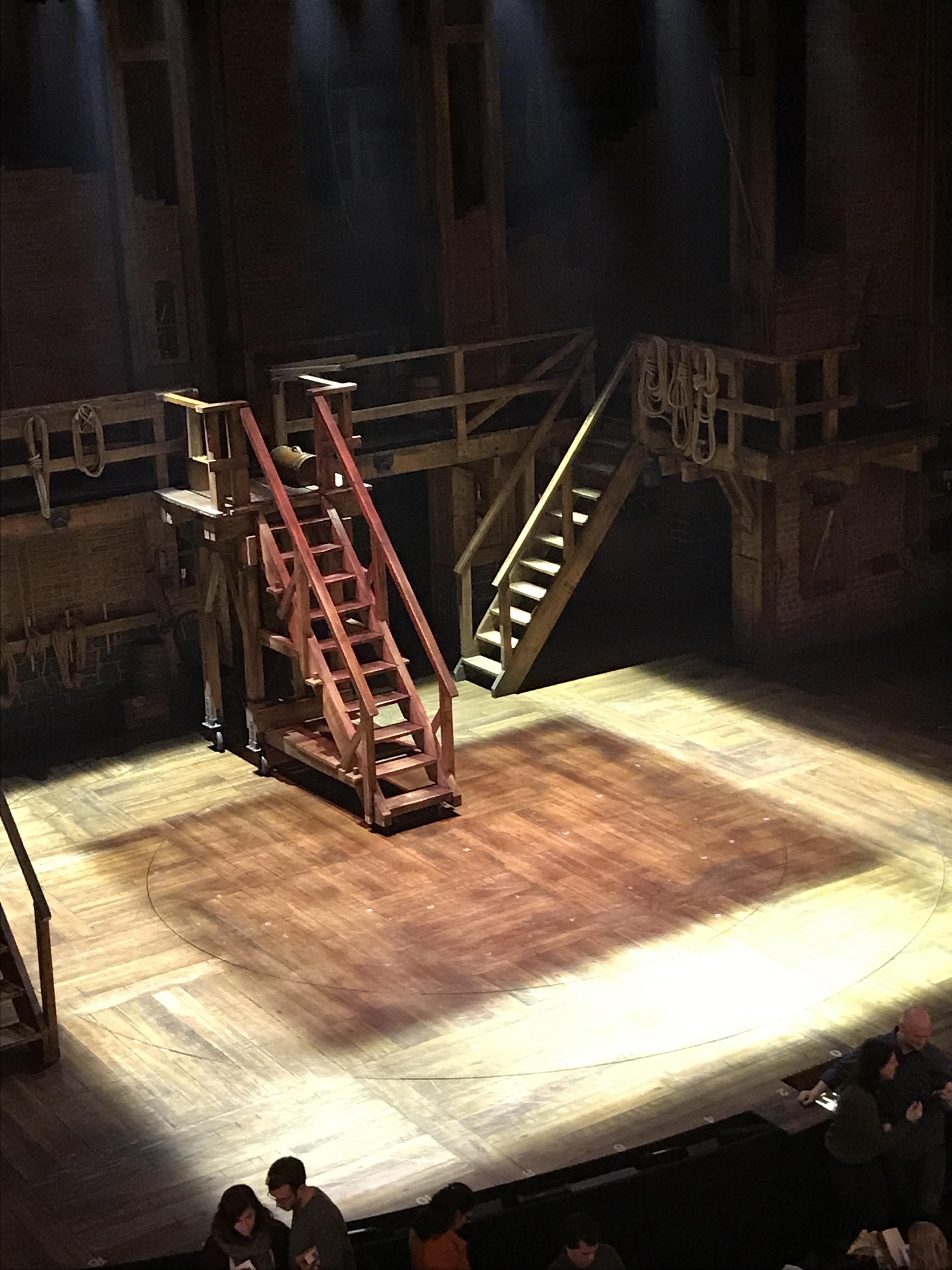
In Shakespeare’s histories, particularly the first tetracycle of plays that include Richard the Second, the three parts of Henry VI, and Richard, III, there is a constant shift between war and peace, as scholar Robert Hunter observes. These plays cover the 200 year period of Wars of the Roses, and the end of the Hundred Years War. In all of these plays there are some very violent and very opportunistic young men who see war as an opportunity to rise above their stations. In war, they win glory in death, honor, respect, and status in life. However, in peacetime, they have “no delight to pass away the time,” as Richard III observes, and they struggle to survive in the political landscape of peace.
Hamilton is a man of this same mold: When we first meet him, he is a poor immigrant from the West Indies with no title or money to improve his status. He spends the first third of the musical wishing he could become a commander in the Revolutionary War, especially in the song: “My Shot”
Once Hamilton joins the revolution, his fortunes start to improve; he becomes George Washington’s aide-de-camp, then becomes a war hero in the Battle of Yorktown, and marries Eliza Schyler, daughter of one of the wealthiest men in America.
Hamilton in war bears similarities to Shakespearean characters like Hotspur, Richard Duke of York, and even Richard III; people who see war as a chance to either die in glory, or become honored, wealthy, and powerful.
Unfortunately for Hamilton, he fares less well once the war ends. Even though he becomes Washington’s first Secretary Of the Treasury, his success and closeness to now-President Washington makes him a walking target to his political adversaries. Even worse, his ambition and inability to compromise makes Hamilton equally vulnerable to people who see him as a loudmouth, an elitist, and a would-be demagogue who wants to control America’s finances and live like a king, similar to the way the British Prime Minister controls England’s finances.
The character Hamilton resembles most in peacetime is Cardinal Wolsey in Shakespeare’s Henry VIII.
I happen to know a lot about this character since I played him back in 2008. Wolsey controlled Henry VIII’s finances and was hated by most of Henry’s court because he was the son of a poor butcher in Essex, and became the king’s right-hand man. Throughout Shakespeare’s play, the lords of court are whispering about how Wolsey really controls the government; they even call him the ‘king cardinal’!
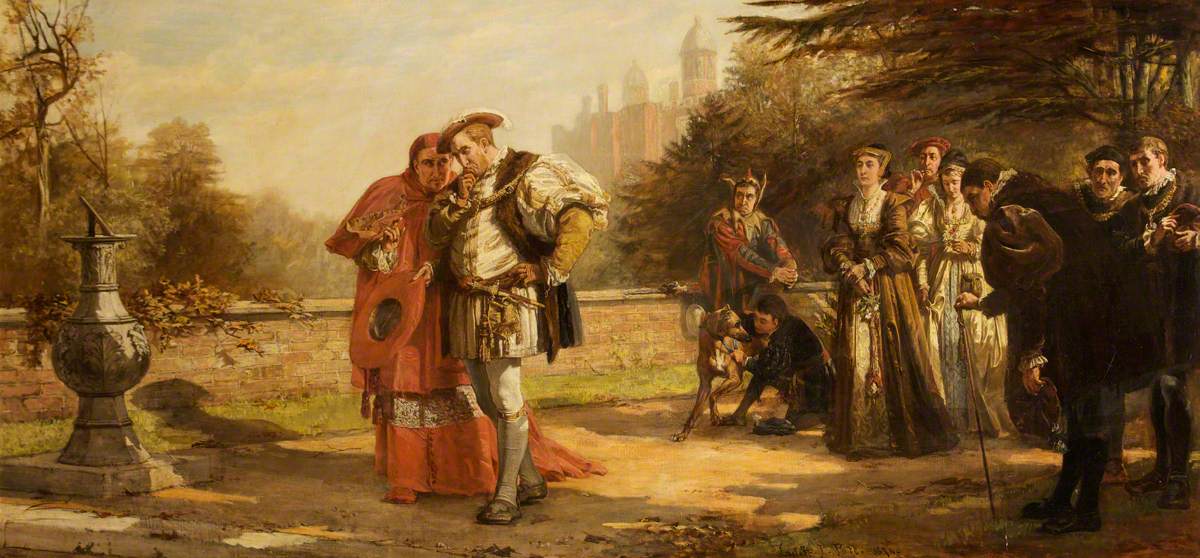
The real life Wolsey appears to have been hated just as much by Henry’s lords. Just look at the faces of the people of the court in this painting of the king and Wolsey by Laslett John Pott; the lords on the right are clearly jealous of Wolsey’s closeness to the king.
In both plays, Washington and King Henry are treated like gods- invulnerable, aloof, and completely above reproach.
Whenever anything bad happens in the play or musical, the legislature blames Wolsey and Hamilton, not the King or the President. Also, in both plays each one falls from grace and is destroyed by his enemies when the king and president no longer supports their right-hand-men.
Wolsey and Hamilton both fall because of their position as the financial advisor, which makes them a target to their enemies. Both are accused of using their country’s finances to enhance their personal wealth, which leads him to scandal and disgrace.
In Henry the Eighth , Wolsey is certainly guilty of conspiring to use his country’s wealth to line his own pockets- he pays the cardinals in Rome to influence their vote in the hopes that he will become the next Pope!

CARDINAL WOLSEY
What should this mean?
What sudden anger’s this? how have I reap’d it?
He parted frowning from me, as if ruin
Leap’d from his eyes: so looks the chafed lion
Upon the daring huntsman that has gall’d him
Then makes him nothing. I must read this paper;
I fear, the story of his anger. ‘Tis so;
This paper has undone me: ’tis the account
Of all that world of wealth I have drawn together
For mine own ends; indeed, to gain the popedom,
And fee my friends in Rome. O negligence!
Fit for a fool to fall by: what cross devil
Made me put this main secret in the packet
I sent the king? Is there no way to cure this?
No new device to beat this from his brains?
I know ’twill stir him strongly; yet I know
A way, if it take right, in spite of fortune
Will bring me off again. What’s this? ‘To the Pope!’
The letter, as I live, with all the business
I writ to’s holiness. Nay then, farewell!
I have touch’d the highest point of all my greatness;
And, from that full meridian of my glory,
I haste now to my setting: I shall fallLike a bright exhalation in the evening,
And no man see me more. Henry the Eighth Act III, Scene ii.
Again, though Wolsey is guilty, like Hamilton he also used his financial genius to bring England into a new age of prosperity after centuries of war. The Tudors were some of the richest and most powerful monarchs in British history, and Wolsey helped establish their dynasty, but thanks to his enemies, he is turned out of court in disgrace:
O Cromwell, Cromwell!
Had I but served my God with half the zeal
I served my king, he would not in mine age
Have left me naked to mine enemies. Henry VIII, Act III, Scene ii.
Hamilton is also accused of embezzling his wealth by his enemies, including James Madison, and Thomas Jefferson
Hamilton’s enemies argue that his banking system benefits New York, where Hamilton was part of the House Of Representatives, as well as the Constitutional Convention. The main difference between Wolsey and Hamilton is that he didn’t embezzle America’s money, he is actually guilty of a far worse sin- adultery. Hamilton is accused of having an affair, and embezzling funds to keep it quiet, which he denies in a spectacular fashion:
In both plays, the moment where the main character begins to fall is dramatized in a stirring, metaphor-rich soliloquy. Wolsey compares himself to the Sun, who, once he reaches the zenith of the sky, has nowhere to go but down to the west, and set into night.

Hurricane From “Hamilton: An American Musical. Reposted from Deviant Art.com
Hamilton compares his situation to being in the eye of a hurricane, a particularly apt metaphor, since the real Alexander Hamilton’s house was destroyed by a hurricane in 1772. In addition, Lin Manuel Miranda‘s parents come from Puerto Rico an island that has, (and continues to be,) ravaged by hurricanes.
In the song, “Hurricane,” Hamilton remembers that when he lost everything as a boy in 1772, he beat the hurricane by writing a letter which was published in the newspaper, and inspired so much pity that the residents of the island raised enough money to send Alexander to America.
Later in the song, Hamilton decides to try to soothe the political hurricane that has engulfed him by writing a pamphlet, admitting the affair, but denying any embezzlement. Eventually the scandal destroys Hamilton’s career, but it doesn’t destroy his life; for that we have to look at the Shakespearean rivalry between Hamilton and Aaron Burr.
Part II- The Duel: Hamilton and Burr V Henry and Hotspur.
Aaron Burr and Hamilton keep meeting at important moments in the show, as if their fates are intertwined like gods in some kind of Greek tragedy.
Hamilton and Burr appear as polar opposites in the musical. Hamilton is fiery, opinionated, uncompromising, and highly principled. He ruffles feathers, but his supporters know where he stands. Burr is the opposite. He keeps his views to himself, and waits for the most opportune time to act on anything. Throughout the play, Hamilton and Burr hate and admire different things about each other. Hamilton admits that Burr’s cool practicality helps him to practice the law and succeed in politics, while Burr admires Hamilton’s energy and his ability to work and write as if his life depends on it, especially in the song “The Room Where It Happens.”
After Hamilton endorses Jefferson in the election of 1800, Burr loses the race, and the job of Vice President. In the musical, he blames Hamilton, and their grievance grows into a deadly conflict.
The rivalry between Hamilton and Aaron Burr mirrors many characters in Shakespeare, but the two I want to focus on here are Hotspur and Prince Hal from Henry the Fourth Part One
As this video from the Royal Shakespeare Company shows, these two combatants meet only once in the play, but they are constantly compared to each other by the other characters, who talk about them as if they were twins, (they even have the same first name)! Even the king remarks that his son could have been switched at birth with Hotspur.
Prince Henry (known as Hal in the play), is the heir to the throne. Like Burr in Hamilton, Hal is methodical, cool, keeps his feelings to himself, and is known by some as a Machiavellian politician. Hotspur, (or Henry Percy), is his opposite. Like Hamilton he is fiery, eloquent, and not afraid to die for his cause, which in Hotspur’s case is to supplant the royal family and correct what he believes is an unjust usurpation by Hal’s father, King Henry the Fourth.

In the scene below, the two men seem hungry to not only kill one another, but to win honor and fame as the man who killed the valiant Henry. Whether it’s Henry Percy, or Prince Henry who will die, is something they can only find out by dueling to the death.
HOTSPUR
If I mistake not, thou art Harry Monmouth.
PRINCE HENRY
Thou speak’st as if I would deny my name.
HOTSPUR
My name is Harry Percy.
PRINCE HENRY
Why, then I see
A very valiant rebel of the name.
I am the Prince of Wales; and think not, Percy,
To share with me in glory any more:
Two stars keep not their motion in one sphere;
Nor can one England brook a double reign,
Of Harry Percy and the Prince of Wales.HOTSPUR
Nor shall it, Harry; for the hour is come
To end the one of us; and would to God
Thy name in arms were now as great as mine!PRINCE HENRY
I’ll make it greater ere I part from thee;
And all the budding honours on thy crest
I’ll crop, to make a garland for my head.HOTSPUR
I can no longer brook thy vanities.
They fight, HOTSPUR is wounded, and falls
HOTSPUR
O, Harry, thou hast robb’d me of my youth!
I better brook the loss of brittle life
Than those proud titles thou hast won of me;
They wound my thoughts worse than sword my flesh:
But thought’s the slave of life, and life time’s fool;
And time, that takes survey of all the world,
Must have a stop. O, I could prophesy,
But that the earthy and cold hand of death
Lies on my tongue: no, Percy, thou art dust
And food for– Dies.
Hamilton’s duel is also a matter of honor; Alexander wants to defend his statements against Burr, while Burr wants to stop Hamilton from frustrating his political career. Here is how their duel plays out in the musical Hamilton:
Just like Burr, Prince Hal feels remorse after killing his worthy adversary.
PRINCE HENRY
For worms, brave Percy: fare thee well, great heart!
Ill-weaved ambition, how much art thou shrunk!
When that this body did contain a spirit,
A kingdom for it was too small a bound;
But now two paces of the vilest earth
Is room enough: this earth that bears thee dead
Bears not alive so stout a gentleman.
If thou wert sensible of courtesy,
I should not make so dear a show of zeal:
But let my favours hide thy mangled face;
And, even in thy behalf, I’ll thank myself
For doing these fair rites of tenderness.
Adieu, and take thy praise with thee to heaven!
Thy ignominy sleep with thee in the grave. Henry IV, Part I, Act V, Scene iv.
III. The Times

In both Hamilton and all of Shakespeare’s history plays, the characters know that they are living during important events and their actions will become part of the history of their country, and none more than Washington. In the song, “History has its eyes on you,” he warns Hamilton that, try as one might, a man’s history and destiny is to some extent, out of his control, which echoes one of King Henry the Fourth’s most bleak realizations:
Henry IV. O God! that one might read the book of fate,
And see the revolution of the times
And changes fill the cup of alteration
With divers liquors! O, if this were seen,
The happiest youth, viewing his progress through,
What perils past, what crosses to ensue,
Would shut the book and sit him down and die. Henry IV, Part II, Act III, Scene i.
Washington is keenly aware of his legacy and does his best to protect it. In Shakespeare’s Henry IV,the king also lies awake trying to figure out how to deal with the problems of his kingdom, which is why Shakespeare gives him the famous line “Uneasy lies the head that wears the crown.” Likewise, Richard II, makes a famous speech where he mentions how many kings have a gruesome legacy of dying violently:
As we see the whole story of Hamilton’s life, his fate changes constantly and his legacy shifts in every scene of the show: immigrant, war-hero, celebrated writer, Secretary of the Treasury, but then, once he published The Reynolds Pamphlet, Hamilton went from famous to infamous. After After Burr murdered him in the duel, Hamilton might have been utterly forgotten, in spite of all his great accomplishments. This is a key theme in all history and tragedies; the desire of every man to create a lasting legacy for himself, and thus transcend mortality.
The women who tell the story
Fortunately for Hamilton, the women of his story also help to preserve it. Historically, most of Hamilton’s archives were preserved by his wife Eliza Schyler, and she and her sisters help shape the story from the beginning to the end of the show. Hamilton’s sister in law Angelica sets up this theme by literally rewinding the scene of her first meeting with Alexander, and then retelling how she and Hamilton met from her own point of view.
Once her sister marries Hamilton, Eliza Schuyler asks to “be part of the narrative.” She knows she married a important man and that his life will someday become part of American history. Eliza wants to be a part of that historic narrative.
When Hamilton commits adultery and writes the Reynolds pamphlet though, Eliza is so hurt and scandalized that she rescinds her requests. In the song “Burn,” she destroys her love letters from before the affair, and all correspondence she had with Alexander when he revealed it. Lin Manuel Miranda explained that he wrote the song this way because no records during this period survived, so he invents the notion of Eliza destroying them as a dramatic device, to heighten her estrangement from her husband. Though this is a contrivance, it does re-enforce how, when part of the story is lost, it twists and destroys part of our impression of a person. Shakespeare knew this too; Henry Tudor went to great lengths to destroy the legacy of his predecessor Richard the Third, and literally repainted him as a deformed tyrant. Shakespeare couldn’t escape the narrative of Richard as a monster when he wrote his history play and sadly helped to perpetuate it to this day.
At the end of the play though, Eliza changes her mind yet again, as the final song I placed earlier shows, Eliza spends the last 50 years of her life to preserving and protecting her husband’s name, as well as Washington, all the founding fathers, and children who can grow up knowing that story at her orphanage. This song illustrates clearly that in the end, a man’s story is defined by the people who tell it, and Hamilton is fortunate to have such a creative, energetic and talented writer/ actor in Lin Manuel Miranda, and the cast of Hamilton, to preserve the story in such a Shakespearean way.
Bravo.

Educational links related to Hamilton:
Books

Hamilton: The Revolution by Lin-Manuel Miranda, Jeremy McCarter. A complete libretto of the show, with notes on its creative conception. 

Alexander Hamilton by
TV:
“Hamilton’s America” PBS Program. Originally Aired 2016. Official Webpage: http://www.pbs.org/wnet/gperf/episodes/hamiltons-america/ You can watch the full documentary here: http://www.tpt.org/hamiltons-america/
Web:
Biography. Com- Alexander Hamilton:https://www.google.com/amp/s/www.biography.com/.amp/people/alexander-hamilton-9326481
Founders Online: The Papers of Alexander Hamilton: Columbia University, accessed 11/12/17 from https://founders.archives.gov/about/Hamilton
House Of Representatives Biography: Alexander Hamilton- IIhttp://history.house.gov/People/Listing/H/HAMILTON,-Alexander-(H000101)/
Resources on Shakespeare’s History Plays:
Books
- Shakespeare English Kings by Peter Saccio. Published Apr. 2000. Preview available: https://books.google.com/books?id=ATHBz3aaGn4C
- Shakespeare, Our Contemporary by Jan Kott. Available online at https://books.google.com/books/about/Shakespeare_Our_Contemporary.html?id=QIrdQfCMnfQC
-
-
The Essential Shakespeare Handbook - The Essential Shakespeare Handbook by
-
Leslie Dunton-Downer and Alan Riding Published: 16 Jan 2013.
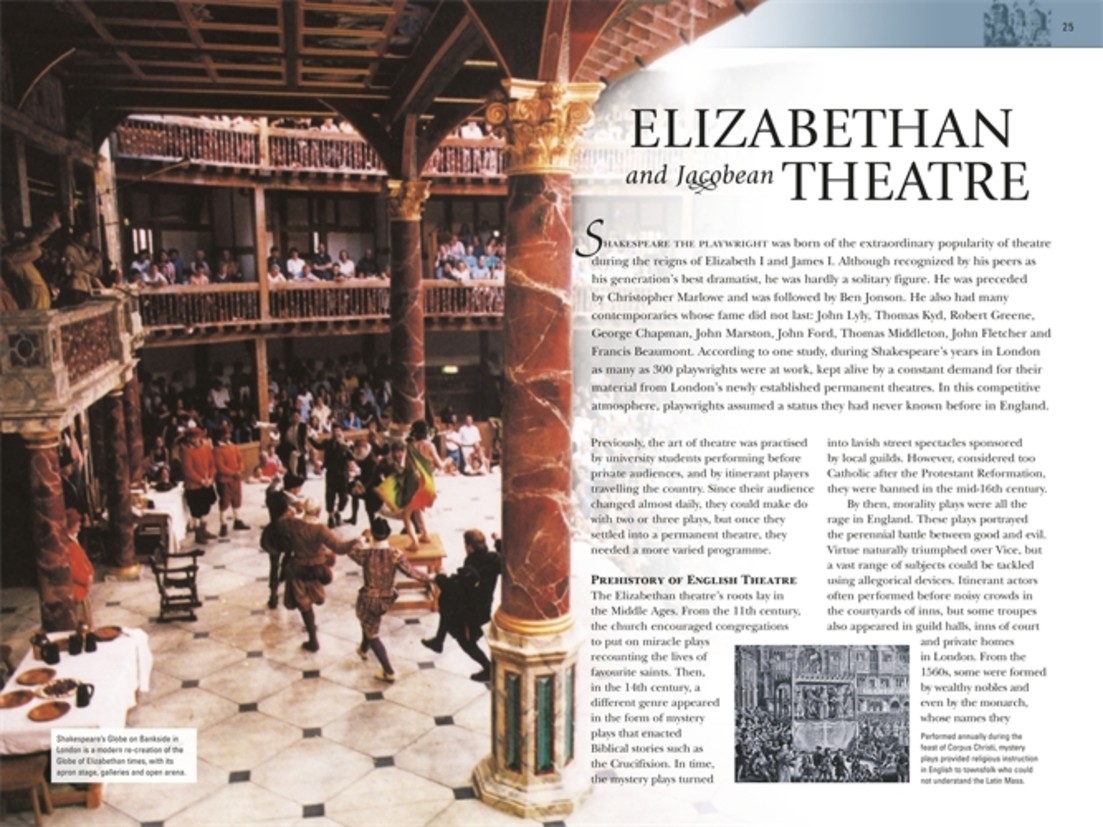
-
-
Will In the World by Robert Greenblatt - Will In the World by Prof. Steven Greenblatt, Harvard University. September 17, 2004. Preview available https://www.amazon.com/Will-World-How-Shakespeare-Became/dp/1847922961

TV:Shakespeare Uncovered: Henry the Fourth. Originally Aired February 1, 2013. Available at http://www.pbs.org/wnet/shakespeare-uncovered/episodes/
Websites
- Howard Ho: How Hamilton workshttps://youtu.be/1qXsFs2ywMo
A Few Quick Updates

Hi everyone!
I know it’s been a while, but I’ve been moving into my new place so it’s been hard to find time for blogging. Anyway, some exciting Shakespeare news out in cyberspace, and I’d like to report on some of the ones that make me really excited!
-
Sir Kenneth Branaugh, Shakespearean actor, director, and founder of the Renaissance Theater company, is putting on a series of productions, including a production of “The Winter’s Tale” with…. DAME JUDY DENCH! This production will be broadcast in theaters around the country, look for theaters in your area! Here is the official trailer:https://embed.theguardian.com/embed/video/culture/video/2015/sep/10/kenneth-branaghs-the-winters-tale-watch-the-trailer-video
- There is a new movie version of Shakespeare’s “Macbeth” coming out in the next few months, starring Michael Fassbender (now he and Ian McKellen have shared 2 big film roles!)
-

Title pages of books in the 60 Second Shakespeare series. For teachers, there are now condensed versions of Shakespeare plays that might be easier for some students to read: http://www.fivestarpublications.com/shakespeare/sixty.html
- You might have heard of this trend of actors speaking lyrics to pop songs like Shakespearean actors. I’d like to say that, for the record, most good Shakespearean actors know not to talk like prissy weirdos, but that this is absolutely hilarious, especially the one for Gangam Style! http://mashable.com/2015/09/24/15-second-shakespeare/?utm_cid=mash-com-fb-main-link#a6zKE_iemmqn
Ok, that’s it for now. Tune in for a new podcast, new play of the month, and some new reviews.
Sleep No More Review

This was without a doubt, the most incredible theater experience I’ve ever had. It was scary, interactive, exciting, clever, sexy, and even a little disturbing, but without a doubt it was incredible, original, and true Shakespearean theater.
Before you read the review though, a word of caution-
WARNING: this is a production where, the less you know about it, the better your experience will be. I will provide a basic outline of the production, and give you an insight into what I experienced, but I would urge you to see the show yourself without any preconceptions, so if you want to keep the mystery going that surrounds this production, I suggest you stop reading…
RIGHT
NOW.
Alright, if you’ve chosen to keep reading, that means you want to know more, so more I shall give you. Going from the general to the specific, I’m going to talk a bit about what the show is, then describe the experience a bit, and then offer some tips for people who have never gone before.

Sleep No More is not the traditional kind of theater- there is no proscenium, no stage, no seats, and only one platform. It’s what theater teachers like my wife call “Experiential Theater.” The way she explains it, it’s theater that exists as an event. Rather than sitting and watching, you actively follow the action and you can get so close to the actors you can, (and sometimes will), touch them.
The play was conceived by an English company called Punchdrunk Theater Company, who took over an old 6 story warehouse on West 27th Street in New York City, and turned it into a fictional hotel/bar called the “McKittrick Hotel.” The play, (which is done entirely without dialogue), is a re-imagination of both Macbeth, and the novel Rebecca by Daphne Du Maurier, set in the 1930s. The audience is admitted on the ground floor and are permitted to go freely through the 6 floor set and watch the actors perform. Different actors perform on different floors and interact with other actors at different times, and the audience may watch any scene or actor they wish.
The title of the play comes from this passage from Macbeth:

The Experience
As I said before, this a very freeing and very active kind of theater. The only division between you and the actors is that you will wear a face mask. Your role is basically to be an anonymous spectator at an event that unfolds before you, an event full of madness, sex, murder, and mayhem. I would describe it as sort of like living in the strange orgy scene in Eyes Wide Shut, or that scene in The Shining where Shelly Duvall runs through rooms of the hotel and keeps seeing bizarre sights.
From the moment you enter the incredibly detailed hotel, you know you are in a place that was dangerous, dark, and chaotic. You wonder if the people are crazy, or if the building itself is crazy.
As an audience member, you set the pace of your experience as you wonder through the hotels’ infirmary, library, parlor, bath, ballroom, balcony, patio, and dark forest (masterfully designed by Alexandria Challer). Eventually the actors will find you and you choose whether to follow them or wait for something else to come along. When I first entered the hotel, I spent a few minutes looking at the set- reading a hotel guest list, or examining a jar in the pantry, or staring at animal carcasses in the trophy room. Eventually though, I found a story unfold before me, and I rushed to follow it.
Because none of the actors talk, this play is not Macbeth, unless you want it to be, it is not Rebecca by Daphne Du Maurier, unless you want it to be. YOU determine what your experience is. The great, (and famously crazy) theater theorist Antonin Artaud once said, “Text is a prison.” If that’s true, then Sleep No More has set its actors free: their movements convey the story through mime, ballet, gestures, and occasional words. This freedom from the restrictions of text means that it’s up to you to truly piece a story together, and you will find that story can alter, change, and sometimes disappear into mist.
How is This Story Macbeth? (Spoilers Ahead)
One of the most common complaints I read online from people who saw the show is that they didn’t understand the connection between Sleep No More and Macbeth. I don’t want to give too much away because I feel that part of the fun in this production is trying to figure out the connection yourself, but I will provide you with a few scenes to look for, to give you some clues on how to connect this physical theater piece with Shakespeare’s play:
Scenes to look for:
- In the bedchamber on the 3rd floor, there is a bathtub on a small platform. On the steps leading up to the tub I saw a letter that contains this text from Shakespeare:
They met me in the day of success: and I have
learned by the perfectest report, they have more in
them than mortal knowledge. When I burned in desire
to question them further, they made themselves air,
into which they vanished. Whiles I stood rapt in
the wonder of it, came missives from the king, who
all-hailed me ‘Thane of Cawdor;’ by which title,
before, these weird sisters saluted me, and referred
me to the coming on of time, with ‘Hail, king that
shalt be!’ This have I thought good to deliver
thee, my dearest partner of greatness, that thou
mightst not lose the dues of rejoicing, by being
ignorant of what greatness is promised thee. Lay it
to thy heart, and farewell.
–Macbeth
This was the first definite evidence I had that the performance was inspired by Shakespeare besides the title of the play. A woman in a beautiful ball gown entered and read the note, pacing the whole time. Suddenly a handsome, red headed man came in. Like the Macbeths in Shakespeare, the body language between these two was hot and fierce; at times passionate and sexual, at times violent and animalistic. Lady Macbeth uses her body and her caresses to tempt her husband to murder, as the one in Shakespeare seduces him with her words. He trembles, turns away, brushes her off. Then, when she persists they struggle- clawing and slapping, even throwing each other across the bed, but in the end, exhausted, he slumps. She, victorious, leaves the room, looking like a queen already.
2. Alone in his room, Macbeth contemplates his dire murder. He leaves the warmth of the bedchamber and enters a dark, moon-lit forrest with a few gravestones. I followed him out into the forrest, knowing that what he does now will probably be an interpretation of Macbeth’s two most famous soliloquies: “If It Were Done When Tis Done” (Act I, Scene vii), and the famous Dagger Speech from Act II, Scene ii. Since the actor didn’t talk, he had to convey Macbeth’s inner torture with his body. I saw him going up to a statue of the Virgin Mary, beating his fists and chest against the hard stone. It was clear to me that this symbolized Macbeth’s struggle between morality and desire. He staggered away from the statue and stopped at a stone pathway that led back to the bedroom. Macbeth then put his hands on the stones, lifted his body up pull-up like, and kicked his legs in a futile attempt of motion. I immediately thought of Macbeth’s line:
I have no spur
To prick the sides of my intent, but only
Vaulting ambition, which o’erleaps itself
And falls on the other (Macbeth I,vii).
It was clear that the actor was showing how Macbeth cannot bring himself to kill, yet is too ambitious to let go of the desire to kill and this is what manifested in his tortured body. He then turned toward me and the other audience members and I saw his expression change. He looked around, worried, even frightened, as if he saw something he couldn’t believe. It wasn’t clear to me at first, but now I’m pretty sure that he was looking at the dagger from his famous soliloquy, and it was US. He ran from the forrest, and we charged after him like a swarm of angry bees! We found him in a corridor on the 2nd floor, where he again hoisted his body up against an old fireplace, inverting himself with his legs sticking up, and his head below, like an upside down cross. He then stretched his hands out and waved them frantically. Two frightened audience members took them and helped him hoist himself down. When Macbeth got to his feet, he proceeded to a darkly lit chamber where another man lay sleeping…
3. In a small bar on the 1st floor, I saw Macbeth with two women and one man. They all wore black lipstick and had crazed and hungry looks in their eyes. The music sped up to a crazed pace and the movements erupted into a terrifying orgy of sights and sounds. A strobe light pulsed showing me glimpses of the frightening spectacle, which included the two women stripping their clothes, the man putting on the head of a goat, and one of the women pulling out an infant covered with blood, and holding it in triumph over Macbeth’s head. At this moment I realized that these gruesome creatures must be the witches, and that they were foretelling Macbeth’s destiny as they do in Act IV. They also brought out a tree, which signified the prophesy that Macbeth will never be vanquished until Birnam Wood walks to Dunsinane Hill. To be honest, I don’t remember much after that, I was probably still in shock!
4. Back in the forrest, I encountered a small brick structure that looked like a tower, with a woman looking out of it expectantly. She beckoned me to come inside. When I did, I saw that she was dressed in a nurses’ uniform, and she was looking at a doctor with concern. Inside the tower was a small operating room with a circular table in the center, and two rows of seats above it. The doctor was injecting some kind of drug into his arm, which made it twitch in spasms. The two of them walked into the forrest and through a door into a room that looked like a small train station with platforms and travel posters on the walls. Lady Macbeth was there, wondering aimlessly. I instantly identified this moment as the famous sleepwalking scene, where Lady Macbeth contemplates the crimes to which she has become accessory. Usually the actress conveys her guilt by washing imaginary blood off her hands, but in this case she chose to interact with people, specifically, ME. She held out her hands to me, I took them. She looked into my eyes with a haunted look on her face. Then she whispered in my ear: “The thane of Fife had a wife, and she was beautiful.” I could see that this woman felt alone and afraid, with no one to talk to. She was no longer the powerful figure throwing her husband across the bed. This was what had driven her mad, and her madness allowed her to see me and the rest of us in the audience. She looked upon us with looks of disgust and terror, as if we were the ghosts of the people she killed, and ran away somewhere we couldn’t follow. We never saw her again (until the ghostly finale).
Those were just a few pieces that I witnessed. I won’t give away how it ended, but I will tell you that the show ended in a dining room on a tableau that reminded me of a cross between Da Vinci’s The Last Supper, and the banquet scene of Macbeth.
When I talked to my wife, (who also came to the show, but was in a different audience group from me), she told me that there were many other scenes that were clearly inspired by Rebecca; she encountered a woman that she figured out was the ghoulish housekeeper Ms Danvers. She also had an intense meeting with the long-suffering Mrs. DeWinter, who gave her a locket and told her to keep it always. Finally, my wife revealed to me the startling fact that (Spoiler Alert), the same woman who plays the infamous Rebecca, dressed in a red flowing gown, also becomes Hecate, the goddess of black magic in Macbeth!
These performances are athletic, well thought-out, and incredibly nuanced. If you take some time to familiarize yourself with the stories of Macbeth and Rebecca, you can understand how the actors are interpreting the stories through dance, mime, and interactions with the set, props, and occasionally, the audience themselves.
I’d now like to conclude this review with my own pieces of advice for those of you who choose to see the show:
- Yes, wear comfy shoes. Almost everyone will tell you to bring comfortable shoes and they’re right- if you don’t want to lose the thread of a story, you have to be quick. Macbeth in particular is fast and nimble as a tiger, and you have to run fast to keep up with him.
- Find a person that interests you. I think some people make the mistake of staying in one place too long and ignoring the actors. This is physical theater, so try to find an actor to follow.
- Pretend you are a ghost if it helps Remember, murder and insanity are here, and you have a chance to see what it looks like and how it moves. Look right into the actor’s eyes and embrace your power to haunt these lost souls. Don’t be afraid to get close to them, and stay there as long as possible.
- If you do read Macbeth or Rebecca beforehand, it can be useful to memorize a few lines or moments and look for them in the performance. I can tell you for a fact that these actors meticulously planned their performances to give physical life to these two great works of literature. Look for a gesture, a glance, or a prop that jogs your memory and puts you into this hybrid world of Shakespeare and Du Maurier.
- The actors can sense if you are interested in interacting with them. If you seem scared or apprehensive, they will respect your space and not get close to you, but if you show them you are brave enough, they will extend a hand, or come toward you and give you a theater experience you will never forget.
- Leave your loved ones behind. Nothing was more fun to me than talking about my experience with my wife after the show and piecing our nights together. Even though the same show was going on the whole time, we saw different people, to different rooms, and had very different reactions.
- If an actor disappears, don’t wait for them. Sometimes you’ll follow an actorrl and they’ll duck into a corridor, or go behind a locked door, or a sentinel in a black mask will block your path. Now the story is over, and you are alone. Now you must choose again where to go, and try and uncover the sense of this horror.
- If you get to go to the 6th floor, consider yourself very lucky. Only a few people get to see it. My wife said she saw one person go up there. He was on an elevator with a small group. As they reached the top floor, a hotel porter let him off, then extended an arm, to indicate no one else would be admitted. Even the man’s girlfriend was blocked by the porter, who then explained, “This experience is best undertaken, alone.”
Well, I hope this whetted your appetite somewhat. Like I said this show is incredible, and very different from the kind of theater we generally think of, and that’s what makes it engaging and exciting. However, there is violence, nudity, and gruesome imagery onstage so it is definitely not for children. If you are interested in learning more, you can visit the Sleep No More website: www.sleepnomore.com/
Until next time,
Sleep Well.
“Something Rotten” Review

https://www.youtube.com/watch?v=-SXqs0TDEfo&list=PLOdRUUA2P9epAHoFuCRdu59ABiOmznT_b
As promised, here is my review of the hot new Broadway musical “Something Rotten.”

My reaction: I went into this show with the hope that it would be a witty, whimsical, musical salute to both Shakespeare and musicals, and it certainly was , but to my mind as a Shakespearean fan, I felt like it didn’t quite live up to its full potential. Yes it’s entertaining, yes it has some great acting and great performances, yes it boasts some glistening songs and scores of jokes, but the plot is a little recycled, the characters are hard to like at times, and the balance of Shakespeare and musicals is pretty tipped to one side.

The Theater
Something Rotten is entertaining from the moment you walk up to the door of the St. James Theater: I was greeted by colorful Elizabethan cartoon figures who voiced their take on the show via speech bubbles: “Song and dance at the same time? Blasphemous!” As I walked up the stairs to my seat in the Mezannine, I saw all kinds of Shakespearean merchandise in the lobby from magnets to T-Shirts, to signature candy bars and drinks, including one called “The Bloody Bard.” This raised my hopes that this show would show some love to Shakespeare in addition to musicals.

As I took my seat, I gasped at the enormity before me: a huge Greek proscenium opening on a Pantheon like dome, complete with two painted muses on the ceiling, and three chandeliers that would tempt any Phantom of the Opera to deploy upon the audience. Below the dome was the set; an impressive recreation of an Elizabethan playhouse with its thatched roof, wooden galleries, and the banners that announce the start of the show. Once the lights dimmed, the orchestra began with trumpet and the ping of an old fashioned Tambor drum, which slowly evolved into the raucous jazzy tune “Welcome To the Renaissance.” The show had begun, and I was smiling already.
The Plot
As I’ve stated before, the premise is pretty simple. Two brothers, Nick and Nigel Bottom, (Brian D’Arcy James and John Cariani respectively), are struggling writers who are trying to make it in theater in London, constantly out classed by Shakespeare (Christian Borle), who used to be an actor in their company. Nick angrily curses out Shakespeare in song in the hilarious number: “God I Hate Shakespeare.”
Shakespeare is a flamboyant and stupendously successful writer with a leather doublet, killer abs, and a cocky smile. He knows he’s the best there is, and shows off by giving extravagant parties and poetry readings, complete with colored lights and pyrotechnics! Shakespeare also has an annoying habit of stealing lines and ideas from other writers; the second he looks at Portia he says, “Good name,” hinting at his use of her name for the heroine of The Merchant Of Venice. Borle is fantastic in his Shakespeare strut, and plays the Shakespeare rockstar persona to the hilt.
Both the Bottom brothers secretly envy Shakespeare; Nick for his money and success, Nigel for his skill at writing beautiful poetry. Nick worries how to make a living as a playwright, especially since he is also supporting his brother and his wife Beatrice (played excellently by Heidi Blickenstaff). Bea urges him not to worry and assures him that she is strong enough to get a job and help ease the burden of supporting his family in the song: “Right Hand Man,” (a wonderful satire of contemporary gender politics). “It’s 1595, we have a woman on the throne,” Beatrice tells her husband, “By 1600 a woman will be exactly as equal as a man.”
Nick doesn’t want his wife to have to work for him, but he can’t get out from under Shakespeare’s shadow. Desperate to turn his luck around, Nick pays a soothsayer (Brad Oscar) to tell him the future of musical theater. Oscar goes into a raucous musical number, “A Musical,” that “invents,” and parodies almost every musical of the last 50 years from A Chorus Line, to Rent, complete with an upbeat tune and kick-lines!
Bottom becomes convinced that he will create the great new musical that will rival Shakespeare’s plays in popularity, and he gets his brother and the Soothsayer to write it. He now imagines that for once, “Bottom’s Gonna Be On Top!”
Nigel Bottom, Nick’s brother, is an aspiring poet who dreams of creating a play that will show beauty and truth. Nigel’s poems put love in the heart of Portia, who adores both his poems, and Nigel himself. The only problem is her father Brother Jeremiah (Brooks Ashmanskas), is a Puritan, (as well as a closet homosexual). Jeremiah despises theater, and by extension, Nigel. The pair secretly meet to allow their love, and their love of poetry to blossom. They also have a wonderful duet, “We See The Light,” where they imagine getting Brother Jeremiah to believe in their love, which turns from tender Elizabethan ballad into a catchy Gospel tune.
I don’t want to give too much away but, in the end, the Bottom family and Shakespeare strike a deal- Shakespeare will still rule theater in England while the Bottoms get to be on top at last in America, where their new musicals will become the theater of the future.
If you already have seen the show, here are some Shakespeare jokes you might have missed:
- The title “Something Rotten,” refers to a line from Hamlet where the guard Marcellus declares: “Something is rotten in the state of Denmark.”
- The name Nick Bottom comes from one of Shakespeare’s characters; in A Midsummer Night’s Dream, he is an actor in an amateur theater troupe, who is magically transformed into a man with the head of a donkey. Through the play and the musical there are jokes about what an ass Bottom is both literally and figuratively.
- The two female characters are also named after Shakespearean heroines: Beatrice, Bottom’s strong-willed wife is from Much Ado About Nothing, while Nigel’s sweetheart Portia appears in The Merchant of Venice, as does the Jewish moneylender Shylock.
- In many of Shakespeare’s comedies women dress up as men to take on their jobs, just as Beatrice does for her husband Nick.
- The villainous puritans who try to shut down Nick and Nigel’s musical are based on a real life religious group who did eventually pull down all the playhouses in London, and ban theater altogether. Fortunately for Shakespeare, they didn’t succeed in destroying the theater until 30 years after he was dead.
- The brothers’ home land of Cornwall probably echoes that of the brothers Edmund and Edgar in Shakespeare’s tragedy of King Lear.
- Many people have accused Shakespeare of stealing his work from other people over the years, and of course, this musical makes it one of his defining characteristics. I’ve written about this in the past, but to sum up my arguments- Shakespeare adapted, he didn’t steal.
- The beautiful song: “To Thine Own Self Be True,” is a direct quote from Shakespeare’s play Hamlet; a bit of fatherly advice from Lord Polonius to Leartes.
- (Spoiler Alert) Toby Belch, Shakespeare’s non-de-plume as he spies on Nick Bottom, is named after another of the real Shakespeare’s characters- a fat drunken knight from the play Twelfth Night.
- The line “Son of York,” comes from Shakespeare’s Richard III.
- (Spoiler alert) Ironically, in Shakespeare’s play of Merchant it is Portia, not Beatrice who disguises herself as a male lawyer and saves the heroes from death in the courtroom with her famous “The Quality Of Mercy Is Not Strained” speech, though Beatrice does so in Something Rotten.
- (Spoiler Alert) The judge in the courtroom whom Shakespeare promises not to make fun of is named Falstaff, named after Shakespeare’s most celebrated comic character- another fat, drunken knight who has no moral code whatsoever!
- (Spoiler alert) When the brothers are banished and sent to America with Shylock, this parodies a historical event in 1751, where a troupe of actors mounted one of the first ever theatrical productions in America, which happened to be Shakespeare’s Merchant of Venice.
This musical is a wonderful and entertaining show, but as I said before, I feel that some of it didn’t quite live up to my own expectations. I’ve decided to list my criticisms as a list so that you can choose to read or ignore it. After all, this is only my opinion, and I want you to make up your own mind.
- I would argue that plot-wise, Something Rotten is basically The Producers set in 1595. The Bottom brothers who struggle to produce a play are quite obviously lifted from Mel Brooks’ Bialistock and Blume, and the fact that Brad Oscar, (who was in that musical), has such a big part in Something Rotten, is a dead giveaway. Plus the final scene that culminates in a courtroom is very derivative of the climax of The Producers. I feel that for a musical that bills itself as “A Very New Musical,” the creators belie this statement by ripping off one of the most popular musical of this century.
- This is a small point, but I believe that there are far more musical jokes in Something Rotten than Shakespeare jokes. This could just have been my own experience, (surrounded as I was by high-school aged musical theater geeks), but I thought that the torrent of musical theater puns and quotes was simply too much. The audience ate it up and laughed so fast that I couldn’t hear a lot of the other jokes. I wish that the jokes were a little more spaced out, and that the balance was a little more toward Shakespeare instead of musicals.
- The roles for women are small and the roles for minorities are nearly nonexistent- the only black actor is a minstrel (played superbly by Michael James Scott), who only gets one song, “Welcome To the Renaissance,” and doesn’t have any influence on the plot whatsoever. In Shakespeare’s plays, fools and minstrels were essential to understanding the plot and often helped comment on the action, so I thought not using his talent more was a huge missed opportunity. Likewise, Bea and Portia are great characters, but I wanted to see more of them in the play, and it would have been nice if they got a scene together.
- Although Shakespeare is the antagonist, I found his scenes were the best, which arguably caused sort of a problem. I feel the writers couldn’t really pick a lane in terms of making it clear whom to root for- Bottom or Shakespeare. In many ways Nick Bottom is a jerk- he ignores his wife, he ridicules his brother, and his jealousy to Shakespeare (though understandable) is highly unappealing. By contrast, Shakespeare might be an egomaniac and a thief, but as he says in “It’s Hard to Be the Bard,” he’s just trying to live up to the adoration that his fans demand of him. The Bard is arguably more sympathetic because he is constantly trying to live up to his image as a genius. Like a lot of artists from Mozart to Bob Dylan, to Picasso, to George Lucas, Borle’s Shakespeare worries that he’s piqued too soon, and has nothing more to offer his public. Bottom never offers to help Shakespeare or ask him for advice on how to become a better writer, he just tries to steal Shakespeare’s success and justifies it with his insatiable jealousy. At least Max Bialistock was nice to Leo Bloom and encouraged him to follow his heart’s desire of being a producer, but Nick never even does that for Nigel. In short, I found it hard to enjoy the character of Nick Bottom, (who was supposed to be the hero), when he is never given an opportunity to be likable. Once again, Bottom is overshadowed by the Bard, but this time it’s his own fault.
Although I was a little disappointed with these issues, the show is incredibly entertaining, well-acted, and has great catchy songs. I certainly would recommend it to any musical theater fan with at least a touch of Shakespeare in their soul!
Stay tuned for a review of one of the greatest Shakespeare adaptations I’ve ever seen, the experiential theater piece, “Sleep No More.”
Something Rotten This Way Comes
 The banner for the new musical: “Something Rotten”
Well everyone, at last there’s a new Shakespearean musical on Broadway! It was nominated for 10 Tony’s and won Best Actor! I caught one of the numbers during the Tony awards on Sunday and I would highly recommend checking this musical out!
The show is set in the 1590s, when all of theater is dominated by a powerful playwright called “The Bard”, who can seemingly do no wrong, (obviously a nod to Shakespeare) . The show then, centers around his competition; two actors who conceive and create the world’s first musical, paying the Bard a backhanded compliment by implying that the only way to beat Shakespeare is to come up with something he hasn’t done before.
Not only do I love the show’s tongue-in cheek wit, I also enjoy the fact that it has some flirtation with real history- Shakespearean plays were actually put to music in the 1640s, as a way of getting around the Puritan’s laws against spoken dialogue in plays. More importantly, the show is a loving parody of both Broadway and Shakespeare and who doesn’t just love loving parody?
So for all of you musical Gleeks and Shakespeare Nerds, go see “Something Rotten” if you can. Below is a link to their official website:
 The Shakespearean Student