
Shakespeare actually lived during the settlement of Virginia, and the Pilgrims came to America just 4 years after he died. I wonder, if Shakespeare had lived, what he would have made of this American tradition?

Happy Thanksgiving!


Shakespeare actually lived during the settlement of Virginia, and the Pilgrims came to America just 4 years after he died. I wonder, if Shakespeare had lived, what he would have made of this American tradition?
Happy Thanksgiving!

Why no Coriolanus?? David Oyelowo is playing him at the National Theatre and it’s the one analysis of Shakespeare you don’t have! Please hurry! I’m seeing it on Friday!User Noittickles, sent to me today
Well, with a request like that, how can I refuse!


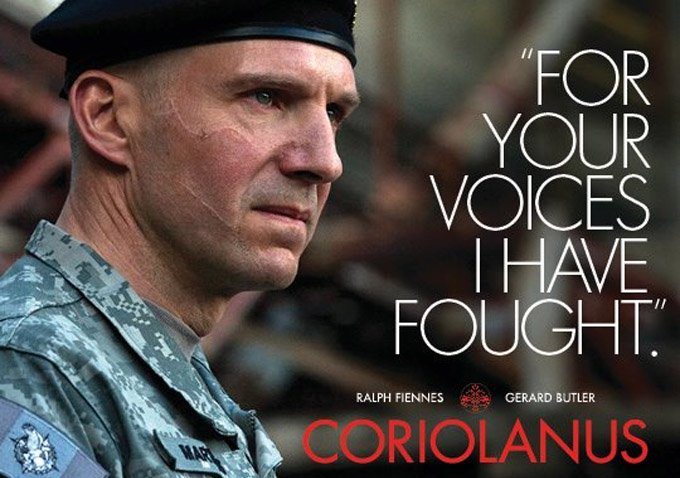

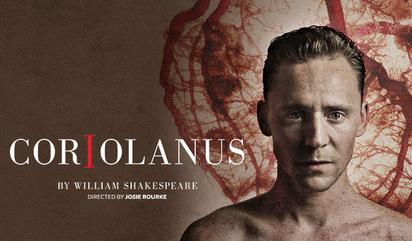
Coriolanus is the only Shakespearean story about Republican Rome, which is to say, before Julius Caesar turned Rome into a dictatorship. The play has been called pro-democracy, pro-monarchy, fascist, Marxist, and many other things. In some ways, the play is rather simple and its verse isn’t much fun to read, but the questions it poses, and the way Coriolanus shows the clash between power and common people, makes it fascinating to think about.
The play’s title character is also the most opaque one Shakespeare ever wrote. Some say he is a war hero, undone by the mob. Some say he is a want-to-be dictator who hates the common people and wants to keep power among the military elite. Unlike Hamlet, Macbeth, or any of Shakespeare’s other tragic heroes, we never get a sense of his true intent, or his actual feelings on anything.
To illustrate this, let’s look at two very different interpretations of the same speech. In Act III, Scene iii, the tribunes (representatives of the commons in the Senate), have organized a smear campaign to prevent Coriolanus from becoming Consul, (the highest rank a Roman aristocrat could achieve before Emperor Augustus). Coriolanus is furious at the Tribunes, and vows to leave Rome to take his revenge on the city. Here’s the text of the speech:
Coriolanus. You common cry of curs! whose breath I hate
As reek o' the rotten fens, whose loves I prize
As the dead carcasses of unburied men
That do corrupt my air, I banish you;
And here remain with your uncertainty!
Let every feeble rumour shake your hearts!
Your enemies, with nodding of their plumes,
Fan you into despair! Have the power still
To banish your defenders; till at length
Your ignorance, which finds not till it feels,
Making not reservation of yourselves,
Still your own foes, deliver you as most
Abated captives to some nation
That won you without blows! Despising,
For you, the city, thus I turn my back:
There is a world elsewhere.
[Exeunt CORIOLANUS, COMINIUS, MENENIUS, Senators,]
and Patricians]
Aedile. The people's enemy is gone, is gone!
Citizens. Our enemy is banish'd! he is gone! Hoo! hoo!
In the first speech, Tom Huddleston plays Coriolanus as a heroic soldier, disgusted and hurt by the lies of the scheming Tribunes:
Hiddleston chose to play Coriolanus not as a villain but as a frustrated demagogue- someone who wants to lead his people to greatness, whether they like it or not. Whether you approve of his methods, Hiddleston’s Caius Martius does care about the good of Rome. You can almost see the tears in his eyes as he leaves the city he loves, the city he bled for, and that has now betrayed him.
By Contrast, Ralph Fiennes takes a much more authoritarian and cruel route in the film Coriolanus, which Fiennes also directed:
Youtube critic Kyle Kallgren made the excellent case that Fiennes’ Coriolanus is first and foremost, a soldier. You could argue that perhaps Coriolanus has no political ambition whatsoever; he merely wants to keep fighting because war is all he knows. Maybe he purposefully sabotaged himself during his campaign for Consul, because all he wishes to rule is the battlefield:
Kalgren also highlights the “proto fascist” parts of Fiennes’ performance, since Fiennes himself has played Nazis, serial killers, and of course, Lord Voldemort, who is essentially a fascist dictator. Like Merchant of Venice, the Nazi party used Coriolanus as a propaganda tool, claiming that Caius’ fall from grace showed the failure of a weak democracy:
The poet deals with the problem of the people and its leader, he depicts the true nature of the leader in contrast to the aimless masses; he shows a people led in a false manner, a false democracy, whose exponents yield to the wishes of the people for egotistical reasons. Above these weaklings towers the figure of the true hero and leader, Coriolanus, who would like to guide the deceived people to its health in the same way as, in our days, Adolf Hitler would do with our beloved German Fatherland.
Martin Brunkhorst, “Shakespeare’s Coriolanus in Deutscher Bearbeitung. Quoted from Weida
It makes sense that fascists would gravitate towards a play about a seemingly virtuous Roman military leader. After all, the word “fascism” is an Italian word, coined by Benito Mussolini, to evoke the glory days of the Roman Empire- days when Roman society was based on military conquest under a strong leader. What these fascists fail to recognize is that Coriolanus is not a strong leader- he hates politics and is unable to gain any support from the people or from the elites in power. His inability to “play the game” of Roman politics, does make him appealing to some, but on the whole, his career is a disaster.
Some have chosen to interpret the story of Coriolanus as a sort of action-movie wish fulfillment- a man in a lawless society who uses his fists rather than words. Back in the 1990s, Steve Bannon (former advisor to President Donald Trump), wrote a hip-hop musical called: The Thing I Am, which re-interpreted the story of Coriolanus as a police captain who is trying to clean up downtown LA, which is embroiled in gang warfare. I find this interpretation paper-thin and not at all conducive to the spirit of the original play. It also has very racist and paternalistic undertones. You can read my review of it here:
https://www.nationaltheatre.org.uk/productions/coriolanus/
Shakespeare refuses to be prescriptive on political or social issues. He tries to represent all sides of an issue and let the audience decide. With the rise of neo-fascist movements, sectarian violence, and the persistent questions surrounding police and military forces, Coriolanus is more relevant than ever. I haven’t seen this production at the National Theater, but I hope it calls attention to the various angles and points of view of the play- Coriolanus the war hero, Coriolanus the traitor, Coriolanus the soldier, Coriolanus the would-be-dictator. David Oyelowo is a fantastic Shakespearean actor, so I’m sure he can bring a great deal of complexity and nuance to this complicated man.
What I find interesting is that the trailer chooses to use this speech, when Coriolanus has defected to Rome’s enemies, the Volskies. He seems sorrowful, desperate, and afraid of what the Volskies will do to him, now that he is in their camp. One line that Oyelowo delivered exceptionally well was the line “Only the name remains.” I haven’t seen the whole play, but it seems THIS Coriolanus is concerned with the glory of his name living after him. The final question this play asks is, for such a complicated man, how will Coriolanus be remembered?
Well, there you go, Stopittickles! Hope you enjoyed this overview of the play Coriolanus. If you like this review, you might like to sign up for my online class on Julius Caesar via outschool.com:
Click here to sign up and get a $5 discount: https://outschool.com/teachers/The-Shakespearean-Student
https://www.bbc.com/news/articles/ce8d25wzd8wo
I find it really cool that a new rock adaptation of Hamlet is coming to London, and that the band Radiohead is going to supply the music.
This isn’t the first time Radiohead has supplied music for a Shakespeare adaptation- in 1996, three of their songs underscored the hit movie Romeo+Juliet by Baz Luhrman

According to Branaugh, the idea behind the film was to emphasize beautiful things like tranquility and love, but preserve and heighten the danger of being hunted by a powerful warlord like the Duke

Branaugh set the film in 19th century Japan, at a time when English people came to Japan for the first time, and created small English communities in the country. I’ll discuss later that I have very conflicting feelings with this choice, but I will give Branaugh this- it does highlight the fish out of water journey that Rosalind and the other characters go through leaving their homes at court, and becoming enamored with a new country.


The cast is full of veteran Shakespeareans and gifted Hollywood stars. Bryce Dallas Howard is charming as Rosalind, and has good chemistry with RSC actor David Oyelowo. I also enjoyed Brian Blessed’s dual role as Duke Senior and Duke Frederick. Kevin Klein is very sincere as Jaques but I wish he had a bit more fun with the over exaggerated melancholy that Jaques puts on. The overall effect of the performances is a sentimental, charming, beautiful, witty group of people who are having a fun time.
The cast is great, the cinematography is stunning, and the music is charming. Overall, Branaugh has done a great job of bringing the spirit of the play alive- that of a sweet, pastoral comedy about love, unrestrained by wealth or status. What I worry about though, is that Branaugh might inadvertently be celebrating colonialism. Yes, Japan is a beautiful country with a highly sophisticated and rich culture, so it makes sense that English people would be drawn to it. That does not justify the cruel way the English and Americans colonized parts of Japan, made the people mine for gold, and forced them to trade with the west. I worry that, like The Mikado, Branaugh celebrates Japan in a way that makes it seem like westerners were justified in taking so much away from it. I wish the plot had more of a “look but don’t touch” attitude to Japanese culture.
I also question the decision to cast barely any Asian actors. Given the story Branaugh wants to tell, it makes sense to cast non-asian actors as Thr Duke, Rosalind, Celia, and even Orlando, since they are the ones who come to the forest from an English-style court. But the roles of Corin, Silvius, Audry, Phoebe, and even Old Adam are people who are supposed to be familiar with the country, meaning it would make perfect sense to cast Asian actors in these roles. Frankly, there are very few well known Asian actors in Hollywood and I would love to give some of them a chance to shine, especially since Shakespeare has long been a way for actors to show their skills.
In conclusion, I can see why people like this movie and I too enjoy it, despite its questionable subtext. I don’t want to take away anyone’s enjoyment of the film, just to remind people not to be too seduced by the historical practice of taking something “As You Like It”

If you like this analysis, you might be interested in signing up for my Outschool Course on Shakespeare’s Comedies. Link down below. Share this class with a friend and you will get $20 USD off!
You’ll also get $20 USD when you sign up with your link and take their first class!




Greetings Dear Gentle Readers,
With the new season just released on Netflix, I’m sure a lot of us literary nerds will rejoice and be happy to have an excuse to play dress up, eat some scrumptious food, and converse on the sweet little confection that is Bridgerton. What follows is by no means a comprehensive list of ideas, I just wanted to share some of my research that went into my own party in the hopes that it gives you ideas. Please feel free to respond to this post by commenting or by hitting me up on Twitter at @Shakestud and share your own Bridgerton Party Pics!

Colin Bridgerton.
I need to give a special thank you to my wife in this post. She’s the one who introduced me to Bridgerton, did a lot of research into Regency etiquette and dining, and bought all the ingredients for the party. More than that, she is an extremely talented writer and educator who inspires me in ways even Penelope Featherington couldn’t enumerate. Watching Bridgerton has become a kind of nightly tradition for us and I am very grateful
Bridgerton is a period comedy on Netflix based on the popular novel series. It is set in an idealized version of the late 18th and early 19th century; a time when England was wealthy, cosmopolitan, and when one’s social standing was everything. The shows writers pay homage to great literary figures like Jane Austin, George Brimsley Sheridan’s The School For Scandal, Shakespeare (of course), and real-life scandal writers of the time; rags like Town and Country, The Spectator, and Courtesans.
Some people have criticized the show for not being historically accurate. Others claim that the show’s plots and characters are highly derivative from other comedies like Gossip Girl and others. I would argue that THAT’S THE POINT. Bridgerton is not trying to do anything original- it is nostalgia bait for literature nerds like me who know that shows like Gossip Girl are ripped off from classical sources. What Bridgerton does, is take these classic tropes, put them back into the period where they became popular, and then update the setting to make it more accessible to a modern audience. Much like the party ideas I’ll give you later, this show is like a sweet confection- comforting, unassuming, with an air of nostalgia and romance like a cup of tea and a crumpet.
https://www.vulture.com/article/bridgerton-characters-ranked-netflix.html
The show focuses on the hopes, dreams, and above all, loves of the Bridgeton family; a noble family in Georgian England. Viola, the matriarch of the house, seeks to find love matches for all her children and to avoid scandalous gossip. She does so through her own intelligence and through the help of her network of female friends, all while avoiding the watchful eye of Queen Charlotte (the powerful wife of King George III), and the mysterious scandal monger Lady Whistledown
Like its dazzling costumes, the show is very much fluff and feathers. Bridgerton’s use of color blind casting is extremely refreshing to me and it signals loudly and clearly that Bridgerton doesn’t want to be painstakingly historically accurate. This is an candy-coated and show that concocts an idealized version of Georgian society- one where painful racial problems are thrown out, there are few economic or political problems to sour one’s pallate, but everybody is rich and pretty and looking to fall in love with a wealthy eligible young man or lady. So, with a concept this delicious, I knew I had to throw a party based on it!
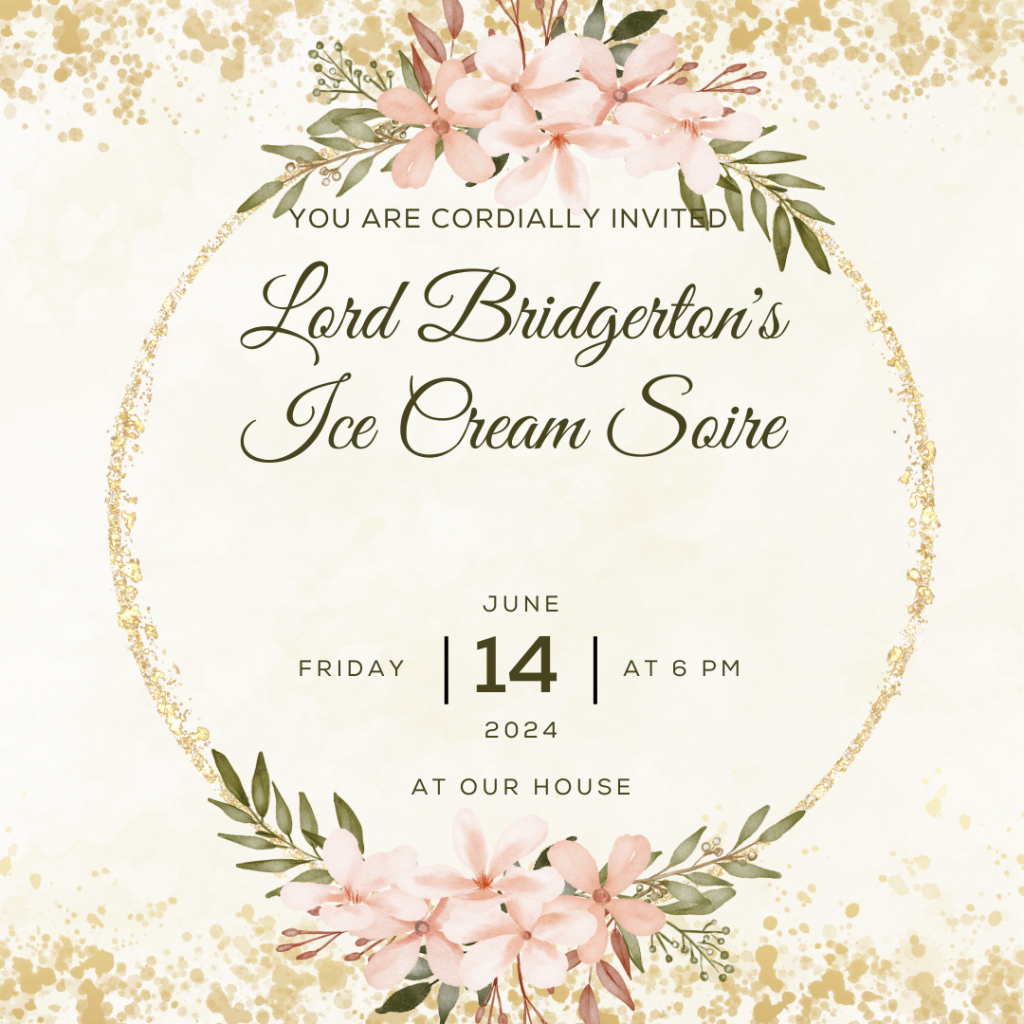
There’s a ton of fancy invitations templates online. Below is an invitation I created for free with an app called Canva and a parchment background picture I found online.
You probably also know that I am a huge fan of the website Immortal Longings because of their excellent Shakespearean art and they sell cards too. You can buy the cards or download the pictures on their website.


The Georgian Era was firmly in the Baroque era- a time known for opulence, excess, and as many frills as possible. Deck your home with as much gold, crystal lace as possible! Use electric candles liberally. Also, use curtains and fancy throw pillows to fancy up your dining room! Here are some more ideas from Chateau Challain:
As you can see, since the Georgian era was known as a time of wealth and excess, you could very easily break your wallet or your back trying to replicate an authentic Georgian dinner party, (especially if you lack an entire household staff to bring it to life). What we tried to do was distill some of my favorite foods from the Georgian era down and come up with an easy plan so that a plebian cooking-impaired soul like myself could make them at a reasonable price. I did not want my wife to have to cook for this, though she did wind up trying out a very interesting Georgian recipe:
Thought I honestly doubt that the upper crust Bridgertons would ever eat this, it is an authentic Georgian recipe and it was common among middle class people, American Revolutionary War soldiers, and even pirates! It’s a savory salad that uses eggs, pickles, mixed greens and anchovies. The name is French for “hodge-podge” and it honestly can be swapped out with any number of ingredients. Here’s a recipe that’s pretty close to what my wife used:
https://ancestorsinaprons.com/tag/salmagundi/
1. dinner course- pie 🥧, 🥗 , cheese, grapes, wine 🍷
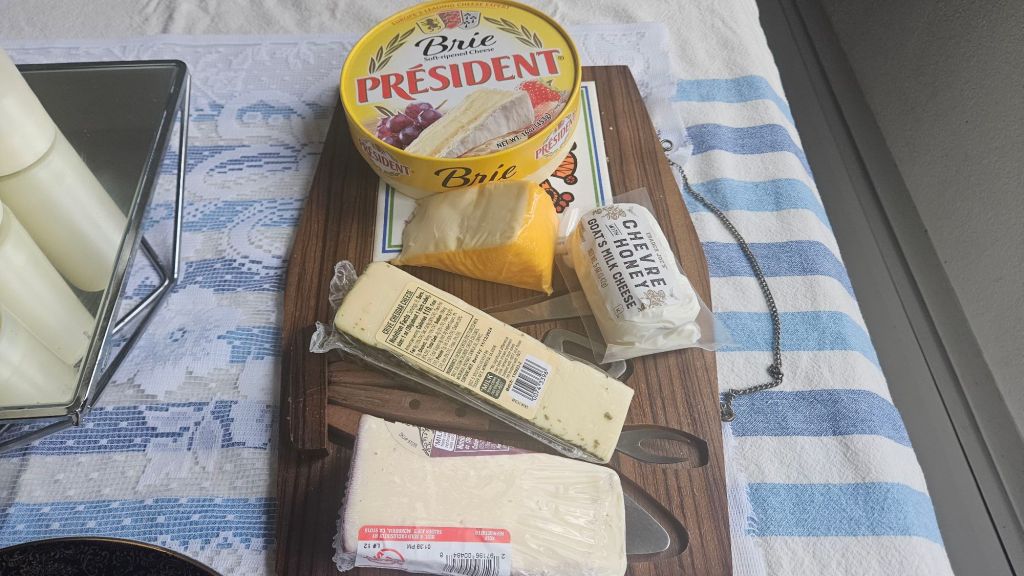
Just like decor, a party or ball amongst the nobility was a sign of wealth and status. If you wanted to impress foreign dignitaries or net a wealthy spouse, you had to show off the wealth and sophistication of your household. We served duck as the main dish since it’s the sort of game the Bridgertons would have on their land. My wife and I also served a meat pie as an homage to the one Daphne eats excitedly in Season 1. Meat pies were very popular in the British isles due to the lack of refrigeration in the Georgian era. For our party, my wife bought the Steak and Stout pie from Trader Joes, which I realize not everyone likes, but it does have a good hearty feel to it. Accompanying the pie, we served cheese, grapes, and some good red wine!
High tea is a real ritual in England to this day, and if you don’t have a lot of time or money on your hand it can be a bit daunting. Again, we relied on Trader Joes to help fill in the gaps of my cooking skills (since again, I wanted my wife to enjoy the party, not cook). I leaned heavily on ice cream, macarons, and of course, tea since they are all foods featured on the show. In fact, there’s a whole scene at the house where the family fight over the last chocolate macaron.
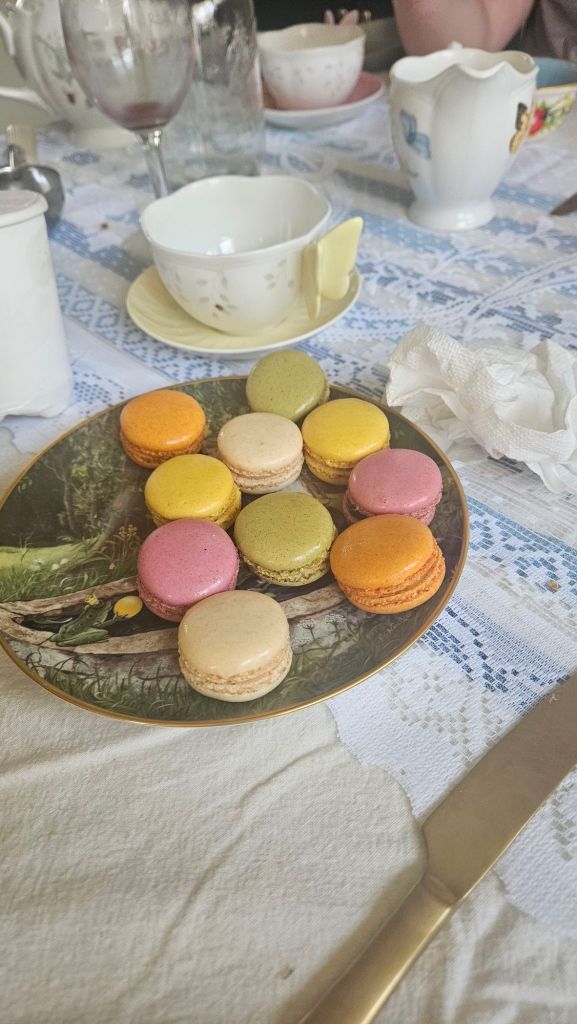
In case you don’t know, macarons are delicious French sandwich cookies made by sifting dry ingredients, combining them with egg whites, piping them onto a baking sheet, and baking them into light, flaky little half circles. From there you can add any kind of filling you like. Now, these cookies are notoriously temperamental, so I just bought some, but for the brave souls with a little more time on their hands, here’s a recipe from NYT:
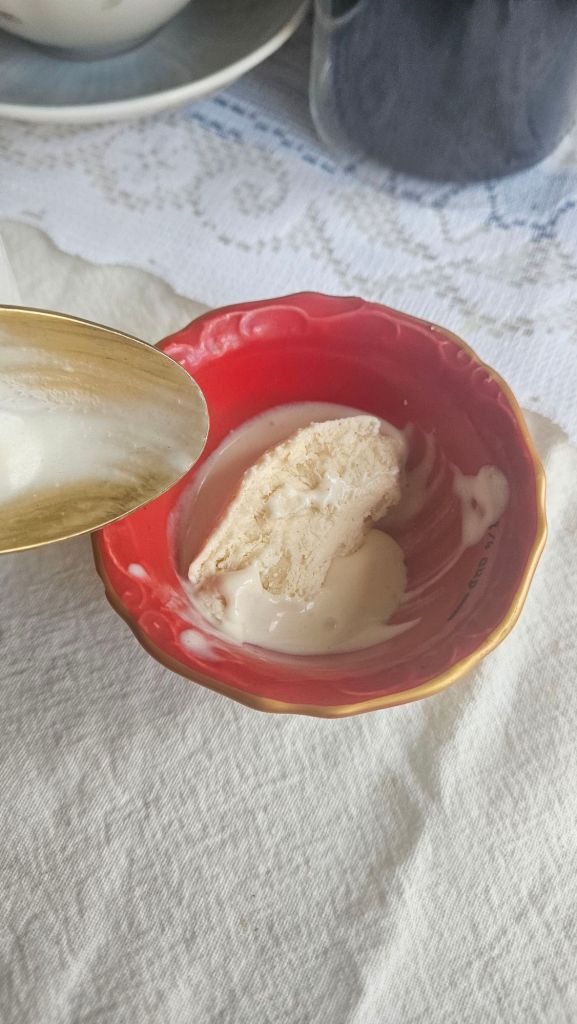
Other Dessert ideas: You could incorporate scones petit fours, or jam/ cucumber sandwiches. I find a dessert tower is really nice for this kind of “take what you like” dessert atmosphere. Also, don’t forget the ice cream!
I’m sure I don’t need to tell you that tea has great cultural significance to the British and I labored over what kind of tea to serve during the party. I personally love Indian Chai and that would be appropriate since it’s mentioned in Season 2. I also enjoy Earl Grey (though that one might be too bitter for most people). However, I decided on Harney and Sons Paris Tea, which is my wife’s favorite, and in my humble opinion, is one of the best teas readily available. It’s a black tea that has been withered, rolled, and baked to make it more flavorful and aromatic, though easy to mass produce. I LOVE THIS TEA. Here’s a link if you want to learn more:
https://www.harney.com/pages/this-is-tea
Now, I should mention that there is a lot of officially branded Bridgerton tea, coffee, and tea snacks (of course), but this post isn’t an ad. If you’re interested in the branded stuff, here’s a few links below:
Bridgerton is famous for featuring classical music covers of pop songs, which I really enjoy- it is a nice way of retelling the story of the characters by connecting them with something contemporary. Most of these covers were done by a group called the Vitamin String Quartet and there are playlists on Youtube, Spotify, and others.
During the Regency, music by Mozart and Hayden were all the rage, so if you want to intercut the covers with real classical music from the time period, you can also use them. I would recommend using waltzes or minuets if you want to get people on the dance floor:
1. Charades
2. Blind Man’s Bluff
3. Bridgerton official Games! There’s an official branded Bridgerton game where you write love notes as Lady Whistledown, while everyone else tries to guess who she is. Here’s a link to the Amazon site:https://www.amazon.com/Bridgerton-High-Society-Board-Game/dp/B0CC6SNRWV
Costumes:
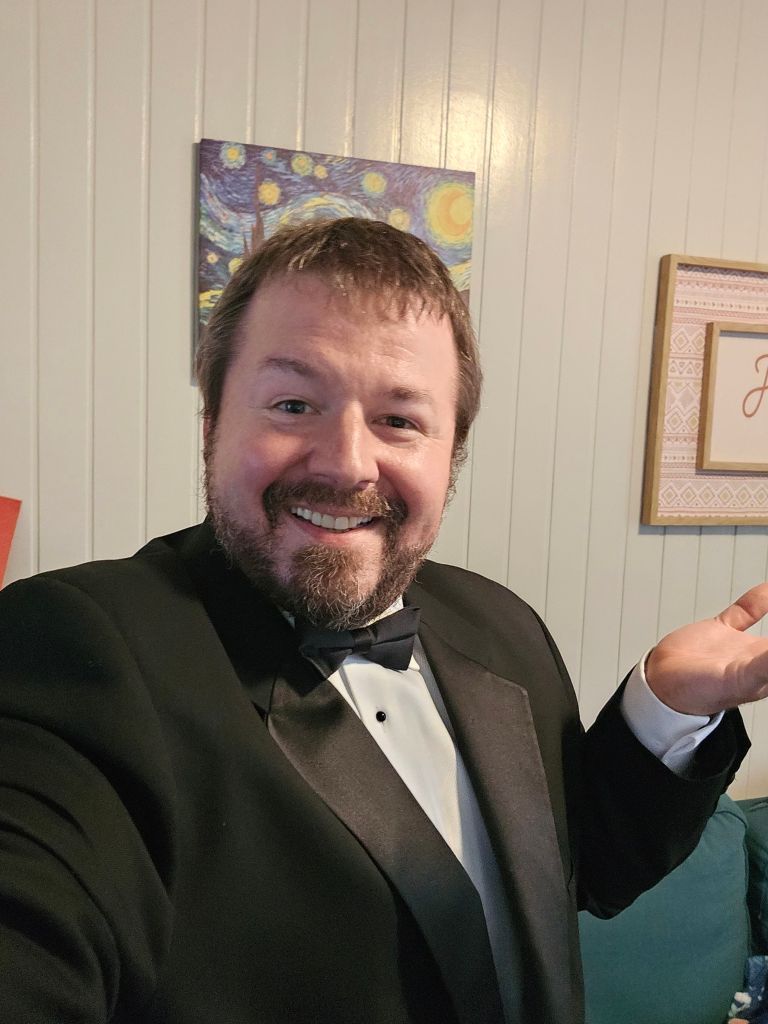
Again, for people on a budget, you might want to forgo full Georgian outfits, but this was a time of ball gowns and elaborate wigs for ladies, and men with waistcoats, knickerbockers, and breeches. For more information on the period, here’s a link to Fashion History Timeline:
https://fashionhistory.fitnyc.edu/category/18th-century/
Well, that’s my advice, happy Midsummer everyone!
And to conclude, I want to dedicate this post to my wife who introduced me to the wonderful, sweet, and heartfelt world of Bridgerton. I hope this post helps you bring a fun, fancy-but laid back evening into your home. I hope also that it helps you become closer to and appreciate your loved ones, just as I wish to keep enjoying the show with my wonderful wife.

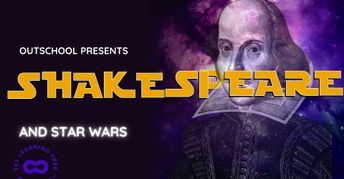
Using self-paced online activities, your child(ren) will compare the plot and characters of Star Wars to Shakespeare’s plays. We will also discuss Shakespeare writing by looking at “William Shakespeare’s Star Wars” by Ian Doescher.
Close Reading: Shakespeare’s Star Wars (Empire Scene) https://shakespeareanstudent.com/2024/04/17/close-reading-william-shakespeares-star-wars/
The Journey of Han and Leia: https://shakespeareanstudent.com/2023/06/16/new-podcast-william-shakespeares-star-wars-part-ii-the-journey-of-han-and-leia/
Review of Jedi:
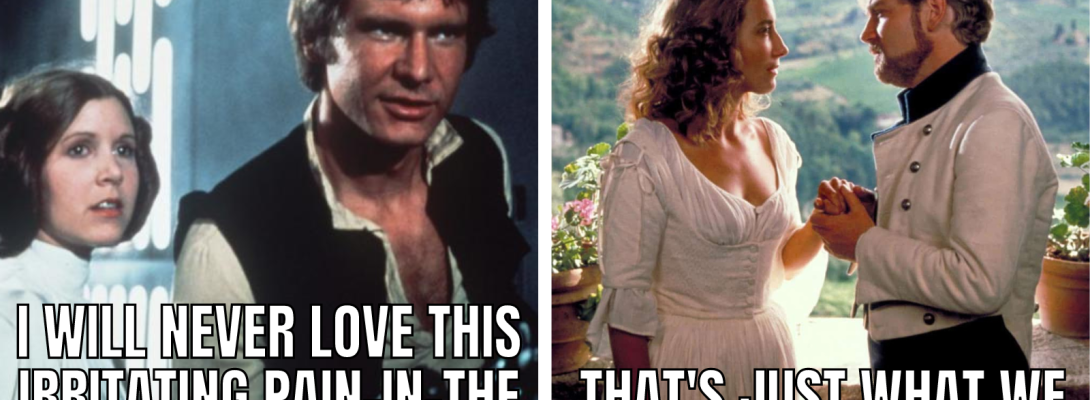
For my Shakespeare club, my actors and I are reading William Shakespeare’s Star Wars: The Empire Striketh Back. We started staging the scene today and I’d like to publish some of our work and our discoveries going through the text.
The scene is the first moment where Han Solo and Princess Leia display their repressed feelings for each other. Han wants to stay with Leia, but he has a bounty hunter trying to hunt him down. Also, Leia has not directly given him any sign of affection, (though Han suspects that she does have feelings for him). He wants her to ask him to stay, not because of his service to the rebellion, but because she loves him back.
Leia And Han, Act I, Scene ii
[Enter Han SL, Leia enters after. stops.
L: Han, halt!
		H:[Turn to her, bows]  What is thy pleasure, Highness?
		L: I did believe that thou had chos’n to stay.
		H: [Center Stage turn out] The bounty hunter we did meet on Ord
		Mantell hath chang’d my mind
		L: 				-We need thee Han.
		H: [Turn to her] What “we?” Why speakest thou of “we?”
		(circling her) Dost thou in royal terms speak her of “we?”
		(Hands on shoulders) Hast thou a rodent in thy pocket such
		That thou and he are “we? (holding her hands)” What meanest thou?
		What need is there that thou dost share with all? [moving her center stage]
		[Turning to audience] Speak not of “we,” but “I.” O princess, what
		Dost thou most need? Not “we,” not “they,” but thou?
		L: [Turning to him] I know not what thou speakest of.
		H: [pointing at her]		- ‘Tis true.
		Most probably thou dost not know thyself.
		L: Thy vanity [takes his pointer finger and points it to the sky]
		Hath puffed up thine imagination.
		H:					-Aye?
		(Smiling) Then why doest thou yet follow me? Wert thou
		Afraid I would depart without a kiss? [He stands behind her, looking at her as if he's about to kiss her cheek. She steps on his foot]
		L: I would as eagerly kiss Wookie lips.
		H: That can arran`ed be. [He turns SR, starts to leave, then turns back to her.] By heaven’s breath,
		A kiss would suit thee well! [Exits SR}
Like Han in the original script, Doescher latches on to the fact that Leia says “We need you Han,” instead of “I need you,” (which would confirm Han’s suspicions that she has feelings for him). Doescher’s Han has a mocking speech where he tries to coax Leia into saying what she truly wants from him. In both versions Leia, (annoyed with Han’s childish behavior), retorts by saying that she would rather kiss a Wookie, but in Doescher’s version, she also has a soliloquy where, like Beatrice in Much Ado About Nothing, she laments that she would admit her affections if Han could put his ego aside and woo her gently, instead of his accustomed taunts and mockery.
If you read my review of the first Shakespeare’s Star Wars play, you know that Doescher put almost every line in iambic pentameter- the standard verse for Shakespeare that has 10 beats per line. I like to call verse the heartbeat of a character and iambic pentameter is sort of a baseline for a character who is calm or in control of their emotions. What’s great about this scene is that Doescher intentionally breaks from the norm of iambic pentameter, which is appropriate because these characters are bubbling with emotions; anger, jealousy, fear, and of course, love.
Leia only has two regular verse lines- right after she enters and right before she leaves:
		L: I did believe that thou had chos’n to stay.
Leia is a princess, used to giving orders and being obeyed. Accordingly her first line is a simple two word command "Han halt." Then Leia clearly. simply, and in standard iambic pentameter, asks Han to explain why he is going. From that point on, none of her lines are 10 syllables long- they either complete his or his lines complete hers. This kind of rapid-fire call and response is called Stichomythia, and it indicates how intelligent these characters are, how passionate they are, and how impatient they are with each other. It's not unlike some of Shakespeare's other great lovers like Beatrice and Benedick, or characters who dispise each other like Richard III and Lady Anne:
Notice that in this “keen encounter of wits,” the characters talk on top of each other. The verse lines indicate that Han and Leia need to keep topping each other and pick up the tempo. This helps convey how frustrated Leia is with Han and is trying to get him to get to the point! The only other regular verse line is her coup-de-gras at the end where she says “I would as soon kiss Wookie lips!” At that point, she’s done talking to Han and just wants him to go, and the verse reflects her decisive choice.
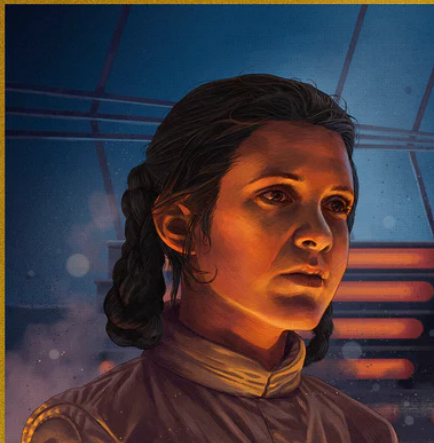
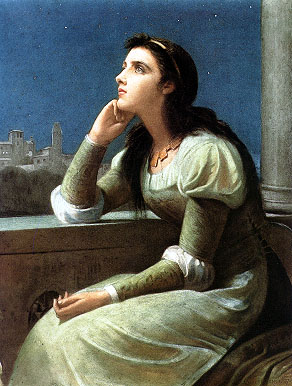
However, as you can hear in the podcast, alone in soliloquy, Leia reveals to the audience that she is still conflicted with her feelings for Han- listing all his best qualities like his hands, his face, his eyes, etc. This rhetorical technique is called anaphora, and it helps Leia build in excitement getting lost in Han’s attractive qualities. For my staging of the scene, Leia puts her hand on her cheek while standing under a balcony to emulate Juliet’s famous musings on Romeo:
While Leia’s verse is quick and direct, Han’s is slower and longer. His sentences spill over from one verse line to another because he’s taking his time. Again, his objective is to basically “neg” Leia into admitting that she loves him, so he’s enjoying goading her. He’s sort of like Benedick in Much Ado About Nothing, though Han speaks verse and Benedick speaks prose:
Again, Han’s goal is to tease Leia into admitting that she loves him, so when she says: “We need thee Han,” he feigns ignorance and asks her to clarify her phrasing- going through all the permutations of “we” (including the colloquial, “Do you have a mouse in your pocket?”) to get her to specify what she means by “we.” If you look at Doescher’s official education guide for the William Shakespeare’s Star Wars series, you can see how Shakespearean characters often go into lengthy metaphors or comparisons to explore an idea or theme:
As I was writing William Shakespeare’s The Empire Striketh Back, I was surprised to realize I had made more references to Shakespeare’s Much Ado About Nothing than any other play. Much Ado is a comedy—probably my favorite of Shakespeare’s comedies—so it was strange that lines from it kept popping up in the darkest of the original Star Wars® trilogy. –
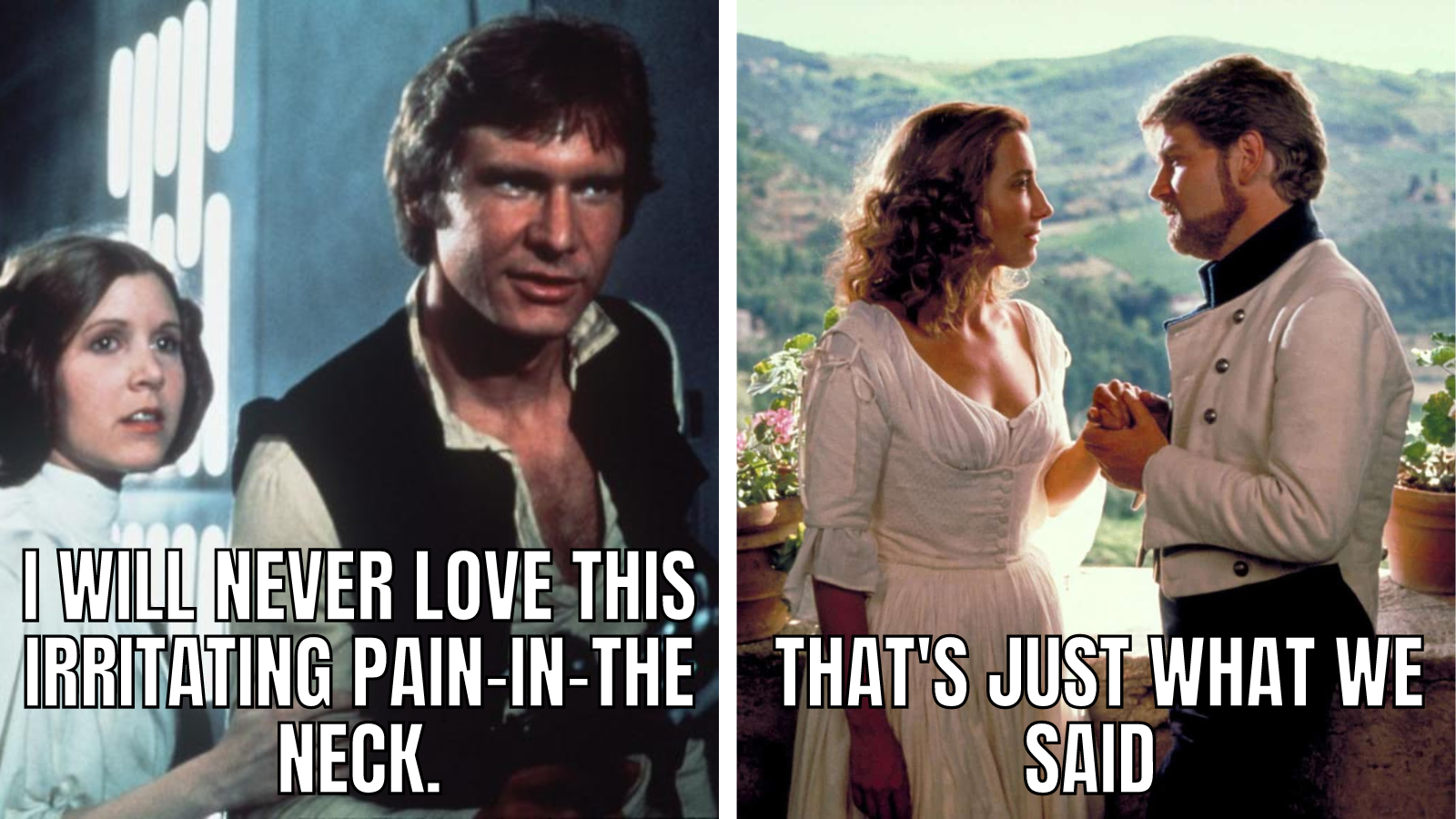

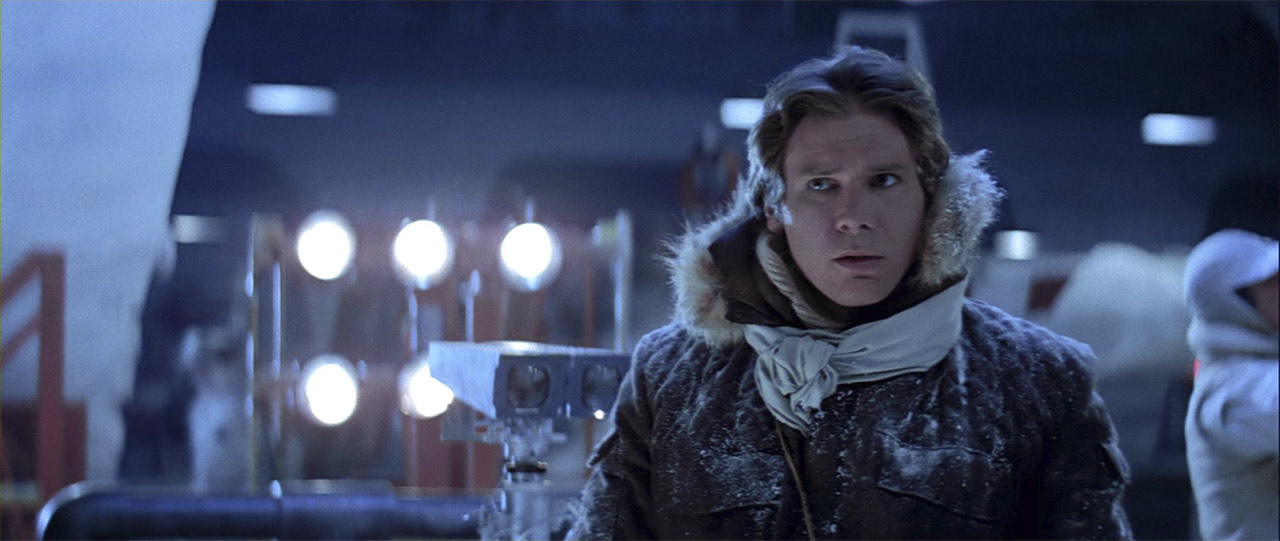

Both of my actors are female and obviously, they aren’t Carrie Fisher or Harrison Ford. Since this play is a parody of the original Star Wars, I wanted to incorporate some physicality and vocal elements, without telling them to impersonate the Star Wars actors.
Harrison Ford is much taller than Carrie Fisher and he uses his height to mock and irritate her. He also crosses his arms and points his index finger at her frequently in this movie, so I used that in the blocking. He also has a “cowboy stance”- legs apart, slight bend in the knees, slow, deliberate gait. Ironically, another man who has this kind of walk is David Tennant in his performance as Benedick in “Much Ado About Nothing.”
As for Carrie Fisher, she has a faster pace and keeps her arms close to her body. She looks like a ball of stress and anxiety, which is appropriate. After all, not only is she going to lose the man she loves, she’s under attack from an empire and living on a cold, dark planet made of ice! I told my actor to put these characterizations into her performance to not imitate Carrie Fisher, but to get the essence of how her emotions affect how the character moves and speaks. That’s the difference between acting this scene, and just doing impressions of the original actors.
I’m excited to see how my actors bring these techniques to life, and I hope you have enjoyed this little insight into how Doescher’s writing once again pulls back the curtain on how Shakespeare used his verse to show the hearts of his characters!
-More Star Wars coming soon!










 The Shakespearean Student