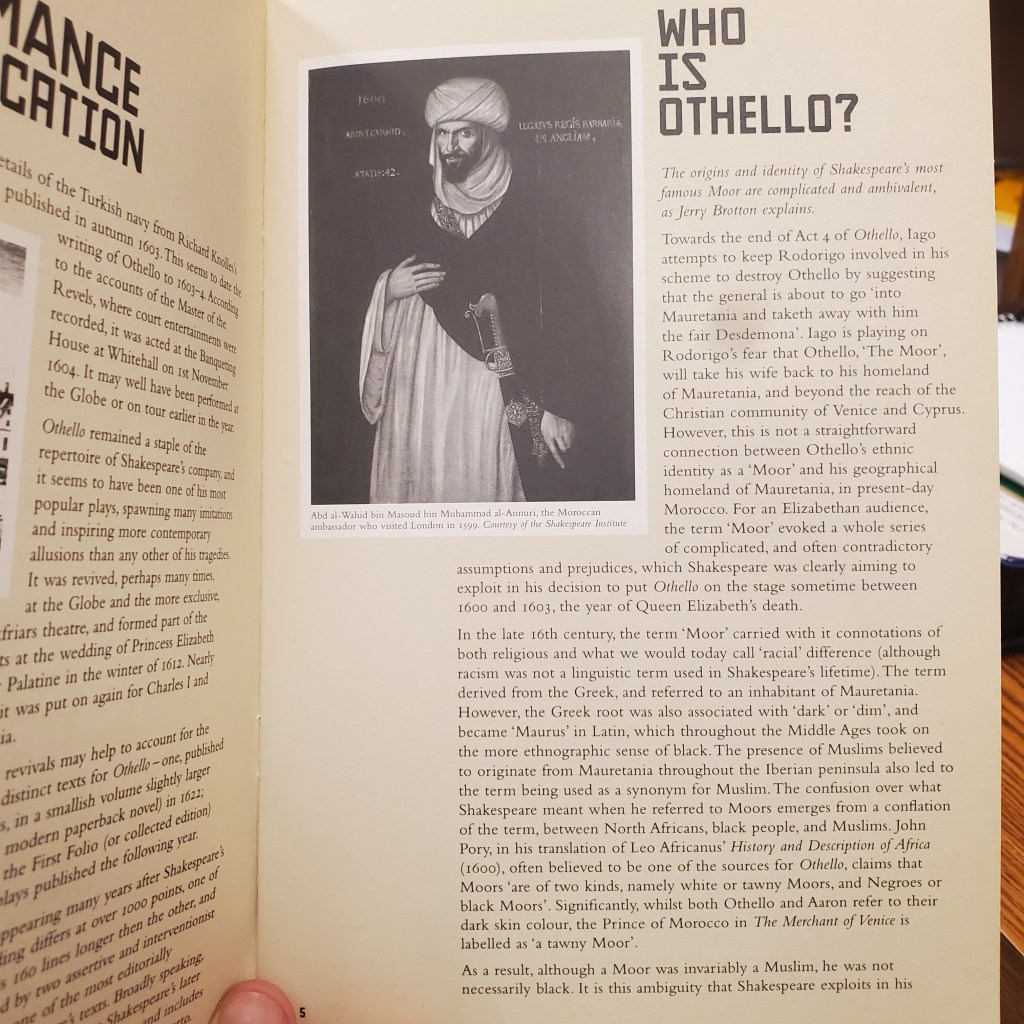
For Throwback Thursday, I’m talking about my first-ever experience going to the Globe Theater. Back in 2007, I saw a production of “Othello” starring Eamon Walker as Othello, and Tim McInerney as Iago. Below are some images from the excellent souvenir program I purchased:
The experience was very special to me I went to London for the second time with my classmates in a college theater class, many of whom I’d also performed with earlier that year in Romeo and Juliet. I got to see over 15 shows in London’s west end , but going to the Globe was definitely a highlight. It felt like a pilgrimage and the icing on the cake after studying Shakespeare’s plays all year long. It was also very serendipitous that the play we saw was Othello, since, as you can see in the video below, I noticed that Sam Wannamaker, the founder of the Globe, performed in the play himself as Iago:
THe concept
Again, since this was my first time seeing a play at the Globe, I appreciated that they played it straight- Elizabethan costumes, no bizarre staging. This felt very much like stepping back in time. Some critics in recent years say that all Globe Productions should be staged like this, and decry more experimental productions. I see an argument for both camps. The Globe is both a temple to Shakespeare’s life and work, and a modern theater that tries to push the boundaries of live performances, and I think this kind of variety is good. That said, I’m glad that every once in a while, they just let a Shakespeare play be classic.
Yes, this is one of the first ever Othellos I saw, and the first one I ever saw live, but Mr. Walker will always be one of my favorites. He really nails the complexities of Othello’s emotions- from powerful and stoic, to sweet and romantic, to rage-filled and abusive. I really felt for him and truly hated Iago for taking such a worthy person and turning him into a monster.
What Mr. Walker does incredibly well is show Othello’s journey to fight the simmering hatred and jealousy he feels towards Desdemona. You can see it in his face when Desdamona casually mentions that Cassio (the man Othello suspects is sleeping with his wife), has just been in the room with her.
I’ve heard critics claim that Mr. Walker’s voice is hard to hear, and I have to admit, his voice is a little hard to hear in an outdoor amphitheater like the Globe, but his physicality and his sublime characterizations of the role of Othello more than makeup for it. In addition, his great portrayal of Othello was also immortalized in a great TV (which I’ll talk about another time), which makes the aforementioned critique of his voice irrelevant.
In 2000, Mr. Walker starred in a made-for-TV movie modern-day Othello which has this heartbreaking scene at a restaurant (1:12:00- 1:15:00) where John Othello, (the first black police chief in England), talks about how his people left Africa, came to England and were given “Other men’s leavings.” He also makes it clear that for years he wanted to be white. This Othello is very clearly not healed from his generational trauma, and it comes out in violent ways:
I honestly liked Tim McInerney less as Iago than in other roles, such as his film role in Ian McKellen’s Richard III. I thought his character voice was too gruff to be understood, and though his physicality is good, I didn’t get much of a sense of his concept for the character. As I’ve written before, Iago is a compelling part, but the actor has to have a clear objective to help us in the audience understand why he feels the need to destroy Othello.
These minor nitpicks aside, this was an excellent production, and I’m really pleased to retell my experience to you. Below are links to reviews and photo slideshows.
In this virtual version of my popular “Macbeth” course, you will engage with William Shakespeare himself and learn about his play in a fun, spooky, and interactive way!
Unlike my previous “Macbeth” course, all teacher interactions will be done through the use of pre-recorded video. Through a combination of multimedia lectures, online games, and a digital escape room, students will delve into the plot, characters, and themes of “Macbeth.” The class is designed to be interactive, fun, smart, and spooky.
Class organization
The class is organized into five parts using a combination of Nearpod, online games, videos, and a digital escape room.
Part I: The Plot of “Macbeth”
You will play a video where William Shakespeare (played by me), will introduce the plot, characters, and literary terms in the play, “Macbeth,” The video will feature graphics, video, and recordings that will explain the plot and who the characters are, and their significance to the plot. Shakespeare will also take time to define a series of vocabulary terms like “soliloquy” and “tragic flaw,” terms that explain his unique writing style and how he constructed his tragedies. After the video, students will participate in a group quiz via Nearpod. The quiz will cover the vocabulary words the students just learned, as well as the characters. and see their scores that will show how well they applied their knowledge from Part I.
Part Two: Jacobean England
Students will learn via Nearpod and Youtube about the English King James I, the monarch for whom Shakespeare wrote “Macbeth.” First, the students will read 1-3 slides with some historical details about the king. Then the students will watch a funny parody song about the life of the Stuart monarchs and answer questions about King James’ life. The section will conclude with slides and a virtual tour of Parliament about the infamous Gunpowder Plot, where an assassin tried to blow up the English government!
Part THree: The Curse Of Macbeth
Using Nearpod, students will delve into the tragic history of the persecution of witches, which Shakespeare incorporated into “Macbeth.” The students will then read an article about the characters of the witches and answer open-ended questions on Nearpod. Next, the students will read an article about the alleged ‘Curse of Macbeth,’ and learn about the long-standing theater superstition. The class will conclude with an online game via Scratch, where you play as Macbeth and deliver the famous Dagger Speech before going to kill the king.
Part Four: Acting Shakespeare
I contemplate murder in Act I, scene vii.
As you know, I’ve played Macbeth professionally and have written articles about the experience. Using Nearpod slides, online articles, and a Youtube video of Sir Ian McKellen, students will deconstruct the process of creating a Shakespearean character, and how actors make famous speeches fresh and alive.
Part Five: Digital Escape Room
Part V: The Digital Escape Room (Spoiler Free Version)
In a combination video/ website, Shakespeare will direct the students to a digital Escape Room, a game where students pretend that the witches from Macbeth have trapped them and Shakespeare in a cursed castle, and the only way to get out is to finish a series of puzzles that cover the characters and vocabulary they learned. The Escape Room will include word searches, decoding ciphers, a sinister forest, and a clever interpretation of the famous dagger speech. The video is designed so Shakespeare allows you to solve the problems independently, or with him guiding you through them. Each puzzle you solve, you enter in a Google Form, getting you one step closer to escaping the cursed castle.
For the final class of my course on Shakespeare’s Tragedies, I’m coaching two young actors on a pair of tragic speeches I’ve selected, and I thought I’d share some of that work with you. The first is a speech by Lady Macbeth that comes from Act I, Scene v. In this speech, Lady Macbeth prays to dark spirits to make her cold and remorseless, so that she can convince her husband to kill the king, and take the throne.
The Text
Lady Macbeth. The raven himself is hoarse That croaks the fatal entrance of Duncan Under my battlements. Come, you spirits390 That tend on mortal thoughts, unsex me here, And fill me from the crown to the toe top-full Of direst cruelty! make thick my blood; Stop up the access and passage to remorse, That no compunctious visitings of nature395 Shake my fell purpose, nor keep peace between The effect and it! Come to my woman’s breasts, And take my milk for gall, you murdering ministers, Wherever in your sightless substances You wait on nature’s mischief! Come, thick night,400 And pall thee in the dunnest smoke of hell, That my keen knife see not the wound it makes, Nor heaven peep through the blanket of the dark, To cry ‘Hold, hold!’ Macbeth, Act I, Scene v, Lines 388-403.
The Given Circumstances
Lady Macbeth has just received a letter from her husband. That letter informs her the witches prophesied he would be king. Soon after she’s finished reading it, another messenger, (hoarse and out of breath), tells her that King Duncan will be staying at her castle tonight! Lady Macbeth immediately sees this as the perfect opportunity to make her husband king, by plotting to murder Duncan as he sleeps under her roof.
Traditional Interpretations
I’ve seen at least six productions of “Macbeth” and when it comes to this scene I think the main interpretations I see are either that Lady Macbeth is gleefully evil, or highly sexual. While it is true that she is praying to dark spirits, and her language when she speaks to Macbeth is sexually charged, I feel that these are not the only options when playing this character.
Francis McDormad
I love the regal poise of Francis in this 2021 movie. She is utterly in control and has absolutely no qualms about murder. I get the sense that she’s more praying to Mercury to get her to speak daggers to her husband, instead of to Lucifer to help her use one. She even has knives coming out of her ears (look at those earings!) This Lady Macbeth doesn’t seem evil in the sense of a cartoon villain. She’s just a woman in a violent society who believes that regicide is an acceptable way to sieze power. I think in this world, might makes right.
By contrast, Judy Dench in the 1979 RSC production is also very human. Her spirits are like… well spirits. You get the sense that she’s taking a swig of liquid courage to get her to go through with these actions which SHE KNOWS ARE WRONG.
Literary Devices
Imagery
“The Triple Hecate,” by William Blake, 1794.
Ravens in Greek and Norse myths were birds of prophecy and associated with the goddess of magic, Hecate (who appears in the play in Act IV). Ravens often appeared to announce deaths or execution. The speech is also full of imagery that rejects traditionally ‘feminine’ virtues. Lady Macbeth seems to associate womanhood with kindness, mercy, pity, and remorse and thus attempts to shed her femininity to accomplish her cruel objective of killing Duncan.
Verse
The Rauen himselfe is hoarse, That croakes the fatall entrance of Duncan Vnder my Battlements. Come you Spirits, That tend on mortall thoughts, vnsex me here, And fill me from the Crowne to the Toe, top-full Of direst Crueltie: make thick my blood, Stop vp th'accesse, and passage to Remorse, That no compunctious visitings of Nature Shake my fell purpose, nor keepe peace betweene Th'effect, and hit. Come to my Womans Brests, And take my Milke for Gall, you murth'ring Ministers, Where-euer, in your sightlesse substances, You wait on Natures Mischiefe. Come thick Night, And pall thee in the dunnest smoake of Hell, That my keene Knife see not the Wound it makes, Nor Heauen peepe through the Blanket of the darke, To cry, hold, hold. Macbeth, Act I, Scene v, First Folio Reprint from Internet Shakespeare Editions.
It’s interesting to note that (in the First Folio text) this speech is only three sentences long. It is a constant build up of energy with only three stops. In addition, Shakespeare puts the most important words, at the end of each line. Almost every line ends with something Lady M wants to kill, such as Duncan, or wants to kill within herself (peace, remorse, nature, Woman(hood). The verse also has commands strewn about in the beginnings and ends of lines. The question is, how confident does Lady Macbeth feel while giving them?
Questions to consider
One of the biggest questions I have with this play is why Lady Macbeth and her husband want to be king and queen anyway? After all, Shakespeare has written plenty of plays that detail how hard and stressful (uneasy) it is to be king. Plus, Macbeth is already a trusted lord and friend of the king, why would he want to damn himself to get a job he knows isn’t his to take? I think that, especially now in the 21st century, it’s very important to have a coherent motive for why the Macbeths are willing to kill for the crown.
Our Interpretation
Looking over the text, my actress sensed a deep loneliness in Lady Macbeth and a haunted feeling that makes her seem desperate to change her life. I thought about how insomnia and paranoid fears are repeated motifs in the play, as well as character traits found in both Macbeth and later Lady Macbeth. Then I thought- Macbeth is a soldier; his wife has probably had to spend years wondering if he is going to come home and imagining what kind of terrible death he might suffer on the battlefield While the king sits safely at home. Perhaps she sees killing the king as a form of revenge for all the fear and sleepless nights she’s experienced, and an attempt to protect her husband from war, by safely placing him on the throne. Maybe she sees this as the only way to make sure her beloved husband never dies in battle. Therefore, instead of watching an evil woman become more evil, you’re watching a good woman, (with good intentions), damn herself for love, which I would argue is a much more active and dynamic choice.
I can think of no better wrapup to my play of the month “Twelfth Night,” than by reporting on my visit to an actual Twelfth night Party, presented by the Society For Creative Anachronism.
What’s a Twelfth Night Party?
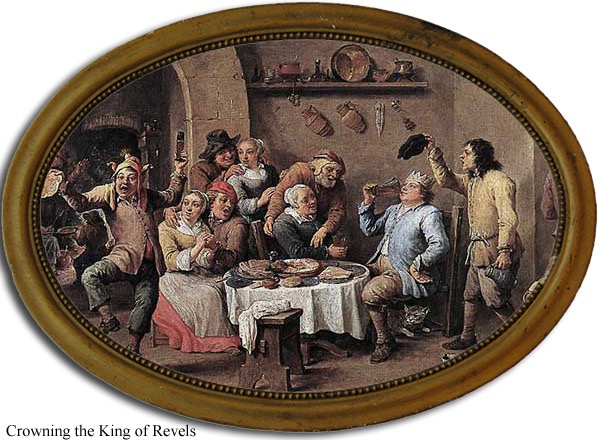
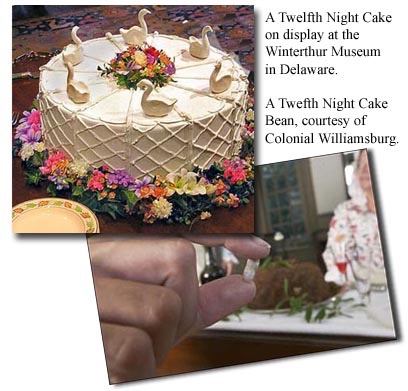
If you took my class on Shakespearean Christmas traditions or read my blog posts, you know that, back in Shakespeare’s day, Twelfth Night was a party to end the Christmas season. It was presided over by a Lord of Misrule, who would lead people in games and songs. The party would also have a Twelfth Night Cake with a bean in the center. If you found the bean, you’d have good luck for the year! So I was pleased to come to a real-life Twelfth Night party and see these traditions come to life!
What is the society for Creative anachronism?
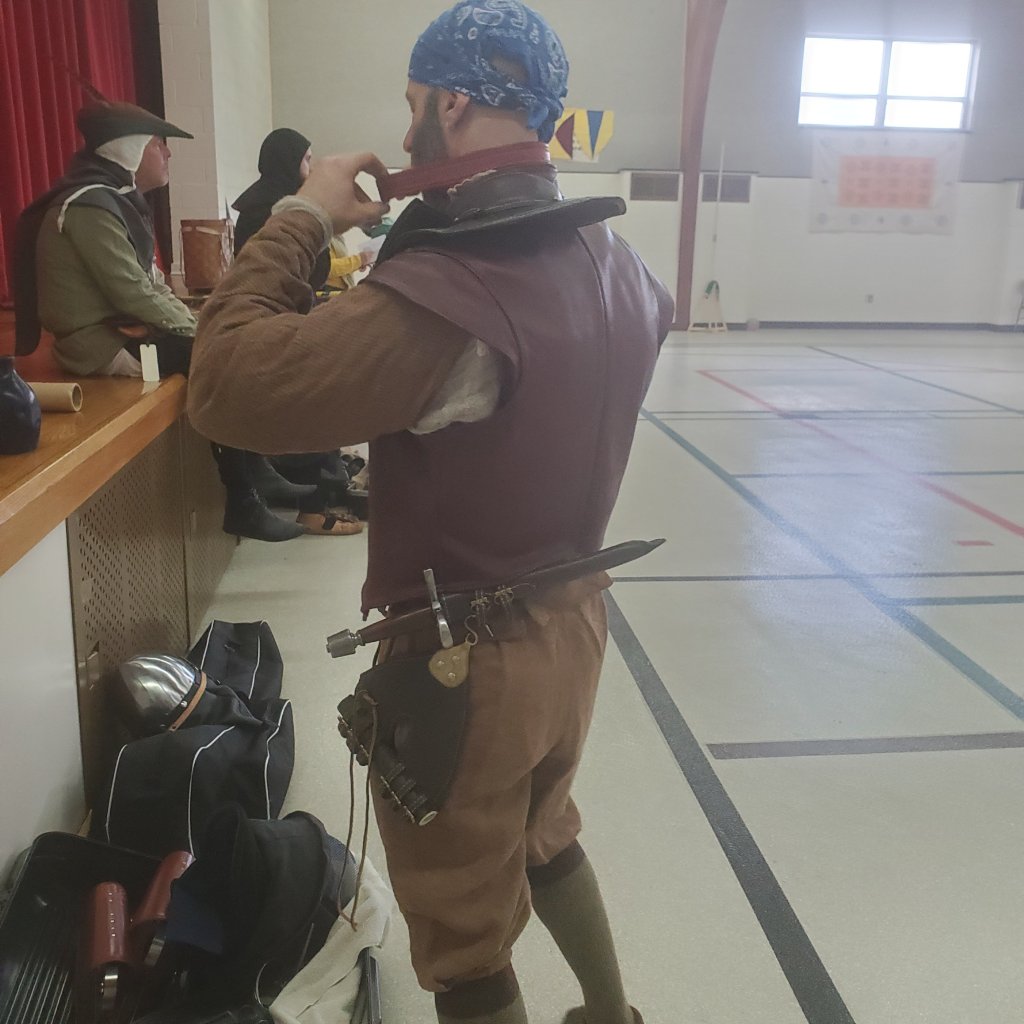
The short answer is- it’s LARPING for history nerds. Rather than creating a D&D persona and then getting arms and armor to play-fight in the backyard, SCA members create personas based on real medieval history, make or buy real historical arms and armor, (or arts and crafts as the case may be) and spend years of their lives studying and perfecting their immersion in that character’s life. SCA-ers learn how to fight with swords, daggers, spears, etc, how to sing medieval songs, medieval dances, and many other medieval ‘mysteries,’ which in this case means arts, crafts, and professions.
The Shire of Owlsherst
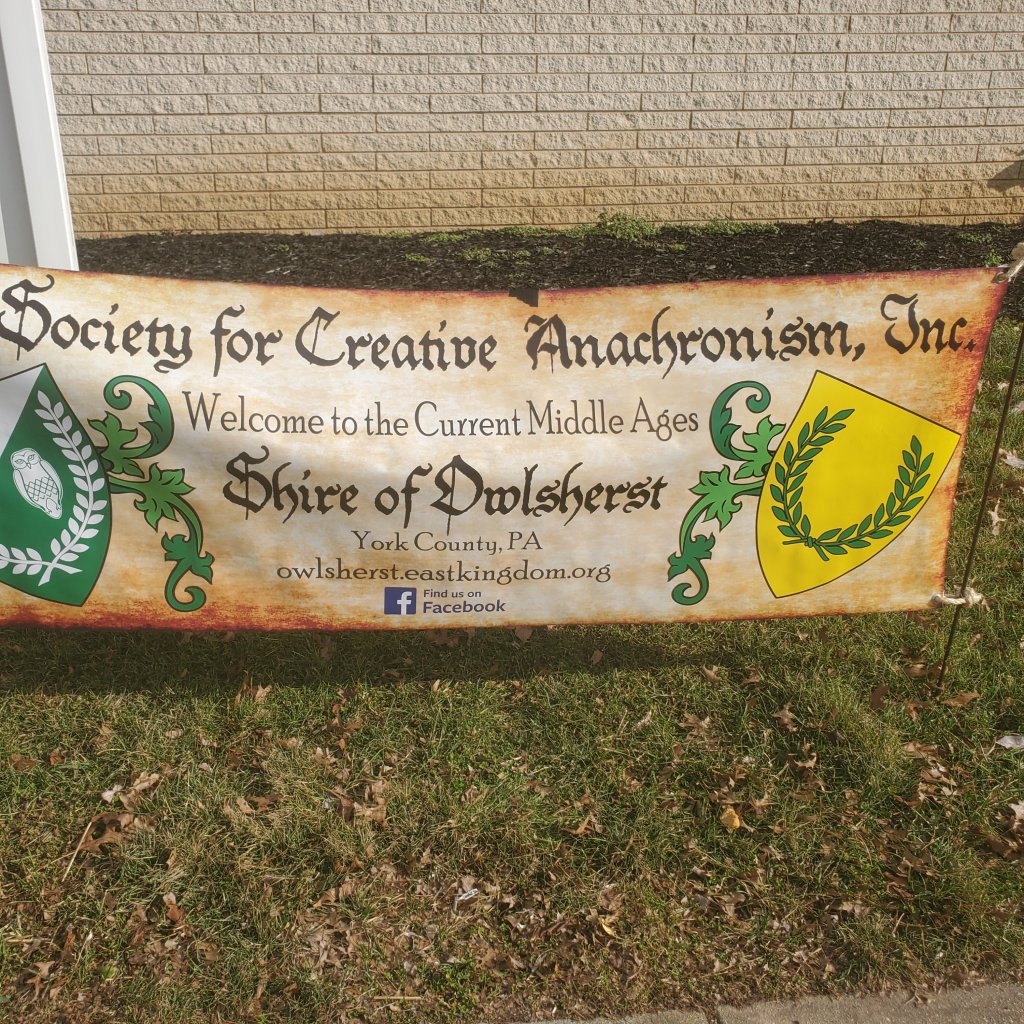
Owlsherst is the SCA’s local chapter in York PA. They have a number of dedicated members who specialize in textiles to rapier-dagger fighting. I’ve posted some videos of their fighting demonstrations on Youtube and Tiktok and their archery master has his own Tiktok channel. They hosted this year’s Twelfth Nigh party and have many other events throughout the year. For more information on this chapter, go to https://owlsherst.eastkingdom.org/
My reaction
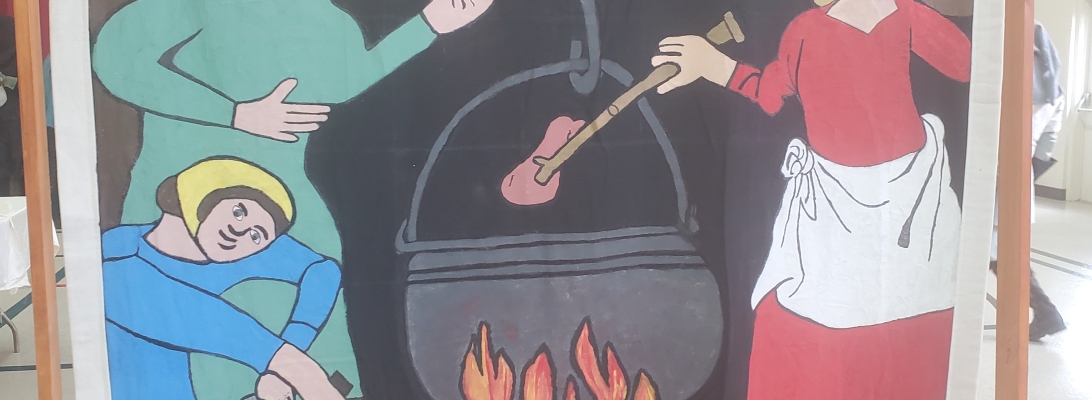
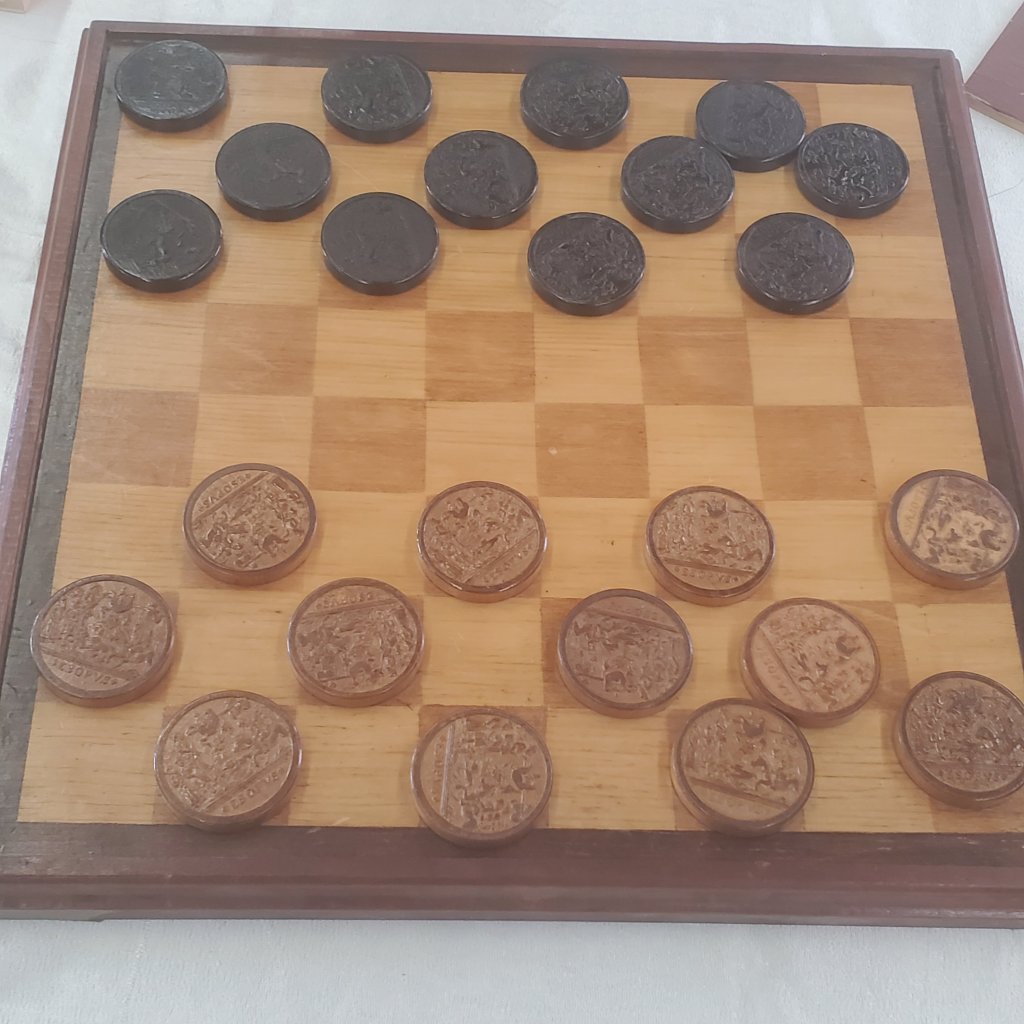
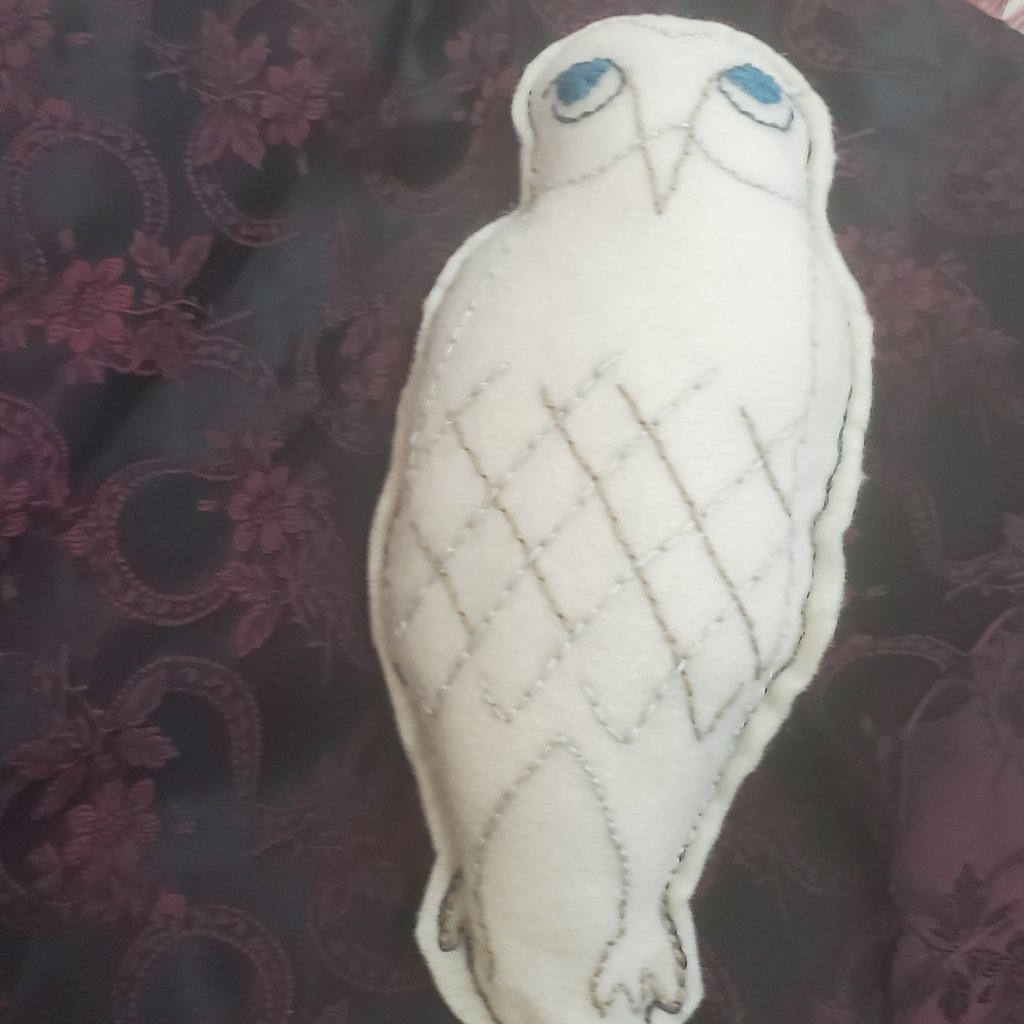
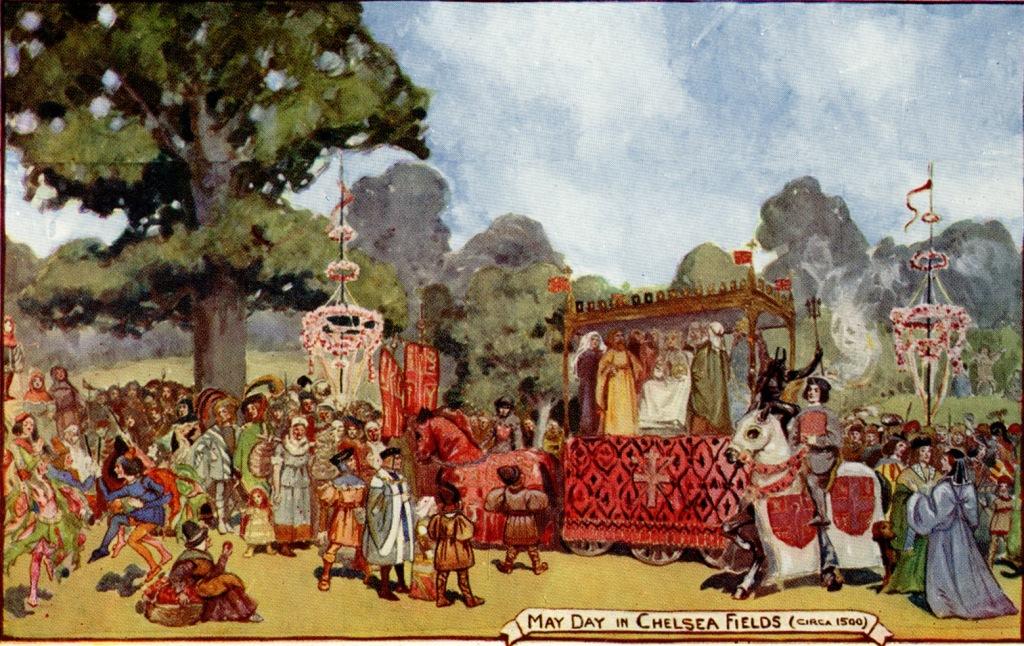
Every SCA event is a great way to celebrate people who are passionate about history and have talents for arts and crafts. Everything from the tapestries to the to the food, to the adorable owl toys, was made by hand by these dedicated people (most of whom brought their own medieval costumes). More members were doing live demonstrations of rapier/ dagger fights, binding books in cow leather, and singing medieval Christmas songs. I was inspired by everyone’s dedication and hard work to put this together. I also wonder if this is how Shakespeare himself felt when, as a child, he went to sheep shearing fairs and saw his friends and fellow artisans put on amateur bible plays on medieval pageant wagons.
That said…
I should warn you that, like a lot of historical reenacting societies like Civil War reenactors, etc, this society is more aimed at hardcore history nerds, than anyone else. This isn’t Medieval Times or a big-budget renaissance fair which is aimed at children and casual fun seekers. As such, it wasn’t really family-friendly. There aren’t many activities for kids and many of the arts and crafts are too delicate for toddlers and young kids. Also, this event isn’t particularly immersive or organized. People mostly just mingled, ate, and watched the various demonstrations. Keep in mind, this is just one chapter and just one event, which means your experience may vary. Nevertheless, because of the organization’s amateur historical nature, I would caution you to manage your expectations. Like I said before, this isn’t some big-budget Disney theme-park ride, but it is a chance for hardcore history nerds to get together, share their knowledge, and celebrate the traditions of a bygone era. If that’s your thing, I highly recommend it!
I love the BBC Kids show “Horrible Histories,” based on the books by Terry Deary (who also appears in the show). The show is a Monty-Python like variety show that jumps from various periods in English history, (primarily), while highlighting the “gory, ghastly, mean and cruel,” elements of history that our teachers tend to gloss over.
One period of history in which the show excels at satirizing is the Tudor period; devoting several songs, sketches, and animations to the reigns of Mary I, Good Queen Bess, and of course, Henry VIII. Here are some of my favorite clips from the series, with Ben Willbond as Henry VIII:
Tomorrow is the first session of my course on Shakespeaere’s tragedies! I’m so excited to teach this great group whom I’ve worked with before. To mark this occasion, I present this silly, catchy, and informative song about the tragic fates of Cleopatra, Juliet, Hamlet, and others.
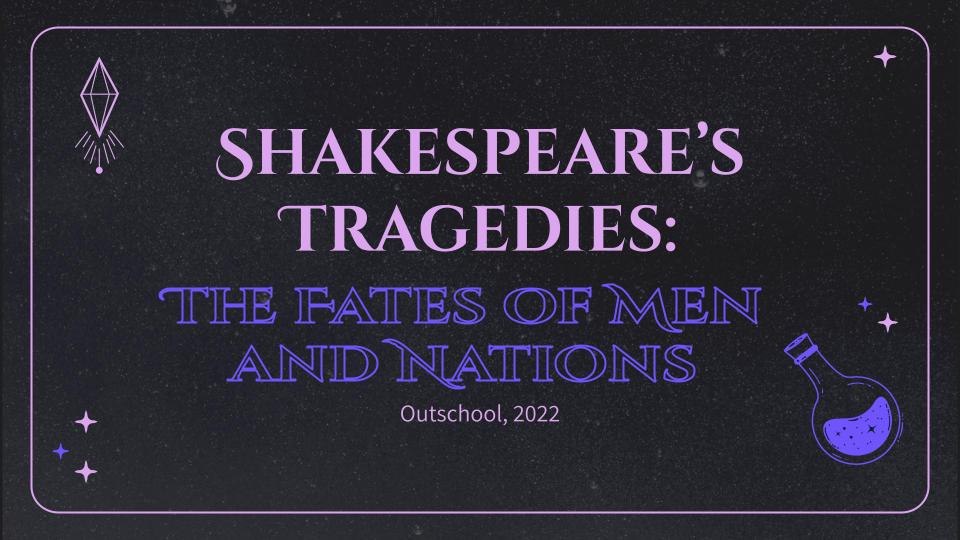
Title page for my course on Shakespeare’s Tragedies
If you want to sign up for this course or request a private session, you can do so at http://www.outschool.com, or by scanning the QR code below:
Slings And Arrows is a Canadian sitcom about a theater festival loosely based on the Stratford Shakespeare Festival in Ontario. Its hero, Geoffrey Tennant (Paul Gross), in addition to dealing with the seemingly endless problems (or should I say, “Slings and Arrows?”) mounting a Shakespeare play, is also worried he’s going mad, since he keeps seeing the ghost of his old mentor/ director Oliver Wells (Stephen Ouimette). For a recap of Season One and Two, click here to read my review.
Series Retrospective
I describe this show as a funny, tragic, bittersweet comedy about drama. It’s The Office for Shakespeare Nerds!
Season 3 Retrospective: The Promised End?
Before settling in to write this review, I went back and read some of your comments on the whole of the series, and if there was a common thread to them, it was the idea that season three is almost too painful to bear by the end, that watching these last three episodes where everything we’ve come to love so much utterly falls apart is something like ripping off a Band Aid. I can see that. I usually watch season three all in one gulp, and having to delay my viewings every week became almost torturous, both because of the plot momentum the show builds up and because I had a week to let the things happening at New Burbage stew away in my brain. What makes it even worse is that nobody here is a bad person.
To succinctly summarize this season, it’s a bad season with a good finale. This season is the show at its most raw, and frankly most of it I can’t bear to rewatch. Accordingly, this won’t be a review of the season, so much as a review of one great episode; the series finale, “The Promised End”. But first, I’ll talk about the characters and tropes that got us there.
The Cast
William Hutt as Charles Kingman
The majority of the drama around season three revolves around Charles Kingman (William Hutt). Mr. Hutt was a distinguished Shakespearean actor and while he was working on this season, Hutt was struggling with leukemia. The final episode aired on August 28, 2006, and Mr. Hutt died peacefully in his sleep on June 27, 2007.
Hutt delivers a great performance as Lear and Charles, and you’d never know he was dying with all the incredible energy and skill he delivers. However, once you know he’s dying, the arc of his character and the way Charles talks about age and death is heartbreakingly poignant:
Stephen Oimette as Oliver Wells
I’ve avoided talking about Oliver because he’s honestly more of a comic relief or a Shakespearean fool for most of the series. In this season, however, he becomes a real character as this clip shows. Geoffrey finally goes to therapy, (which Oliver twists into a ghost couple’s counseling session). It’s wonderful to see them finally address their love-hate relationship and I think it carries over into Geoffrey’s arc (more on that later).
Darren Nichols
Again, Darren Nichols is mostly comic relief, but he actually becomes a full-fledged antagonist in Season 3. In Seasons 1-2 he was a character foil- a director who hates theater, except as a vehicle for himself. In Season 1 he’s literally a foil for Geoffry, (in that he clashes with Geoffrey with literal fencing foils). In addition, he crams his production of Hamlet with pointless spectacle. In Season 2 Darren is a foil to Sarah in Romeo and Juliet– he loves being clever and cynical and wages war on the sentimentality of the love story. In this season, first Daren is a foil to Richard- mocking the sentimental storytelling of musical theatre, (as you can see in the clip above). Next, he becomes Richard’s pawn; taking credit for Richard’s skill as a director and propelling himself to become the new Artistic Director. He’s basically Edmund in King Lear- a narcissist and a cynic who loves to mock and tear down institutions.
Paul Gross as Geoffrey Tennet
Geoffrey has a very dynamic arc this season, but to achieve it, he actually regresses a lot. In the first few episodes, Geoffrey seems to hate being at this theater even after his Macbeth became a great success. He starts crying randomly, which I interpret to mean he’s horrified at the possibility that he might have to be in this theater for another year. In essence, after a full year of growth, Geoffrey has regressed to the selfish, obsessive jerk he was in Season One. As you’ll see later, this regression was necessary in order to justify his arc, but I find it nearly unbearable to watch.
That said, it’s nice to see that Geoffrey isn’t a perfect person, and he still hasn’t addressed the source of his pain- his breakdown, Oliver’s betrayal, losing Ellen, and losing his job as an actor. The only glimmer of hope in this bleak season is that Geoffrey finally confronts his pain and learns to make peace with himself, with Ellen, and Olliver.
King Lear tropes in Season 3
Trope 1: a kingdom divided
Shakespeare wrote King Lear at the same time that King James was trying to unite England and Scotland, which is why a big theme of the play is how foolish it is to divide a kingdom. In Season three of Slings and Arrows, the Lear production has to share the theater with a new musical about addiction (loosely inspired by Rent). As you can see in this clip; while they rehearse this corny, ridiculous musical, Charles is telling the story of Shakespeare’s King Lear.
Often in theater rehearsals, actors will tell the story of the play from their character’s perspective. What’s brilliant about this clip is that, while the musical demonstrates a paper-thin understanding of addiction, dramatic storytelling, or even good musical theater, Charles is conveniently leaving out Lear’s cruelty to his daughters, his failure to see their flattery, and his insane clinging to power when he has already given it away. Charles’ inability to see Lear’s flaws also mirrors his inability to see his own, which brings me to my next trope:
Trope 2: Love, or enabling addiction?
Like I said earlier, Charles understands the positive aspects of Lear, but fails to see the negative, which is why he also fails to see them it in himself. Lear is not just a dear old man who was betrayed for no reason; he’s a selfish, deluded, violent, old narcissist who cares about no one but himself. That is why he goes mad- he defines himself by power, and when he loses it, he loses his identity.
What’s really great about this season is that it doesn’t just show the dark and light aspects of Lear, it also questions the ethics of Kent and Cordelia, (the heroes of the play), who try to save him. Geoffrey eventually plays Kent in the final episode, and it’s quite obvious that he mirrors Kent’s arc; sacrificing everything to help Charles play Lear one last time. He and Anna (who is basically Cordelia in this season) even get Charles drugs to help him with the pain of cancer. Charles’ desire to play Lear mirrors Lear’s desire to play the king; they are both addicted to something that is ultimately killing them.
As you look at the season as a whole, you have to ask, was it worth it? Was it worth it for Geoffrey to lose his job and his theatre, get a bunch of other people fired, and eventually lose the festival as we know it just for one man? In the play and the show, this question is never answered, but it is useful to contemplate.
Episode Six: The Promised End
Just like in Season two, we get a beautifully directed, beautifully shot, condensed version of “King Lear” in the final episode, but the tone is completely changed. Everyone has been told that if they do this show, they will be fired, and they do it anyway. This conflict means that onstage and on screen for the actors and characters, this is a bittersweet last-ride for everyone. We know this is not just the last show for Charles, Jeffrey, Ellen, and the company, it’s also the last for Paul Gross, Steven Oimette, and the rest of the terrific TV cast.
The truly heartbreaking moments in this episode come from Geoffrey, Oliver, and Charles. We see how amazingly good Charles is, (once he accepts his age and mortality). In essence, making this everyone’s last performance made it better all around.
“A Higher Purpose”
In a great twist of fate, Geoffrey has to fill in for Jerry as the Earl of Kent. He’s horrified since the last time he acted he had a nervous breakdown. This has been a problem the whole series for Geoffrey- he blames Oliver for his breakdown and he hates the New Burbage theater because it reminds him of his breakdown. But now, he must confront his fears and get back onstage and who helps him? Oliver. He coaxes Geoffrey through his stage fright by getting Geoffrey to focus on Charles. This, by the way, is how all actors deal with it- we find an objective and spend 2-3 hours fighting for it so we don’t have time for fretting about the audience.
It’s truly lovely to watch Oliver coaching Geoffrey- not only does it mirror Geoffrey doing the same thing for Jack in season one, but we see the story of Lear from Kent’s perspective- a man trying to serve his king. This puts Geoffrey’s arc through the season into sharp focus as well- he was trying to save Charles, not Lear- Charles.
“What are we doing here?” “Putting on a play.”
Like I said before, Geoffrey starts this season with a real self-destructive streak and it’s telling that in therapy he admits that he has no work-life balance. He defines himself by making art. Through playing Kent and doing something outside the theater, Geoffrey finds meaning in his life offstage. This is why I can bear to watch this episode instead of the others- yes the theater is gone, yes Darren and Richard win and all the characters I care about have been fired, but at least Geoffrey, Ellen, Oliver, and Charles finally grow and get to move on. Charles can die in peace now that he gets to do one last performance, (without letting it drive him mad). Geoffrey gains a new perspective on his life, and thus he doesn’t need Oliver anymore. I now have reason to hope that he and Ellen can now make a life together and not mess it up like they did the last time.
In conclusion, Season Three is not fun or cheerful, and there’s no satisfying conclusion for most of the characters. That said, this might be the best-written, most amazingly performed, and most heartrending sign off for a series I’ve ever seen, and if it took so much toil and pain to get here, so be it. It’s also a tremendous tribute to a great actor, William Hutt; I feel privileged to see his final performance on this show, and rejoice that at least one more time, I got to see the king bow:
When we our betters see bearing our woes, We scarcely think our miseries our foes. Who alone suffers suffers most i’ th’ mind, Leaving free things and happy shows behind; But then the mind much sufferance doth o’erskip When grief hath mates, and bearing fellowship. How light and portable my pain seems now, When that which makes me bend makes the King bow
Edgar, Act III, Scene vi.
Play ME OUT CYRILL!
Shameless plug! If you’re here for more Lear, I’ll actually be playing Kent in an online radio play this Saturday, October 22nd, at 1PM EST. Here’s a link to the Youtube channel where it will be broadcast: