With awards season in full swing, there has been a lot of controversy over two stories that Shakespeare had a great influence over- Hamnet, based on the novel of the same name, and Guillermo Del Toro’s adaptation of Frankenstein. Despite getting five golden globe nominations, Frankenstein went home with a hand emptier than the monster floating off on an iceberg. Meanwhile, Hamnet took the best actress and best picture award, and is poised for an Oscar nomination.
I’ll review Hamnet at a later date. What I want to do now is discuss the influence Shakespeare and other Renaissance writers had on the classic 1818 novel, and how well Del Toro hints at the story’s Renaissance roots.I would argue that, although rooted in the 10th century Romantic world, Frankenstein has many Shakespearean and Early Modern influences, notably Dr Faustus by Christopher Marlowe, and The Tempest by Shakespeare
In 1818, a young woman named Mary Wolstonecraft, heard from her friend, a Swiss doctor, about a prominent experiment called galvanism and was faced with the terrifying prospect that man might someday be able to resurrect the dead, (a feat that had only successfully been done by God). When Mary Shelley wrote the novel Frankenstein she redefined the Faustus story and made it about Man not taking responsibility for the consequences of his actions, and also a warning to progress for its own sake without compassion without reason without wisdom. As we shall see, Shelly was a trailblazer in turning the Faustian wizard into the mad scientist.
The Morality Tale
Faustus is one of the oldest and most quintessential German stories it is a morality tale medieval in its origins it also is loosely based on a real person a real scholar named Doctor John foustis and this story was influential on forming German cultural identity and the story itself has inspired countless authors some German and some merely influenced by German culture and it’s very interesting to trace the way that it’s being used And how the the trope of the Faustian bargain has influenced Germany America and and England other Anglo sects and countries so the story of Faustus is Medieval in origin but he became extremely popular when English playwright Christopher Marlowe Shakespeare’s contemporary and rival wrote it down in his play of Dr. Faustus
What’s interesting about this interpretation is that you could easily see it as Faustus Rejects from the beginning the notion of divine grace he believes that he cannot that he is either unwilling or unable to believe that he is beloved by God and therefore he turns to satanic poworse it’s somewhat ambiguous why he does this one possible interpretation is that Faustus might actually be a that faustis like Marlow might be a possible gay man and is convinced that he is an abomination under the Lord and therefore he might as well indulge in satanic activities.
Whatever the reason the play does a great job of showing the struggle of Faustus as he is presented several times with the chance to repent, and actively refuses it every single time.
“Tutors Not So Careful”
In Marlow’s version, Faustus studies at the University of vittenburg in Germany, whicb also boasts other notable allumni- Prince Hamlet which Shakespeare would later write in his own play Hamlet Prince of Denmark. The prince broods over whether the creature he has seen return from the dead is actually a devil, sent to destroy him.
Shelley admits that a lot of her as a source for that her sources for Shakespeare her sources for Frankenstein included Shakespeare in The Tempest. Though Doctor Frankenstein his book is not a is Swiss not German he is educated at the University of english stat in Germany where he learns organic chemistry and acquires the ambition to do with the alchemists and conjurors of faustis day failed to do namely create the elixir of life.
“Graves, at my command, Hath waked their sleepers”
One big trope in Frankenstein is the danger of man crossing over into God’s domain- that from the beginning of time there has been a knowledge that God deliberately kept from humankind. In Frankenstein, this takes the form of scientific knowledge, but in Shakespeare, it is magic. In Macbeth, the title character is tempted by witches to know his destiny and is punished severely for it. Remember that when Shakespeare wrote the play, King James presided over hundreds of witch hunts and wrote a book on how to identify witches.
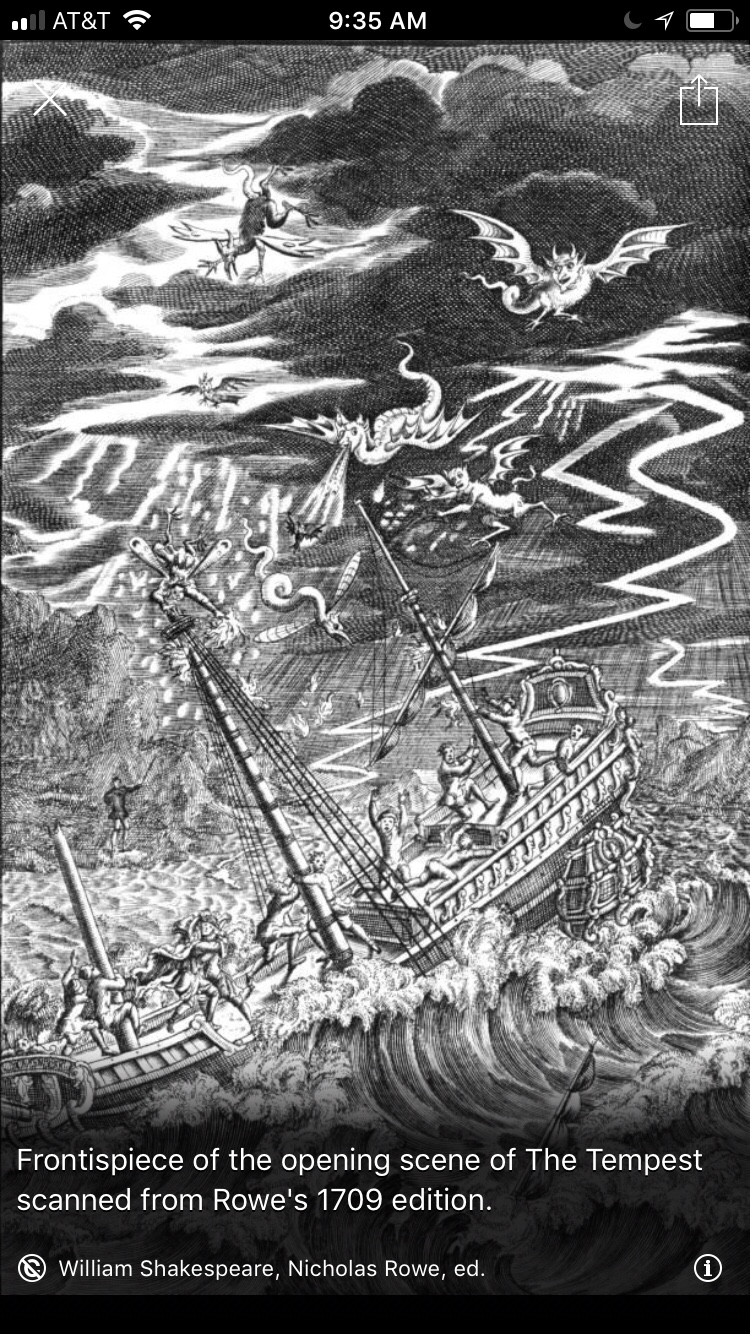
In The Tempest, Shakespeare gives us a more ambiguous look at magic where the magician Prospero has the power to create storms, conjure up spirits, and like Frankenstein, raise the dead:
 I have bedimm'd
The noontide sun, call'd forth the mutinous winds,
And 'twixt the green sea and the azured vault
Set roaring war: to the dread rattling thunder2065
Have I given fire and rifted Jove's stout oak
With his own bolt; the strong-based promontory
Have I made shake and by the spurs pluck'd up
The pine and cedar: graves at my command
Have waked their sleepers, oped, and let 'em forth
By my so potent art. The Tempest, Act V, Scene i.
Even though Prospero is the protagonist and he faces no consequences for his magic, for some reason he chooses to abandon it. It’s almost as if Shakespeare was anticipating Frankenstein by having a proto mad scientist character give up his art before it is too late:
 But this rough magic
I here abjure, and, when I have required
Some heavenly music, which even now I do,
To work mine end upon their senses that
This airy charm is for, I'll break my staff,2075
Bury it certain fathoms in the earth,
And deeper than did ever plummet sound
I'll drown my book.
Prospero, Act V, Scene i.
“This thing of Darkness”
“You taught me language, and my profit in’t is I know how to curse!”
“Cursed, cursed creator! Why did I live? Why, in that instant, did I not extinguish the spark of existence which you had so wantonly bestowed? I know not; despair had not yet taken possession of me; my feelings were those of rage and revenge. I could with pleasure have destroyed the cottage and its inhabitants and have glutted myself with their shrieks and misery.
Shelly, Chapter 16
If you’ve never read the book Frankenstein, you might be surprised to learn that unlike Boris Karloff’s grunting silent monster, in the novel the Monster is actually intelligent and well-spoken. One thing I enjoyed about Guillermo Del Toro’s version is that the Monster gets time to tell his tale. As we in the audience get to know him, the notion of who is the true Monster and who is truly human becomes as murky as the subterranean lair the doctor chains his creation within. He engages in intellectual debates with his creator and demands to know why Frankenstein chose to abandon him.
My abhorrence of this fiend cannot be conceived. When I thought of him I gnashed my teeth, my eyes became inflamed, and I ardently wished to extinguish that life which I had so thoughtlessly bestowed. When I reflected on his crimes and malice, my hatred and revenge burst all bounds of moderation.
The global phenomenon “Five Nights At Freddie’s” (FNAF) has spawned 11 major games, spinoff games, 19 books, countless comics, and a big Hollywood movie premiering this week:
My video podcast on FNAF
One other thing this franchise has spawned is ENDLESS FAN THEORIES. I admit, when I first heard of this jump-scare-based game with haunted animatronics, I viewed it as a silly novelty- a clever way to create cheap horror using monsters who jump out at you in a dark room… then I saw this:
2023- The Game Theorist Youtube show tells the entire chronology of the FNAF saga.
The YouTube channel Game Theory, which has been analyzing and dissecting the games for the last 8 years finally created a complete chronology of the games’ lore. Like a lot of the best horror stories like Dracula and “Sleep No More,” the game scatters a lot of its lore throughout the game in the form of mini-games, security guard notebooks, newspaper clippings, and of course, the iconic, nervous late-night phone calls that your character (a nameless night watchman) receives from a mysterious character known only as THE PHONE GUY.
This story is truly the stuff of nightmares- serial killers, murdered children, ghosts, possessed robots, broken families, and unending quests for revenge from beyond the grave. Of course, a few of these tropes Mr. Shakespeare would be very familiar with, so I thought I’d delve into some of the themes, tropes, and ideas that link these two franchises. My goal is to get fans of the video game to understand that, since Shakespeare and Scott Cawthorne (the creator of the game) use a lot of the same horror plots and ideas, that, if you can understand FNAF you can understand Shakespeare!
Part I: The mad scientist- William Afton Vs. William Shakespeare’s Prospero
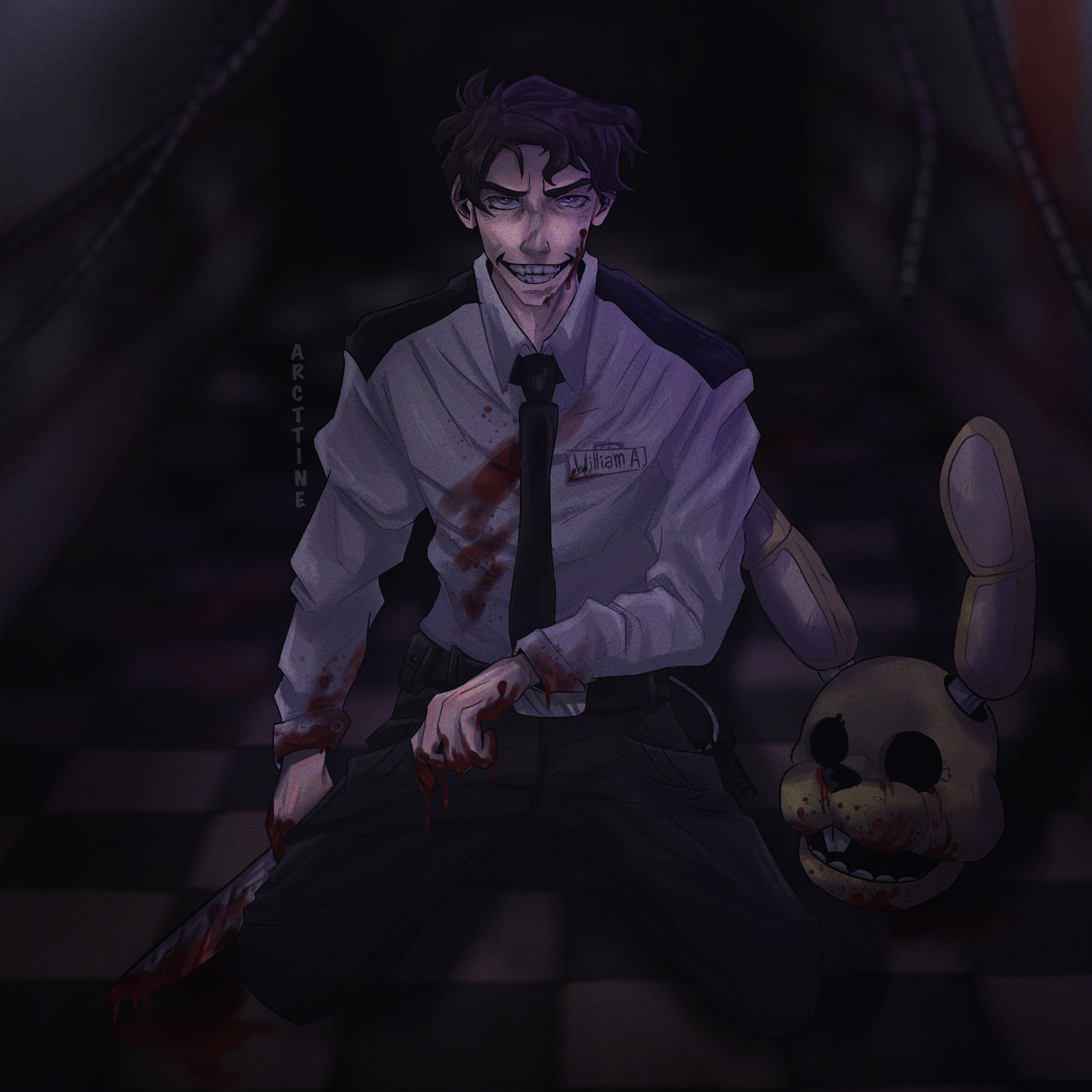
The story of Five Nights At Freddie’s revolves around its main antagonist- a genius roboticist-turned-serial killer named William Afton, who starts out as a successful businessman and children’s entertainer obsessed with bringing his creations to life. Any horror fan will tell you that this is an automatic sign of a villain because he is trying to master the skill that only God possesses- the ability to create life.
In Shakespeare’s final play, The Tempest, the hero is a brilliant magician who, after his brother exiles him to a desert island, masters many crafts considered unnatural for the 1600s:
I have bedimm'd
The noontide sun, call'd forth the mutinous winds,
And 'twixt the green sea and the azured vault
Set roaring war: to the dread rattling thunder
Have I given fire and rifted Jove's stout oak
With his own bolt; the strong-based promontory
Have I made shake and by the spurs pluck'd up
The pine and cedar: graves at my command
Have waked their sleepers, oped, and let 'em forth
By my so potent art.
The Tempest, Act V, Scene i, Lines 2063-
Like I discussed in my post on Shakespeare and Star Trek, Prospero’s magic is both benevolent and terrifying. He uses it to rescue himself and his daughter Miranda from the island, and he creates beautiful visions of gods and angelic music for Miranda and her young lover Sebastian, but he also creates nightmarish visions to torment his enemies:
Both Afton and Prospero are motivated by revenge against the men who betrayed them. In Afton’s case it’s his rival/ partner Henry Emily who bankrupted his business and later got him fired from his own company. Afton torments Henry by murdering his daughter and ruining his business by luring kids to their death inside the pizzeria, disguised as one of the animatronic characters. Afton also figures out how to torment people using sound alone, like Prospero does to his slave Caliban:
Caliban. All the infections that the sun sucks up
From bogs, fens, flats, on Prosper fall and make him
By inch-meal a disease! His spirits hear me
And yet I needs must curse.
For every trifle are they set upon me;
Sometime like apes that mow and chatter at me
And after bite me, then like hedgehogs which
Lie tumbling in my barefoot way and mount
Their pricks at my footfall; sometime am I
All wound with adders who with cloven tongues
Do hiss me into madness.
Here comes a spirit of his, and to torment me! The Tempest, Act II, Scene ii.
Prospero isn’t a killer, but like Afton, he has learned the secret to life after death, which makes him powerful and dangerous. Even more unsettling, both men are on an endless quest for revenge and torment men whom they saw as brothers. Other Shakespearean characters take their lust for revenge to the same dark place Afton did- the murder of children.
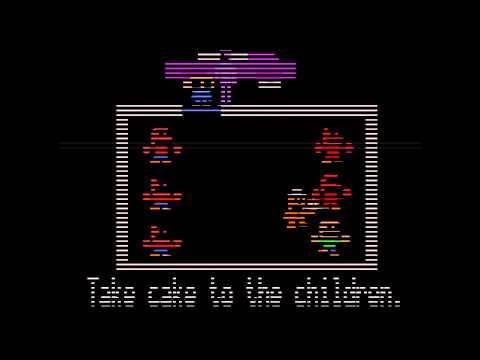
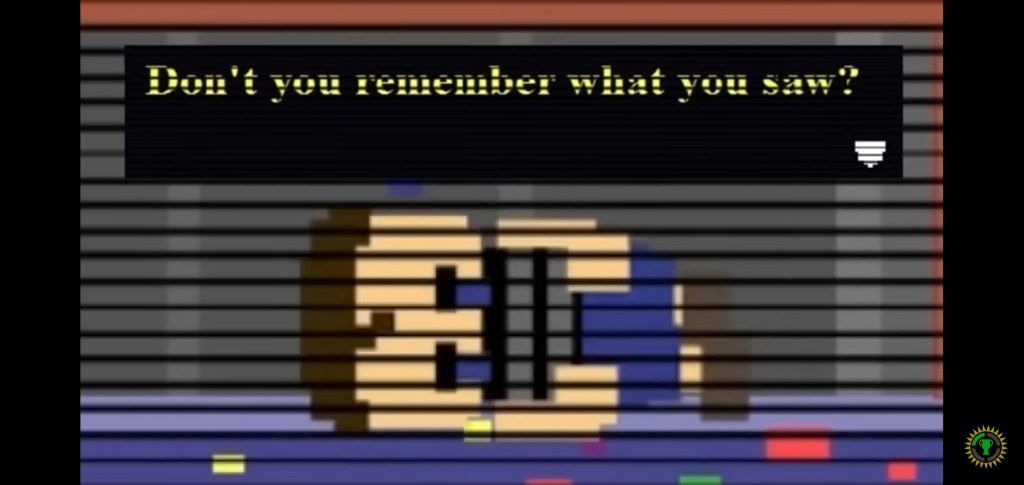
For the first four games, Afton isn’t directly part of the game- he’s merely mentioned in pieces of the lore. Frequently we see 8- bit re-enactments of his crimes in a series of mini-games, where he appears as a faceless, purple killer.
Screenshot of William’s first murder of Henry’s daughter Charlie outside of the pizzeria.
Why purple though? It’s true that purple is associated with royalty, and sometimes associated with villainy, (since it isn’t a color found much in nature). I think though, there might be a deeper, more macabre meaning to this color associated with this killer: It is a scientific fact that human blood, when it is shed and deprived of oxygen, actually turns purple:
The colors of arterial and venous blood are different. Oxygenated (arterial) blood is bright red, while dexoygenated (venous) blood is dark reddish-purple
Shakespeare was very aware of this medical fact. He lived in an age where traitors’ heads were placed on spikes on London Bridge, and people would pay to watch wild dogs attack bears (the FNAF of his time). Shakespeare makes many gory references to murderers watching red blood turn purple:
I make as good use of it as many a man doth of a Death’s-head or a memento mori: I never see thy face but I think upon hell-fire and Dives that lived in purple;
Henry IV, Part I, Act III, Scene iii.
Woe above woe! grief more than common grief! O that my death would stay these ruthful deeds! O pity, pity, gentle heaven, pity! The red rose and the white are on his face, The fatal colours of our striving houses: The one his purple blood right well resembles;
Henry VI, Part III, Act II, Scene v.
Now, whilst your purpled hands do reek and smoke,
Julius Caesar Act III, Scene i.
With purple falchion, painted to the hilt In blood of those that had encounter’d him:
Henry VI, Part III, Act II, Scene v (Richard of Gloucester)
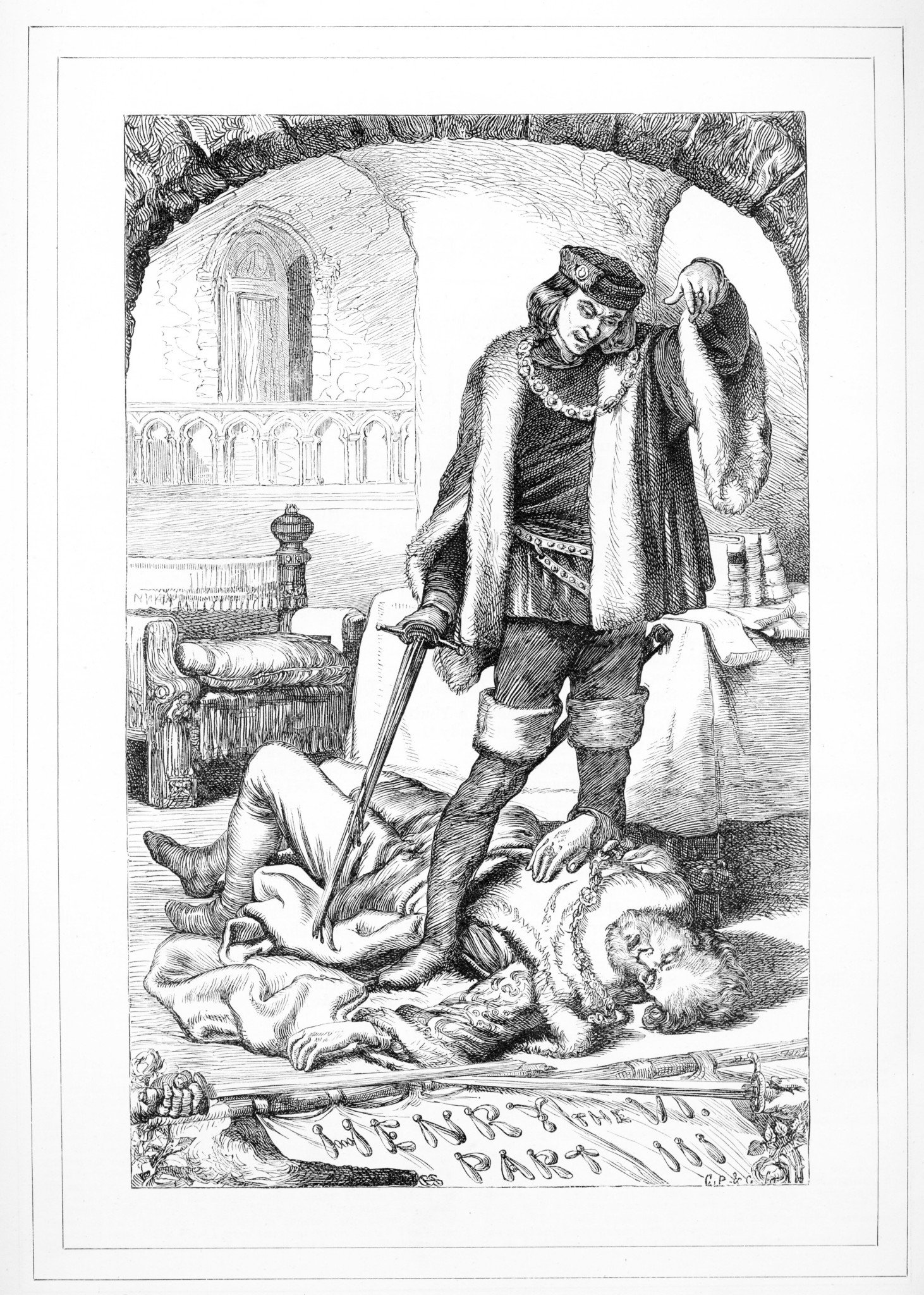
This last quote is spoken by Richard of Gloucester, who, in the play that bears his name, becomes King Richard III, Shakespeare’s most irredeemable villain. Just like William Afton, he kills without remorse and dispatches anyone who gets in his way on the path to the crown. In addition, like many of Shakespeare’s villains, his turn to pure evil occurs right after he does the unthinkable- when he murders children.
Richard (Ian McKellen), orders the secret murder of his nephews in the tower in order to keep his crown.
Throughout the rest of the play, Richard kills a lot of his political and personal enemies and we go along with them because he’s the protagonist. But once he murders the princes, who have done nothing to harm him or anyone else, Richard crosses the line from anti-hero to monstrous villain. It is also at this part of the play when his victims begin to take their revenge… FROM BEYOND THE GRAVE!
Part III: The ghostly revenge story
I’ve written before that in Shakespeare, ghosts are usually murder victims either out for revenge, or trying to convince a living person to avenge their death. Likewise, in the subsequent games, Affton’s victims possess the animatronics, seeking to kill their murderer!
One of the creepiest scenes in Shakespeare comes when Richard III is visited the night before his final battle by the ghosts of all the people he’s killed:
Similarly, when Macbeth murders his friend Banquo (and attempts to murder his young son Fleance), he is visited by Banquo’s ghost, during a party, no less! Even more ironic, look at the language Macbeth uses when he sees the ghost:
Approach thou like the rugged Russian bear, The arm’d rhinoceros, or the Hyrcan tiger; Take any shape but that, and my firm nerves Shall never tremble: or be alive again.
It’s truly ironic that, while in FNAF, the ghosts of Afton’s slaughtered children appear in the forms of angry animatronics, shaped like fearsome animals, Macbeth would rather see the fearsome animal, than the ghost of the man he murdered! Though Macbeth himself doesn’t fear bears, in both FNAF and Shakespeare, bears and other animals have long had a symbolism associated with wrath, anger, and taking bitter vengeance on the wicked.
Part IV: The Forrest of Beasts
1930s-style ad for the original Fredbear’s Singin’ Show, where a real dancing bear entertained travelers.
Bear Baiting
Even the animals in FNAF have some significance that Shakespeare has touched on in some of his plays, especially bears. In many renaissance and medieval sources, bears are symbols of wrath, revenge, and fierce protectors of children. Both Shakespeare and FNAF exploit this symbolism, and both the game and Shakespearean plays create horrifying beastly images in stories of revenge.
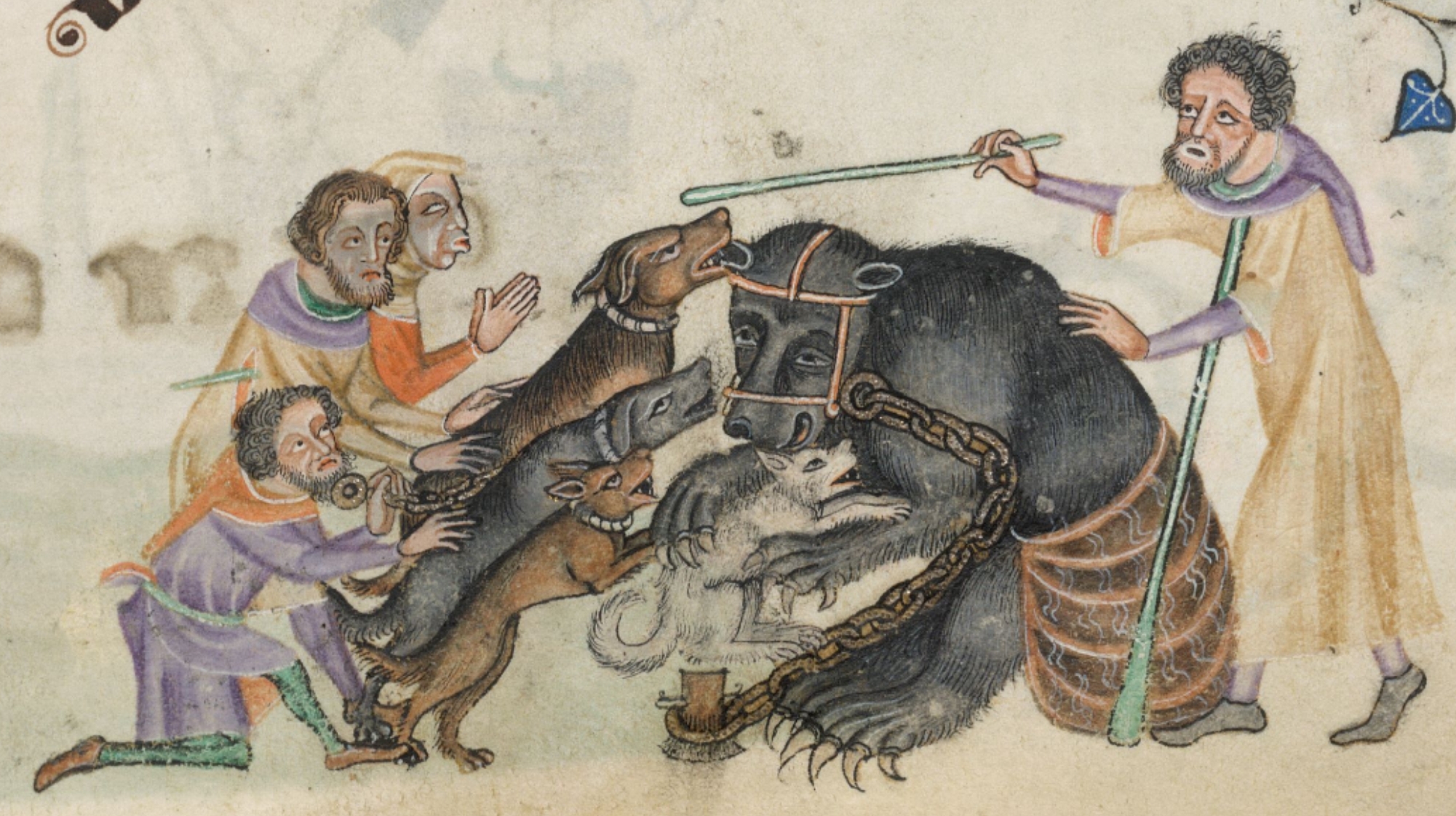
Just like the Fredbear singin’ show, Elizabethans liked to watch real bears perform onstage, sometimes as dancers, but also IN BLOODY FIGHTS TO THE DEATH. In the 1590s, there was a popular sport called “Bear baiting,” where bears would be chained, sometimes to a pole, and set on by vicious dogs. The ‘sport’ was watching to see who would prevail- the fierce and free dogs, or the powerful, bound bear.
As you can see from this close-up of Wenceslaus Hollar’s famous Panorama Of London (1647), we know that Shakespeare had to pass bear beating pits on his way to the Globe all the time, (you can see ‘Beer bayting’ or bear beating, written on the playhouse on the left, and Shakespeare’s Globe Theater on the right). Not only that, Shakespeare writes about the bloody sport frequently in his plays. When Macbeth knows he’s losing the battle with Malcolm, he compares himself to a bear, tied to a stake, forced to fight until his last breath. It calls to mind the moment in the game when the ghosts shed their animatronic skins and attack William directly, while he’s trapped in the Springtrap suit.
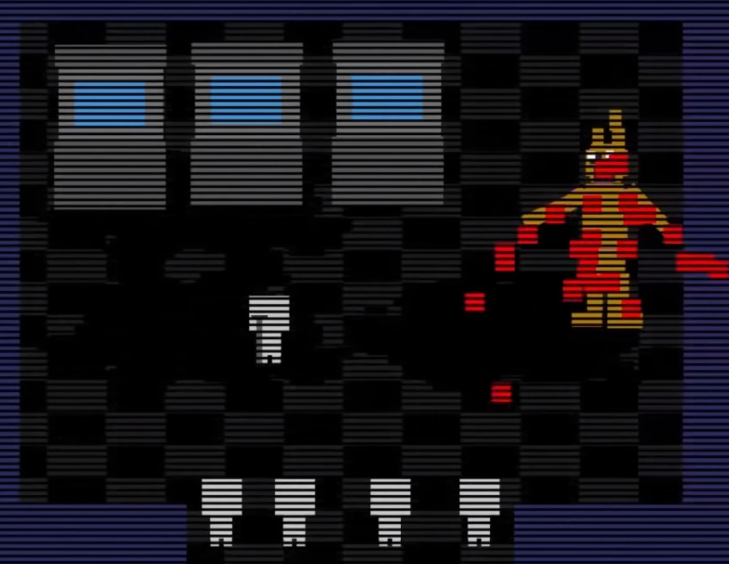
The ghosts of Afton’s original five victims gang up on him, possibly causing his golden Bonnie suit to malfunction, and kill him… for now.
It’s worth noting that when the ghosts kill Afton, he’s wearing his Golden Bonnie suit. As Mat Pat mentioned, yes it is the disguise he wore to commit his crimes, but it is also symbolic of who Afton has become- a beastly, inhuman creature who looks friendly on the outside, but inside is cold and robotic. This also calls to mind the beast symbolism in the aforementioned ghost scene from Richard III. The real King Richard III used a boar as his royal sigil, and Shakespeare exploits that beast imagery by comparing Richard to a bloody, rooting hog, grown fat on the blood of his victims. Richard doesn’t wear a pig suit, but he literally wears his cruelty and bloodlust as a badge of honor!
In both the games and the plays, the ghosts become a manifestation of the murderer’s guilty conscience, and beast-like imagery is used to convey how cruel and beast-like the murderer has become. Macbeth and Richard don’t dress like beasts, but they do kill like them.
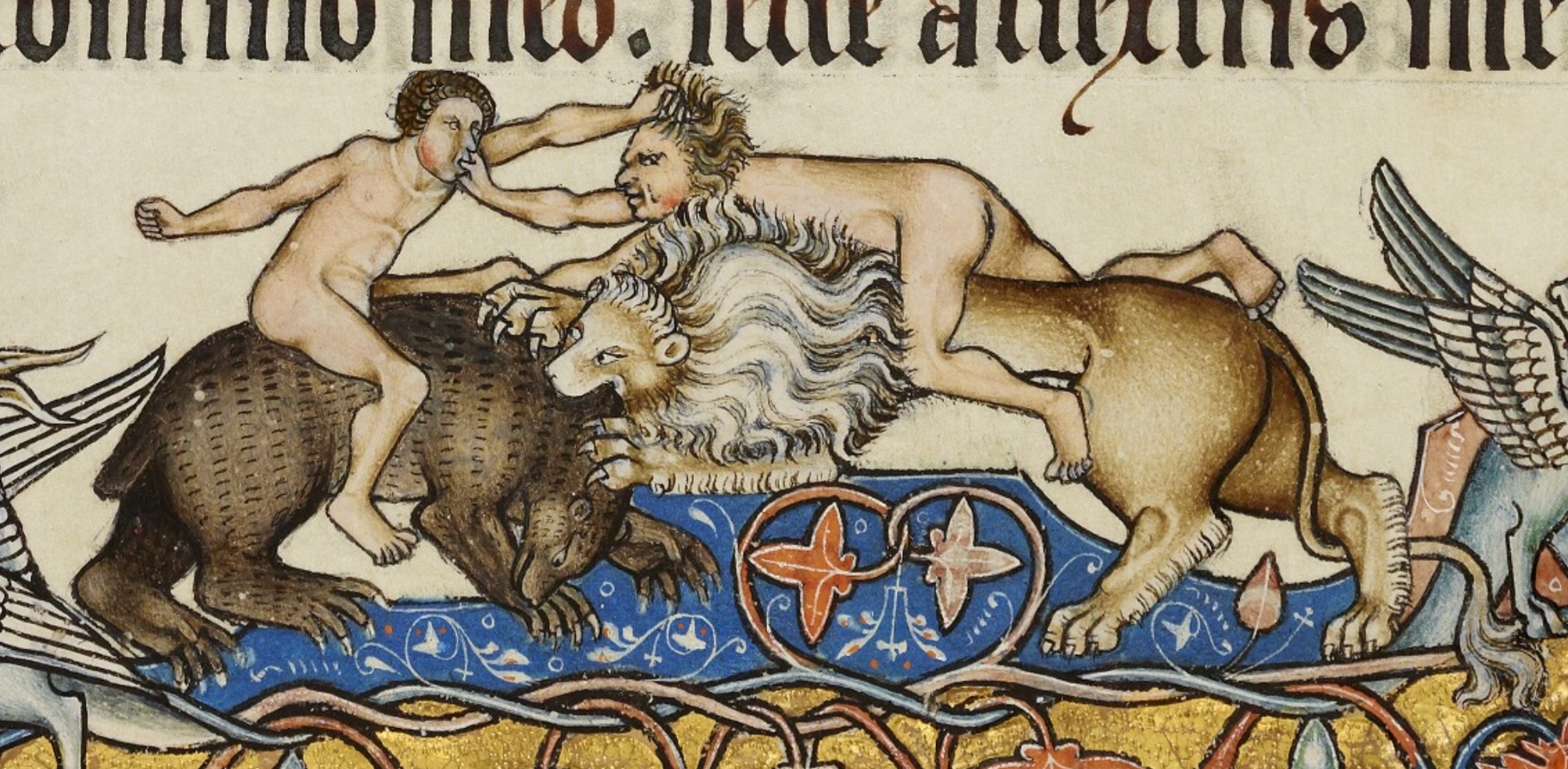
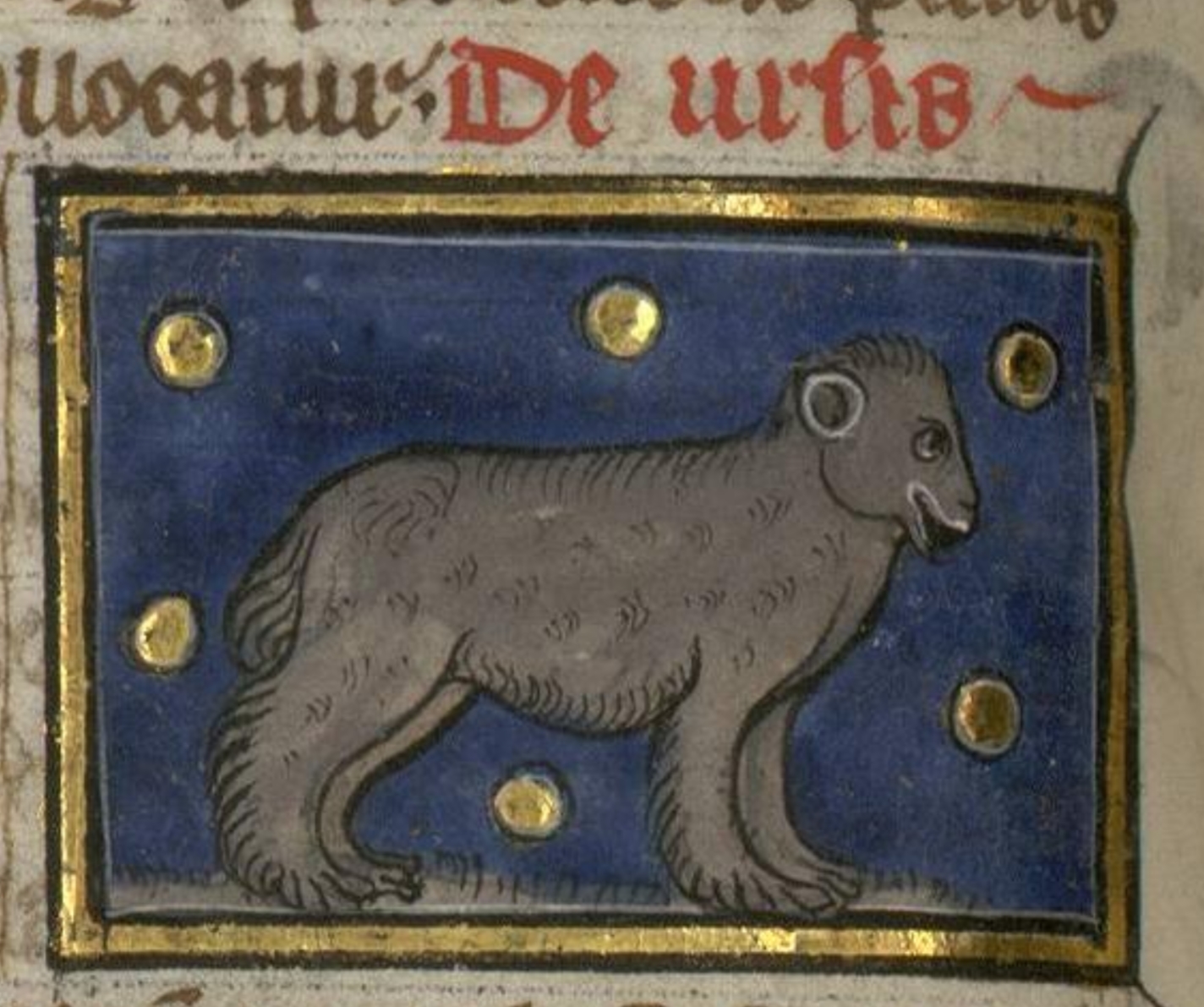
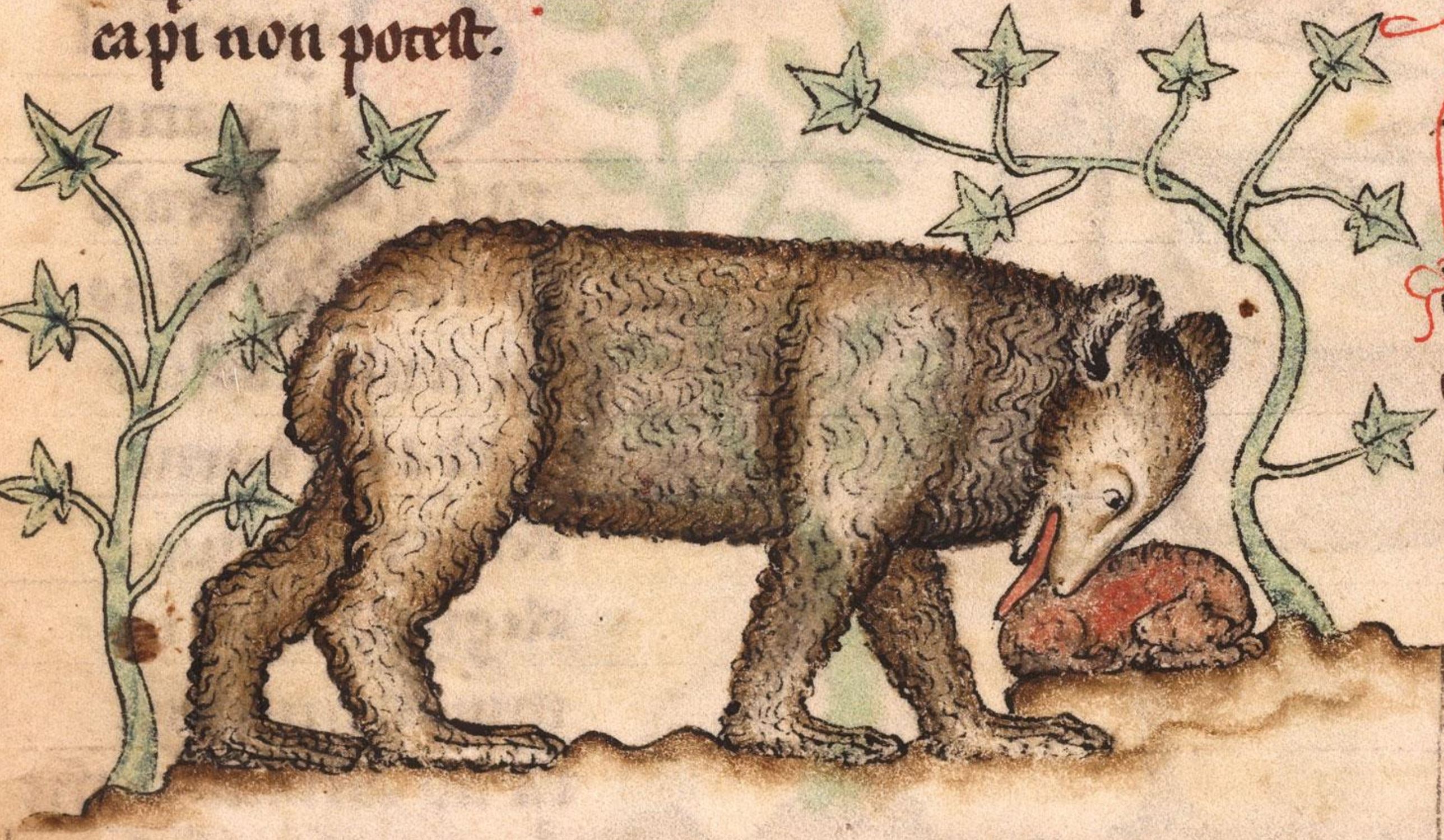
A bear fighting a lion, while both are ridden by naked men viciously fighting each other. Marginal illustration from a psalter.A very shaggy bear.The bear’s cub is born as a lump of flesh; the bear has to lick it into its proper shape.Two bears fight with a unicorn, a scene not described in any bestiary. Marginal illustration.
The beast imagery also extends to the concept of revenge. One big theme in Five Nights At Freddie’s is the concept that revenge, (whether justified or not), is blind and indiscriminately destructive. Even though the five ghosts that possess the animatronics are justifiably angry for being murdered, they don’t just try to kill Afton- they attack any poor soul who sticks around the pizzeria at night. Like Hamlet, who wants to avenge his father’s murder, but kills the wrong people, the five souls trapped in their metal cages have a noble goal- protect the children in the pizzeria, and destroy Afton, but they are full of beastlike rage and are unable to see friends from foes. This kind of blind rage reminds me of how real bears will fight off anyone whom they perceive as a threat. In medieval manuscripts, bears are tender to their cubs and literally form them out of little hairy lumps by licking them into shape. At the same time, they are powerful, deadly, and violent to anyone that threatens the cubs.
This kind of blind violence is something Shakespeare explores a lot in his history plays and his tragedies. Every time he talks about a society going wrong, he describes it as if it were populated with beasts, not humans. In Timon of Athens, the titular character, having left Athens to go live in the woods, laments to his frenemy, the cynical philosopher Apemantus, how his city has become like a collection of beasts:
Timon. What wouldst thou do with the world, Apemantus, if it lay in thy power?
Apemantus. Give it the beasts, to be rid of the men.
Timon. Wouldst thou have thyself fall in the confusion of2025 men, and remain a beast with the beasts?
Timon. A beastly ambition, which the gods grant thee t’ attain to! If thou wert the lion, the fox would beguile thee; if thou wert the lamb, the fox would eat three: if thou wert the fox, the lion would suspect thee, when peradventure thou wert accused by the ass: if thou wert the wolf, thy greediness would afflict thee, and oft thou shouldst hazard thy life for thy dinner: wert thou a bear, thou wouldst be killed by the horse: What beast couldst thou be, that2045 were not subject to a beast? and what a beast art thou already, that seest not thy loss in transformation!
Apemantus. If thou couldst please me with speaking to me, thou mightst have hit upon it here: the commonwealth of2050 Athens is become a forest of beasts.
Timon. How has the ass broke the wall, that thou art out of the city? Timon Of Athens, Act IV, Scene iii.
In short, the history of horror, which Shakespeare helped shape in plays like Macbeth, Richard III, Hamlet, and others, has a lot of classic tropes and the Five Nights At Freddie’s games exploit them quite well; tropes like supernatural vengeance, the death of innocents, beast-like killers, and unquiet ghosts. What works the best about this franchise is that it tells its lore like a mystery, slowly revealing Afton’s gruesome crimes over multiple installments. I wonder if someone has ever applied this to Shakespeare…
Shameless plug: Romeo and Juliet Murder Mystery
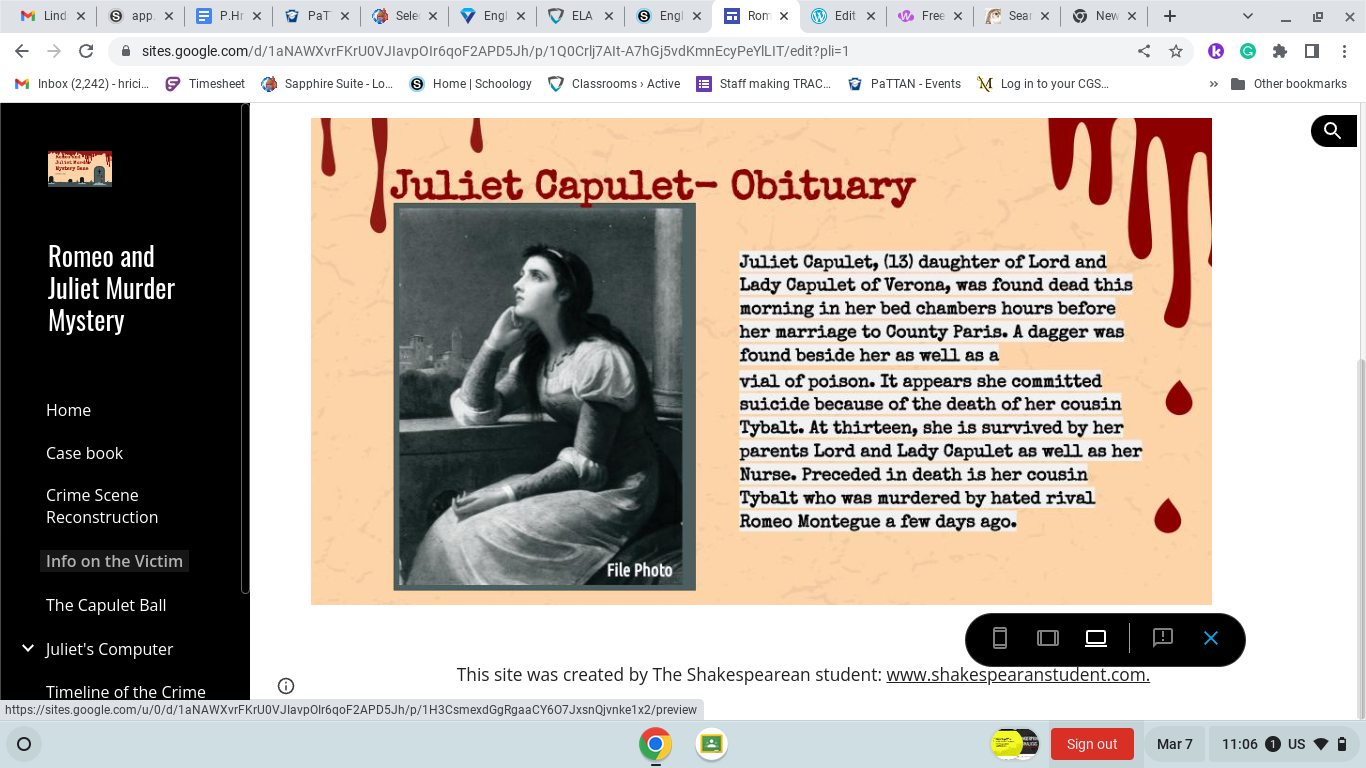
I’m proud to announce that I’ve just been approved to present a fully online, fully immersive murder mystery-style game, where you play as a detective trying to solve the mysterious death of Juliet Capulet! This is a really cool mixture of Shakespeare and forensics science as you examine crime scenes, look for clues, interrogate suspects, and untangle the story of Romeo and Juliet, and it even takes place over the course of five nights! Classes start March 17th. Register now at www.outschool.com!
Would Shakespeare enjoy playing FNAF well, who knows, but I do like to think he would appreciate the lore, if not the jump scares……
As is often the case for me, I like to get at the heart of what makes a piece of pop culture relevant and compare it to Shakespeare. I wish to stress that Shakespeare is not the source of all great art, but at the same time, he knew where to find the source of art, and most great art has some sort of Shakespearean influence.
2. Plot
Harry Potter as Hamlet (AI artwork)
In the case of Harry Potter, we have some surface plot similarities to Hamlet: a young man brooding over the loss of his parents, who takes revenge against the man who took them from him. Both stories also have a powerful autocrat who is associated with snakes:
The serpent that did Sting thy father’s life
now wears his crown.
Is Harry hearing voices? Chamber ofSecrets
In both Harry Potter and Hamlet, the hero’s friends worry that he’s losing his mind; in the second book: Harry Potter can hear the basilisk because he speaks the snake language. Nobody else can understand what he’s hearing, and they conclude Harry is hearing voices. Meanwhile, Hamlet is the only one who hears the ghost of his father:
In the fifth book, Harry Potter and the Order of the Phoenix, Harry can hear voices coming from a vale between the land of the living and the land of the dead, because he saw death at a very young age. This isolates Harry from other characters, (who have not suffered loss), and they once again think that he is losing his mind.
Hamlet and Harry have a visceral understanding of grief; they understand that when one is experiencing grief, one sees the world in a way that most other people can not comprehend. In a way, insanity is a metaphor for grief, and both characters (both of whom, by the way, spend most of their time wearing black) personify how this grief changes their worldview.
The fundamental difference between Hamlet and Harry Potter could be summarized like this; Hamlet is devoted to his father, Harry to his mother. The ghost of Hamlet’s Father sets the action of Hamlet into motion, as he demands that his son revenge his murder. By contrast, Harry Potter is constantly inspired by his mother. Although he only sees his mother for a short time, it’s what he learns about her that drives many of Harry’s actions. Even after death, the memory of Lilly’s kindness and love not only inspires Harry, but other characters like Snape, Slughorn, Dumbledore, Sirius, and Lupin. Lilly’s memory rallies all the heroes to unite and defeat Voldemort.
In addition, Harry’s choices emulate his mother’s personality more than his father’s. Harry’s primary concerns are to stop Voldemort from taking over the Wizarding World, to show kindness and respect to everyone, and to guard his friends with his life if necessary, just as his mother did for him. In other words, the matriarchal virtues of love, self-sacrifice, and familial devotion drive Harry, not a patriarchal desire for vengeance which drives Hamlet. Therefore, Harry Potter is a more modern Hamlet, driven by a desire to improve a world and a community, rather than just “The royal bed of Denmark,” which Claudius has defiled.
The Melancholy Dane is driven by anger over his father’s untimely and foul murder and the sadness of losing him. Many actors have chosen to play Hamlet as a man who wants revenge, but one for whom vengeance doesn’t come naturally. Hamlet’s conscience, his scruples, his gentleness, and sometimes his sympathy for Claudius, blocks him from quickly taking revenge. In the clip below, Ethan Hawke is literally watching an avenger in a movie (Brandon Lee in The Crow) on a movie screen. It’s as if Hamlet is looking at a reflection of what he wishes he could be- a decisive, ruthless avenger:
As mentioned before Harry Potter’s ability to command loyalty, friendship, and respect from others allows him to accomplish his goals; he succeeds by rallying everyone, his friends, family and even his enemies to unite and fight. By contrast, Hamlet is a man who cannot trust anybody and therefore must rely on his own cunning (and sometimes ruthlessness), in order to achieve his goals.
Harry’s powers to mobilize the best in people are the powers that the dark Lord did not understand. Like a tyrant, Voldemort keeps all the power to himself; he rules by being more powerful than the people around him and inspiring fear. This makes him vulnerable when his foes band together, and his friends desert him, like when Laertes implicates Claudius for killing Hamlet and finds himself alone, friendless, and ready to taste Hamlet’s revenge:
When Shakespeare sat down to write Hamlet, the Elizabethan age was very cut throat- England had gone through the Civil War, violent factions were springing up at court, and Elizabeth herself suffered multiple assassination attempts. Hamlet is very much a product of a time where everyone is worried about being watched and betrayal can happen at any moment. By contrast, Harry Potter was written at another paranoid time- right after the September 11th attacks where racism, homophobia, and xenophobia were (and to a certain extent, still are), ripping the world apart. For all her faults, JK Rowling created a new kind of Hamlet figure, one who tries to bring people together in times of fear and grief, not one who wishes he could be “bounded in a nutshell” or that his “too too solid flesh”Close Reading: “Oh That This Too Too Solid Flesh” would melt away.
3. A Common Ancestor- Hercules
Like all Renaissance playwrights, Shakespeare took inspiration from ancient Greek and Roman sources. Scholars have seen echoes of Orestes, Perseus, and of course, Oedipus in Hamlet, but one Greek myth that pops up in both Hamlet and Harry Potter is the myth of Hercules. Here’s a short list of commonalities:
1. Both heroes defeat a serpent as a baby and is raised by people who aren’t his parents. Hercules strangles snakes in his cradle, Harry defeats Voldemort, and Hamlet (who is still a child), defeats his uncle who is called a serpent by the Ghost.
2. Cursed by a malevolent creature who hates his mother. Harry gets his scar, Hercules is cursed by Hera (his father’s wife, but not his biological mother). Hamlet
3. Labors involving wild beasts- Nemean Lion (sorting hat), Hydra= basilisk. 3. Captures a stag (Conjures a patronus) 4. Boar= Troll 5. Stables= basilisk in the bathroom 6. Stymphalian birds= golden snitch 7. Girdle of Hipolita= Ravenclaw diadem 8. Cattle of Geryon= other horcruxes 9. Golden Apples= mermaid egg guarded by dragon
10 and most obvious- BOTH OF THEM FACE A THREE HEADED DOG
I bring this up because in many ways, Harry Potter, Hamlet, and Hercules are timeless myths that represent what Joseph Campbell called “The Hero’s Journey”- an eternal story of growth, struggle, death, and rebirth that transcends time, place, and cultures.
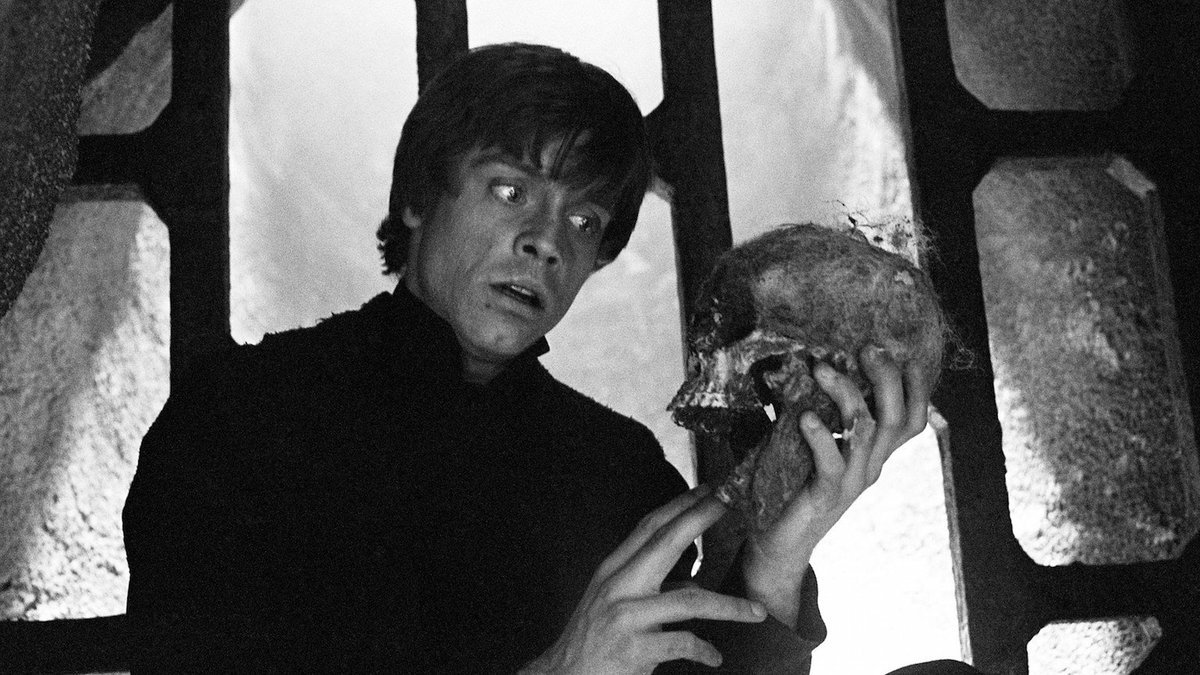
Another character that shares a lot of similarities with Hamlet and Harry Potter is Luke Skywalker from Star Wars. If you enjoyed this analysis of Shakespeare and Harry Potter, you might enjoy my course on Shakespeare and Star Wars from Outschool.com:
This two-week course is fully online and fully immersive. You can learn about Shakespeare through the lens of Star Wars, (and like this post), you will learn about characters, plots, and the ideas behind classic stories by comparing them to contemporary pop culture. Click the link below to get started:
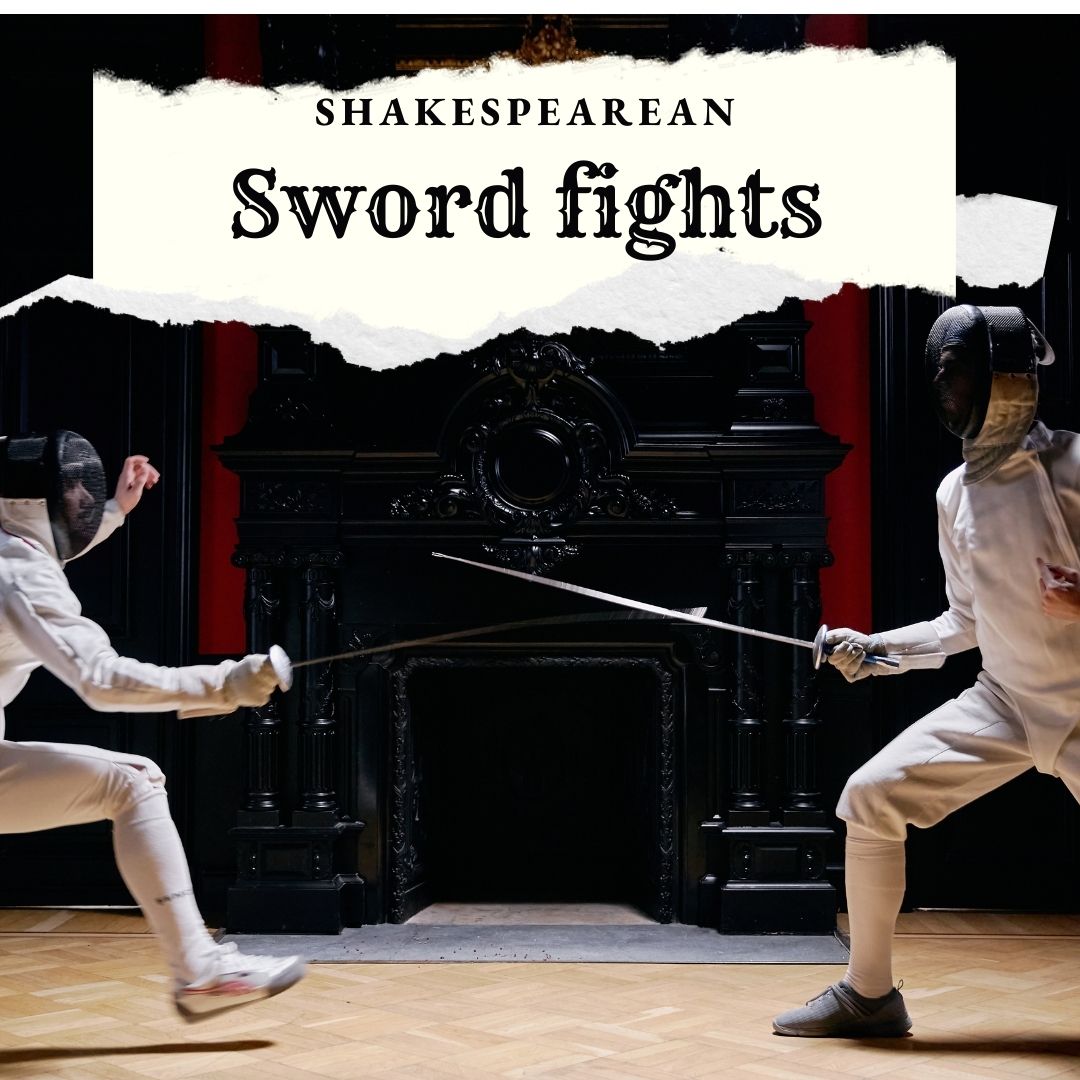
Title Card- “The Violent Rhetoric Of Julius Caesar”Title for my Outschool class on Codes and Ciphers, inspired by the Disney show “Gravity Falls.”Digital business card for my online classes with a QR code if you want to know moreTitle art for my Outschool course on Shakespeare’s comediesCover art for my Outschool class: “Shakespeare- the Lost Play”Title of my Outschool murder mystery gameTitle image for my online course on “Romeo and Juliet.”Title card for my Outchool Intro To Shakespeare cs.Title art for my Outschool course on Shakespeare’s comediesTitle for my Outschool class in swords and Stage Combat.
Great online classes in Shakespeare and science are available for students all this month at Outschool.com.
From now until June 1st, you can get a $20 discount with referral code PAULHT20. Share the joy with other curious minds in the family too! Spread the word and let’s ignite the passion for learning together!
Class Descriptions
Live Classes
For these classes you meet with me live over Zoom:
Introduction to Shakespeare- Tuesdays 9-9:30AM (EST)
This is my 30 minute short and sweet intro to Shakespeare’s life, his plays, and why his work still matters to us today!
Intro To STage Combat (With SwordS)- Tuesdays 9:30-10AM (EST)-
Like the Intro to Shakespeare class above, this is an intro to the basic footwork, attacks, and defensive parries of swordplays for someone just begeinning to learn about swords.
Title image for my online course on “Romeo and Juliet.”
An Immersive Guide To “Romeo and Juliet- Tuesdays from 10-11AM (EST)
This multi-week course delves into the plot, characters and themes of “Romeo and Juliet,” while also providing interactive activities, virtual tours, and webquests.
Shakespeare’s History Plays- SaturdAYs 8:30 AM IST
This is a new course I’m working on to cover all of Shakespeare’s History plays including Henry V, Richard II, and Richard III. More info as it becomes available.
Asynchronous Classes
These classes are Flex Schedule, which means the teacher prepares the activities in advance and allows you to do them at your own pace without direct consultation.
A flexible schedule class that teaches kids the plot and characters of “Romeo and Juliet,” in the context of a detective story where you solve the mystery of the young lovers’ deaths.
Did you know that Star Wars is based on the ideas and writings of William Shakespeare? This class will teach you about writing and characters though games, interactive activities and dramatic readings of both Star Wars and Shakespeare!
Concept: To explore the plot, characters, and themes of Shakespeare’s Julius Caesar while also gaining an insight into Ancient Roman history and culture.
Student Description: Delve into the passionate speeches of Brutus and Antony in Shakespeare’s Julius Caesar, which led a whole country to revolution.
Parent Description Using self-paced online activities, and a helpful handout, your child(ren) will analyze the rhetoric and persuasive power in two speeches from Shakespeare’s “Julius Caesar.” The course will also cover the culture of Ancient Rome, and the circumstances that led to Julius Caesar’s assasination, which inadvertently led to the birth of the Roman Empire.
Course Organizaiton (the class is divided into 4 parts that students can complete at their own pace over a week-long period
Each lesson will have:
“That Is the Question” (Essential Question)
Lesson Objectives
Set the Scene (Background and context)- 1-3 slides
The Players (biography) 1-3 slides
Go Deeper (Webquest)
Explore military life and the lives of women in Rome using my blog and other websites as a guide.
Post 3 things you learned to the Outschool page or send a photo of your completed handout.
Words, Words Words (Vocabulary, famous lines)
A Taste of Your Quality (Independant Project)
Show us your mettle (Test)
So each class should be 14-15 slides long.
Outline
Class I- Background on Caesar and Roman Culture
That is the Question:
Why did Brutus feel Julius Caesar had to die?
What was the aftermath?
Can one person’s speech effect an entire nation?
Lesson Objectives
To provide historical and political context to explain why Julius Caesar was assassinated, and how his death inadvertantly created the Roman Empire.
To explain the Rhetorical Triangle, the building blocks of persuasive speech.
To go through the story of Julius Caesar focusing on the effect of the speeches.
To study the famous “Friends, Romans Countrymen” speech.
To contrast this speech with some more recent political speeches and you think critically about:
Brutus- Podcast episode. I posit in this episode that Brutus is
Words, Words, Words-
Traitor
Republic
Dictator
Revolution
Ethos
Pathos
Logos
Rhetoric
Colossus
Aeneus
A Taste Of Your Quality:
(Independent work): We’ll examine a painting of Brutus’ ancestor Lucius and learn why Brutus values Rome more than even family.
Show Us Your Mettle:
Quizzes on Brutus
Class 3- Antony and Brutus’ Dueling Speeches
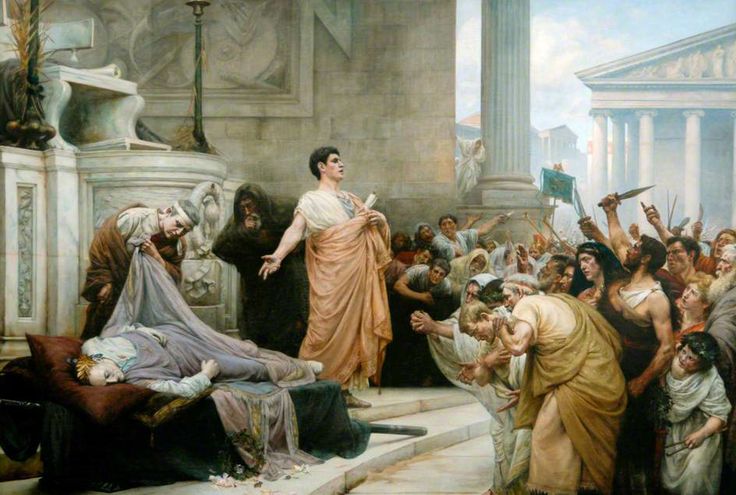
(c) Hartlepool Museums and Heritage Service; Supplied by The Public Catalogue Foundation
That Is the Question
After Caesar’s Death, his friend Marc Antony held a funeral for him where he gives the famous “Friends, Romans, Countrymen” speech. How did Antony’s speech affect the crowd?
Brutus has a speech where he explains why he killed Caesar. What does he say, and how effectively does he say it?
Antony was secretly plotting to take power for himself, and get Brutus and Cassius killed. How did he do it?
Do speeches have the power to change a nation?
Learning Objectives
To explain the Rhetorical Triangle, the building blocks of persuasive speech.
To study the famous “Friends, Romans Countrymen” speech, as well
To look at these speeches and get you to think critically about:
We’ll talk about the consequences of violent revolutions and how Julius Caesar has inspired some of the greatest speeches in political history.
-Patrick Henry
– Gettysburg Address
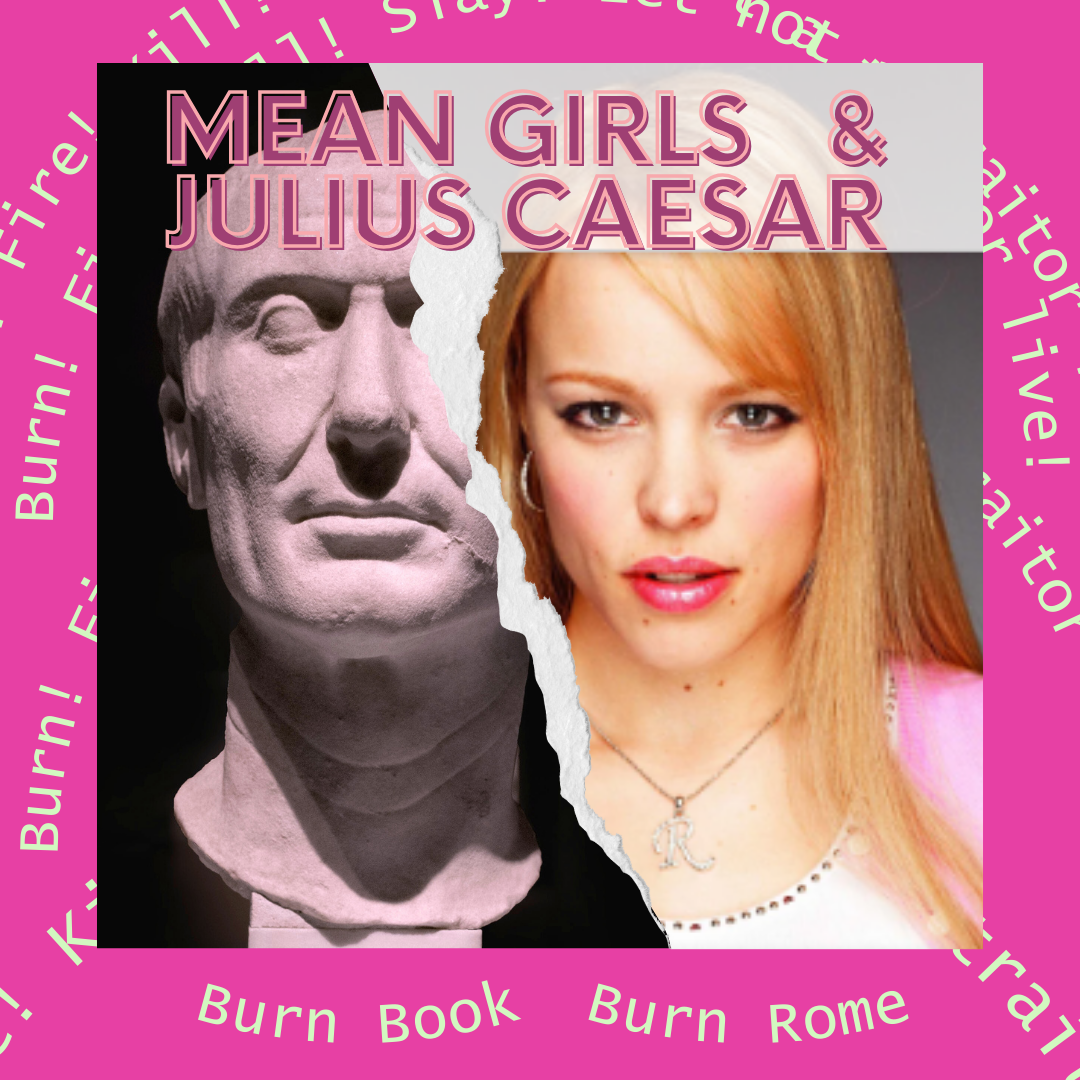
– Mean Girls
That Is the Question
How have people interpreted the play “Julius Caesar” in America?
Does this play promote violence?
What kind of violent speech do we deal with in politics today?
Learning Objectives
To show the link between American History and Julius Caesar
To address the controversy and the misconception that the play promotes violent assassination.
To end on a cautionary note people must think critically about what they hear in politics and not make rash decisions based on appeals to fear.
Setting the Scene- US History
America was founded using the principles of republican government that Ancient Rome used- with a senate, and a series of checks and balances to ensure no one has too much power.
America was founded in a violent revolution, and some of our country’s early leaders used Brutus as an inspiration- to overcome a tyrannical king.
In later years, however, some people have forgotten what happened to Brutus
Today, we are often bombarded with speech that encourages fear and anger and we must think critically when we hear such speech in whatever forum- Roman, or Reddit.
The Players (use my JC lecture?)
Patrick Henry
Abraham Lincoln
John Wilkes Booth
Donald Trump
Go Deeper
-Watch the Caesar Video
– How does the play promote nonviolence?
– How did Brutus’ assassination fail to save the Roman Republic?
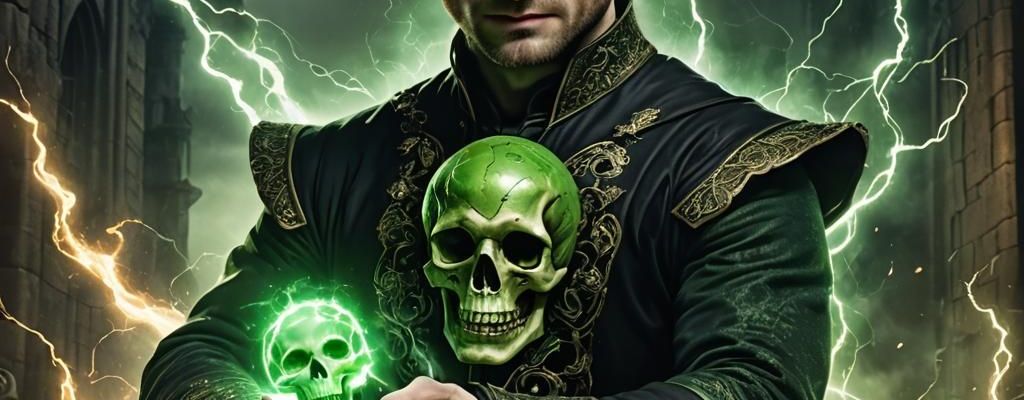
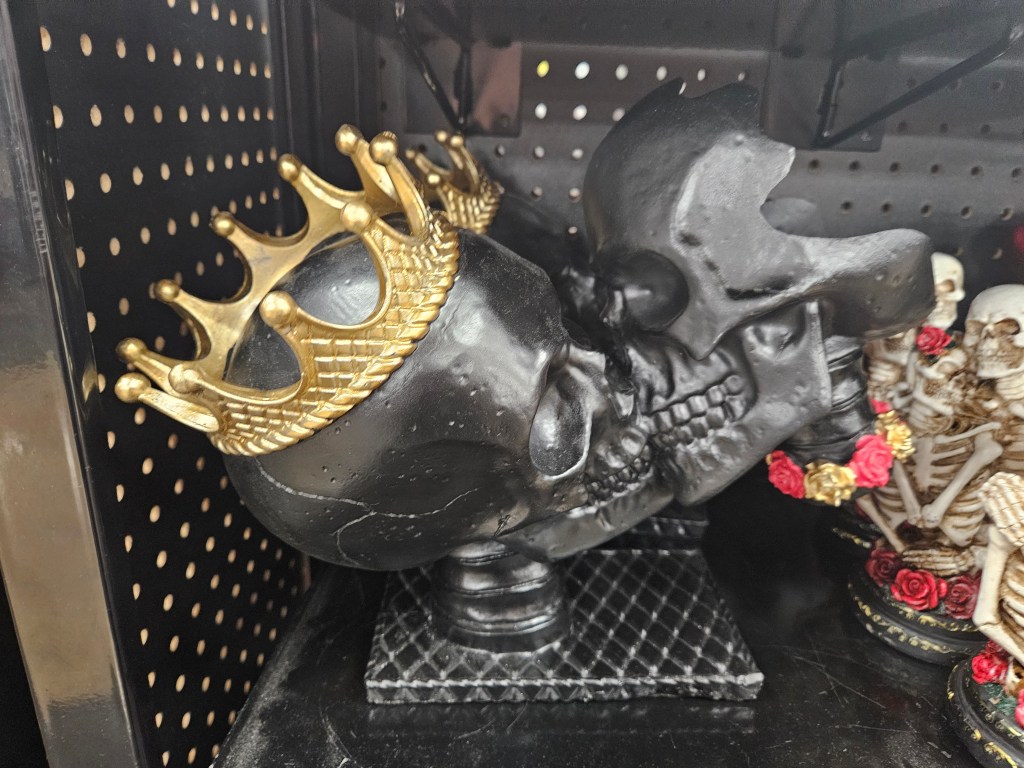
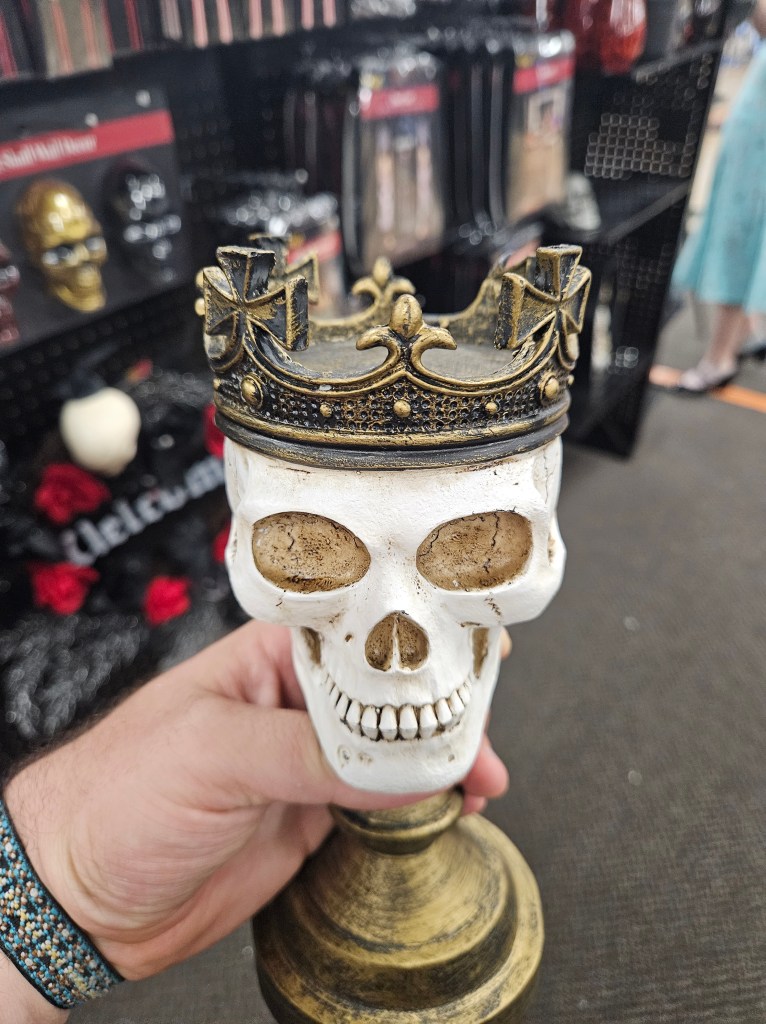
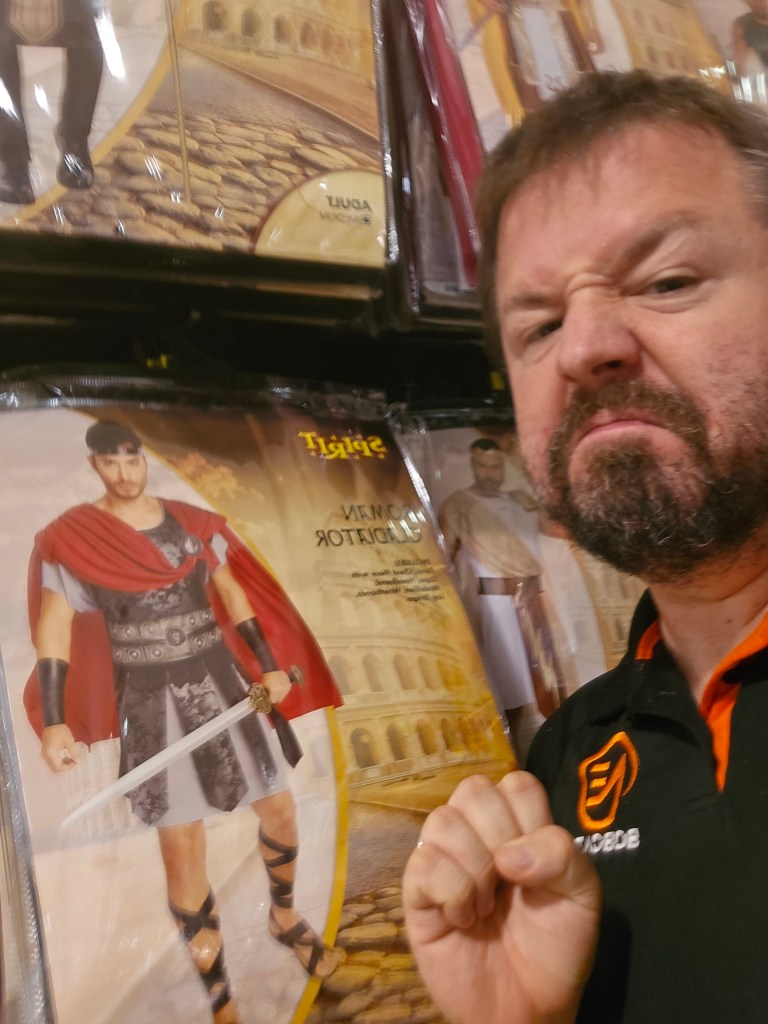
I’ve written before that Shakespeare helped influence Halloween as we know it- the images of holding skulls, witches chanting over a cauldron, and even ghosts coming back to plague their murderers all have Shakespearean roots. Exhibit A is how these images and tropes can even be found in beloved Halloween costume stores like Spirit Halloween!
If you like creepy Halloween activities and Shakespeare, please sign up for my fully online, fully asynchronous class: “An Immersive Guide To Shakespeare’s Macbeth!” The class features a digital escape room, an interactive quiz, and a special, undead guest!
Shakespeare’s birthday is coming up! This is the week where I usually stop talking about individual plays, and talk about the man himself. Today I’d like to cover how he’s been portrayed in fiction. As you’ll see, with such a famous and at the same time mysterious figure like Shakespeare, there is a lot of leeway in terms of how you portray him. This list shows multiple interpretations of Shakespeare and at different stages (ages) of his life. Some are comic, some are tragic, but all are fascinating to discuss:
#10: Rhys Ivans (Anonymous, as The Earl Of Oxford).
Like I said in my podcast, I don’t believe Oxford was the real Shakespeare, and I have some issues with the character and his lack of humanity. That said, I do like the character they were going for- a tortured genius who has to create, in spite of himself, and it destroys him and his family.
#9: Hugh Laurie
I love what they do here- Shakespeare’s a temperamental artist who hates editors, but ultimately accepts that he has to put butts in seats. It’s very true-to-life and Rowan Atkinson and Hugh Laurie do a great job in this sketch!
#8: Kill Shakespeare Volume 2
Like I said in my full review, I really like the idea of an aging Shakespeare buckling under the pressures of being an icon. Bardolatry, the worship of Shakespeare as a literary god, has been a real thing in academic circles for at least the last 200 years and I think it really hampers first-time readers from even attempting to read Shakespeare. Since this comic is very much attempting to get people to do just that, it makes sense that they portray Shakespeare as a deeply flawed human who is trying his best, but not able to live up to his god-like persona.
#7 Matthew Baynton- Horrible Histories
Even though this history show for kids is also trying to make Shakespeare accessible for British schoolchildren, it actually takes the opposite approach for Shakespeare- make him cocky, self-assured, silly, and a bit of a schlamaazel, who like his own creation of Mercutio, talks too much and invariably gets himself into trouble.
#6: King Of Shadows
Cover of “King Of Shadows,” an excellent Young adult novel for anyone who loves Shakespeare.
“Nat, say hello to William Shakespeare”. They might as well have said, “Nat, say hello to GOD!”
-King Of Shadows
Again, most interpretations of Shakespeare are aware of and try to subvert the god-like status he has in our culture, which is why this YA novel attempts to humanize him, by having him interact with the hero, Nathan, a 20th-century child actor, go back in time and finds himself switching places with another Nathan Field, a real boy actor in Shakespeare’s company. Nathan then meets and befriends Shakespeare and the two form a father-son bond.
This book takes place just a few years after the death of Shakespeare’s own son, Hamnet, so this William Shakespeare has a son-shaped hole in his heart. It’s really heartwarming to see the two broken people form a family bond.
#5: Hamnet
As I said before, Shakespeare is not the main character of this novel; he pops in and out of the life of the real main character; his wife Anne, as he visits her at his parents’ home, and later when he sees her on periodic trips home from London. His characterization is entirely indirect. That said, we learn a ton about him through her perceptive eyes. We see his hatred of his abusive father, his frustration with being a glover’s son with no time to make a living in the theater. We see his ambition take hold as he travels to London, and at last, his contrite return to finally become a good husband after the death of his son. This Shakespeare is sort of a prodigal son, who searches for fame and fortune as a young man in the big city, but eventually comes to value his life at home. This solves the mystery of why Shakespeare never moved his family to London, why he retired in the early 1610s, and why his writings have nothing about his relationship with his family, his wife, or especially his son. This Shakespeare is scarred; trying to redeem himself from the sins of his past.
#3 Kenneth Branaugh- “All Is True”
This Shakespeare is at the end of the journey he took in “Hamnet.” He’s retired from theater, trying to pick up the pieces of his life in Stratford, and trying to reconcile his feelings for the fair-young-man (played by Ian McKellen), and his wife, (played by Judy Dench). It’s melancholic, but still funny in a dour way.
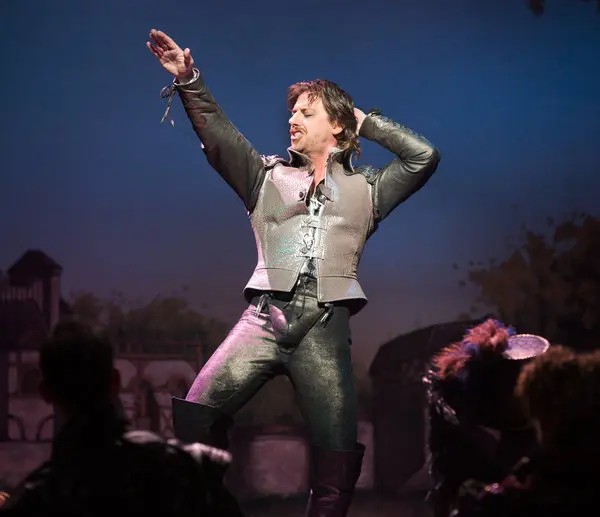
#3: Christian Borle- “Something Rotten”
Like I said in the review of the Broadway musical, Borle is the best part of this show. Like Matthew Baynton, he plays Shakespeare as a cocky young self-assured genius on the outside, but unlike Baynton, we see he has a deeper side underneath. As he sings in the incredibly catchy “Hard To Be the Bard,” Shakespeare is once again dealing with the problem of maintaining his success and is under a tremendous amount of pressure to crank out new and successful plays all the time. Even though he’s the antagonist, he’s more sympathetic than the heroes.
#2: Jacob Fiennes- “Shakespeare In Love”
I realize this movie has lost a lot of prestige over the years, thanks to the controversy over its loathsome producer, Harvey Weinstein. I realize that the film Shakespeare In Love might not have deserved best picture over films like Saving Private Ryan. That said, I still think it’s a fantastic movie and every single element from the sets to the costumes to the near-perfect casting, is top-notch, especially the casting of Jacob Fiennes as Shakespeare. This young, heartthrob Shakespeare hasn’t yet become the self-assured genius we see elsewhere on this list. He’s constantly out-classed by Christopher Marlowe, which is a very good choice because it helps us sympathize and root for this man, whom we all know will become a rich, successful genius, but hasn’t yet.
Fiennes also gives Shakespeare a very good arc- he’s a selfish dreamer like Bottom at the beginning and a sweet, sensitive man at the end. In the end, he writes for all the right reasons- supporting his family, immortalizing his love Lady Viola, and helping his friends and partners in the Chamberlain’s Men. Most of these Shakespeare are fairly static, but this movie gives him a great hero’s arc which allows us to like him and hope that his play is a success. As you can see in this alternate version of the final scene, Shakespeare makes a tearful goodbye to Viola, and sets about paying tribute to her in a play that will eventually become Twelfth Night. He also begins his lifelong partnership with Richard Burbage, who will go on to play Malvolio in that play, as well as Hamlet, Othello, and many others. It’s a satisfying conclusion to his arch, which like Viola, shows that Shakespeare is ready to take on a “brave new world” with a new sense of purpose.
#1: Dean Lennox Kelly From Dr. Who: The Shakespeare Code
Dr. Who (David Tennent) and Dr. Martha Jones ( Freema Agymann), are… disappointed when they meet Shakespeare in person in 1599.
Though this episode has an inauspicious start, Dean Lennox Kelly from this 2007 episode of Dr. Who finds a way to incorporate every aspect of every other Shakespeare on this list! He’s a cocky, self-assured showman on the outside who knows he’s a genius but is also a middle-class man of the people, playing to the groundlings. On the inside though, he is mourning the loss of his son and yearning for love, which is why he falls in love with Martha and (spoiler alert) makes her the Dark Lady of the sonnets. He also is clever enough to figure out what’s going on as three aliens try to manipulate him into using his gift of words to conjure the end of the world for them. Finally, he is still a hard-working writer and does occasionally doubt his own work:
Shakespeare: “To be or not to be”. Oh, that’s quite good.
10th Doctor: You should write that down
Shakespeare: I dunno… bit pretentious?
-The Shakespeare Code.
Again, the best thing about this Shakespeare is his arc- he drops his mask of genius and opens up to Martha and the Doctor, just like how the Doctor confides in Shakespeare how he is mourning the loss of his previous companion, Rose. In the end though, he draws strength in the memory of his son, and actually uses it to save the world!
Is this a historically accurate biopic? No. Is it a silly cartoon? Also no. The reason I ranked this episode the highest is because they managed to encompass the myth and the man of Shakespeare in a very compressed time, with tons of Shakespeare easter eggs, and historical references, and it was filmed in the real re-creation of Shakespeare’s own theater! Someday I’ll write a full review of this episode, but for now, I hope you’ve enjoyed this list, and are hungry for more Shakespeare’s Birthday Week content!
This is my new trailer for my fully online, fully immersive murder mystery game based on Shakespeare’s “Romeo and Juliet.” You play as a detective hired to solve the mystery of Juliet’s murder. You will piece together the plot and characters of Romeo and Juliet, but also use forensic science to identify clues, interrogate suspects, and examine the crime scene just like a real detective! Register now at Outschool.com SPECIAL OFFER: Get $5 off the murder mystery class with coupon code HTHESSQ76F5 until Apr 22, 2023. Get started at https://outschool.com/classes/romeo-a… and enter the coupon code at checkout.


































 The Shakespearean Student